South Korean prosecutors filed insurrection charges today against former President Yoon Suk Yeol, a crime that carries a potential death sentence under Article 87 of South Korea's Criminal Act. The indictment, the first time a sitting or former Korean president has faced insurrection allegations, stems from Yoon's stunning declaration of martial law on December 3, an action that lasted only six hours before the National Assembly voted unanimously to overturn it but has nonetheless triggered the country's gravest constitutional crisis since democratization in 1987.
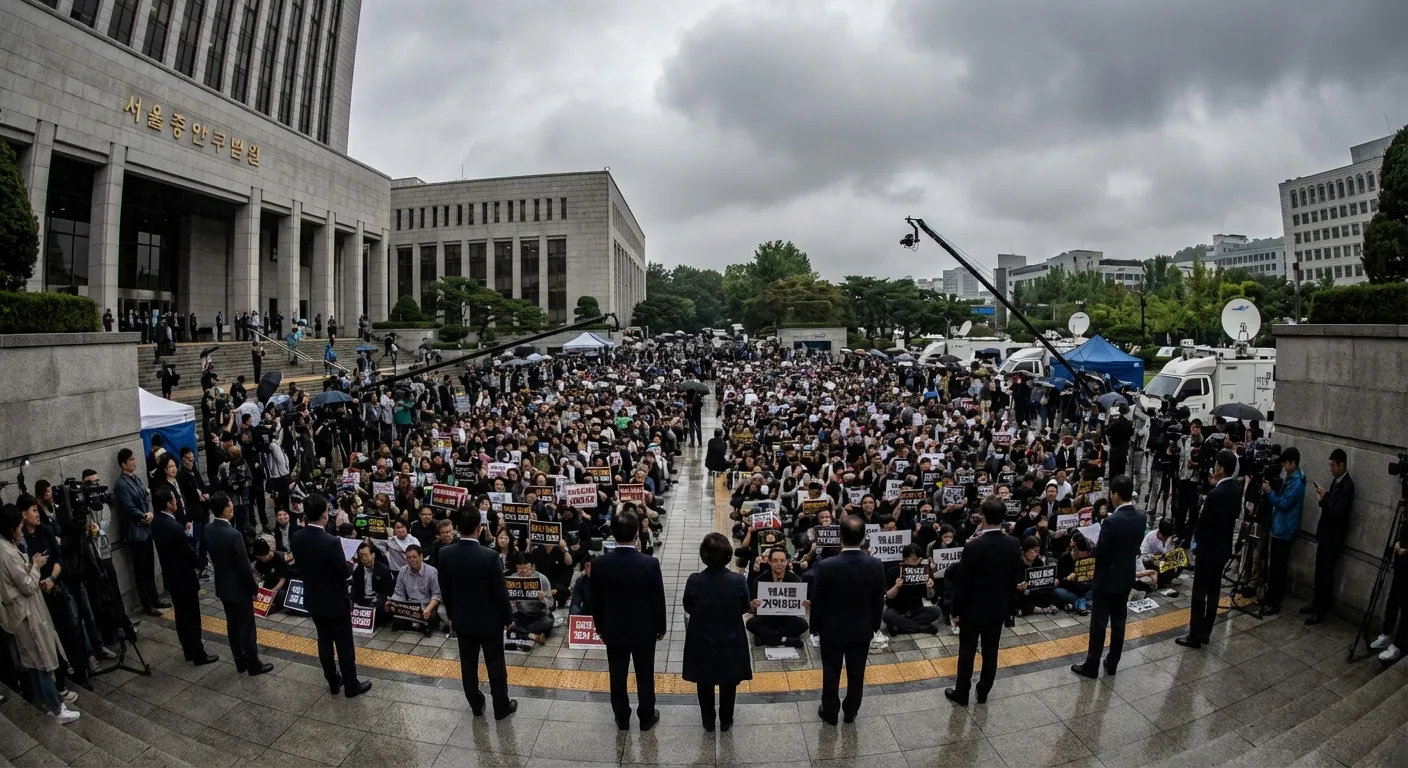
The charges were expected but their formal filing still sent shock waves through Korean politics. Yoon, who has been detained since December 9, appeared briefly at the Seoul Central District Court for a preliminary hearing where he denied all charges. His lead defense attorney, Seok Dong-hyeon, told reporters that the prosecution "is criminalizing a presidential decision, however misguided, that was rescinded through constitutional processes before any lasting harm occurred." Outside the courthouse, competing crowds of supporters and opponents numbered in the tens of thousands, separated by rows of riot police.
The Six Hours That Shook Korean Democracy
Yoon's martial law declaration came without warning on the evening of December 3. In a nationally televised address at 10:27 p.m., he accused opposition parties of "anti-state activities" and announced emergency military rule, ordering the suspension of all political activity, the closure of the National Assembly, and the arrest of several opposition lawmakers. Troops from the Army Capital Defense Command were dispatched to surround the Assembly building, and special forces units were reportedly ordered to detain opposition leader Lee Jae-myung.
The justification was, by any measure, threadbare. Yoon pointed to legislative opposition to his budget proposals and claimed, without evidence, that opposition lawmakers were under North Korean influence. Even members of his own People Power Party expressed immediate shock. Kim Gi-hyeon, the party's leader, issued a statement within an hour calling the declaration "a grave error" and urging Yoon to reverse course.
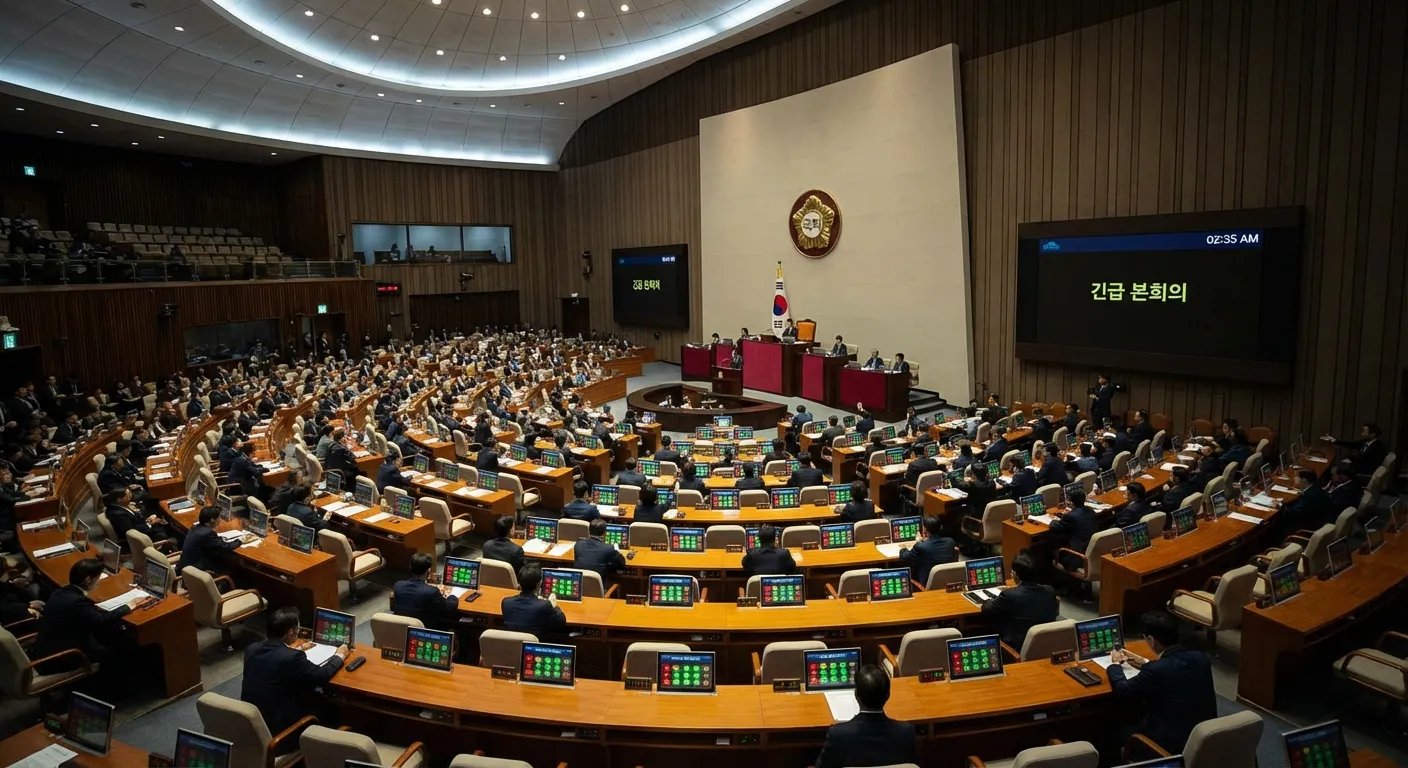
The National Assembly's response was remarkable in its speed and resolve. Despite the military cordon, 190 of 300 legislators managed to enter the building, some by climbing walls or being passed through windows by aides. They convened an emergency session and voted unanimously to demand martial law's reversal, a procedure that under the Korean constitution compels the president to comply. Facing unified legislative opposition and growing signals from military commanders that they would not enforce orders they considered illegal, Yoon rescinded the declaration at 4:27 a.m. on December 4. The entire episode lasted five hours and fifty-nine minutes.
The Legal Architecture of the Prosecution
The insurrection charge rests on a specific theory: that deploying military forces to obstruct the legislature and ordering the arrest of political opponents constitutes an attempt to "subvert the Constitution" by force, regardless of whether the attempt succeeded or was voluntarily abandoned. Chin Jung-kwon, a political scientist at Dongyang University and frequent commentator on Korean constitutional law, told The Korea Herald that the prosecution faces "a historically unprecedented case with no direct precedent in Korean jurisprudence, but the facts are not seriously in dispute. The question is purely one of legal categorization."
Yoon's defense team is constructing an argument rooted in presidential authority. They contend that the martial law declaration, while arguably ill-advised, fell within the constitutional powers granted to the president under Article 77, which authorizes martial law during wartime, comparable emergencies, or threats to public order. They argue that criminalizing a decision that was reversed through proper constitutional channels sets a dangerous precedent.
The prosecution's response is that the constitutional process worked not because Yoon respected it, but because legislators physically defied military obstruction to exercise their authority. The attempted arrest of opposition lawmakers, the deployment of soldiers to prevent the Assembly from convening, and the orders issued to military commanders collectively demonstrate, prosecutors argue, that Yoon intended to prevent constitutional checks from operating.
Political Fracture and Early Elections
The indictment accelerates an already volatile political situation. Yoon was impeached by the National Assembly on December 10, and the Constitutional Court has 180 days to rule on whether to permanently remove him from office. If the court upholds impeachment, a presidential election must follow within 60 days.
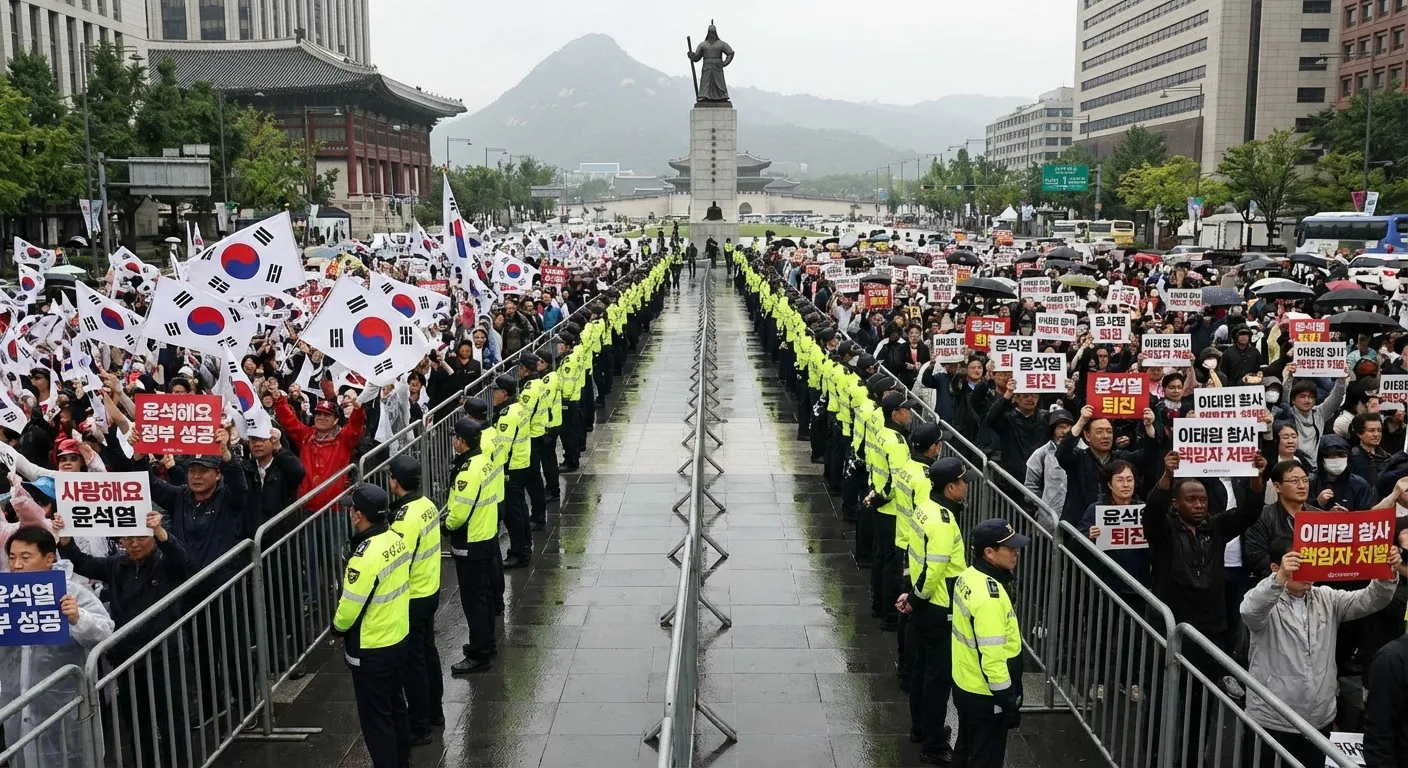
Yoon's People Power Party has fractured. Some members have distanced themselves entirely, calling the martial law declaration indefensible and positioning themselves for a post-Yoon conservative movement. Others maintain that the prosecution is politically motivated retaliation orchestrated by the opposition Democratic Party. Polling from Gallup Korea conducted December 12-13 shows that 71% of respondents support the impeachment, but the numbers break sharply along partisan lines: 94% of opposition supporters versus 38% of ruling party supporters.
The international dimension compounds the uncertainty. South Korea hosts 28,500 U.S. military personnel and plays a central role in Indo-Pacific security coordination. Political instability in Seoul complicates joint planning on North Korea policy at a moment when Pyongyang has accelerated its weapons testing program. The U.S.-ROK alliance, formalized by the 1953 Mutual Defense Treaty, depends on close coordination between civilian governments, and prolonged political turmoil in Seoul risks delaying joint military exercises, complicating intelligence sharing, and creating openings that both Pyongyang and Beijing could exploit. The State Department has issued carefully worded statements supporting Korean democratic institutions without commenting on specific legal proceedings.
What Happens Next
The constitutional timeline will unfold in overlapping stages. The Constitutional Court's impeachment ruling is expected by late February or early March 2026. The criminal trial will proceed on a separate track and could take years to conclude, with appeals potentially extending to 2028 or beyond. Under Korean law, insurrection is one of the few charges for which there is no statute of limitations, meaning that even delays will not extinguish the prosecution. The outcome will shape Korean politics for a generation. A conviction would establish that martial law declarations against democratic institutions carry the most severe criminal consequences. An acquittal, while unlikely given the public evidence, would raise questions about the enforceability of constitutional constraints on executive power. Either way, the six hours of December 3 have already altered the trajectory of Korean democracy, proving both its vulnerability and, in the Assembly's defiant vote, its resilience.
Sources
- South Korea Indicts Ex-Leader Yoon Over Power Plot Provoking North - Al Jazeera, December 2025
- South Korean President Yoon Suk Yeol Declares Martial Law - The Korea Herald, December 2024
- South Korean President Yoon Suk Yeol Taken Into Custody Over Martial Law - The Korea Herald, 2025
- 1 Year After Martial Law, Korea's Chronic Political Conflicts Have Only Deepened - The Korea Times, December 2025
- Testing Democratic Resilience: What South Korea's Martial Law Reveals - ICONnect Blog