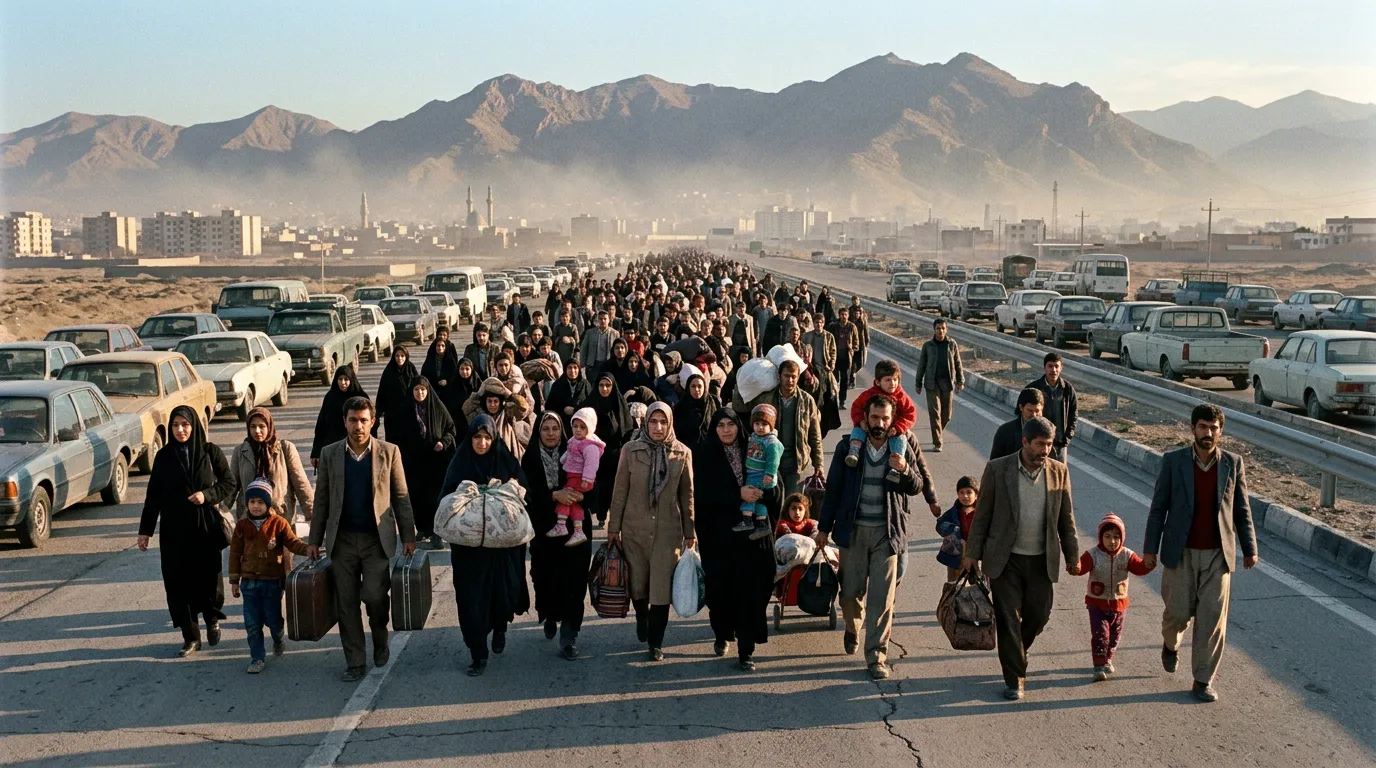
On a highway north of Tehran, a family of five sits on the median divider with three suitcases and a plastic bag of bread. They left their apartment in the Tehranpars district two days ago when airstrikes hit an industrial complex three kilometers from their building. They have no destination, only a direction: north, toward the Alborz Mountains, away from the bombs.
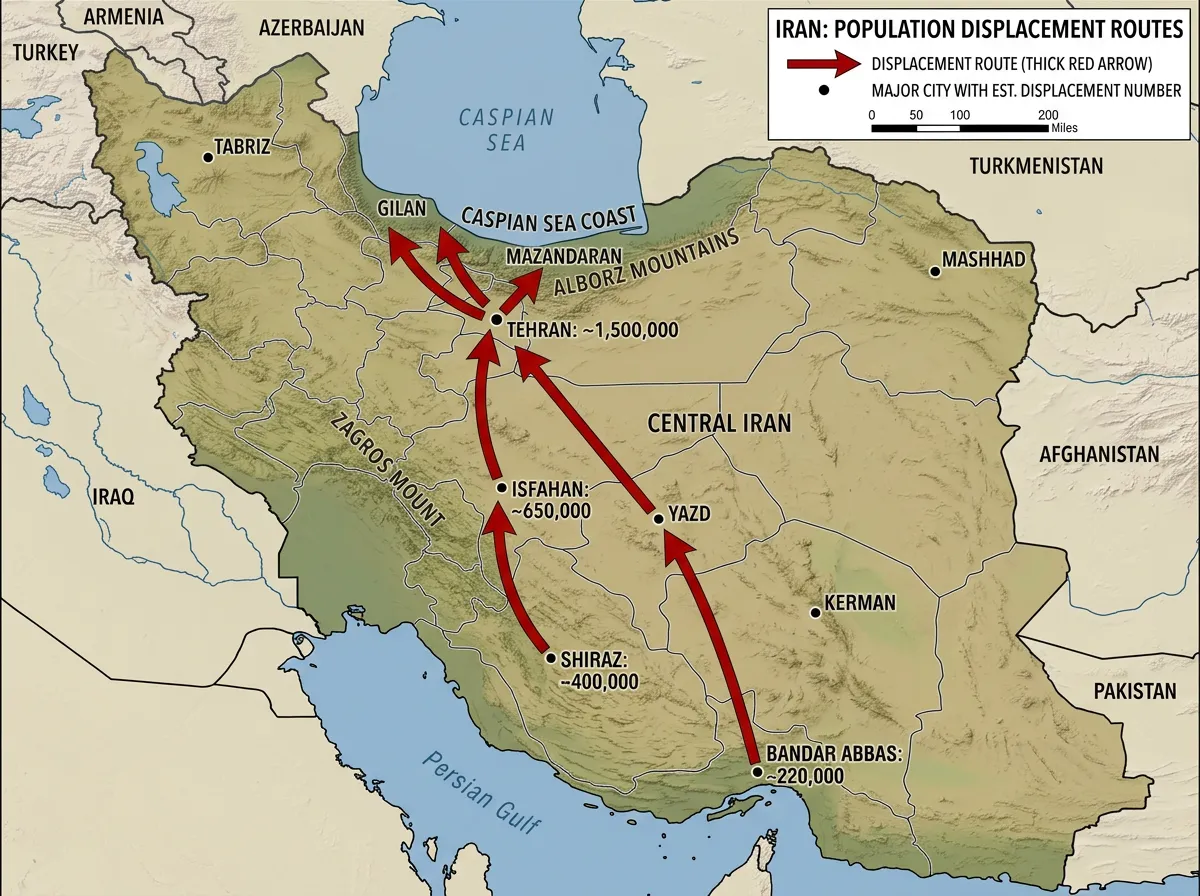
Multiply that family by hundreds of thousands. On Thursday, the United Nations High Commissioner for Refugees reported that between 600,000 and one million Iranian households have been temporarily displaced since the conflict began on February 28, representing up to 3.2 million people. Most are moving north from Tehran and other major urban centers toward rural areas, smaller cities, and the Caspian coast. The displacement is internal for now, but the scale and speed are staggering by any modern standard.
The Fastest Displacement Crisis Since World War II
The UNHCR's 3.2-million figure covers just 13 days. To put that pace in context, Syria's internal displacement, which eventually reached 6.6 million people, took roughly two years to approach comparable numbers. Ukraine's internal displacement in 2022, which peaked at around 6.3 million, reached the 3-million mark after approximately six weeks of fighting. Iran has matched that figure in under two weeks.
The speed reflects the nature of the conflict. Unlike Syria's civil war, which unfolded region by region over years, or Russia's invasion of Ukraine, which concentrated initially along defined front lines, the strikes on Iran have targeted infrastructure across the entire country. Tehran, Isfahan, Bandar Abbas, and Shiraz have all sustained damage. Residents in those cities are not weighing whether to leave. They are leaving immediately, with whatever they can carry, because the next strike could land anywhere.
Filippo Grandi, the UN High Commissioner for Refugees, called the situation "an emerging catastrophe that demands an immediate international response." He noted that the figure of 3.2 million is based on preliminary assessments and "is likely to continue rising as hostilities persist."
Why Tehran Empties Northward
The geography of Iran's displacement follows a predictable logic. Tehran, home to roughly 9 million people in the city proper and 16 million in the metropolitan area, sits on a plateau south of the Alborz mountain range. The mountains form a natural barrier between the capital and the Caspian Sea coast, and the provinces on the northern side, including Gilan, Mazandaran, and Golestan, have remained largely untouched by airstrikes. Their distance from military infrastructure, combined with the mountain barrier, makes them the most obvious refuge.
The northern route also follows existing family networks. Iran's rural-to-urban migration over the past four decades means that many Tehranis have relatives in the northern provinces. Families who moved to the capital for work are now reversing that journey, returning to ancestral villages and small cities where they have at least a roof and a family connection. The UNHCR noted that this pattern is consistent with displacement in other Middle Eastern conflicts, where family networks function as the first and most reliable form of shelter.
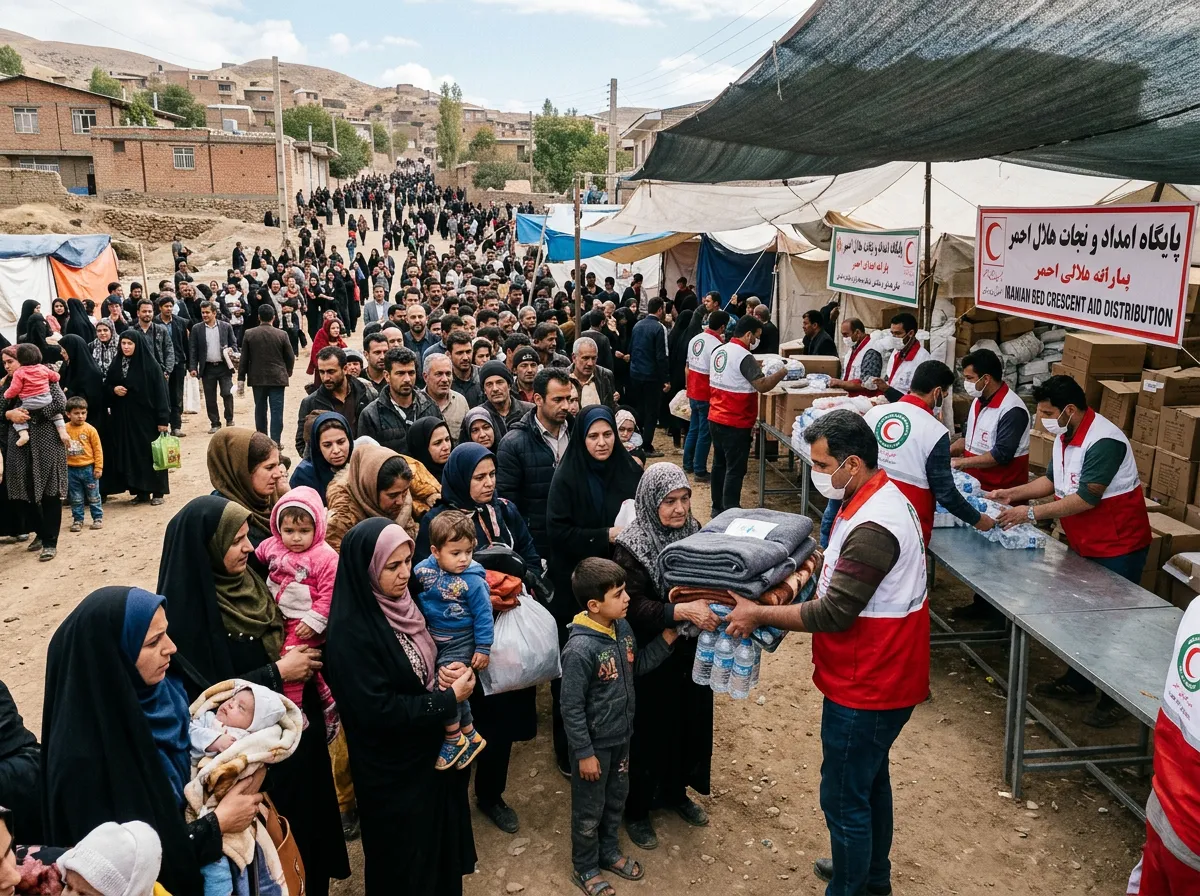
But the northern provinces were never designed to absorb millions of additional people. Gilan province, the most common destination, has a population of roughly 2.5 million. If even a fraction of Tehran's displaced residents concentrate there, the strain on food supply, water systems, healthcare, and housing will be immediate. Iran's Red Crescent Society has begun setting up temporary camps in several northern cities, but the logistics of feeding and sheltering this many people in mountainous terrain with limited road access are daunting.
The Compounding Crisis: 3.4 Million Afghan Refugees Already in Iran
This is where the displacement story takes a turn that most international coverage has overlooked. Iran hosts approximately 3.4 million Afghan refugees, the legacy of decades of conflict and Taliban rule in Afghanistan. These refugees, many of whom have lived in Iran for years, were already in a precarious position: limited work permits, restricted access to healthcare, and periodic threats of deportation. Now they are being displaced alongside the Iranian population that hosts them.
The UNHCR specifically flagged Afghan refugee families as "particularly vulnerable, given their already precarious situation and limited support networks." Unlike Iranian citizens who can fall back on family connections in the northern provinces, Afghan refugees in Iran typically lack those networks outside the cities where they settled. They have fewer resources, less legal protection, and fewer options.
This creates what refugee scholars call a "compounding displacement" scenario, where a population that was already displaced once faces displacement again within their host country. The phenomenon occurred in Lebanon in 2006, when Syrian workers fled alongside Lebanese citizens during the Israel-Hezbollah war, and again in 2020, when Rohingya refugees in Bangladesh's Cox's Bazar camps were displaced by Cyclone Amphan. But the scale in Iran, potentially hundreds of thousands of Afghan refugees displaced within a country of 88 million people that is itself under attack, has no close modern parallel.
The implications extend beyond Iran's borders. If Afghan refugees begin crossing into Turkey, Pakistan, or Turkmenistan, the displacement becomes an international refugee crisis on top of an internal one. Turkey, already hosting roughly 3.5 million Syrian refugees, has signaled that its capacity for additional arrivals is effectively zero. Pakistan, which shares a long border with both Iran and Afghanistan, faces its own political instability. The corridors that displaced people might use are already strained.
The Aid Architecture That Doesn't Exist
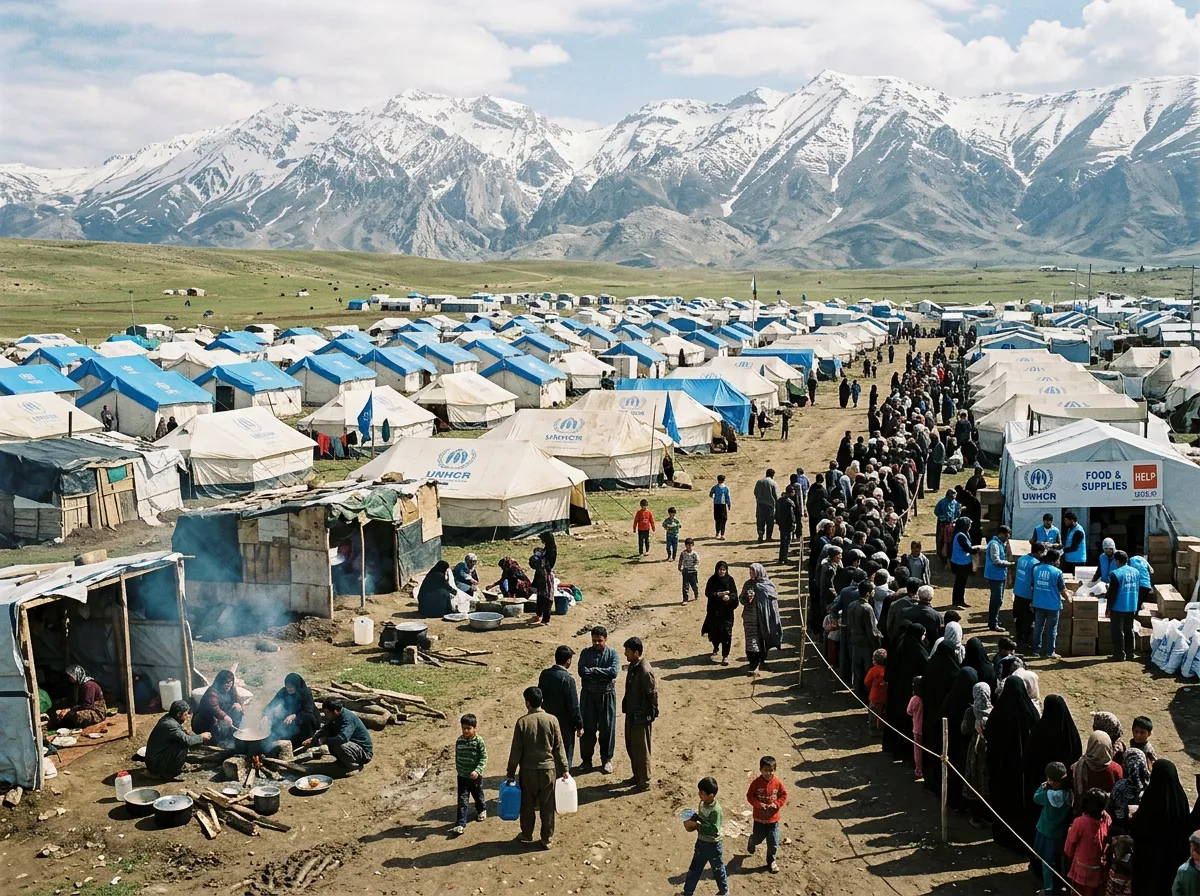
International humanitarian response to the Iran displacement faces a structural problem: the aid infrastructure doesn't exist. Unlike Syria, where UNHCR and partner organizations spent years building refugee camp networks in Jordan, Lebanon, and Turkey, or Ukraine, where European nations opened borders and activated reception systems within days, Iran has no pre-positioned humanitarian architecture for a crisis of this scale.
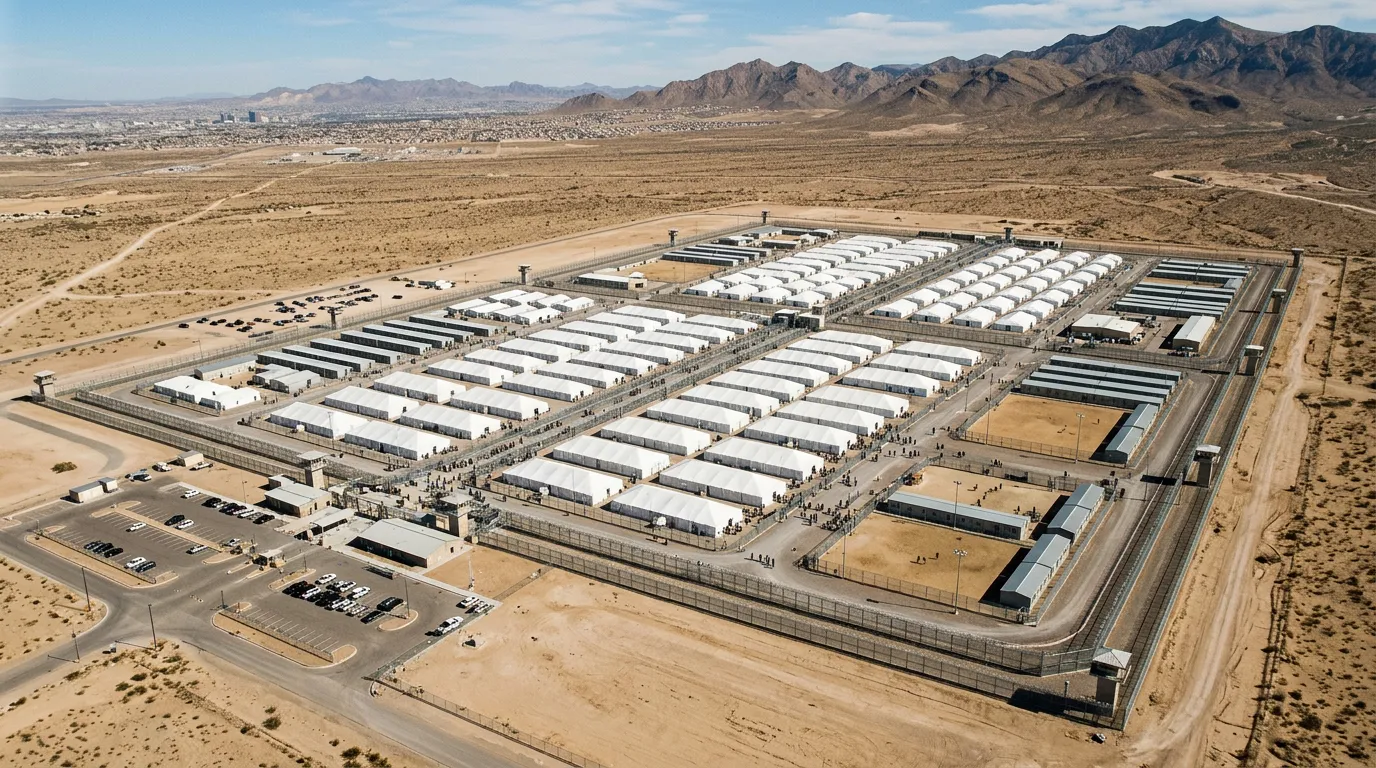
The reasons are partly political. Decades of sanctions have limited the presence of international NGOs inside Iran. The UNHCR maintains offices in Tehran and several other cities, but its operational capacity is geared toward the Afghan refugee population, not a sudden displacement of millions of Iranian citizens. The International Committee of the Red Cross has some access, but the active military conflict complicates movement and logistics.
Iran's own domestic capacity is substantial but unevenly distributed. The Iranian Red Crescent Society, one of the largest national Red Cross/Red Crescent societies in the world, has extensive experience with earthquake response and has activated emergency protocols. But earthquakes are localized events. This displacement stretches across the entire country, with movement flowing in one direction and needs accumulating faster than any single organization can address.
The congressional debate over the scope of U.S. military engagement has so far proceeded with almost no discussion of humanitarian obligations. International humanitarian law requires parties to a conflict to allow civilian access to food, water, and medical care. Whether and how that obligation applies when one party is conducting strikes from thousands of miles away is a legal question that will occupy scholars for years. In the meantime, 3.2 million people need shelter now.
What History's Fastest Displacement Crises Teach Us
The pace of Iran's displacement, 3.2 million in 13 days, places it in a category that includes only a handful of modern crises. The 1994 Rwandan genocide displaced approximately 2 million people in its first two weeks, though primarily across borders into Zaire and Tanzania. The 1971 Bangladesh Liberation War displaced an estimated 10 million into India over nine months, with the initial surge moving roughly 1 million in the first week. The 2003 invasion of Iraq displaced approximately 1.5 million in its first month.
What these precedents share is that the displacement itself became a crisis independent of the conflict that caused it. Disease outbreaks in Rwandan refugee camps killed tens of thousands. The influx into India in 1971 nearly triggered a famine in West Bengal. Iraq's internal displacement destabilized provinces that had been stable before the invasion. In every case, the humanitarian consequences persisted for years after the fighting stopped.
Iran's displacement has a feature that makes it potentially more dangerous than any of these precedents: it is happening inside a country that is simultaneously navigating a leadership succession crisis and defending against an active military campaign. The government's capacity to manage the displacement is constrained by the same conflict causing it. Roads used for evacuation are also needed for military logistics. Hospitals treating displaced civilians are also treating combat casualties. The overlap between military and humanitarian needs creates bottlenecks that do not exist when displacement flows across an international border into a stable neighboring country.
The Impact
The UNHCR's report of 3.2 million displaced Iranians is a preliminary figure from a conflict that is still escalating. If the current rate of displacement continues, Iran could see 5 to 7 million internally displaced persons by the end of March, a figure that would rival the worst years of the Syrian crisis compressed into a single month.
Three factors will shape what happens next. First, whether the conflict expands further south toward Iran's oil infrastructure in Khuzestan province, which would displace an additional population center that has so far been partially spared. Second, whether Turkey, Pakistan, and other neighboring countries open or close their borders to refugees, a decision that will determine whether this remains an internal crisis or becomes a regional one. Third, whether international humanitarian organizations can scale operations inside Iran despite sanctions frameworks and active hostilities. The 3.2 million people already displaced are not waiting for answers to these questions. They are walking north, carrying what they can, hoping the mountains are far enough from the bombs.
Sources
- UNHCR: Up to 3.2 million Iranians temporarily displaced as conflict intensifies - UNHCR
- UN refugee agency says up to 3.2 million displaced by the war - ABC News
- Up to 3.2 million people displaced across Iran amid attacks: UN - Al Jazeera
- UN agency says up to 3.2 million displaced by Iran war - The Hill