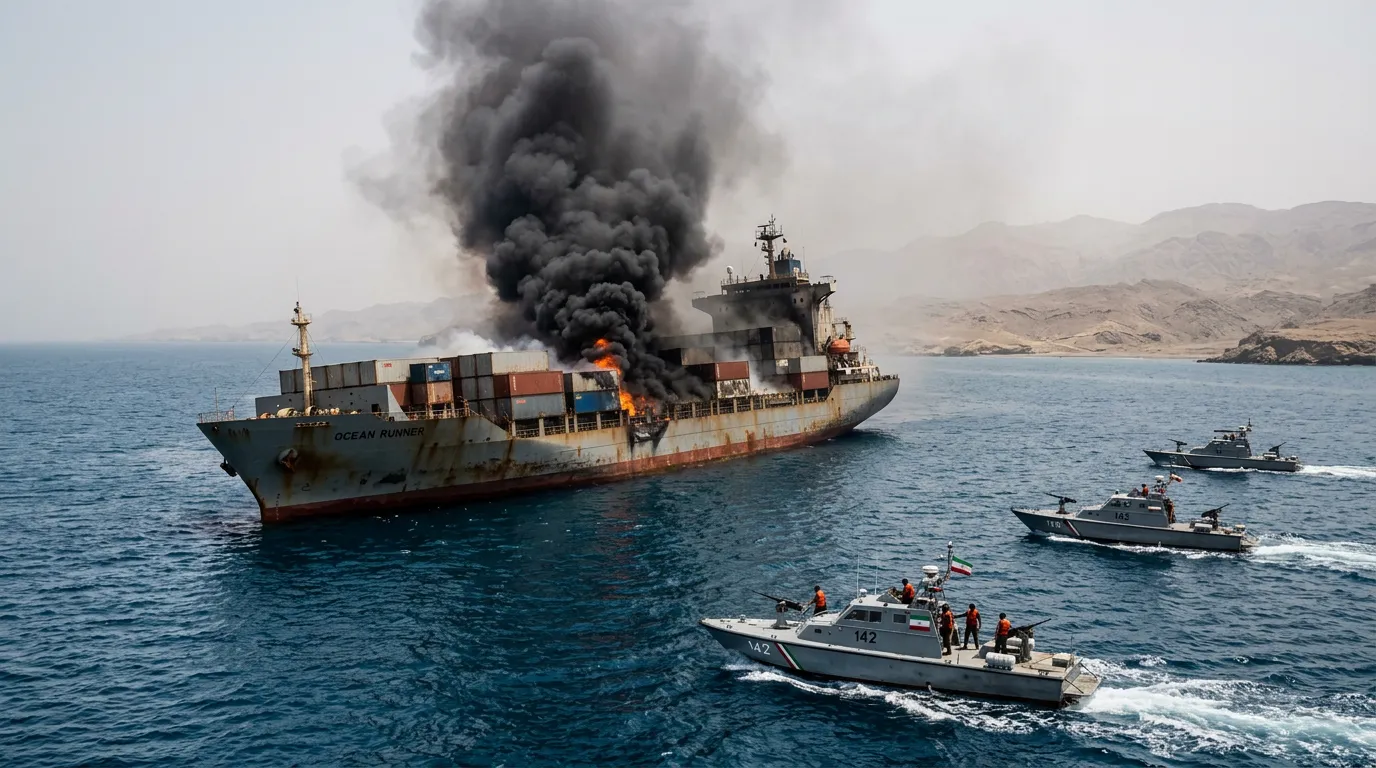
On day 12 of the U.S.-Israel military campaign against Iran, the conflict crossed a line that economists have feared since the first strikes landed on February 28. Three commercial vessels were hit by projectiles in the Strait of Hormuz on Wednesday, bringing the total number of ships attacked since hostilities began to at least 14. Iran's Islamic Revolutionary Guard Corps claimed responsibility for firing four missiles at U.S. military facilities in the region, including two targeting Camp Arifjan in Kuwait. But the ship attacks carry a different kind of significance. Military bases are hardened targets in a war zone. Commercial freighters transiting an international shipping lane are the circulatory system of the global economy. Attacking them is not just an act of war. It is a signal that Iran intends to make the entire world pay the cost of this conflict.
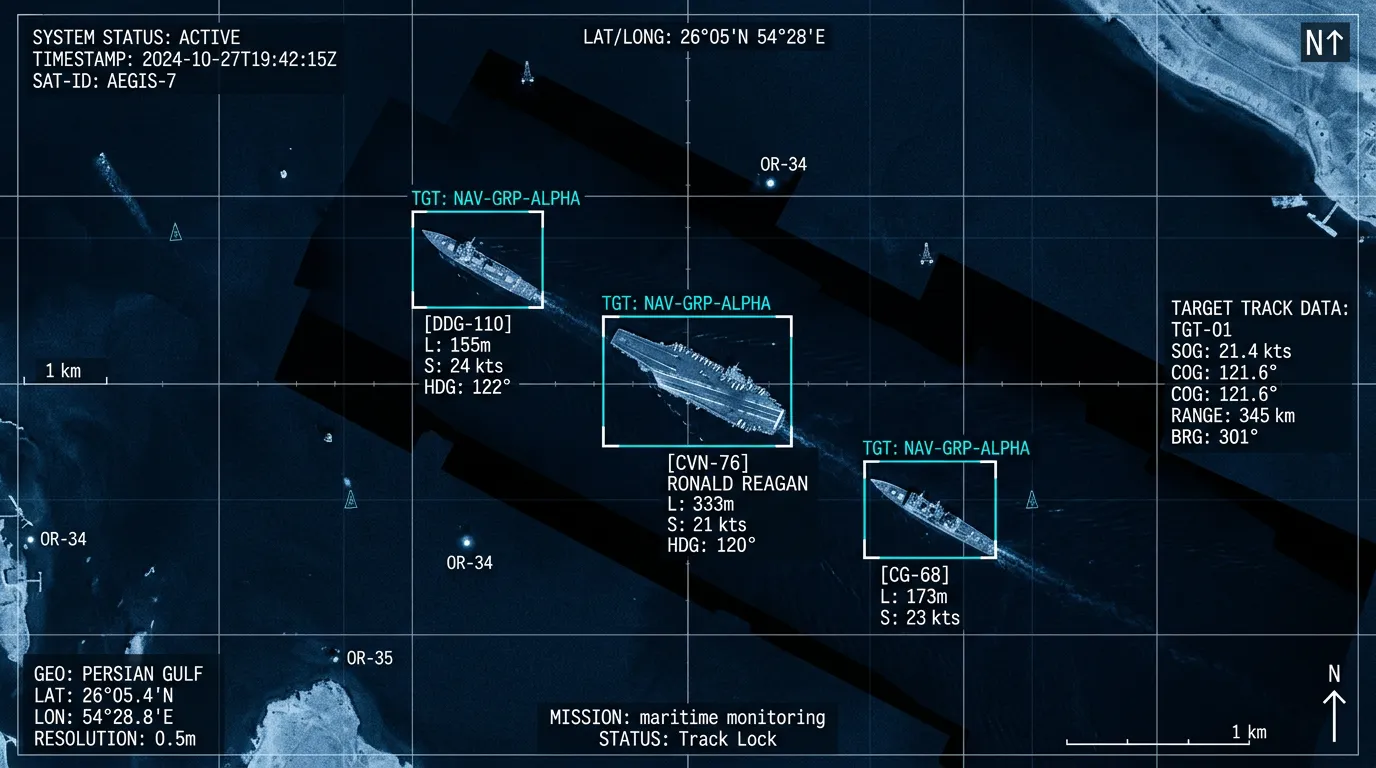
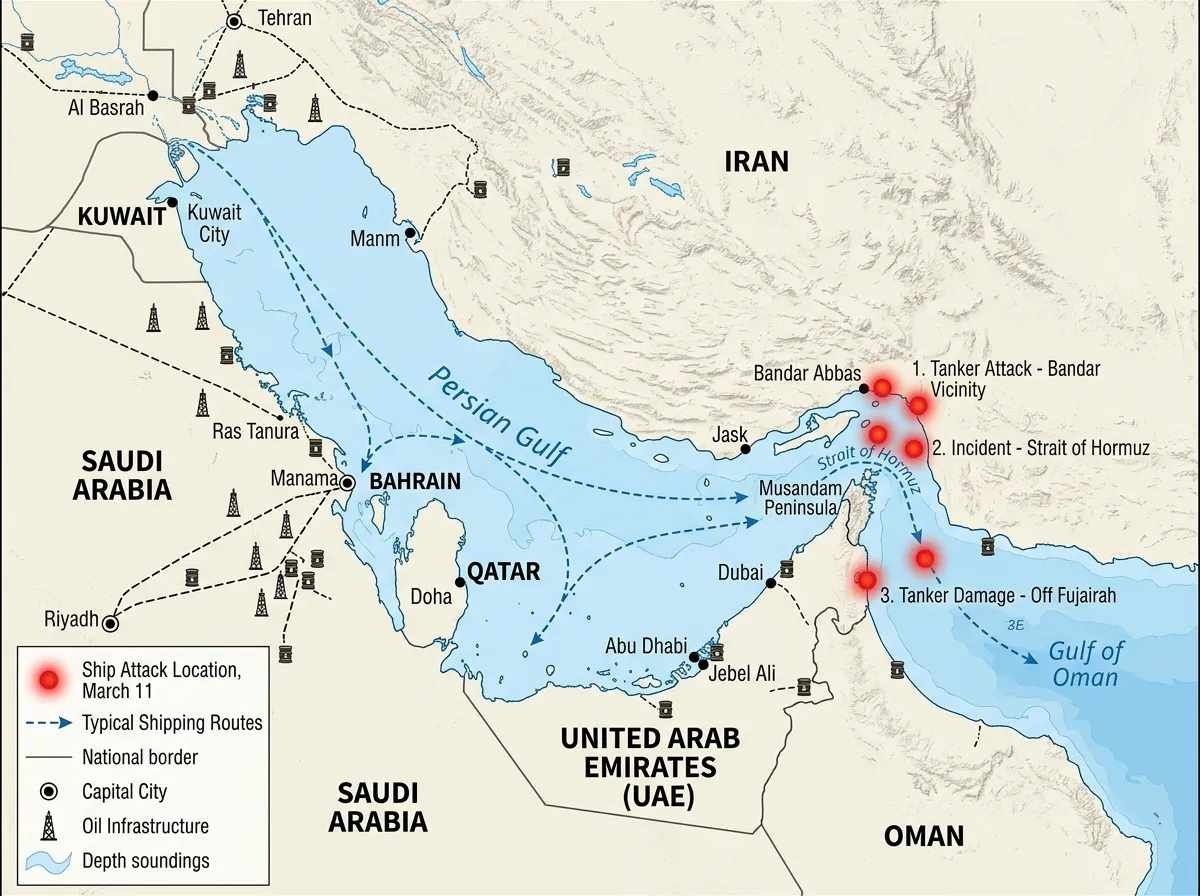
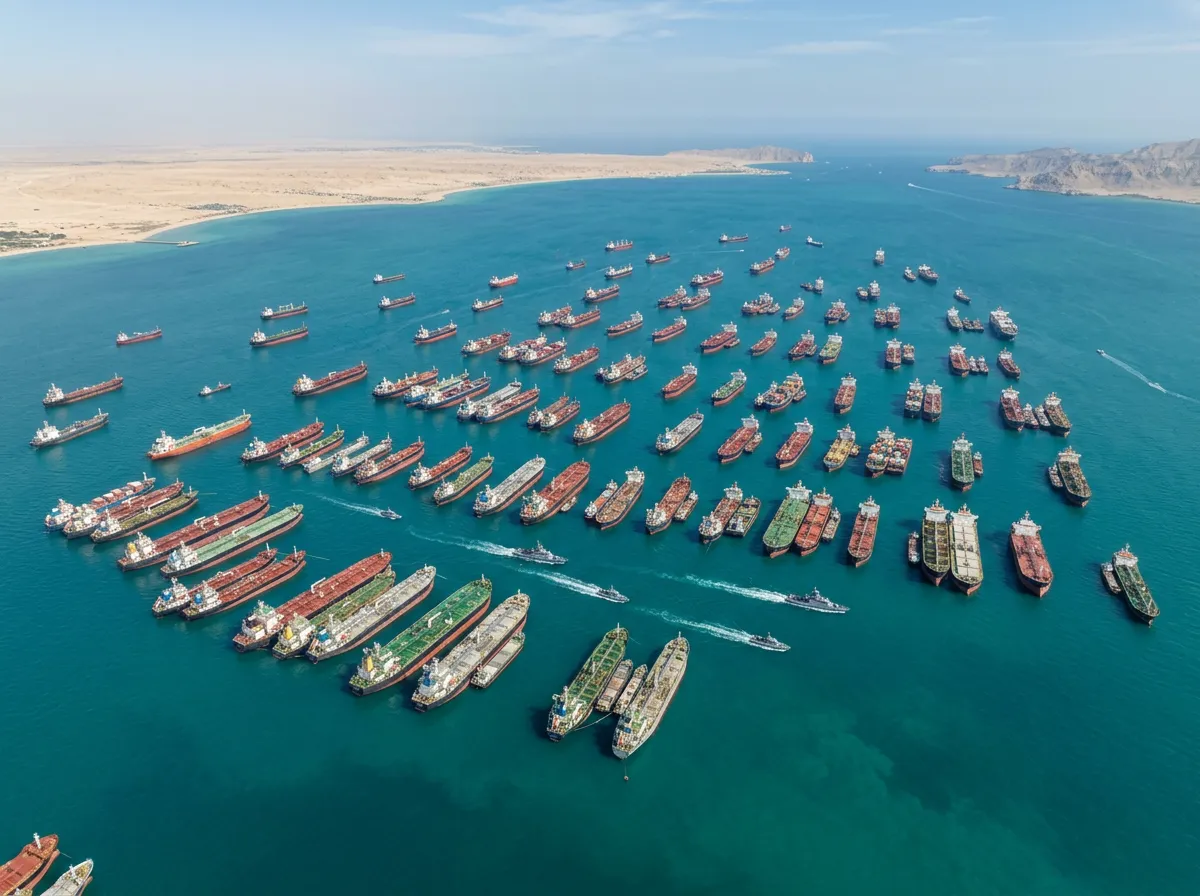
The Strait of Hormuz is a narrow waterway between Iran and Oman through which roughly 20 percent of the world's daily oil supply passes. When tanker traffic through the strait dropped by approximately 70 percent in the first week of fighting, with over 150 ships anchoring outside to avoid the risk, the disruption was already severe. Wednesday's attacks suggest the situation is getting worse, not better.
What Happened Wednesday
The UK Maritime Trade Operations office confirmed that three vessels were struck in separate incidents. A container ship was hit approximately 25 nautical miles northwest of the UAE's Ras Al-Khaimah, catching fire before the crew was evacuated safely. A bulk carrier was struck 50 nautical miles northwest of Dubai, sustaining damage but with no reported casualties. A third vessel, the Japan-flagged container ship One Majesty, sustained what officials described as minor damage from an unknown projectile.
The IRGC framed the attacks as part of its "37th wave" of retaliatory operations. Beyond the ship strikes, Kuwait's National Guard confirmed downing eight drones. Saudi Arabia destroyed five drones near its Shaybah oilfield. Qatar intercepted incoming missiles. Bahrain reported drone strikes that wounded dozens of civilians, including children. The geographic spread of these attacks, spanning five countries in a single day, illustrates the degree to which Iran has decided to expand the conflict's footprint beyond its own borders.
The 1987 Tanker War Parallel Nobody Wants to Acknowledge
The last time a Middle Eastern conflict systematically targeted commercial shipping was the Iran-Iraq Tanker War of 1984-1988, when both nations attacked oil tankers in the Persian Gulf to damage each other's export revenue. Over four years, more than 400 ships were damaged or destroyed, and the United States eventually intervened with Operation Earnest Will, a naval escort program for reflagged Kuwaiti tankers. That conflict provided a template for what happens when a regional war spills into commercial shipping lanes, and the current crisis is following the same pattern at an accelerated pace.
There are critical differences, however, that make today's situation more dangerous. In the 1980s, both sides primarily targeted tankers carrying the other's oil exports. Iran's current strategy appears to target any commercial vessel transiting the strait, regardless of flag, cargo, or destination. The indiscriminate nature of these attacks is what prompted insurance companies to withdraw protection and indemnity coverage for the region as of March 5, making the economic risk too high for most ship owners to justify passage. When insurers pulled out of the 1980s tanker war, it took months. This time, it took five days.
The speed of the insurance withdrawal reflects another difference: the global economy's tighter integration. In 1987, disruptions to Persian Gulf shipping affected oil prices and little else. In 2026, the Strait of Hormuz carries not just oil but liquefied natural gas shipments that supply Asian and European energy markets, container cargo linking Asian manufacturing to Middle Eastern and African consumers, and bulk commodities that underpin supply chains across multiple continents. The disruption ripples further and faster than it did four decades ago.
The Oil Price Shock and the Stagflation Scenario
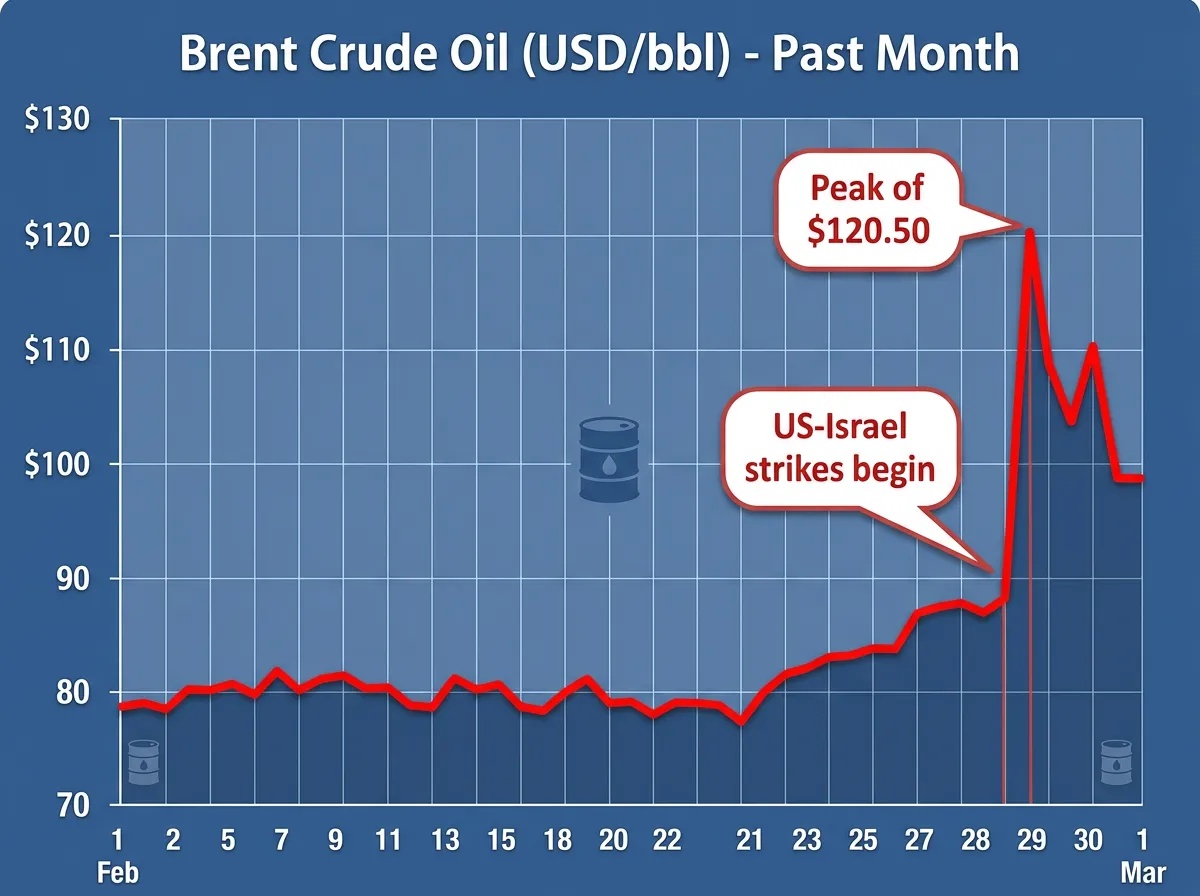
Brent crude briefly approached $120 per barrel during Sunday trading before retreating to around $100 by Wednesday. West Texas Intermediate reached approximately $90.90, marking a roughly 36 percent increase in a single week. Saudi Aramco's CEO warned that continued tanker transit problems "will have a serious impact on the global economy," a characteristically understated assessment from a company that controls the world's largest oil reserves.
The production cuts have been staggering. Iraq has slashed output by approximately 2.5 million barrels per day, equivalent to roughly 60 percent of its total production. Kuwait and the UAE have also reduced supply, with analysts at JPMorgan estimating that total regional production cuts could exceed 4 million barrels per day. UPI reported that some analysts believe crude could climb as high as $150 per barrel if the strait remains effectively closed, a price level that would trigger what economists call stagflation: rising prices combined with slowing economic growth.
According to analysis by the International Monetary Fund, every 10 percent rise in oil prices corresponds with a 0.4 percent rise in inflation and a 0.15 percent reduction in economic growth. A sustained move to $120 oil would represent a roughly 50 percent increase from pre-conflict levels, implying a two-percentage-point increase in inflation and a 0.75 percent drag on global GDP. Those numbers, if they materialize, would make this the most significant oil shock since the 1973 Arab embargo, which triggered a global recession that lasted nearly two years.
Who Bears the Cost and Who Profits
The economic pain from a prolonged Hormuz disruption will not be distributed evenly, and analyzing who benefits reveals the strategic calculus behind Iran's targeting decisions. Energy-importing nations in Asia, particularly Japan, South Korea, and India, face the most acute supply risk. Japan imports roughly 90 percent of its oil through the strait. South Korea imports approximately 70 percent. Both nations have strategic petroleum reserves, but those reserves are designed to cover weeks of disruption, not months.
European nations, still adjusting their energy infrastructure after reducing dependence on Russian gas, face a secondary shock. Natural gas prices in Europe have already risen 15 percent since the conflict began, and a prolonged disruption to LNG shipments through the Persian Gulf would force competition for alternative supplies from the United States, Australia, and Qatar, the latter of which is itself under direct military threat.
The clearest beneficiary is Russia. Moscow's oil exports bypass the Strait of Hormuz entirely, flowing through pipelines to China and Europe or via Arctic shipping routes. Every dollar increase in global oil prices boosts Russian revenue at a moment when the Kremlin is financing its ongoing war in Ukraine. As we reported last week, Russia has been sharing intelligence with Iran on American military positions, suggesting a level of strategic coordination that extends beyond passive benefit.
The UN Vote and What Diplomacy Cannot Fix
The UN Security Council prepared to vote on a Gulf Cooperation Council resolution demanding that Iran cease attacks on regional infrastructure and commercial shipping. The resolution faces near-certain vetoes from Russia and China, both of whom have blocked previous measures targeting Iran during this conflict. Even without a veto, a Security Council resolution lacks enforcement mechanisms that would change Iran's calculations. Tehran has already demonstrated willingness to absorb military strikes, economic isolation, and diplomatic condemnation without altering its retaliatory posture.
The fundamental problem diplomacy faces is that Iran's strategy is rational, if devastating. By targeting the strait, Tehran imposes costs on the entire global economy, not just the United States and Israel. This creates pressure on Washington from allied governments in Tokyo, Seoul, New Delhi, and European capitals who need the strait open for their own economic survival. Iran is betting that the economic pain it inflicts on American allies will translate into diplomatic pressure on Washington to de-escalate, a strategy borrowed directly from the 1973 Arab oil embargo playbook.
What This Changes
The Strait of Hormuz crisis has moved from a military conflict with economic side effects to an economic weapon with military support. Wednesday's attacks on three commercial vessels confirm that Iran has no intention of limiting its retaliation to military targets. The economic consequences are already measurable: a 36 percent spike in oil prices, production cuts exceeding 4 million barrels per day, and the effective closure of the world's most important oil transit route.
The key metric to track is not the military situation but insurance premiums. When marine war risk insurance was withdrawn on March 5, it removed the economic infrastructure that makes commercial shipping possible. Until those premiums return to levels that ship owners can absorb, the strait will remain functionally closed regardless of what happens on the battlefield. Based on the 1987-88 precedent, insurance companies did not resume Gulf coverage until a formal ceasefire was in place and naval escorts were guaranteed. Neither condition appears close to being met. If the IMF's oil-price-to-inflation model holds, consumers worldwide will begin feeling the impact within four to six weeks as higher energy costs cascade through supply chains into retail prices for food, transportation, and manufactured goods.
Sources
- Iran fires missiles, drones at Gulf nations as ship hit in Strait of Hormuz - Al Jazeera
- Oil could hit $150 as Hormuz disruptions raise stagflation fears - UPI
- Shutdown of Hormuz Strait raises fears of soaring oil prices - Al Jazeera
- As Oil Tankers Come Under Attack, Experts Fear for Global Trade Through Strait of Hormuz - TIME