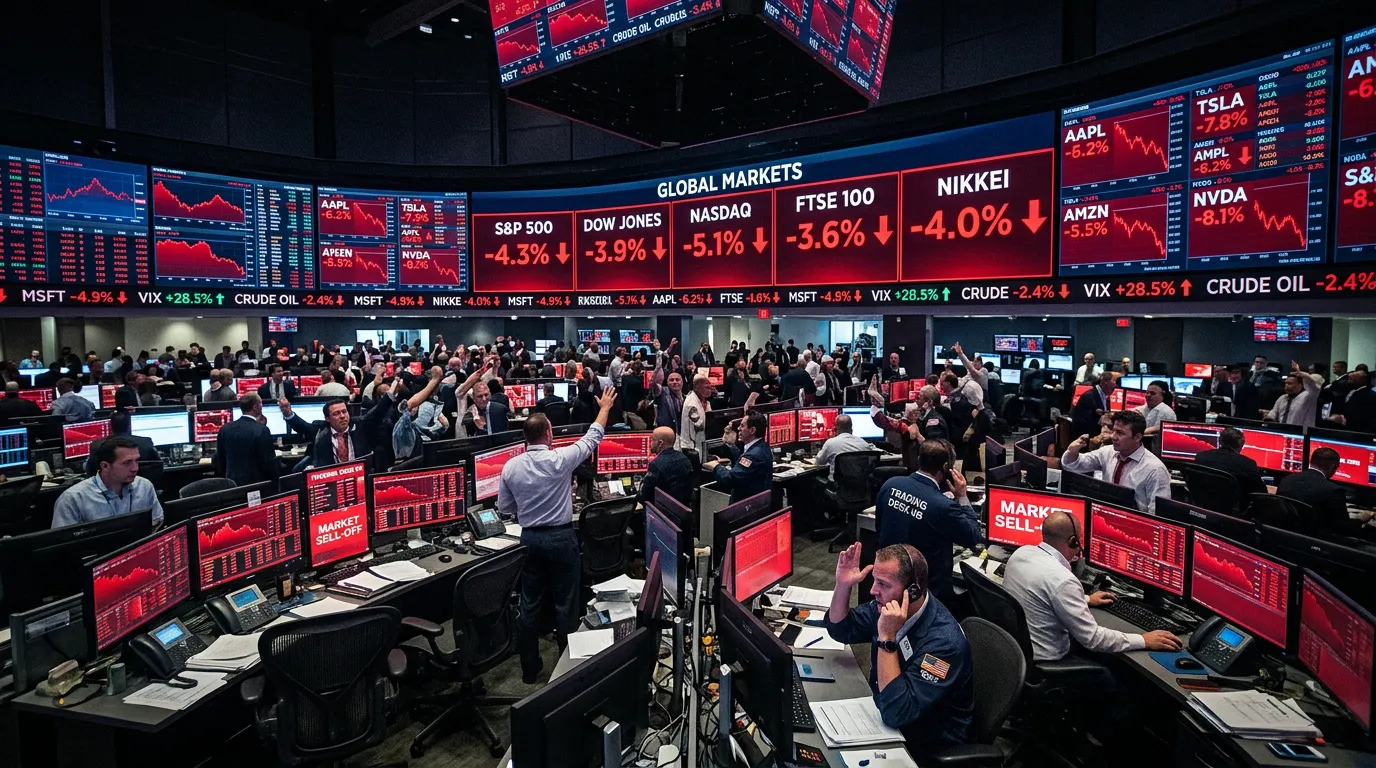
The Dow Jones Industrial Average fell more than 1,000 points in late-afternoon trading on Wednesday before recovering slightly to close down 785 points, a 1.6% decline that marks the index's worst single-day performance since the tariff-driven sell-off of April 2025. All 11 major S&P 500 sectors finished in the red, with Materials down more than 4.5%, tracking its worst session in nearly a year. The broad S&P 500 lost 1.2%, while the small-cap Russell 2000 dropped nearly 2%. This was not a reaction to any single headline. It was the market finally acknowledging that three separate forces, the U.S.-Iran military conflict, escalating trade policy uncertainty, and surging oil prices, are converging into a problem that cannot be absorbed through normal volatility.
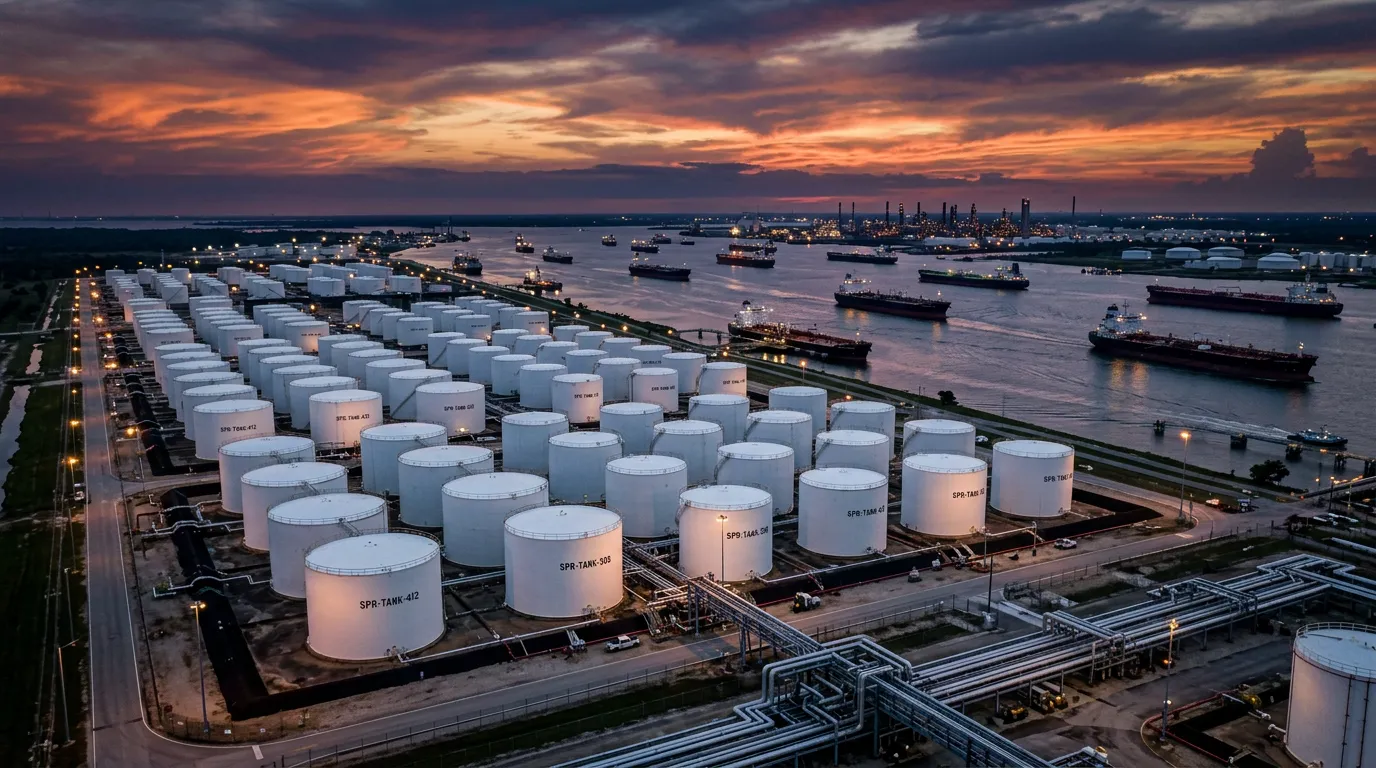
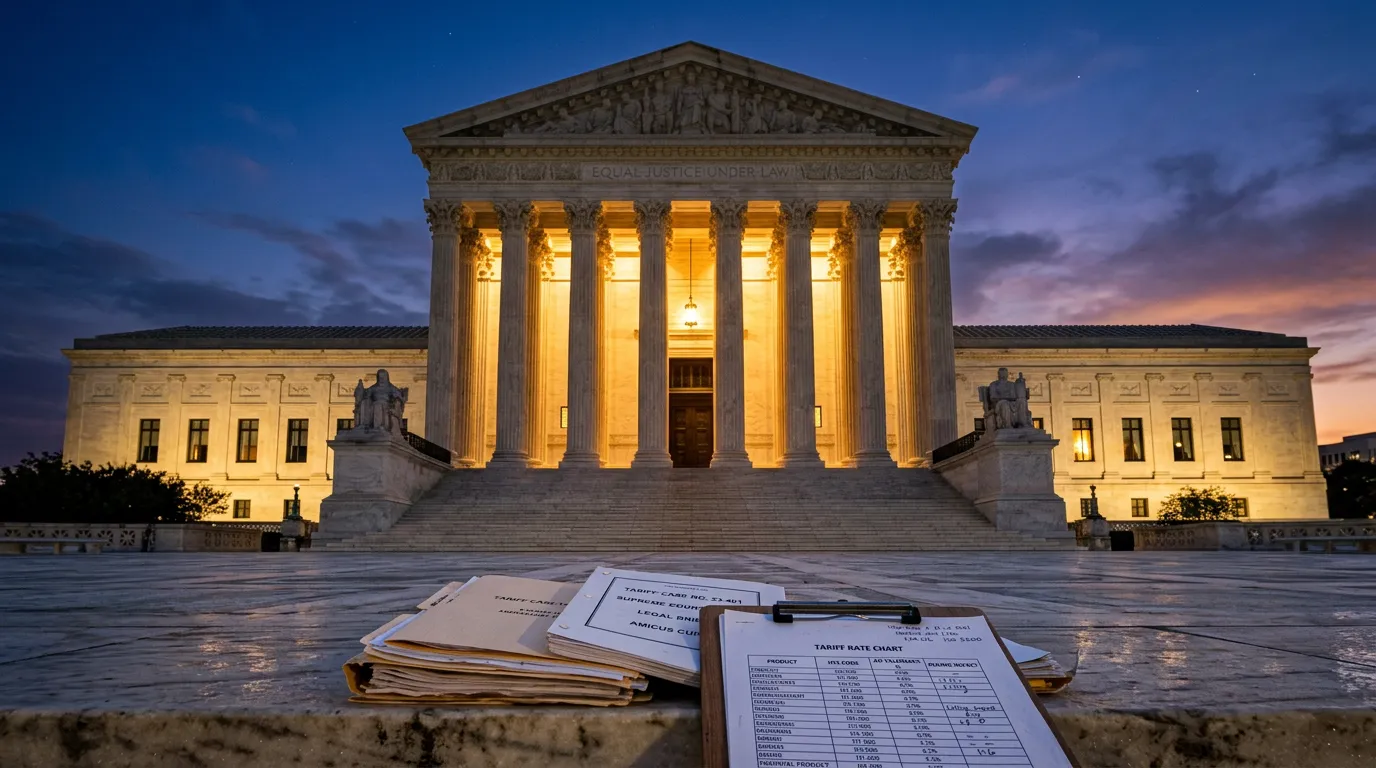
The sell-off arrived after a week in which investors had been trying to maintain the fiction that geopolitical disruption was temporary and containable. The U.S. and Israel's military campaign against Iran entered its seventh day on Wednesday, with strikes hitting targets in Tehran, southern Beirut, and Iranian military installations. Oil prices spiked above $95 per barrel. At the same time, the Trump administration's tariff posture continued to generate uncertainty, with new duties on Chinese semiconductors taking effect this month and retaliatory measures from Beijing expected within weeks. The market had been slowly pricing in each of these risks individually. On Wednesday, it priced them in together.
The Three-Front Problem Wall Street Cannot Solve
Each of the three forces pushing markets lower would be manageable in isolation. A regional military conflict creates oil price spikes and defense sector rotations, but markets have historically absorbed Middle Eastern conflicts within weeks. Tariff escalation creates winners and losers across sectors but does not typically produce broad sell-offs unless it threatens to tip the economy into recession. And elevated valuations, the third factor analysts keep citing, are a background condition, not a catalyst. The problem is that all three are happening simultaneously, and each one amplifies the others.
Rising oil prices driven by the Iran conflict act as a de facto tax on consumers and businesses, which compounds the inflationary pressure already created by tariffs. The tariffs themselves make it harder for companies to manage the cost increases from energy prices, because supply chain alternatives are either unavailable or more expensive under the current trade regime. And elevated stock valuations mean that the market has less cushion to absorb negative shocks, because earnings expectations were already priced for a best-case scenario that no longer exists.
This three-front dynamic is why Wednesday's sell-off was broader and deeper than the individual headlines would suggest. It is also why the standard Wall Street advice to "buy the dip" may not apply here. The dip is not driven by a single resolvable event. It is driven by the intersection of structural forces that will take months, not days, to work through.

The 2003 Iraq Parallel, and Why This Time Looks Worse
When the United States invaded Iraq in March 2003, the S&P 500 had already been declining for months amid pre-war uncertainty. The index hit its lowest point on March 11, 2003, just days before the invasion began, and then rallied sharply as the initial military campaign appeared swift and successful. By the end of 2003, the S&P 500 had gained more than 26% from its March low. The lesson Wall Street took from that episode is that markets sell the rumor and buy the news, and that military conflicts create buying opportunities.
That framework does not apply to the current situation, and the differences are instructive. The 2003 Iraq invasion was a planned, unilateral military action with a clear initial objective: regime change. Markets could model the scenarios. The conflict was also occurring in a low-interest-rate environment with minimal trade friction, meaning the economic backdrop was supportive even as geopolitical risk spiked. The current U.S.-Iran conflict has none of those characteristics. It lacks a defined end state, involves a country with significantly more military capability than Saddam Hussein's Iraq, and is occurring against a backdrop of active trade wars with multiple countries and interest rates that remain historically elevated.
The oil price comparison is equally unfavorable. In 2003, oil was trading below $40 per barrel when the invasion began, and the price spike was absorbed by an economy with significant spare capacity. Oil above $95 in 2026 hits an economy already dealing with tariff-driven inflation and consumer spending that has been softening since the fourth quarter of 2025. The Federal Reserve's options are also more constrained. In 2003, the Fed could cut rates to support the economy through a geopolitical shock. Today, with inflation still above target and the Fed already under political pressure not to raise rates further, the central bank has fewer tools available.
The bottom line from this historical comparison is straightforward: the 2003 playbook of buying the military-conflict dip assumed a supportive economic backdrop. That backdrop does not exist in 2026.
What the Sector Breakdown Tells Us About Investor Sentiment
The breadth of Wednesday's sell-off is as significant as its depth. When markets decline on geopolitical news, the typical pattern is a flight to safety: defense stocks rise, consumer staples hold steady, and the pain concentrates in cyclical sectors. Wednesday's trading did not follow that pattern. While Materials and Industrials led the losses, as expected given their exposure to tariffs and commodity costs, Consumer Discretionary also fell more than 2%, and even traditionally defensive sectors like Utilities and Healthcare posted losses exceeding 1%.
This across-the-board selling suggests that institutional investors are not simply repositioning within equities but reducing overall exposure. The CBOE Volatility Index spiked above 25, its highest level since the April 2025 tariff shock, confirming that options markets are pricing in elevated risk across the board. "This is not sector rotation, this is risk reduction," noted Gregory Peters, co-chief investment officer at PGIM Fixed Income, in an interview with CNBC on Wednesday. That distinction matters because sector rotation resolves itself as clarity emerges. Risk reduction creates a self-reinforcing cycle where selling begets more selling as margin calls and stop-loss orders trigger additional liquidation.
The only meaningful bright spot was the bond market, where Treasury yields fell as investors sought safety, and gold, which hit $2,740 per ounce. Both moves confirm the risk-off narrative rather than complicating it.
Congress, the Fed, and the Limits of Policy Response
The market sell-off is occurring at a moment when the two institutions with the most power to respond, Congress and the Federal Reserve, are both constrained. Congress passed a resolution this week authorizing the use of military force against Iran with broad bipartisan support, a vote that critics argued amounted to a blank check for an open-ended conflict. That authorization removes one avenue for de-escalation: the possibility that Congress might force the administration to seek a diplomatic resolution by withholding military funding. With the authorization in place, the market has no near-term political catalyst for de-escalation to price in.
The Federal Reserve faces its own constraints. Chair Jerome Powell has repeatedly stated that the Fed will not raise or lower rates in response to geopolitical events, focusing instead on economic data. But the data itself is being distorted by the very forces driving the sell-off. Tariffs push prices higher, making the inflation data look hotter. Military conflict disrupts supply chains and energy markets, creating the kind of cost-push inflation that rate hikes cannot effectively address. And consumer confidence, already weakened by months of trade uncertainty, is vulnerable to further deterioration if the conflict in the Middle East escalates.

The Outlook
Wednesday's sell-off was not a panic, but it was a warning. The market is telling investors that the convergence of military conflict, trade friction, and elevated valuations has created a risk environment that simple diversification cannot solve. The three forces driving losses are interconnected: the Iran conflict raises oil prices, which amplifies the inflationary impact of tariffs, which constrains the Fed's ability to respond, which leaves asset prices exposed.
The key metric to watch over the next two weeks is oil. If crude stays above $90 per barrel for more than 10 trading days, the energy cost shock will begin showing up in consumer price data by late March, forcing the Fed into a position where it must choose between tolerating higher inflation and risking a rate hike into geopolitical uncertainty. Based on current production levels and the likelihood that Iranian oil exports remain disrupted for the duration of the military campaign, the probability of sustained prices above $90 is high. For investors, the practical implication is that the floor for this sell-off has not been established. Markets will not find stable footing until at least one of the three forces, war, tariffs, or oil, shows signs of resolution. None of them will by the end of March.