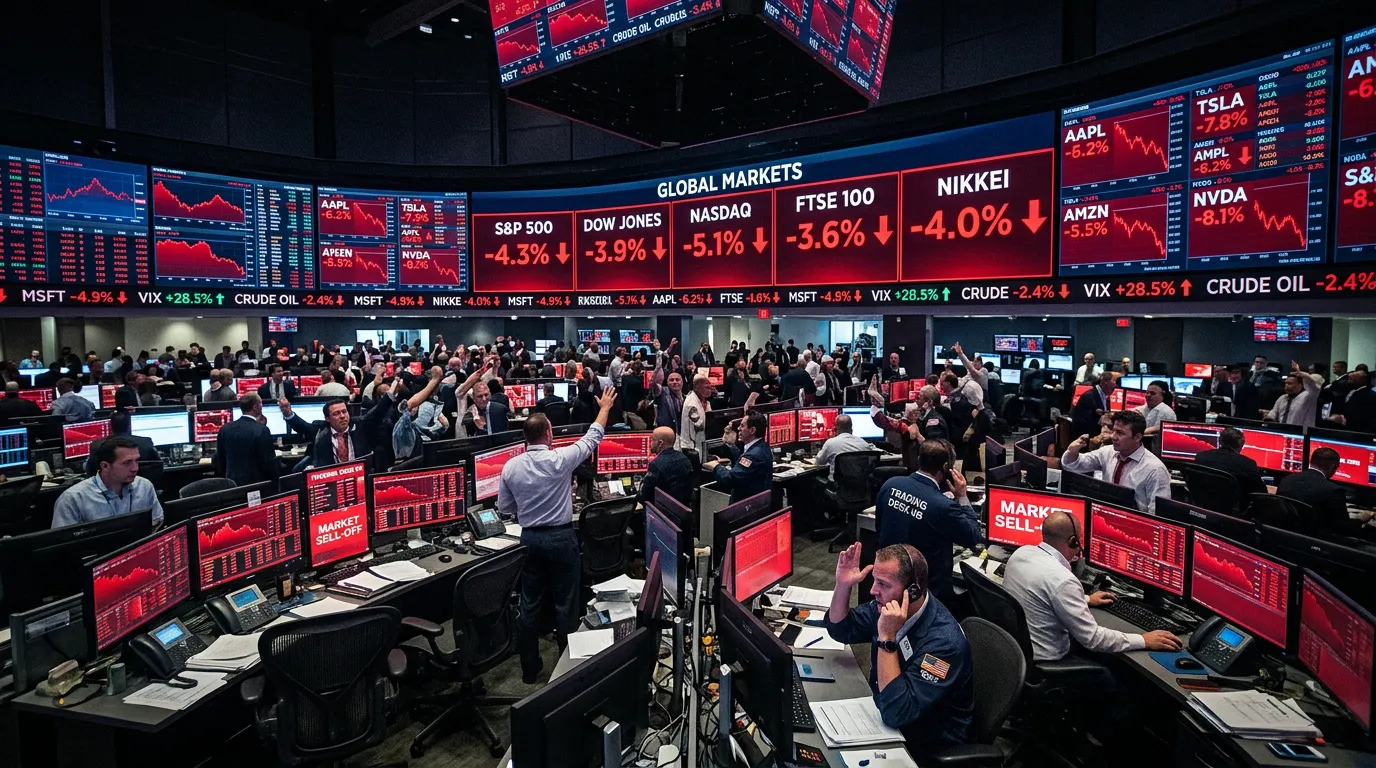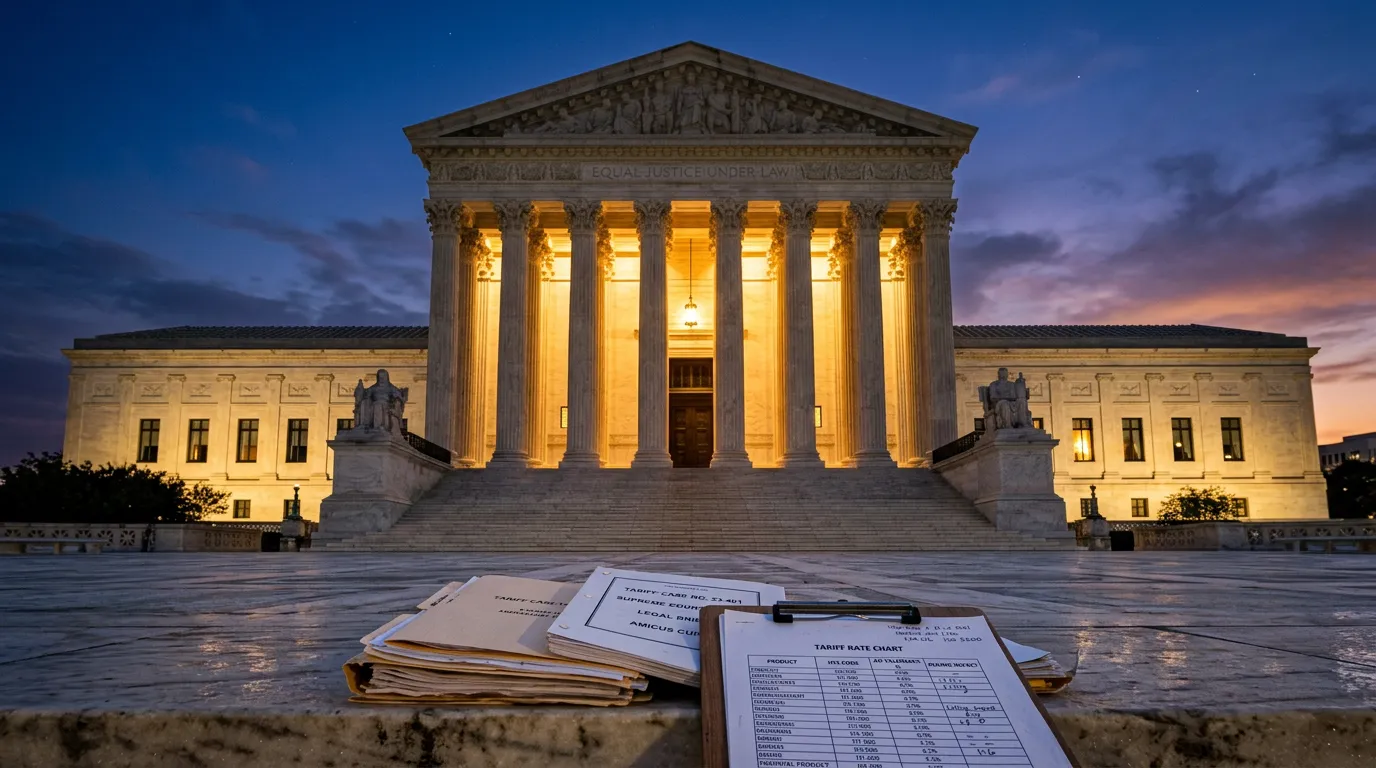
The Supreme Court handed Donald Trump the most significant legal defeat of his second term on February 20, and it took him roughly four hours to find a workaround. In a 6-3 decision, the justices ruled that the International Emergency Economic Powers Act does not give the president authority to impose tariffs. By that evening, Trump had signed an executive order invoking Section 122 of the Trade Act of 1974, imposing a 10% global tariff effective February 24. By Saturday, he raised it to 15%.
The speed of that pivot tells you everything about where this fight is actually headed. The Supreme Court answered a narrow legal question about statutory authority. The broader question, whether any president can unilaterally reshape American trade policy, remains very much open.
What the Court Actually Said
The ruling in Learning Resources, Inc. v. Trump was clearer than most Supreme Court trade cases. Chief Justice John Roberts, writing for a six-justice majority that included Sotomayor, Kagan, Gorsuch, Barrett, and Jackson, held that IEEPA's language authorizing the president to "regulate" commerce during national emergencies does not extend to imposing tariffs. "IEEPA contains no reference to tariffs or duties," Roberts wrote. "The Government points to no statute in which Congress used the word 'regulate' to authorize taxation."
The reasoning centered on a straightforward principle: tariffs are taxes, and the Constitution gives Congress the power to tax. No president had ever read IEEPA as granting tariff authority until Trump's second term. A narrower three-justice plurality, Roberts joined by Gorsuch and Barrett, went further, invoking the major questions doctrine to argue that such sweeping economic power requires "clear congressional authorization."
Justice Brett Kavanaugh, joined by Clarence Thomas and Samuel Alito, dissented, arguing that IEEPA's broad language and historical practice supported presidential trade authority. Thomas wrote a separate dissent emphasizing executive power in foreign affairs.

The Section 122 Gambit
Trump's response came with striking speed. The executive order, signed the same day, declared that the United States faces "fundamental international payments problems" under Section 122 of the Trade Act of 1974. That provision allows the president to impose temporary import restrictions to address balance-of-payments deficits or imminent dollar depreciation.
There's a problem with that logic. Section 122 was written for a world that no longer exists. The provision dates to the Bretton Woods era, when currencies were pegged to the dollar and the dollar was pegged to gold. Under a fixed exchange rate system, balance-of-payments crises were real and potentially catastrophic. The modern floating exchange rate system, in place since 1973, largely eliminates the classic balance-of-payments problem that Section 122 was designed to address.
The tariff rate itself carries limits the administration may find uncomfortable. Section 122 caps tariffs at 15% and limits their duration to 150 days without congressional approval. Trump's initial 10% rate, quickly raised to the statutory maximum of 15%, suggests the White House is already pushing the boundaries of this authority.
The effective tariff rate tells the story in numbers. Without the IEEPA tariffs, the US effective tariff rate sits at roughly 9.1%, already the highest since 1946. With the Section 122 tariffs at 15%, that rises to an estimated 13.7%. The administration exempted critical minerals, energy products, pharmaceuticals, passenger vehicles, beef, and tomatoes, a carve-out list that reveals which price increases the White House fears most.
Why the Legal Path Forward Is Murkier Than It Looks
The conventional reading of the ruling is that the Supreme Court reasserted congressional authority over trade. That reading is correct but incomplete. What the Court did not address is whether other statutory authorities, beyond IEEPA and Section 122, might survive judicial scrutiny.
The administration has already signaled interest in Section 338 of the Tariff Act of 1930, which allows tariff retaliation against countries that discriminate against American commerce. Unlike Section 122, Section 338 has no explicit rate cap and no built-in time limit. The legal challenge there would focus on whether Trump can characterize trade deficits as "discrimination," a stretch that echoes the same kind of expansive reading the Court just rejected under IEEPA.
There's a historical parallel worth considering. When Franklin Roosevelt was blocked by the Supreme Court on New Deal programs in the 1930s, his response was not to accept the rulings but to find alternative legal pathways while simultaneously pressuring the Court. The "switch in time that saved nine" reflected a broader political reality: constitutional boundaries on economic power are ultimately enforced through politics as much as law. Trump appears to be following a similar playbook, testing one authority after another until he finds one that sticks or until Congress acts.
The Consumer Math Nobody in Washington Wants to Discuss
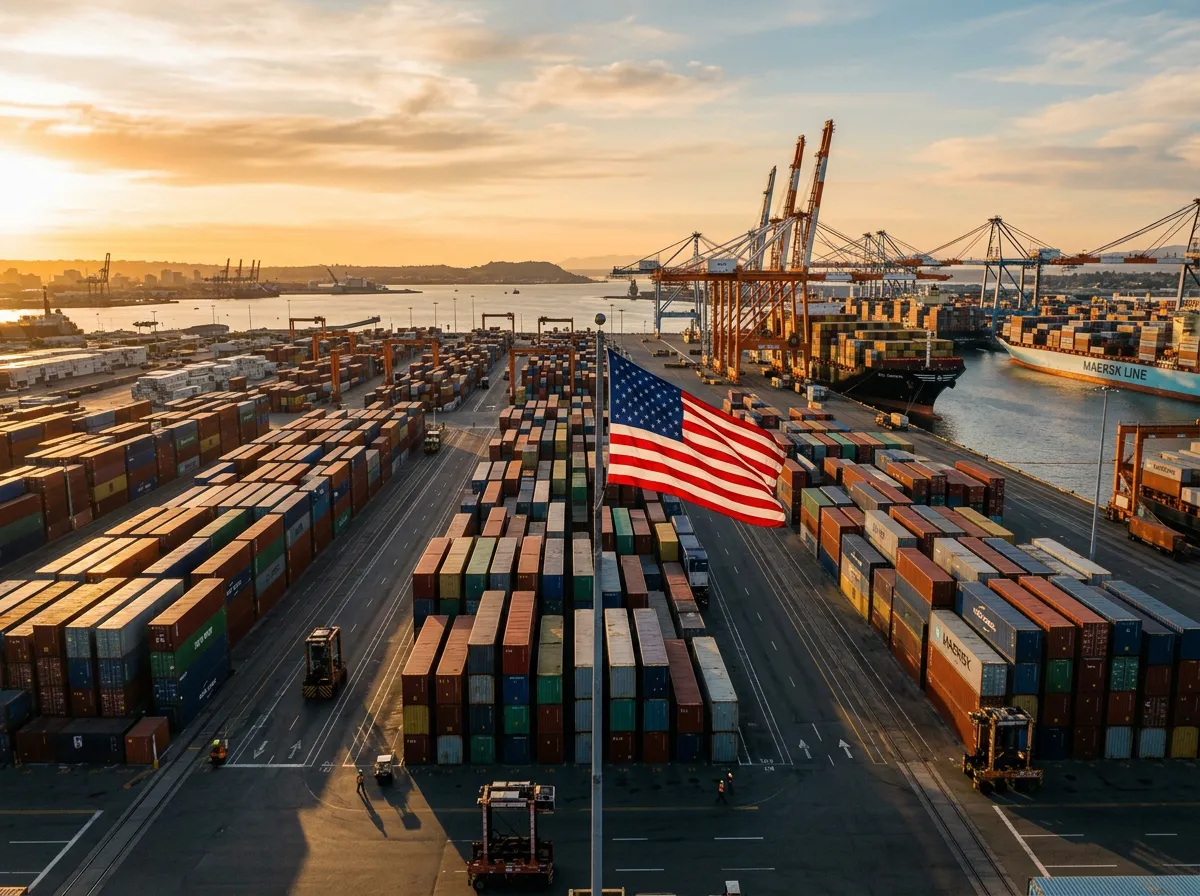
Here is what gets lost in the legal chess match: tariffs are paid by American importers, who pass the costs to American consumers. This is not an opinion; it is the consistent finding of economists across the political spectrum, from the Tax Foundation to the Peterson Institute to the Federal Reserve Bank of New York.
At the current 15% Section 122 rate, the average American household faces an estimated annual cost increase of $1,200 to $1,800, depending on purchasing patterns. That figure is lower than the roughly $2,400 projected under the struck-down IEEPA tariffs, but it is not zero, and it hits lower-income households disproportionately. Clothing, electronics, furniture, and household goods carry the heaviest tariff burden because those categories rely most on imports.
The exemption list tells a political story. By excluding gasoline, cars, and groceries like beef and tomatoes, the administration is shielding the most visible consumer prices while maintaining tariffs on goods that feel less immediate but still add up. Americans may not notice a $15 increase on a $200 piece of furniture, but they would notice $4 gas. The White House knows this.
China's position has strengthened through this episode. Beijing had already been diversifying trade routes and building relationships with countries in the EU-Mercosur trade bloc, positioning itself to absorb trade disruptions more effectively than during Trump's first-term tariff wars. China's record $1.2 trillion trade surplus in 2025 demonstrated that the previous round of tariffs redirected trade flows without reducing China's overall export volume.
What Happens When the Clock Runs Out
Section 122's 150-day limit creates a hard deadline: July 24, 2026. Unless Congress extends the tariffs, which would require legislation that would face Democratic opposition, they expire automatically. The administration has three paths forward.
First, it can seek congressional authorization for permanent tariffs. With Republicans holding narrow majorities in both chambers, this is possible but politically treacherous. Many Republican members represent districts that rely on imported goods or export-dependent agriculture, and midterm elections are nine months away.
Second, it can invoke yet another statutory authority. Section 338 and Section 301, which allows tariffs in response to unfair trade practices, are the most likely candidates. Both face their own legal vulnerabilities, but any challenge would take months to reach the Supreme Court.
Third, it can use the 150-day window as leverage to negotiate bilateral trade agreements. This is the approach most trade experts consider most likely, and potentially most productive. A temporary tariff creates urgency without the economic damage of a permanent trade wall.
The Bigger Story
The Supreme Court's tariff ruling will be remembered less for what it struck down than for what it revealed. American trade policy has operated for decades on statutory authorities that were never designed for their current use. Congress delegated trade powers to the executive branch during the Cold War and never fully reclaimed them. The Court has now drawn one boundary. The question is whether it will need to draw more, or whether Congress will reassert itself before the judiciary is forced to act again.
Based on the administration's pattern of rapid legal pivots, the next challenge is likely to arrive at the Court within 12 months. The 6-3 majority on IEEPA authority was decisive, but the narrower 3-3-3 split on the major questions doctrine signals that future cases on presidential trade power will be closer calls. The July 24 expiration of Section 122 tariffs is the date that matters. What happens before it will determine whether this ruling marks a genuine shift in trade policy or simply a detour.