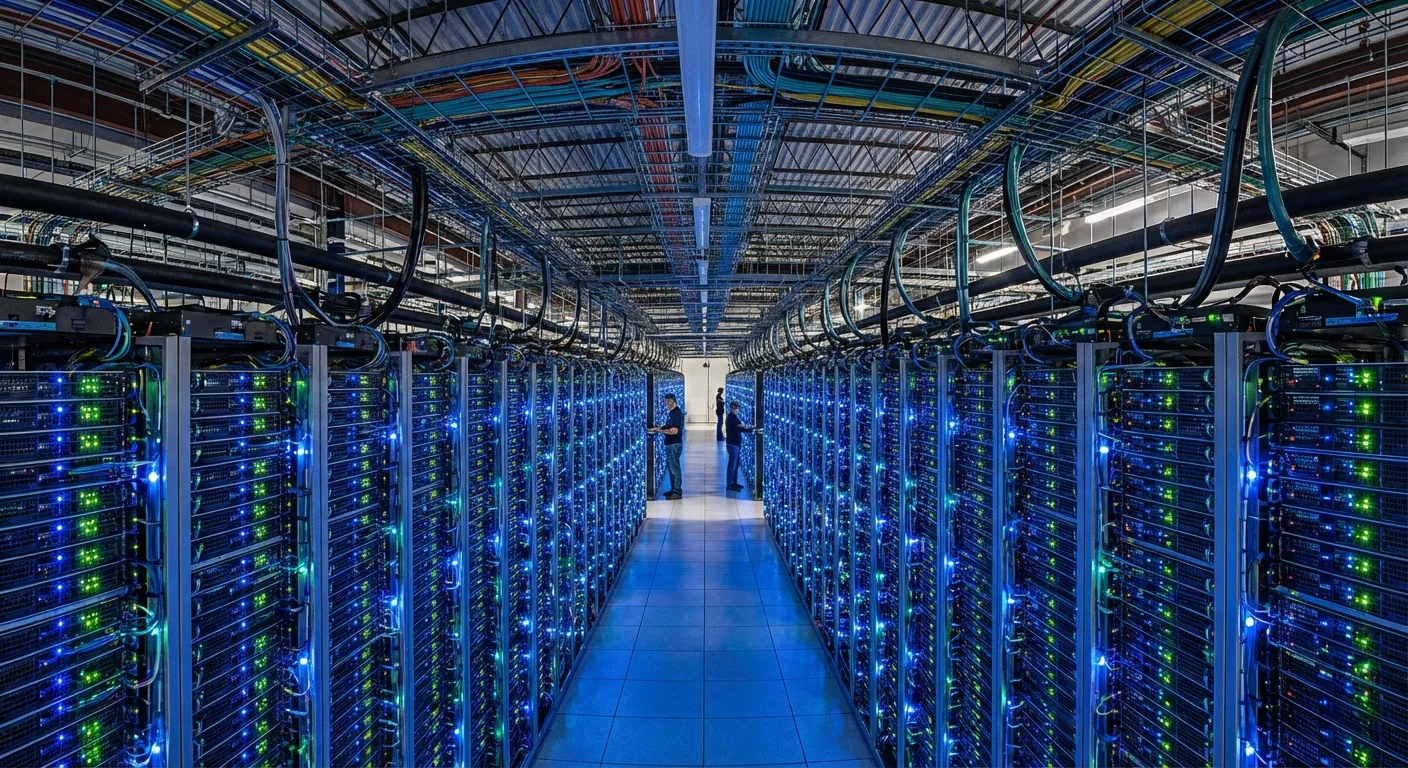
The number is staggering enough that it's worth pausing on: $2.52 trillion. That's Gartner's updated forecast for global spending on artificial intelligence in 2026, released in late January, representing a 40% increase from the $1.8 trillion estimated for 2025. To put that in perspective, it's roughly equal to the entire GDP of France. In a single year. On a technology that most companies are still figuring out how to use.
The acceleration caught even the analysts off guard. Gartner's mid-2025 projection had pegged 2026 spending at $2.1 trillion. The upward revision reflects a combination of factors: faster-than-expected enterprise adoption, infrastructure buildouts running ahead of schedule, and a spending arms race among tech giants that shows no signs of slowing down. The question isn't whether the money is flowing. It's whether it's flowing to the right places.
The Infrastructure Layer Takes the Biggest Share
If you picture AI spending as a three-layer cake, the bottom layer, infrastructure, is by far the thickest. Data centers, chips, cooling systems, and power generation account for an estimated $1.1 trillion of the total, nearly half of all AI spending in 2026.
This isn't glamorous work. It's construction, manufacturing, and energy procurement. But it's where the bottleneck has been. Training and running large AI models requires computational resources at a scale that most existing data center capacity simply can't support. The result has been a building boom that rivals anything the tech industry has seen.
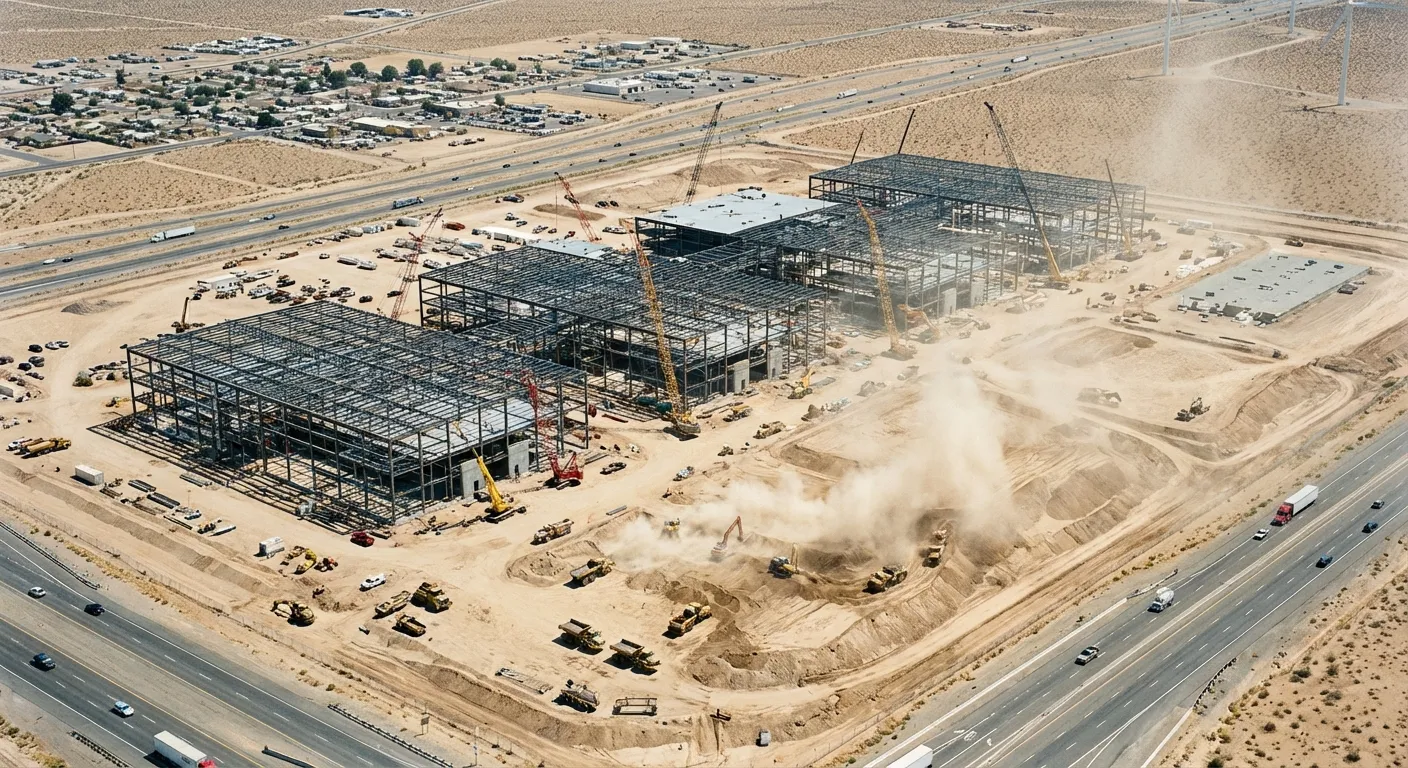
Meta's nuclear power plans, Microsoft's partnership with Constellation Energy, and Amazon's data center expansion across Virginia and Oregon are the headlines. But the spending extends far beyond tech giants. Utility companies, real estate developers, construction firms, and semiconductor manufacturers are all seeing AI-driven demand reshape their businesses. John Byrne, Dell Technologies' president of infrastructure solutions, told Bloomberg in January that "every conversation with enterprise customers now starts with AI infrastructure. Two years ago, it was an afterthought."
The chip market alone tells the story. NVIDIA reported record revenue of $44 billion in its most recent quarter, driven almost entirely by AI chip sales. TSMC, which manufactures chips for NVIDIA, Apple, and most other major chipmakers, has seen its order books fill beyond capacity. AMD, Intel, and a wave of custom chip startups are all chasing the same demand. CesiumAstro, which raised $470 million in January for satellite communications hardware, illustrates how AI infrastructure spending is rippling into adjacent sectors that support connectivity and data transmission.
The infrastructure boom carries an energy cost that is becoming harder to ignore. The International Energy Agency estimated in December 2025 that data centers consumed 4.5% of global electricity, up from 2% in 2022, with AI workloads driving most of the increase. Microsoft's own sustainability report disclosed that its data center electricity consumption grew 34% year over year in fiscal 2025, pushing its total carbon emissions upward even as the company committed to going carbon-negative by 2030. The rush to secure nuclear power, natural gas, and even coal-fired generation for new AI facilities reflects a pragmatic calculation across the industry that growth trumps sustainability timelines, at least for now.
The Software Layer: Where the Margins Are
Software and services account for roughly $850 billion of the forecast, the layer where profit margins are highest and competition fiercest. This includes the AI models themselves, the enterprise platforms built on top of them, and the consulting services that help companies deploy everything.
The enterprise AI platform market is where the fiercest battles are playing out. OpenAI's recent Frontier platform launch targets this segment directly, competing with Microsoft Copilot, Google's Gemini enterprise tools, Salesforce Agentforce, and a deep bench of specialized vendors. Each is betting that enterprise customers will consolidate their AI spending on a small number of platforms rather than stitching together dozens of point solutions.
Consulting firms have been among the quieter beneficiaries. Accenture, Deloitte, McKinsey, and their peers have built large AI practices that help companies navigate vendor selection, implementation, and change management. Accenture alone reported $3 billion in AI-related bookings in its most recent quarter, according to its earnings call. Companies are willing to pay premium rates for help deploying technology they don't fully understand, which describes most organizations' relationship with AI in 2026.
Who's Spending and Why
The geographic distribution of AI spending remains heavily concentrated. The United States accounts for approximately 45% of the global total, followed by China at roughly 20%, and the European Union at around 15%. The remaining 20% is spread across Japan, South Korea, the Middle East, and emerging markets.
By industry, financial services leads in per-company spending, driven by algorithmic trading, fraud detection, and customer service automation. Healthcare is the fastest-growing sector by percentage, though it starts from a smaller base. Manufacturing, logistics, and energy round out the top five, with each sector pursuing AI for different reasons: predictive maintenance, supply chain optimization, and energy grid management, respectively.

The motivations are shifting too. In 2024, most companies described their AI spending as experimental or exploratory. By early 2026, Gartner's survey data shows that 62% of large enterprises classify AI as a "strategic priority" tied to revenue growth or cost reduction, up from 38% a year earlier. Frances Karamouzis, a Gartner distinguished VP analyst, said the shift reflects "a move from 'What can AI do?' to 'What happens to us if our competitors deploy AI and we don't?'"
That competitive anxiety is real, but it also introduces risk. When spending is driven by fear of falling behind rather than clear ROI calculations, some of that $2.52 trillion will inevitably be wasted. The ongoing debate about whether AI investment is a bubble hasn't been resolved by the spending surge. If anything, the acceleration makes the question more urgent.
The Outlook
The $2.52 trillion figure represents a bet, collectively placed by thousands of companies, that AI will transform enough of the economy to justify the investment. Some of that bet will pay off handsomely. Infrastructure spending on chips and data centers supports real computational needs that aren't going away. Enterprise software that demonstrably reduces costs or increases revenue will find buyers. But some portion of the spending will prove premature, misallocated, or simply wasted on technology that doesn't deliver what the sales pitch promised. The difference between a productive technology transition and a speculative bubble often comes down to how large that wasted portion turns out to be.
Sources
- Gartner Says Worldwide AI Spending Will Total $2.5 Trillion in 2026 - Gartner, January 2026
- The $3 Trillion AI Data Center Build-Out Becomes All-Consuming for Debt Markets - Bloomberg, February 2026
- Energy demand from AI: Energy and AI report - International Energy Agency
- NVIDIA Announces Financial Results for Third Quarter Fiscal 2026 - NVIDIA Newsroom, November 2025
- Accenture Reports First-Quarter Fiscal 2026 Results - Accenture, December 2025