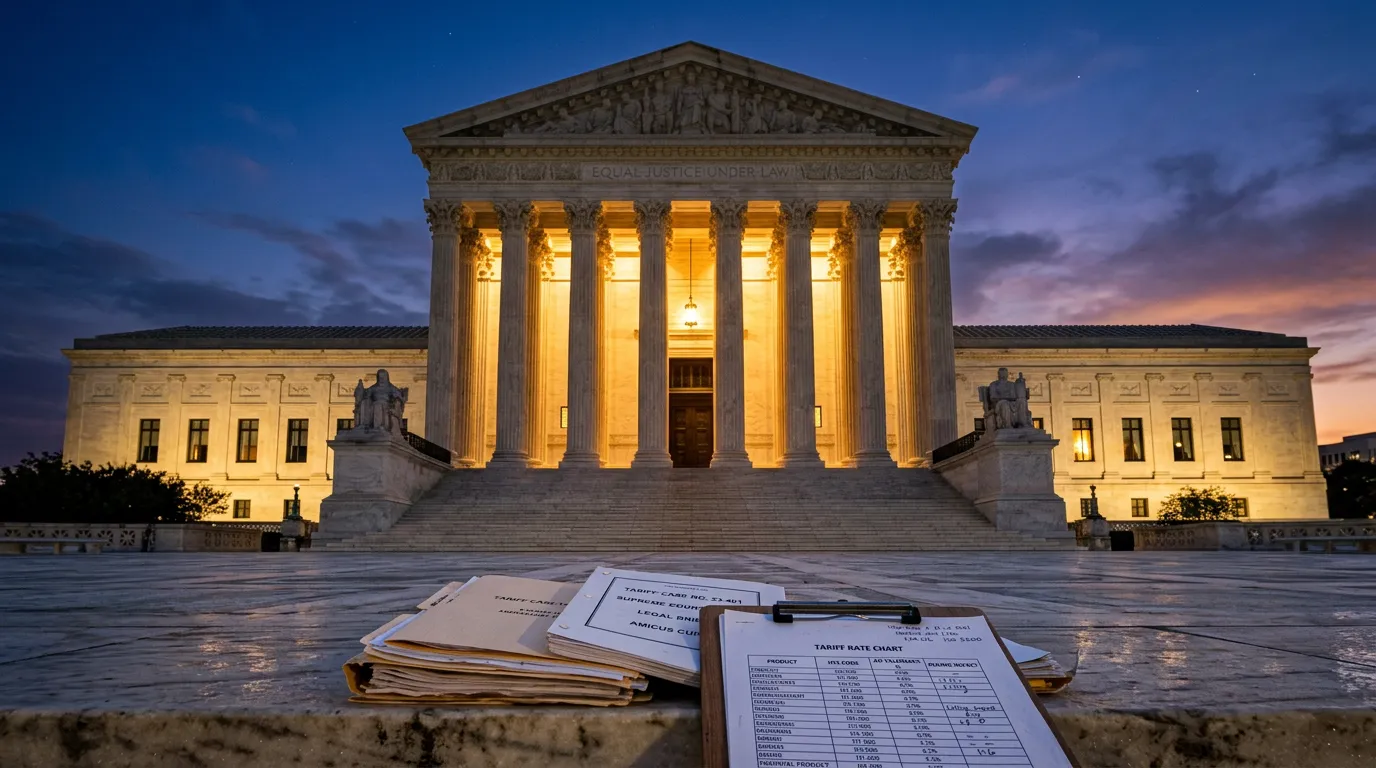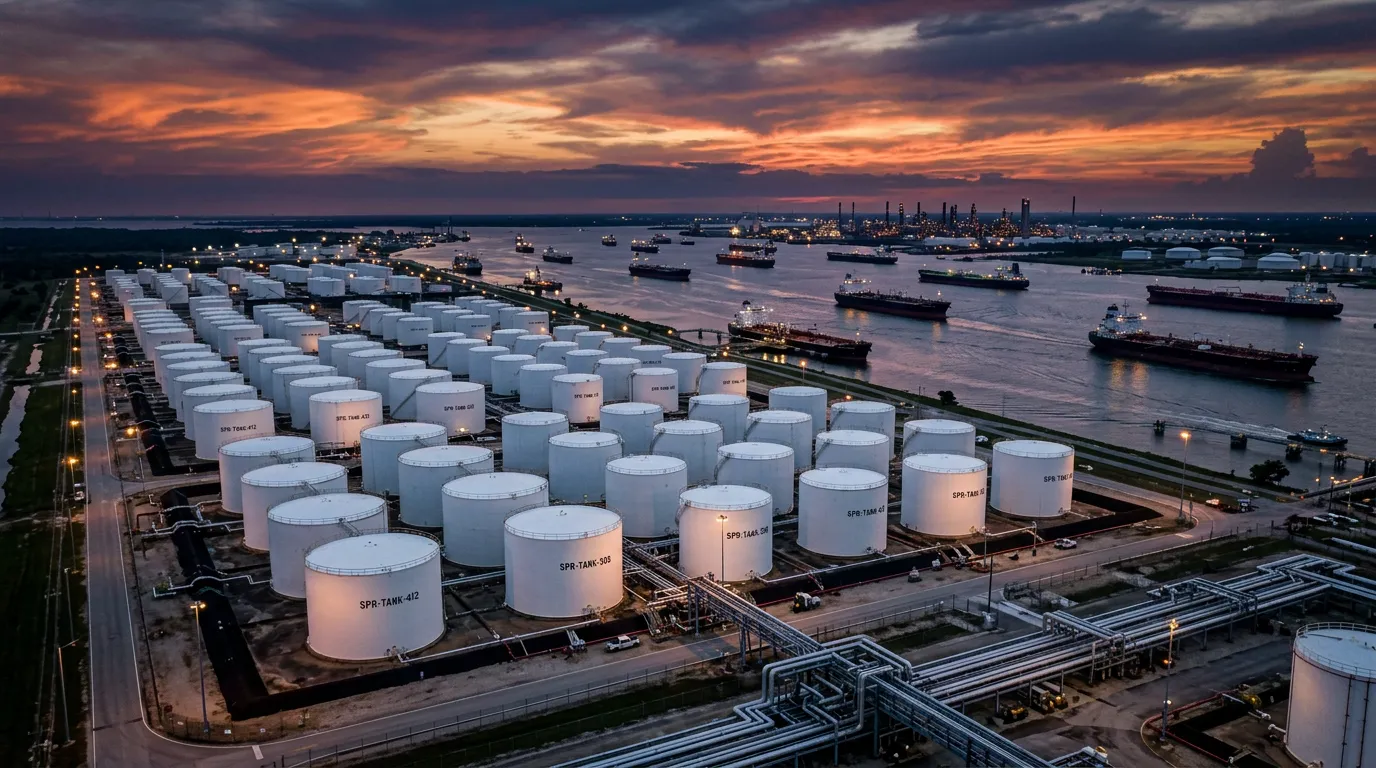
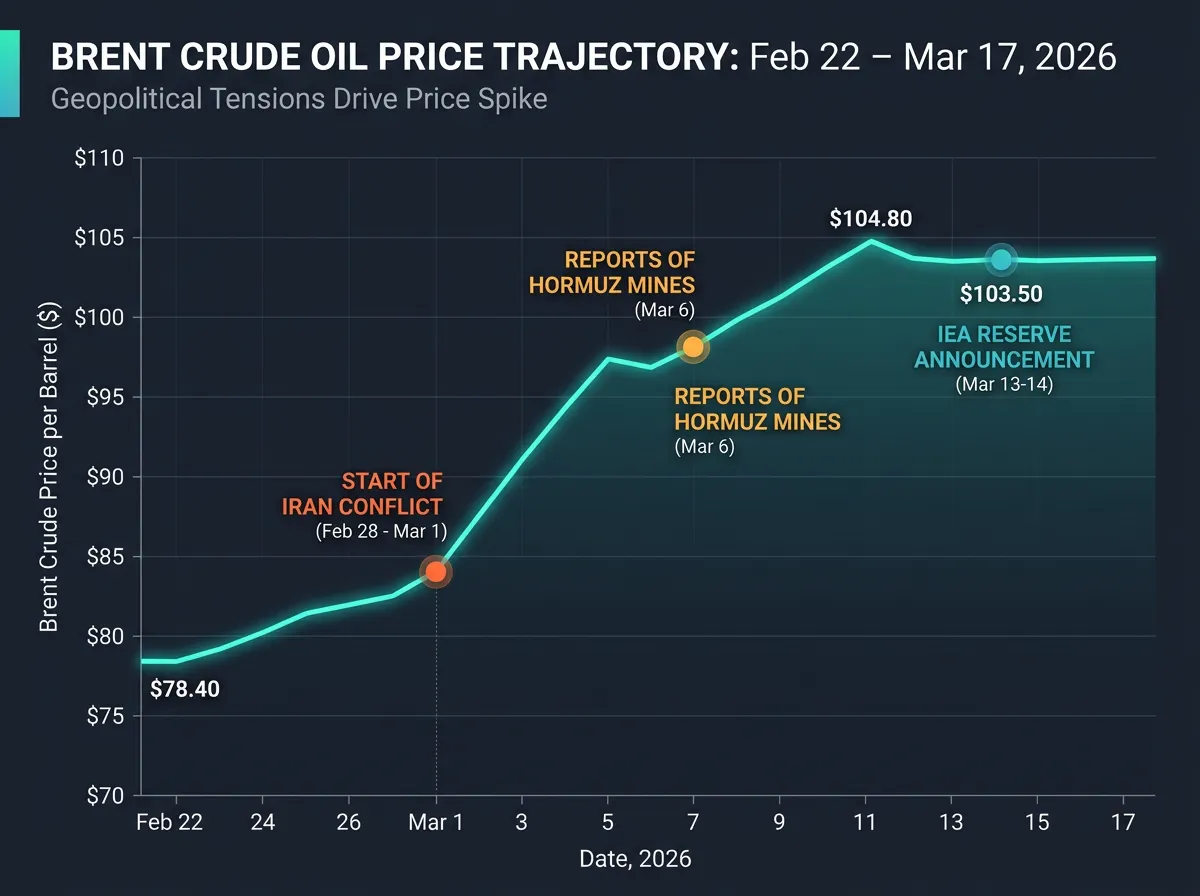
On Tuesday, the International Energy Agency announced the largest emergency oil release in its 52-year history: 400 million barrels drawn from the strategic reserves of 32 member nations. The United States alone committed 172 million barrels from the Strategic Petroleum Reserve. By any historical measure, this was an extraordinary intervention. Brent crude briefly dipped below $90 a barrel on the news, a sharp pullback from the near-$120 peak earlier in the week. By Wednesday morning, prices had climbed back above $100, erasing most of the relief.
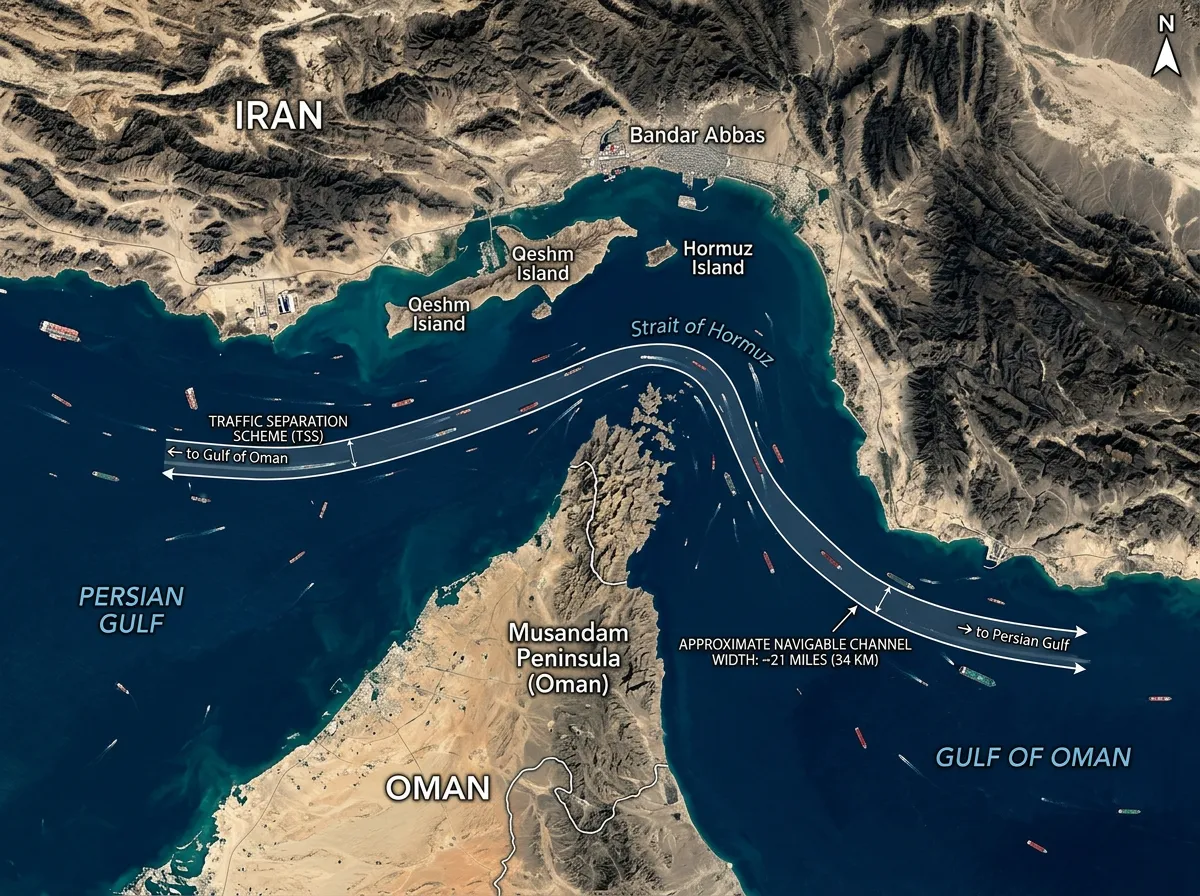
The speed of that rebound tells a story that policymakers would prefer not to hear. This isn't a supply disruption that stored oil can solve. The Strait of Hormuz, through which roughly 20% of the world's crude flowed before the conflict began on February 28, is currently operating at less than 10% of pre-war capacity. Iran has seeded the waterway with naval mines. The oil is still in the ground, or on tankers with nowhere to go, and no amount of reserve drawdowns changes that physical reality.
What the IEA Actually Announced
The IEA's coordinated release commits its 32 member countries, including the United States, Japan, Germany, Canada, Australia, Italy, and the United Kingdom, to draw down reserves over a timeline appropriate to each nation's capacity. The U.S. Department of Energy confirmed that American barrels would begin flowing as early as next week, with the full 172-million-barrel commitment distributed over several months.
The sheer volume dwarfs every previous emergency action. The 2022 release following Russia's invasion of Ukraine totaled 182 million barrels, which until this week held the record. That intervention, combined with coordinated sanctions and Russia's decision to keep selling oil to willing buyers like India and China, helped stabilize crude prices within months. IEA Executive Director Fatih Birol acknowledged the limits of the current action, telling reporters that "the most important thing for a return to stable flows of oil and gas is the resumption of transit through the Strait of Hormuz." The IEA is hoping to replicate the 2022 playbook. The problem is that the 2026 crisis bears almost no structural resemblance to 2022.
Why the 2022 Playbook Won't Work This Time
The 2022 oil crisis and the 2026 crisis share a surface-level similarity: a geopolitical conflict disrupted supply, and the IEA responded with reserve releases. But the mechanics are fundamentally different, and understanding why matters for anyone trying to predict where prices go from here.
In 2022, Russian oil never actually left the global market. Moscow redirected exports to India, China, and other willing buyers at discounted rates. European nations replaced Russian supply with imports from the Middle East and West Africa. The reserve release bridged a temporary logistics gap while trade routes reorganized. Total global production barely changed.
The Hormuz situation is a genuine physical chokepoint. According to the Energy Information Administration, roughly 21 million barrels per day transited the strait before the conflict. With Iranian mines and active naval engagement reducing that to under 2 million barrels per day, the world has lost access to approximately 19 million barrels of daily throughput. That includes not just Iranian crude but Saudi, Iraqi, Kuwaiti, Qatari, and Emirati exports that depend on the waterway. No reserve release replaces ongoing production losses of that magnitude. The 400 million barrels, released over months, amounts to roughly 21 days of the lost throughput. Reserves are a bridge to nowhere if the underlying disruption doesn't resolve.
This is the analytical gap that much of the current coverage misses. The 2022 release worked because the supply wasn't actually gone: it was rerouted. In 2026, the supply isn't rerouted. It's physically blocked. Strategic reserves are designed for temporary disruptions while markets adjust. They were never designed to substitute for the indefinite closure of the world's most critical oil transit point.
America's Depleted Safety Net
The U.S. commitment of 172 million barrels represents the largest single-country contribution in IEA history, and it comes at a precarious moment for the Strategic Petroleum Reserve. After the Biden administration drew down approximately 180 million barrels in 2022 to combat post-Ukraine price spikes, the SPR was only partially refilled. Current reserves sit at roughly 390 million barrels, according to Department of Energy data, down from a peak of 727 million in 2009.
A 172-million-barrel release would reduce the U.S. reserve to approximately 218 million barrels, the lowest level since the SPR's early years in the 1980s. Energy Secretary Chris Wright framed the decision as necessary to "protect American consumers and stabilize global markets," but several energy analysts have raised concerns about the long-term implications. "You're spending your insurance policy during a fire that hasn't peaked yet," said Bob McNally, president of Rapidan Energy Group and a former White House energy adviser, speaking to CNBC. "If this conflict lasts through summer, what's left to release?"
The calculus is even more complicated for smaller IEA members. Japan, which imports nearly all of its oil, holds reserves sufficient for roughly 145 days of consumption. Germany maintains around 90 days' worth. Drawing those reserves down significantly while the Strait of Hormuz remains contested leaves these nations increasingly exposed to any further escalation.
The Demand Side Nobody Is Discussing
While the supply crisis dominates headlines, the demand response may ultimately determine whether $100 crude becomes the new floor or a temporary spike. Goldman Sachs analysts noted Wednesday that global demand destruction typically begins in earnest when oil exceeds $110 for more than 60 days. Airlines begin cutting routes. Trucking companies pass costs to shippers. Consumers drive less. The economic slowdown that follows can reduce demand by 1 to 2 million barrels per day within a quarter.
That mechanism, unpleasant as it is, functioned as a pressure valve during the 1990 Gulf War and again in 2008. But it operates on a lag. Consumers don't immediately change behavior when prices rise. They absorb the cost for weeks before adjusting. And governments, aware that high gas prices carry political costs, tend to intervene with subsidies and tax holidays that delay the demand response further. The market turbulence triggered by the war and tariff uncertainty suggests investors are already pricing in a prolonged disruption, not a quick resolution.
Who Benefits From the Release Falling Short
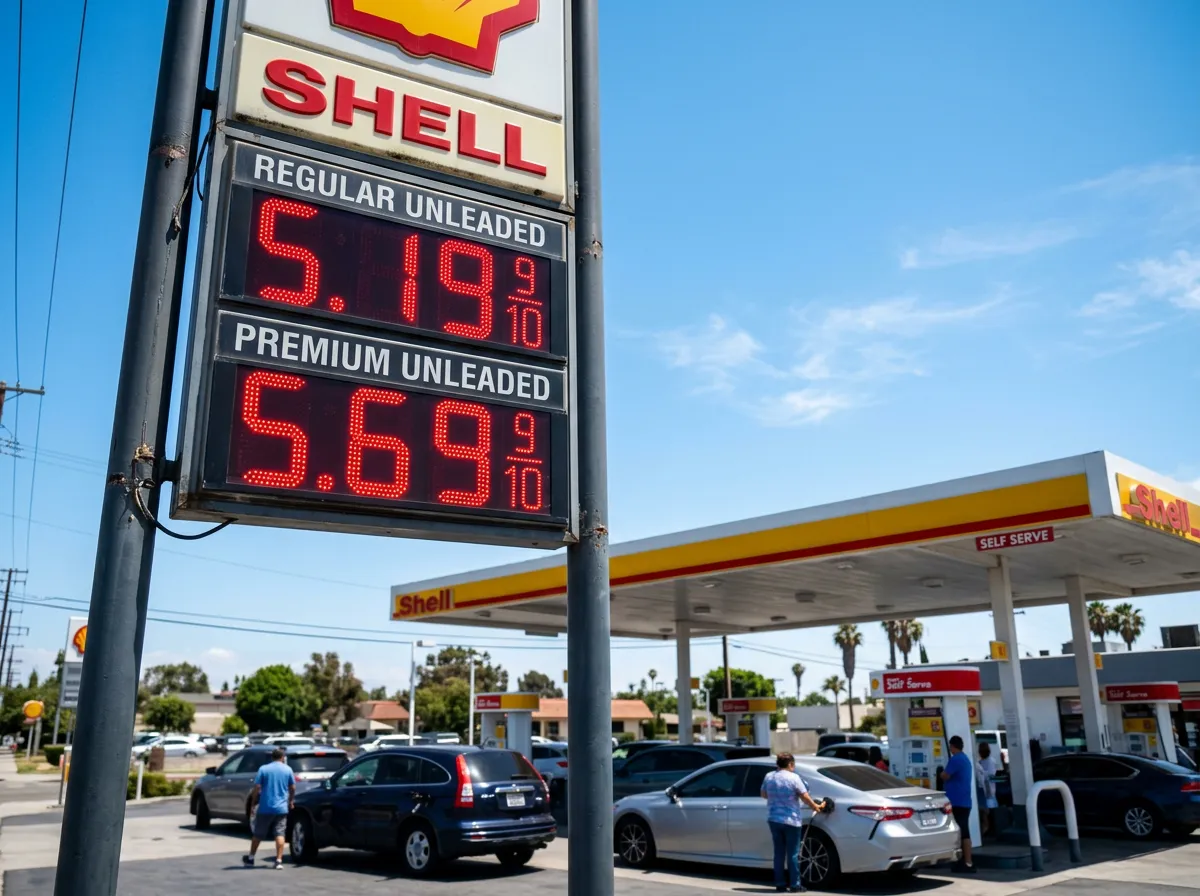
Not every actor in the global energy market views $100 oil as a crisis. OPEC+ members outside the conflict zone, particularly Saudi Arabia's non-Hormuz pipeline capacity and Russia's redirected exports, stand to profit from elevated prices. Moscow, which has quietly expanded oil shipments to China and India throughout the Hormuz crisis, sees every dollar above $80 as revenue that offsets Western sanctions pressure. Saudi Aramco's direct pipeline to the Red Sea port of Yanbu can export roughly 5 million barrels per day without transiting the strait, giving Riyadh leverage that smaller Gulf producers lack.
U.S. shale producers, meanwhile, have signaled they can increase output, but the timeline is measured in months, not weeks. Pioneer Natural Resources CEO Scott Sheffield told investors last week that "we can respond, but the permitting and drilling timeline means meaningful new production won't hit the market before Q3." The reserve release buys time for that ramp-up, but the gap between depletion and new production represents the market's core anxiety.
What to Watch
The IEA's 400-million-barrel release is the largest coordinated intervention in the history of strategic petroleum reserves, and it has done almost nothing to reassure oil markets. That alone is significant. The market is telling policymakers that stored barrels cannot substitute for a functioning Strait of Hormuz.
Three indicators will determine whether this crisis deepens or stabilizes. First, the pace of Hormuz mine clearance: U.S. and allied naval forces have begun demining operations, but military officials have offered no timeline for restoring safe passage. Second, the SPR drawdown rate: if the U.S. burns through its 172-million-barrel commitment faster than expected, the political pressure to halt releases will mount. Third, demand destruction: if Brent holds above $110 for more than two months, the economic slowdown that follows will reduce consumption, but at the cost of broader recession risk. The era of cheap energy intervention is over. What comes next depends on whether the physical blockage breaks before the reserves do.
Sources
- IEA announces largest-ever oil stock release amid Middle East conflict - International Energy Agency
- IEA agrees to release record 400 million barrels of oil - CNBC
- Countries agree to historic release of stockpiled oil - NPR
- Plans for record emergency oil release signal war could drag on - CNBC
- Major, multi-country oil release deal fails to bring down prices - NBC News