When Minnesota Attorney General Keith Ellison filed a federal lawsuit on Monday accusing the Trump administration of illegally withholding $243 million in Medicaid payments, he framed it as a straightforward legal dispute: the federal government owes Minnesota money and is refusing to pay. But the case is about something larger than one state's Medicaid reimbursements. It is a test of whether the executive branch can use federal funding as a compliance weapon, cutting off money not because a state violated the law, but because a state refused to comply with policy preferences that have nothing to do with the program being defunded.
The numbers tell a story that undermines the administration's stated rationale. Minnesota's Medicaid payment error rate is 2%, according to the state's complaint. The national average is 6%. If the federal government were genuinely concerned about states being "good stewards of the American people's tax money," as Vice President JD Vance put it in defending the withholding, Minnesota would be one of the last states to target, not one of the first.
The $2 Billion Threat That Started It All
The dispute predates the lawsuit by two months. On January 6, 2026, the Trump administration announced it would withhold more than $2 billion annually from Minnesota's Medicaid funding, citing vague assertions of "noncompliance" with Medicaid regulations. The administration did not specify which regulations Minnesota had violated, did not provide evidence of fraud or waste, and did not follow the standard administrative process for withholding federal funds, which requires discovery, an evidentiary hearing, and a formal finding of noncompliance.
On February 25, the administration narrowed the threat but made it concrete: $259 million in Medicaid payments owed to Minnesota would be withheld, with approximately $243 million targeting the same service areas flagged in January. The state responded with Monday's lawsuit, filed jointly by Ellison's office and the Minnesota Department of Human Services.
The lawsuit makes two core legal arguments. First, the administration violated the Administrative Procedure Act by failing to provide Minnesota with the required notice and opportunity to respond before withholding funds. Second, the withholding violates the Spending Clause of the Constitution, which prohibits the federal government from imposing conditions on funding that are unrelated to the purpose of the program. The complaint explicitly argues that the real motivation is political retaliation, not programmatic compliance.
Federal Funding as a Policy Weapon: A Framework for Understanding
The Minnesota case fits a pattern that has accelerated dramatically over the past year, one that deserves a clearer framework than the "states' rights vs. federal power" framing that dominates most coverage. What is emerging is a specific executive strategy: using discretionary enforcement of existing funding requirements to punish states that resist administration priorities, without passing new legislation or winning court orders.
This approach is distinct from traditional federal-state funding disputes in three critical ways. First, the enforcement is selective. The administration has not announced a nationwide Medicaid compliance review; it has targeted specific states. Second, the stated rationale is detached from the actual program. Minnesota's 2% error rate suggests its Medicaid administration is exemplary, not deficient. Third, the withholding bypasses the normal administrative process, which exists precisely to prevent arbitrary punishment.
The closest historical parallel is not a Medicaid case at all but the highway funding disputes of the 1980s, when the federal government threatened to withhold transportation money from states that refused to raise their drinking age to 21. In that case, the Supreme Court ruled in South Dakota v. Dole (1987) that Congress could attach conditions to federal funding, but only if those conditions were related to the program's purpose and were not coercive. The Court set a threshold: if the financial pressure was so great that states had "no real choice" but to comply, the conditions crossed the line from encouragement to coercion.
Minnesota's Medicaid funding represents a significant portion of the state's healthcare budget. If $2 billion annually were withheld, the state would face immediate crises in healthcare delivery for its most vulnerable residents. That level of financial pressure, imposed without a hearing and without evidence of programmatic failure, may well cross the coercion threshold the Supreme Court established four decades ago. The question is whether courts will apply that framework to executive withholding, or whether they will treat the issue as a political question best resolved between the branches.

The Pattern Beyond Minnesota
Minnesota is not the only state facing federal funding pressure, but it is the first to respond with a lawsuit that directly challenges the constitutional basis of the withholding. The Trump administration's standoff with Harvard over federal research grants follows a similar playbook: withhold funding, cite vague compliance concerns, and force the institution to either capitulate or spend resources fighting in court.
The strategy's effectiveness depends on a simple asymmetry. The federal government can withhold funds immediately, while the legal process to challenge that withholding takes months or years. During that gap, the affected state or institution absorbs the financial damage, which creates pressure to settle or comply regardless of the legal merits. Minnesota's decision to sue rather than negotiate signals that at least some states are willing to absorb those costs in exchange for a binding legal precedent.
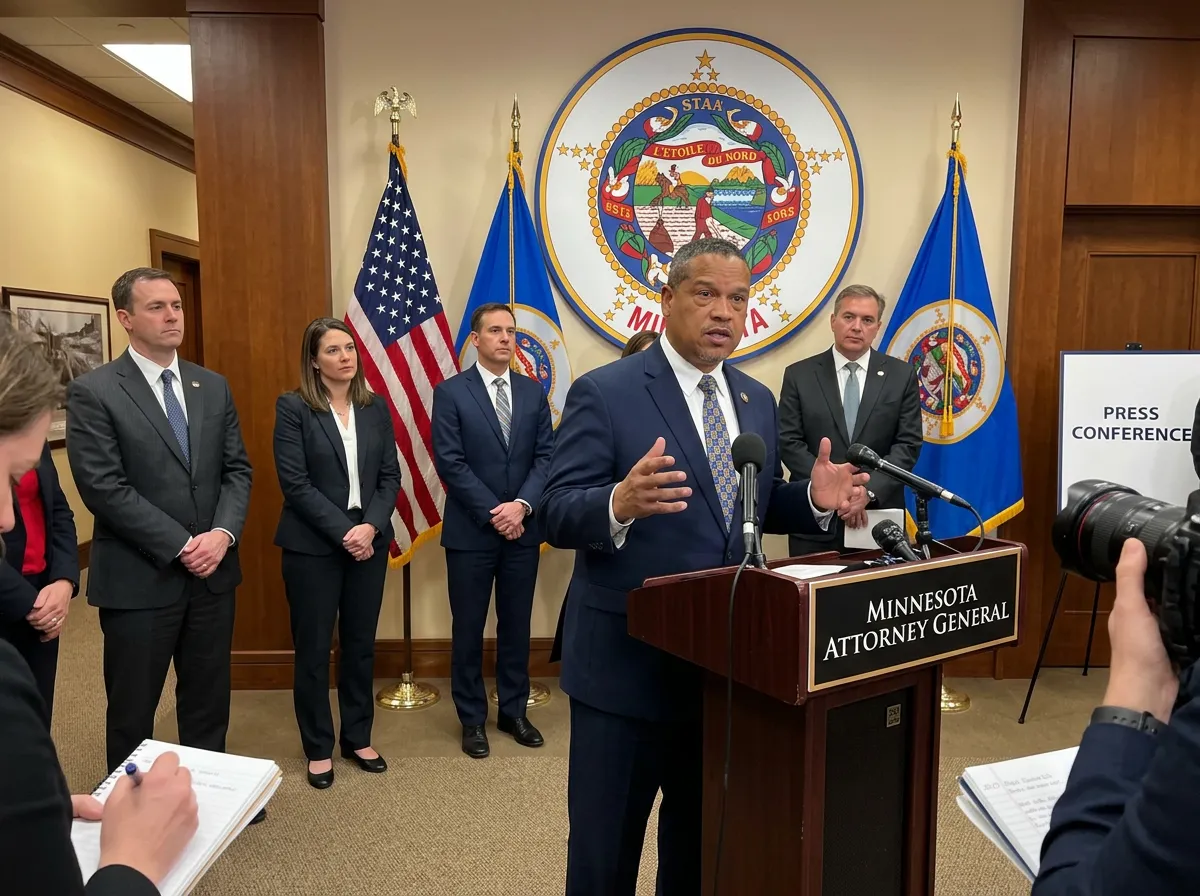
NPR reported that the lawsuit accuses the administration of "weaponizing" Medicaid funding, a characterization that Ellison used in his press conference on Monday. "This isn't a compliance dispute," Ellison said. "This is the federal government using healthcare dollars as leverage to punish a state for policy disagreements that have nothing to do with Medicaid." The administration has not publicly responded to the specific legal arguments in the complaint, though Vance's earlier statement about ensuring states are "good stewards" is likely to form the basis of the government's defense.
What Other States Are Watching
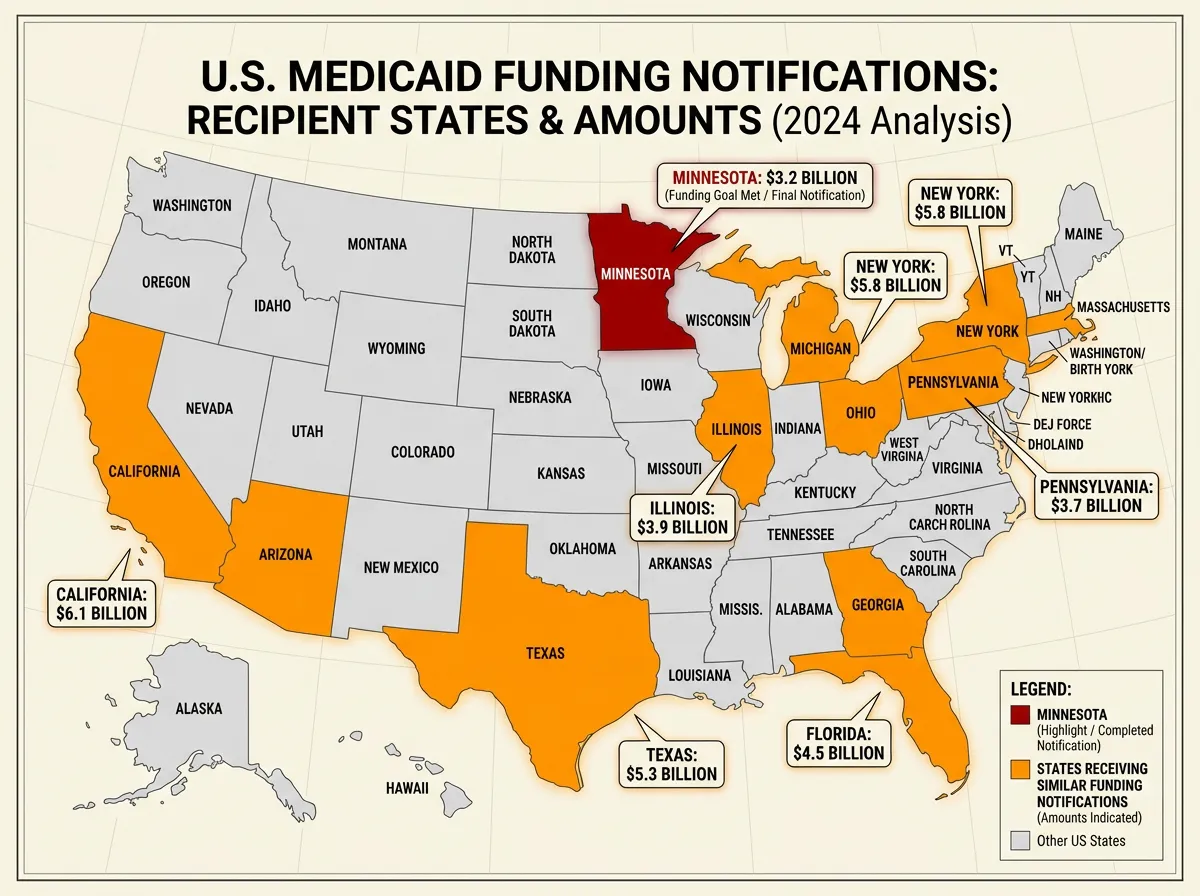
The lawsuit's implications extend well beyond Minnesota. At least six other states have received similar notifications about potential Medicaid funding adjustments, according to reporting from Roll Call. None have yet filed lawsuits, but several attorneys general have issued public statements supporting Minnesota's position. If the court issues a preliminary injunction blocking the withholding, it would signal that the executive branch cannot unilaterally cut federal funding without following established administrative procedures, a ruling that would constrain this tactic across every federal program.
The DOGE Social Security data controversy from January illustrates the broader pattern: federal agencies are being directed to use their administrative powers in ways that extend well beyond traditional program oversight. In that case, the issue was data access. In Minnesota's case, it is funding. In both, the underlying question is the same: what are the limits of executive discretion over programs that Congress created and funded?
The Impact
Minnesota's lawsuit will likely produce a ruling within months, given the state's request for a preliminary injunction. The case has two possible outcomes, and both carry consequences that extend far beyond Medicaid. If the court sides with Minnesota, it establishes that the executive branch must follow administrative due process before withholding congressionally appropriated funds, effectively closing the funding-as-weapon strategy. If the court sides with the administration, it opens the door for any future president to selectively withhold funding from states that oppose their policy agenda, regardless of the program's actual performance.
The key indicator is whether the judge grants the preliminary injunction, which requires Minnesota to demonstrate a likelihood of success on the merits. Given the state's 2% error rate and the administration's failure to follow standard administrative procedures, the legal arguments favor Minnesota. But legal arguments are only part of the equation. The political dynamics of federal-state relations, the current composition of the judiciary, and the administration's willingness to escalate will all shape how this case unfolds. Based on the procedural record, Minnesota is likely to win the preliminary injunction by late April 2026, which would force the administration to either release the funds or pursue the withholding through legitimate administrative channels, a process that Minnesota's exemplary compliance record would almost certainly survive.
Sources
- In Lawsuit, Minnesota Accuses Trump Administration of 'Weaponizing' Medicaid Funding - NPR
- Minnesota Sues Trump Administration for Illegally Withholding $243 Million in Medicaid Payments - Minnesota Attorney General's Office
- Minnesota Sues to Block Trump Administration's Withholding of Medicaid Funds - PBS NewsHour
- Minnesota Sues Trump Administration Over Medicaid Freeze - Roll Call