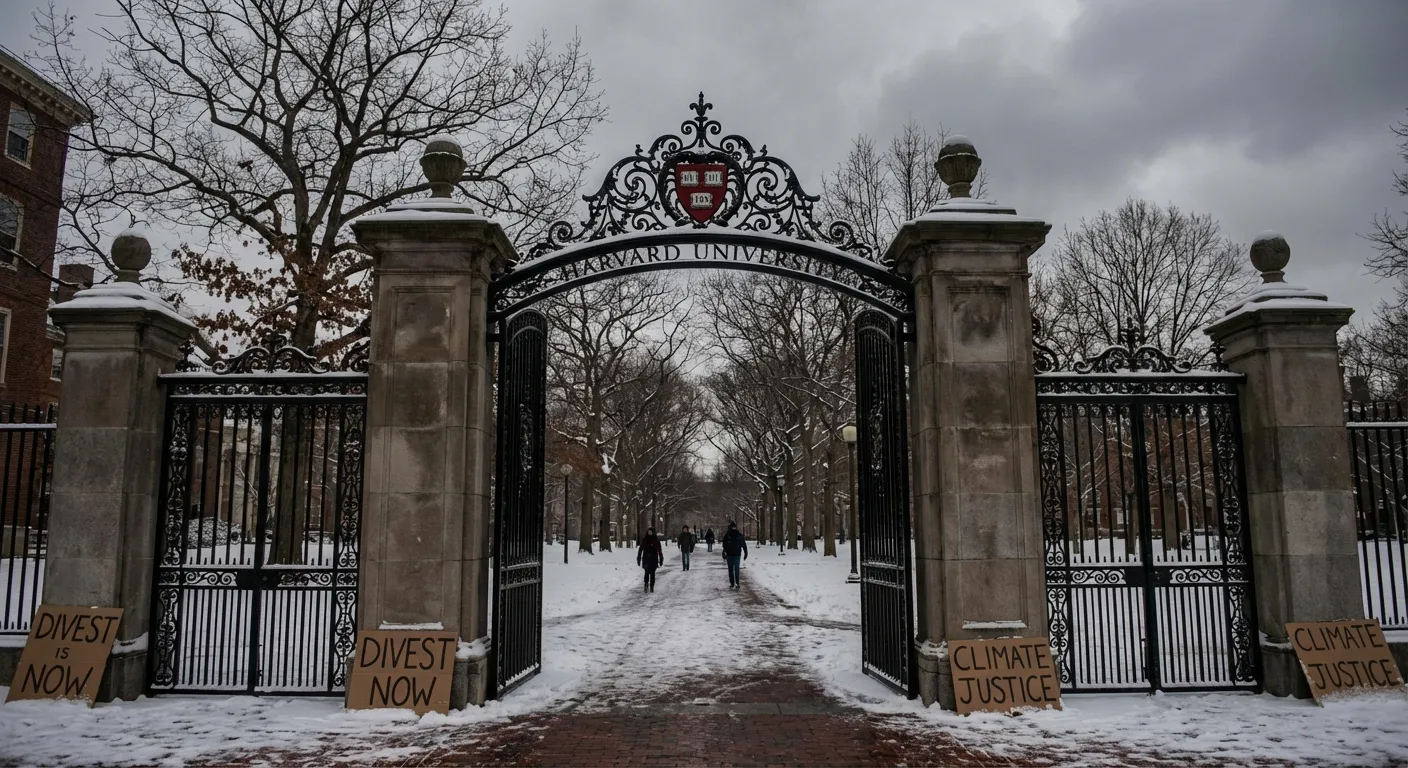
The Department of Defense has frozen all existing contracts and grants with Harvard University, effective immediately. The action, announced February 5, cuts off an estimated $600 million in annual federal funding for research ranging from cybersecurity to biomedical engineering. The stated reason, according to a DoD spokesperson, is Harvard's "failure to comply with new federal diversity, equity, and inclusion certification requirements." The real story is larger and more consequential for American higher education.
Harvard is not the first university targeted by the Trump administration, and it won't be the last. Over the past six months, the White House has escalated a confrontation with elite academic institutions that combines disputes over campus speech, research funding conditions, and a broader ideological project aimed at reshaping how universities operate. The Harvard standoff is the sharpest escalation yet, and the response from the academic community will shape the landscape for years.
What Triggered the Freeze
The immediate trigger is a certification requirement imposed by executive order in October 2025. The order requires institutions receiving federal funding to certify that they have eliminated all DEI programs, positions, and requirements, or face funding review. Most universities quietly complied, restructuring diversity offices and renaming programs to satisfy the requirement without fundamentally changing their operations.
Harvard took a different approach. In a public letter signed by President Alan Garber in December, the university stated that it would comply with federal law but would "not certify the absence of programs and values that we believe are central to academic excellence." The letter stopped short of outright defiance but was read by the administration as a refusal to comply.

The DoD funding freeze followed. It is the largest single financial action taken against a university in modern history and affects not just humanities programs but hard science research with direct national security implications. Harvard's applied physics lab, which does classified work on signal intelligence and communications security, is among the programs affected. Researchers across multiple departments learned that their grants were suspended through a mass email from the university's Office of Research Administration, which itself learned from a DoD notice filed the same morning.
Beyond Harvard: The Legal Arguments
Harvard's lawsuit, filed in the District of Massachusetts, advances three core arguments. First, the university contends that freezing existing contracts and grants violates the Administrative Procedure Act because the government failed to provide notice and an opportunity to respond before cutting funding. Second, Harvard argues that the DEI certification requirement is unconstitutionally vague, compelling institutions to certify the absence of programs without defining what counts as a prohibited program. Third, the suit invokes the First Amendment, arguing that the certification amounts to compelled ideological speech by forcing universities to disavow viewpoints the government disfavors.
The administration has signaled that other institutions are under review. A list reportedly circulating within the Department of Education names 14 universities, including Yale, Stanford, MIT, and Columbia, as potentially noncompliant. No additional funding freezes have been announced, but the threat is explicit: Harvard is an example, and other universities should take note.
Lawrence Bacow, Harvard's former president and a constitutional law scholar, told The New York Times that the action represents "a fundamental threat to the research enterprise that has made American universities the envy of the world." He noted that federal research funding isn't charity but an investment that "generates the science, technology, and talent that maintain American economic and military advantage."
The Money at Stake
Federal funding accounts for approximately 15% of Harvard's total operating budget, a proportion that is actually lower than at many peer institutions. MIT receives roughly 30% of its budget from federal sources. Stanford receives about 25%. Public universities in some states depend on federal research grants for more than 40% of their research budgets.
This means that while Harvard has the financial reserves to absorb the freeze temporarily, thanks to its $50 billion endowment, most other universities do not. If the administration extends the certification enforcement beyond Harvard, the financial consequences for less wealthy institutions could be severe, forcing layoffs of research staff, termination of graduate student funding, and cancellation of projects mid-stream.
The research implications extend beyond academia. Federal grants to universities fund work that eventually reaches the private sector and the military. Drug development pipelines, cybersecurity tools, materials science advances, and climate modeling all depend on university research funded by agencies like the NIH, NSF, DoD, and DOE. Disrupting that pipeline doesn't just hurt universities. It slows the innovation infrastructure that American economic competitiveness depends on.
Two Competing Visions
The standoff reflects genuinely different views about what universities should be and who gets to decide.
The administration's position, articulated by Secretary of Education Linda McMahon at a January press conference, is that universities receiving taxpayer money must comply with federal policy, full stop. "No institution is above the law," McMahon said. "If Harvard wants to run its own programs without conditions, it can do so without federal dollars." The framing positions the government as a customer enforcing terms of a contract.
The universities' position, broadly shared even by those that have complied with the certification requirement, is that academic freedom requires some insulation from political control. Research priorities, hiring decisions, and campus speech should be determined by academic judgment, not by whoever occupies the White House. The fear is that today's certification is about DEI, but tomorrow's could be about climate research, vaccine development, or any other area where academic consensus conflicts with political preference.
Both arguments contain real substance. Government has legitimate authority to attach conditions to funding. Universities have legitimate claims to institutional autonomy. The question is where the line falls, and the Harvard standoff is forcing that question into the open more directly than any previous confrontation between federal power and American institutions.
A Fight That Ripples Outward
Harvard has filed suit in federal court seeking an injunction to restore funding while the legal questions are resolved. The case is expected to move quickly, with a preliminary hearing scheduled for February 20. Legal analysts are divided on the outcome, with some noting that the government has broad discretion over funding conditions and others arguing that retroactively freezing existing contracts violates due process.
Regardless of the legal outcome, the political dynamics have already changed. University presidents across the country are recalculating their relationship with the federal government. Some are accelerating compliance to avoid being next. Others are quietly building legal strategies and lobbying coalitions. The American Association of Universities, which represents 71 research universities, issued a statement calling the Harvard freeze "an unprecedented threat to the American research enterprise."
What Happens Next
The Harvard case will likely reach the courts before it reaches a resolution. In the meantime, the practical consequences are already being felt: researchers losing access to funding, graduate students uncertain about their positions, and collaborative projects between Harvard and government agencies suspended. The outcome will set a precedent that shapes the relationship between federal funding and academic institutions for a generation. What began as a dispute over diversity certifications has become something much larger: a test of whether political conditions on government funding can be used to reshape how American universities operate.
Sources
- Trump demands $1 billion from Harvard as a prolonged standoff appears to deepen - WBUR, February 2026
- Trump has sued universities for billions. Here's what the strategy tells us - NPR, January 2026
- Statement by Higher Education Associations in Opposition to Trump Administration Compact - American Council on Education
- Trump demands Harvard eradicate DEI to preserve its federal funding - The Chronicle of Higher Education