Russia is providing Iran with intelligence about the locations and movements of American troops, warships, and aircraft across the Middle East, according to multiple U.S. officials and intelligence sources who spoke to reporters on March 6. The revelation, first reported by the Washington Post and quickly confirmed by NBC News, CNN, CBS News, and ABC News, is the first indication that Moscow has sought to directly involve itself in the war between the United States and Iran. Much of the intelligence Russia has shared consists of imagery from its sophisticated constellation of overhead satellites, giving Tehran a view of American military deployments that its own surveillance capabilities can no longer provide. One U.S. official described the effort as "pretty comprehensive," though the full scope of what Moscow has delivered to Tehran is still being assessed.
The timing is significant. Iran's own ability to track American forces has been severely degraded since the United States and Israel launched their air campaign against the country on February 28. With Iranian radar systems, communications infrastructure, and military installations under sustained bombardment for more than a week, Tehran's reconnaissance capabilities have been shattered. Russia's satellite data fills a gap that Iran cannot fill on its own, and the intelligence reportedly includes the positions of warships and fighter jets deployed throughout the Gulf region. While officials say there is no indication that Moscow is helping direct specific missile or drone strikes, the information it is providing could make Iranian attacks more accurate and more lethal at a moment when American forces are already under fire.
What Russia Is Actually Providing
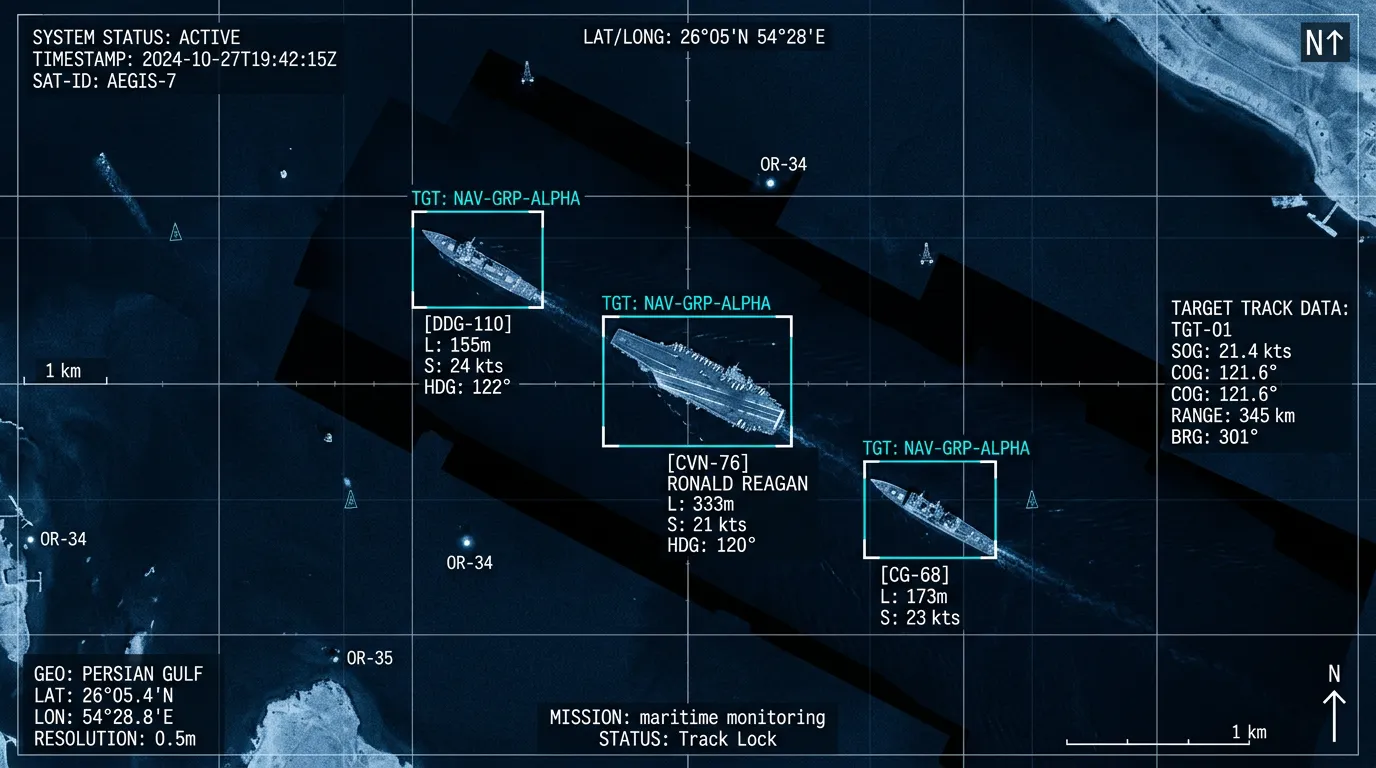
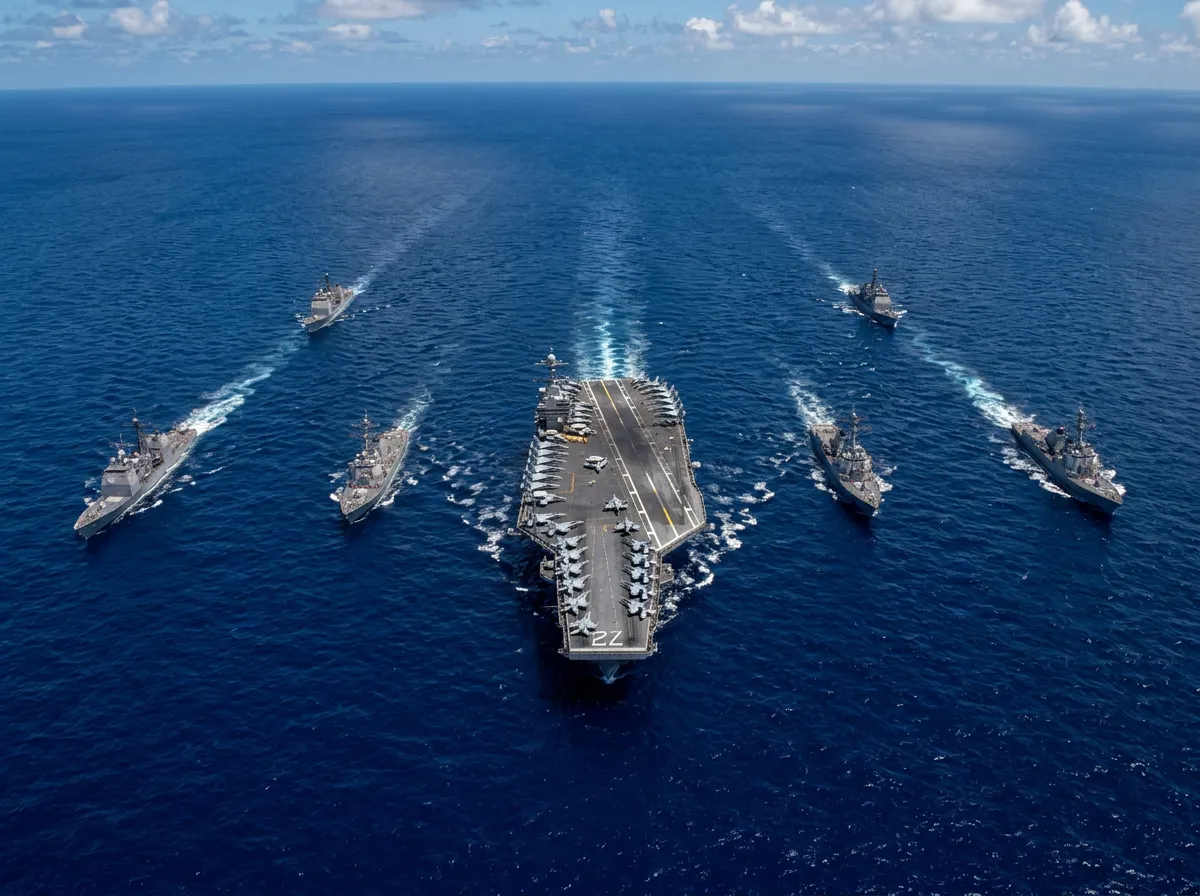
The intelligence flowing from Moscow to Tehran centers on imagery from Russia's military satellite constellation, one of the most advanced space-based reconnaissance systems outside the United States. Russia operates dozens of Persona and Bars-M optical reconnaissance satellites alongside Pion-NKS radar imaging platforms capable of tracking surface vessels regardless of weather or cloud cover. These systems can identify ship types, count aircraft on carrier decks, and track convoy movements in near-real time. For a country whose own surveillance infrastructure has been degraded by American strikes, this data is extraordinarily valuable.
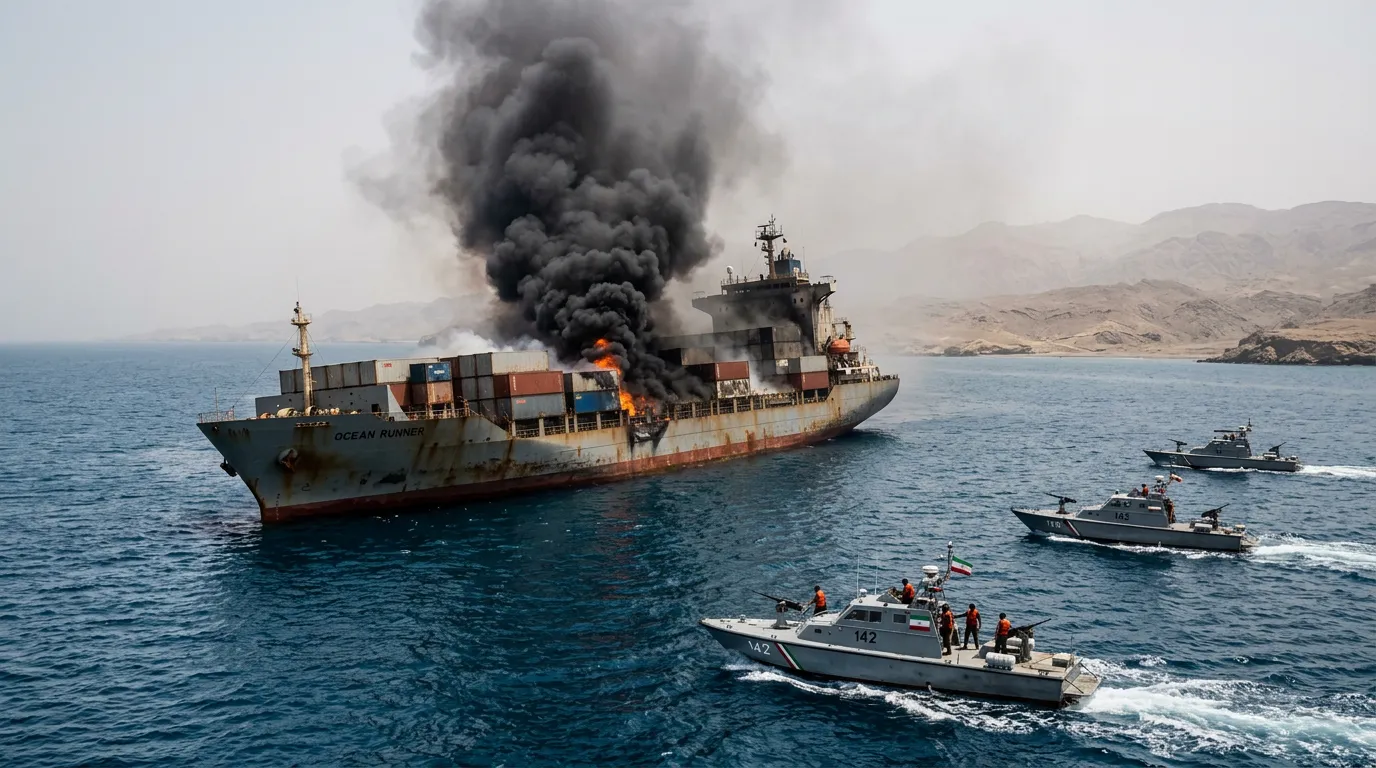
Officials told reporters that the satellite imagery has included locations of U.S. warships operating in the Persian Gulf and surrounding waters, as well as the positions of fighter jets and other aircraft deployed to bases across the region. The intelligence could also help Iran locate American radar installations, communications equipment, and other support infrastructure that enables the air campaign. U.S. CENTCOM has struck more than 3,000 targets in Iran since February 28 and destroyed 43 Iranian warships, and much of that firepower is being projected from naval assets and regional bases that Russian satellites can observe.
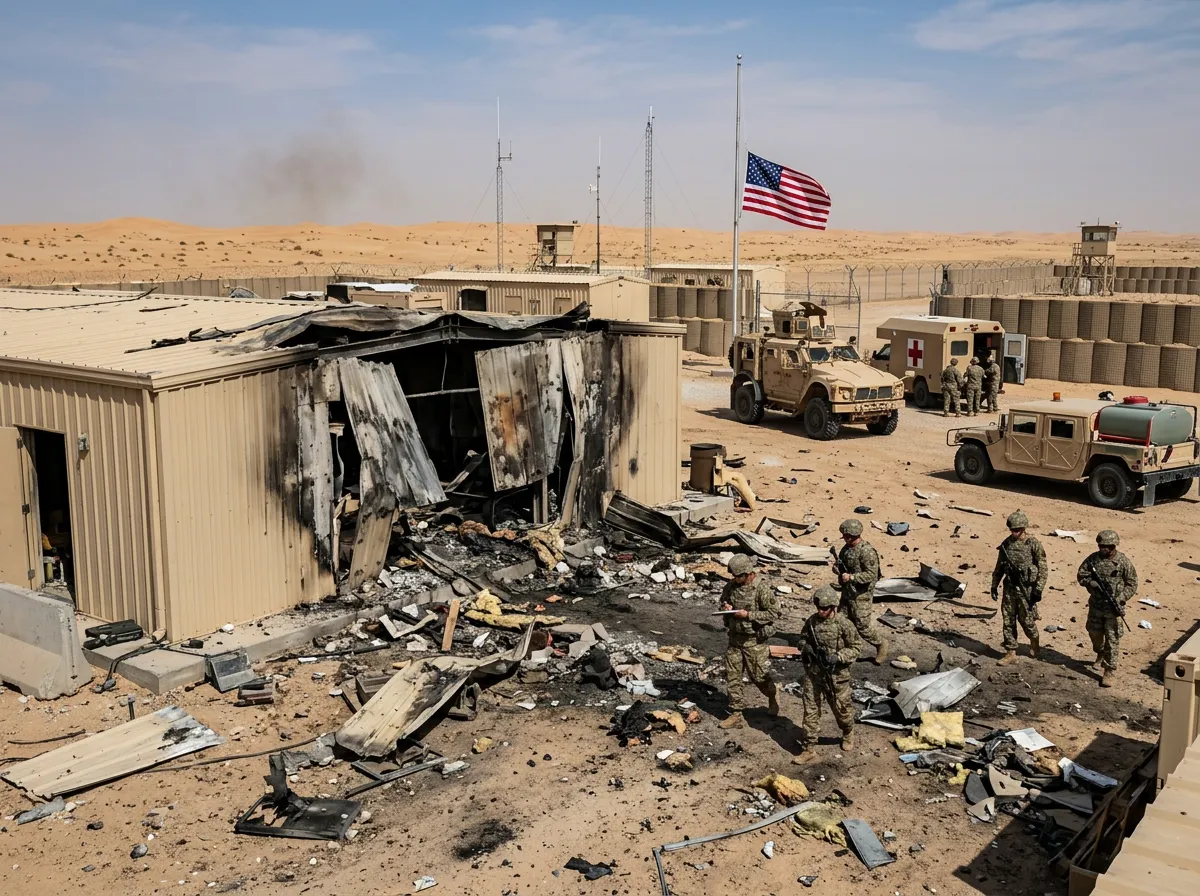
What officials have not confirmed is whether any specific Iranian attack can be traced directly to Russian targeting intelligence. But the circumstantial evidence is troubling. An Iranian drone struck a facility housing U.S. troops in Kuwait on March 1, killing six American service members. In the days since, several additional Iranian drones have hit locations where American personnel were present. Iran has fired more than 500 ballistic and naval missiles and nearly 2,000 drones since the war began, with roughly 60% of those aimed at U.S. targets rather than Israeli ones. The question intelligence analysts are now asking is whether the accuracy of recent Iranian strikes reflects improved targeting information from an outside source.
The Cold War Playbook: Intelligence Sharing as Proxy Warfare
Russia's decision to feed targeting intelligence to Iran follows a pattern that defined superpower competition for decades, and the historical parallels offer a sobering guide to where this conflict may be heading. During the Vietnam War, the Soviet Union provided North Vietnam with detailed intelligence on American bombing raids, including radar data on incoming aircraft formations and technical specifications of U.S. weapons systems. Soviet advisors staffed North Vietnamese air defense networks, and Moscow supplied the surface-to-air missiles that shot down thousands of American aircraft. The intelligence sharing was not a peripheral aspect of the conflict. It was the mechanism that allowed a smaller, less technologically advanced nation to sustain a war against the world's most powerful military for over a decade.
The parallels to the current situation are striking and instructive. In both cases, a major power is providing intelligence to a weaker combatant fighting the United States, using surveillance technology that the smaller nation cannot replicate on its own. In both cases, the intelligence provider is careful to maintain a degree of plausible deniability, stopping short of direct military participation while making the conflict significantly more dangerous for American forces. And in both cases, the intelligence sharing signals that the provider views the conflict as an opportunity to bleed American resources and attention away from other strategic priorities. For the Soviet Union, the goal was to prevent the United States from focusing on Europe. For Russia in 2026, the goal is almost certainly to keep American military assets and political attention diverted from Ukraine.
The Afghanistan parallel from the other side of the ledger is equally instructive. Throughout the 1980s, the United States provided intelligence to Afghan mujahideen fighters battling the Soviet occupation, including satellite imagery of Soviet troop positions and supply routes. That intelligence, combined with Stinger missiles and other weapons, turned a Soviet military advantage into a grinding stalemate that eventually contributed to Moscow's withdrawal. The lesson is that intelligence sharing by an outside power extends conflicts, raises casualty counts, and makes negotiated endings harder to reach. If Russia continues providing targeting data to Iran, the historical pattern suggests this war will last longer and cost more American lives than current projections assume. The question is not whether Russian intelligence will change the outcome of the war. The United States and Israel possess overwhelming conventional superiority. The question is how many additional casualties and how many months of conflict the intelligence sharing will add before that superiority produces a resolution.
How Each Side Is Framing the Revelation
The official responses to the intelligence-sharing reports reveal how each government is calculating its position. White House Press Secretary Karoline Leavitt offered a notably dismissive reaction: "Whether or not this happened, frankly, it doesn't really matter, because President Trump and the United States military are absolutely decimating the rogue Iranian terrorist regime." Defense Secretary Pete Hegseth told 60 Minutes that "the American people can rest assured their commander-in-chief is well aware of who's talking to who. And anything that shouldn't be happening is being confronted and confronted strongly." The subtext of both statements is that the administration does not want this story to become a narrative about American vulnerability or Russian escalation.
Moscow's response was more carefully calibrated. Kremlin spokesperson Dmitry Peskov confirmed that Russia maintains "dialogue" with Iranian leadership but declined to address the specific intelligence-sharing allegations. In a separate statement, Peskov said Iran had not requested Russian military support, a claim that intelligence officials have contradicted. Iran's Foreign Minister Abbas Araghchi offered the most revealing response, acknowledging that military cooperation with Russia "continues" without specifying what form it takes. That language is consistent with a relationship both sides want to maintain without advertising.
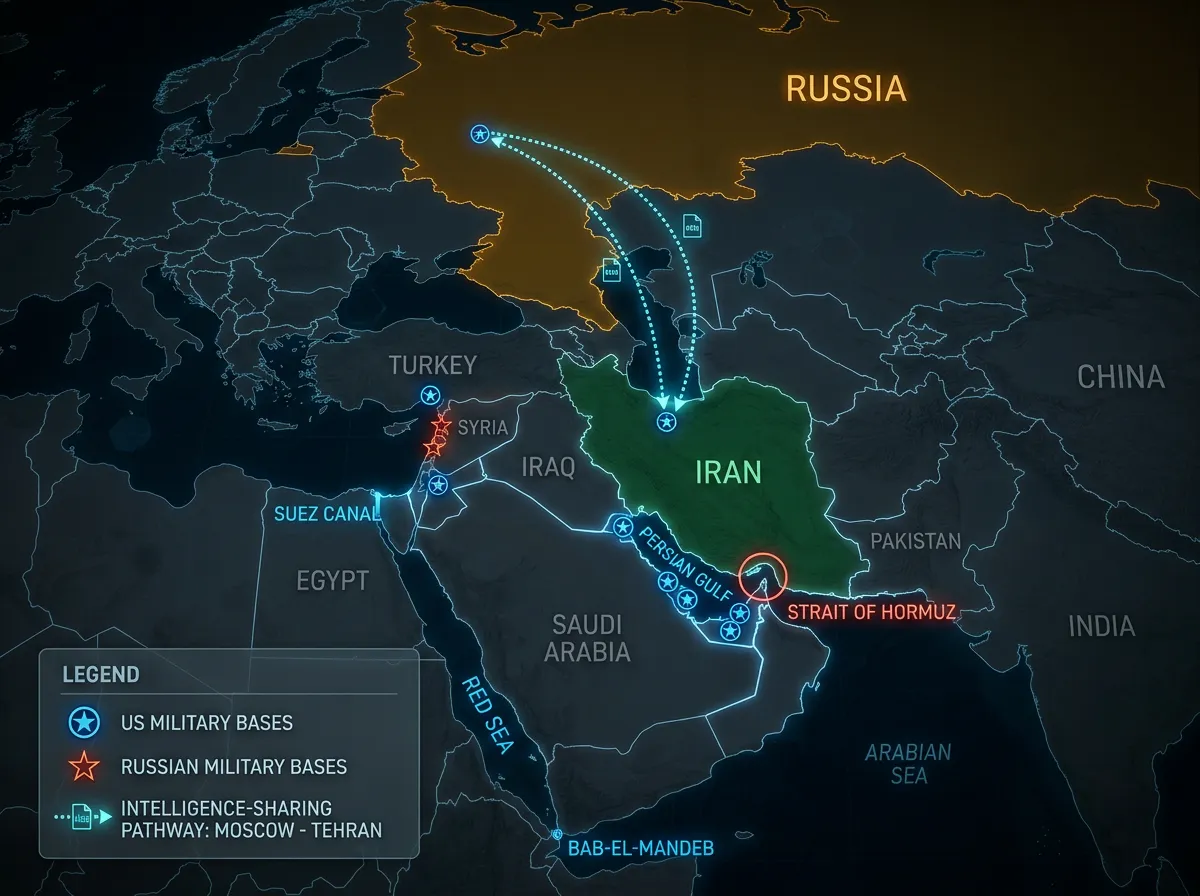
Allied nations and NATO members are watching the situation with growing concern, though few have commented publicly. The intelligence-sharing revelation complicates the already strained diplomatic environment around the conflict. Gulf allies have complained that the United States did not notify them before launching strikes on Iran from regional bases, and the addition of Russian intelligence support for Tehran raises the threat level for every American installation in the region. For NATO, Russia's decision to actively support a country at war with the United States creates a new dimension of tension at a moment when the alliance is already stretched by the ongoing conflict in Ukraine. The line between intelligence sharing and co-belligerency is legally and strategically blurry, and Russia appears to be testing exactly where that line is.
The Battlefield Context: Eight Days of War
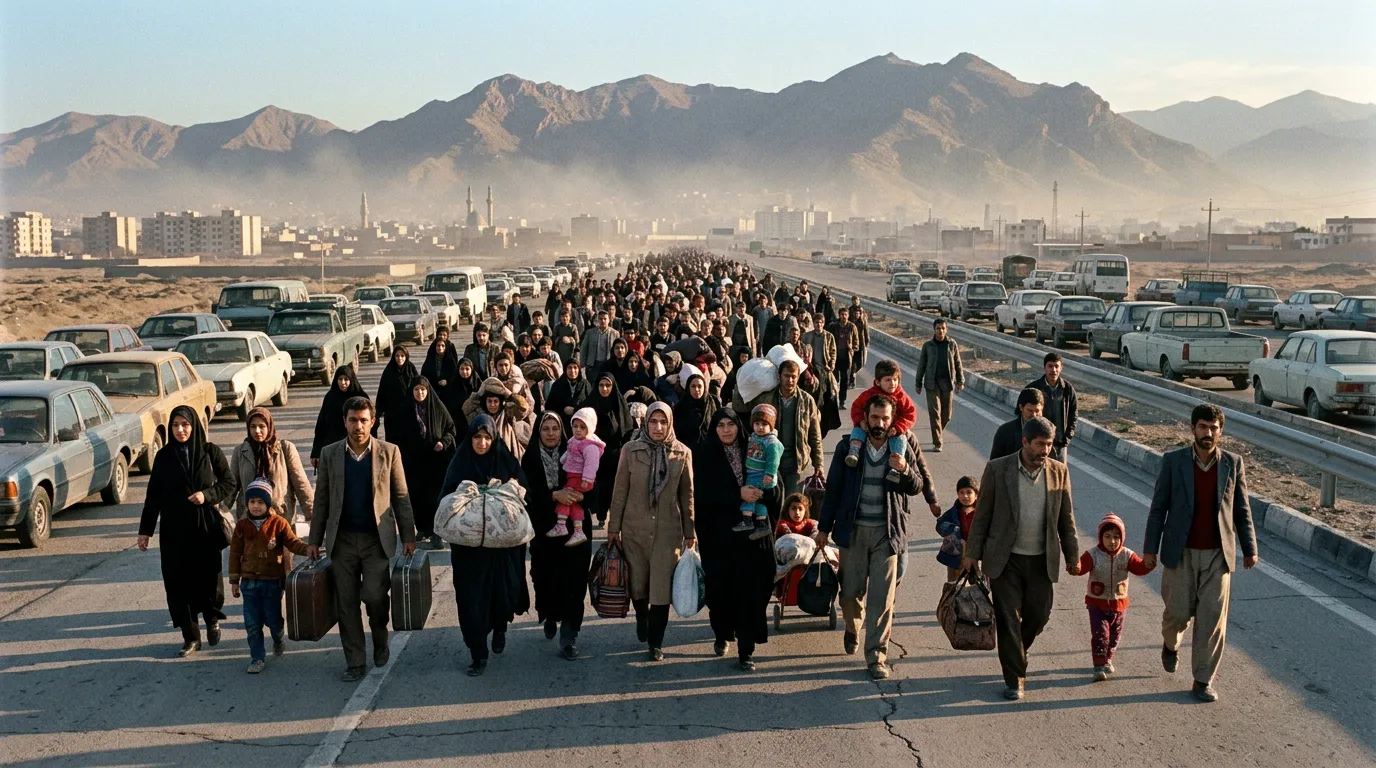
Understanding why Russian intelligence matters requires understanding the scale of what is happening on the ground. Since the U.S.-Israeli air campaign began on February 28, the death toll in Iran has reached at least 1,332 people, according to tracking by Al Jazeera. U.S. CENTCOM has struck more than 3,000 targets and destroyed 43 Iranian warships. The assassination of Supreme Leader Ali Khamenei, whose death was announced on March 1, has not broken Iran's will to fight. President Masoud Pezeshkian has declared that the American demand for "unconditional surrender" is a "dream they should take to their grave."
Iran's response has been substantial despite the damage to its military infrastructure. Tehran has launched more than 500 ballistic and naval missiles and nearly 2,000 drones since February 28, splitting its fire between Israeli and American targets. Approximately 40% of those projectiles have been aimed at Israel, while 60% have targeted U.S. forces and installations across the Gulf. Hezbollah launched a missile attack on Israel on March 2, opening a second front. More than 95,000 people have been displaced by Israeli strikes in Lebanon since the war began. The war powers vote in Congress earlier this week gave the administration broad authorization to continue military operations, and the market impact of the conflict has been severe, with the Dow dropping 785 points on Wednesday.
Into this volatile environment, Russian satellite intelligence introduces a new variable. Iran's ability to sustain its missile and drone campaign depends on knowing where to aim. Without Russian data, Tehran is increasingly firing blind as its own sensors go dark under American bombardment. With Russian data, Iran can continue targeting American positions with a degree of precision that its degraded infrastructure would otherwise not allow.
What This Means for the War's Trajectory
The strategic implications of Russian intelligence sharing extend beyond the immediate battlefield. First, it signals that Moscow has made a calculated decision that the benefits of supporting Iran outweigh the risks of antagonizing the United States. Russia and Iran signed a strategic partnership agreement in 2025, though it notably lacked the mutual defense provisions included in Russia's agreement with North Korea. Intelligence sharing falls into a gray zone below direct military involvement but above diplomatic neutrality, and Russia appears comfortable operating in that space.
Second, the intelligence sharing raises the risk of escalation between the United States and Russia. If American service members are killed in an attack that can be traced to Russian targeting data, the political pressure on the Trump administration to respond directly against Russian assets will be intense. The administration's current posture, dismissing Russia as "not really a factor" in the words of Defense Secretary Hegseth, may not be sustainable if casualties mount. The six service members killed in Kuwait on March 1 are already a raw political issue, and any evidence linking their deaths to Russian intelligence would transform the domestic debate.
Third, Russia's involvement makes a negotiated end to the conflict harder to achieve. Iran's incentive to negotiate diminishes if it believes it can sustain its military operations with external intelligence support. And the United States is less likely to accept a settlement that leaves Russia's intelligence pipeline to Tehran intact. The conflict dynamics are shifting from a bilateral war between the U.S. coalition and Iran toward something closer to a Cold War proxy arrangement, where the combatants on the ground are backed by competing great powers with their own strategic agendas.
The Impact
Russia's decision to provide targeting intelligence to Iran marks the moment this conflict stopped being a regional war and became a great-power contest. The satellite imagery flowing from Moscow to Tehran is not a symbolic gesture. It is a material contribution to Iran's ability to kill American troops, and the historical pattern of intelligence sharing in proxy conflicts points clearly in one direction: longer wars, higher casualties, and more difficult paths to peace. Based on the trajectory of every Cold War conflict where a superpower provided intelligence to a combatant fighting its rival, the most likely outcome is that Russian support extends the duration of Iran's resistance by weeks or months, not that it changes the ultimate military outcome. American and Israeli conventional superiority is overwhelming. But the cost of that superiority, measured in lives and dollars and geopolitical instability, just increased significantly. The indicator to track in the coming days is whether U.S. intelligence detects Russian data being used in specific targeting sequences. If that link is confirmed publicly, the pressure to retaliate against Russian intelligence assets, whether through cyber operations, diplomatic expulsions, or direct action, will become politically irresistible.
Sources
- Russia is giving Iran intelligence to target U.S. forces, officials say - The Washington Post
- Russia is providing intelligence to Iran on the location of U.S. forces, sources say - NBC News
- Russia providing intelligence to Iran about U.S. positions, sources say - CBS News
- Iran war: What is happening on day eight of US-Israel attacks? - Al Jazeera