Iran's Assembly of Experts announced on Saturday that Mojtaba Khamenei, the 56-year-old son of slain Supreme Leader Ali Khamenei, will succeed his father as the Islamic Republic's third supreme leader. The decision came just eight days after U.S.-Israeli strikes killed the elder Khamenei on February 28, along with his wife, mother, and one of his sisters. Mojtaba was not present during the attack and had reportedly been moved to a secure location days earlier.
The selection was swift, contested, and shaped by intense pressure from the Islamic Revolutionary Guard Corps. It also marks something Iran's theocratic system was never supposed to produce: a dynasty. The Islamic Republic was founded in 1979 explicitly to reject monarchy. Forty-seven years later, the supreme leadership has passed from father to son, and the institution most responsible for that outcome is the military force that was built to protect the revolution from exactly this kind of consolidation.
Who Is Mojtaba Khamenei?
Mojtaba Khamenei has never held elected office. He has never faced a public vote or served in any official government capacity. Yet he has been one of the most powerful figures in Iranian politics for more than a decade, operating as his father's gatekeeper, managing access to the supreme leader, and cultivating deep relationships within the IRGC's senior command structure.
Born in 1969 in Mashhad, Mojtaba studied Islamic jurisprudence in Qom and later served in various advisory roles within the supreme leader's office. His public profile remained deliberately low for most of his career, though in recent years he began appearing at more public events, a shift analysts interpreted as deliberate positioning for succession. According to a profile by Al Jazeera, he is considered a hardliner whose positions mirror his father's confrontational stance toward the United States and Israel, making him unlikely to pursue moderation or diplomatic engagement in the near term.
His relationship with the IRGC is the key to understanding both his rise and what comes next. Unlike his father, who built authority over decades through political maneuvering and the gradual consolidation of clerical networks, Mojtaba's power base rests almost entirely on his alliance with Iran's military establishment. That alliance is what made his selection possible in the chaos of wartime, and it is what will define the constraints and incentives of his leadership.
How the IRGC Engineered the Vote
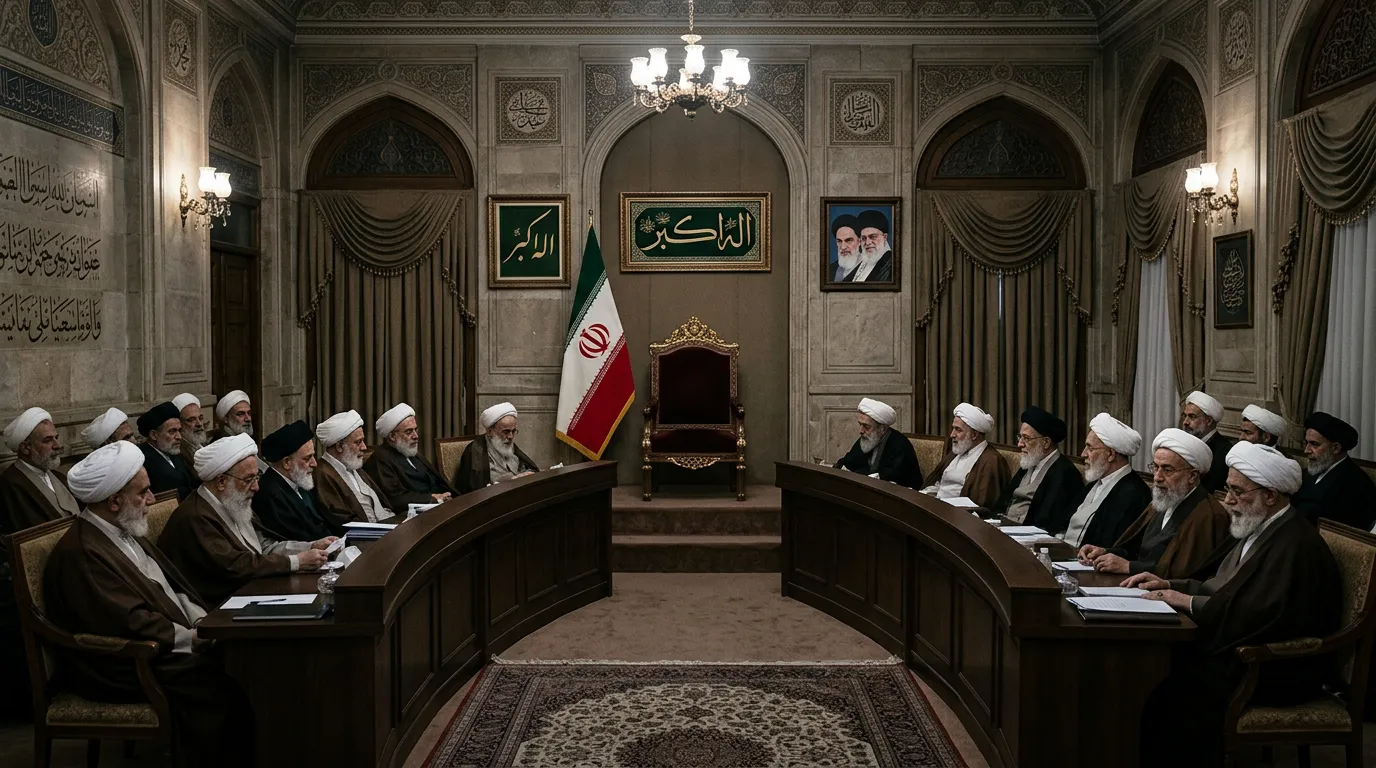
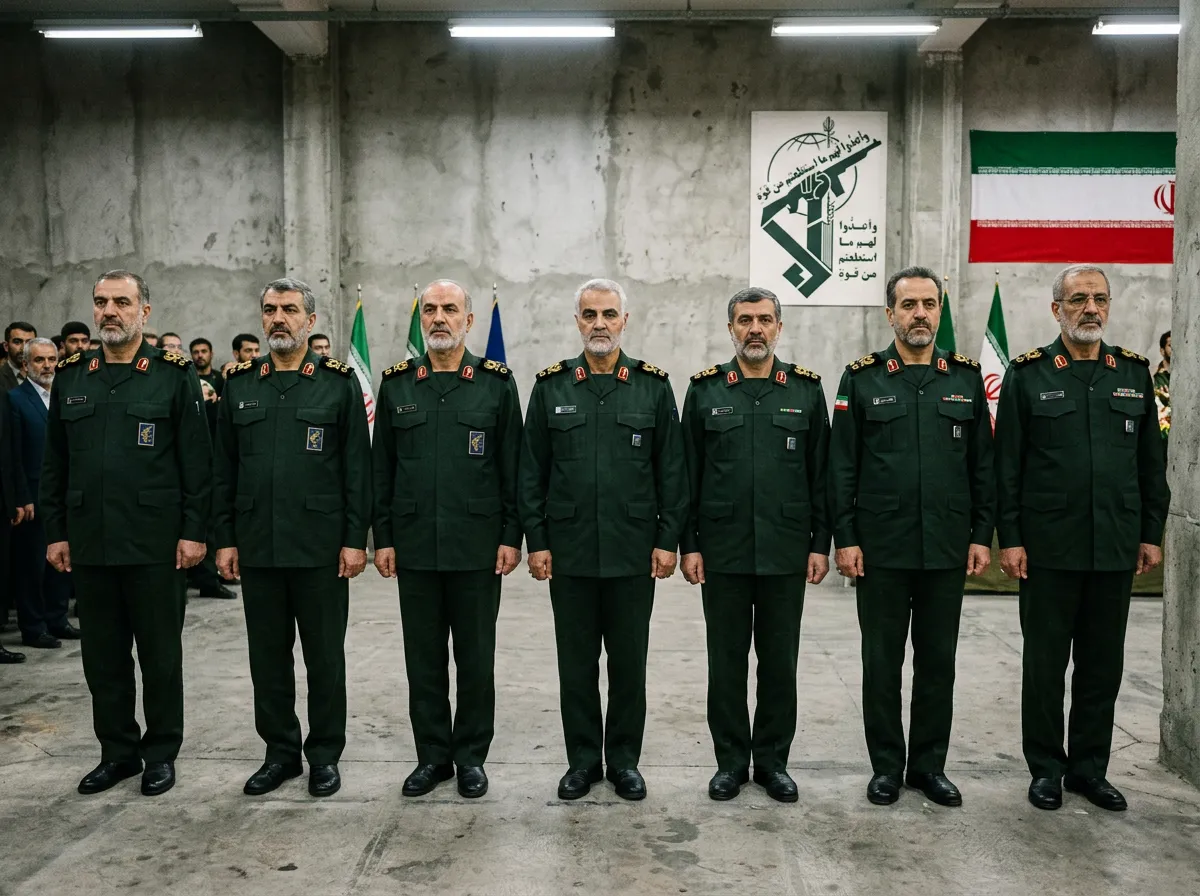
Constitutionally, the Assembly of Experts, a body of 88 Islamic scholars vetted by the Guardian Council, holds exclusive authority to select Iran's supreme leader. In practice, the selection process unfolded under enormous military pressure. According to reporting by Iran International, IRGC commanders began lobbying Assembly members immediately after Ali Khamenei's assassination, conducting in-person meetings and phone calls to push for Mojtaba's candidacy.
The lobbying intensified on March 3, when the Assembly convened its first electoral session. At least eight Assembly members threatened to boycott a second session over what they described as "heavy pressure" from the IRGC. The process was further complicated when U.S. and Israeli strikes hit the Assembly of Experts office in Qom after the first round of votes had been cast but before the count was completed. A second session was scheduled for March 5, and the final announcement came on March 8.
Two other candidates had been discussed as potential successors. Hassan Khomeini, grandson of the Islamic Republic's founder Ayatollah Ruhollah Khomeini, represented a reformist alternative with significant name recognition. Alireza Arafi, the Guardian Council member and director of Islamic seminaries, was considered a compromise candidate with "significant religious standing," according to Asia Times reporting. Neither could overcome the IRGC's organizational advantage and its ability to apply direct pressure on individual Assembly members during wartime conditions.
An interim three-person council, consisting of Arafi, President Masoud Pezeshkian, and judiciary head Gholam-Hossein Mohseni-Eje'i, had been governing since February 28. With Mojtaba's formal selection, that transitional arrangement has ended, though the new supreme leader inherits a country under active bombardment and a government apparatus operating from dispersed locations.
The Authoritarian Succession Playbook
Iran's revolutionary constitution was designed to prevent exactly what just happened. The Islamic Republic was built on the rejection of the Pahlavi monarchy, and its founding documents deliberately separated supreme leadership from hereditary succession. The Assembly of Experts exists specifically to ensure that clerical qualification, not bloodline, determines who holds the highest office.
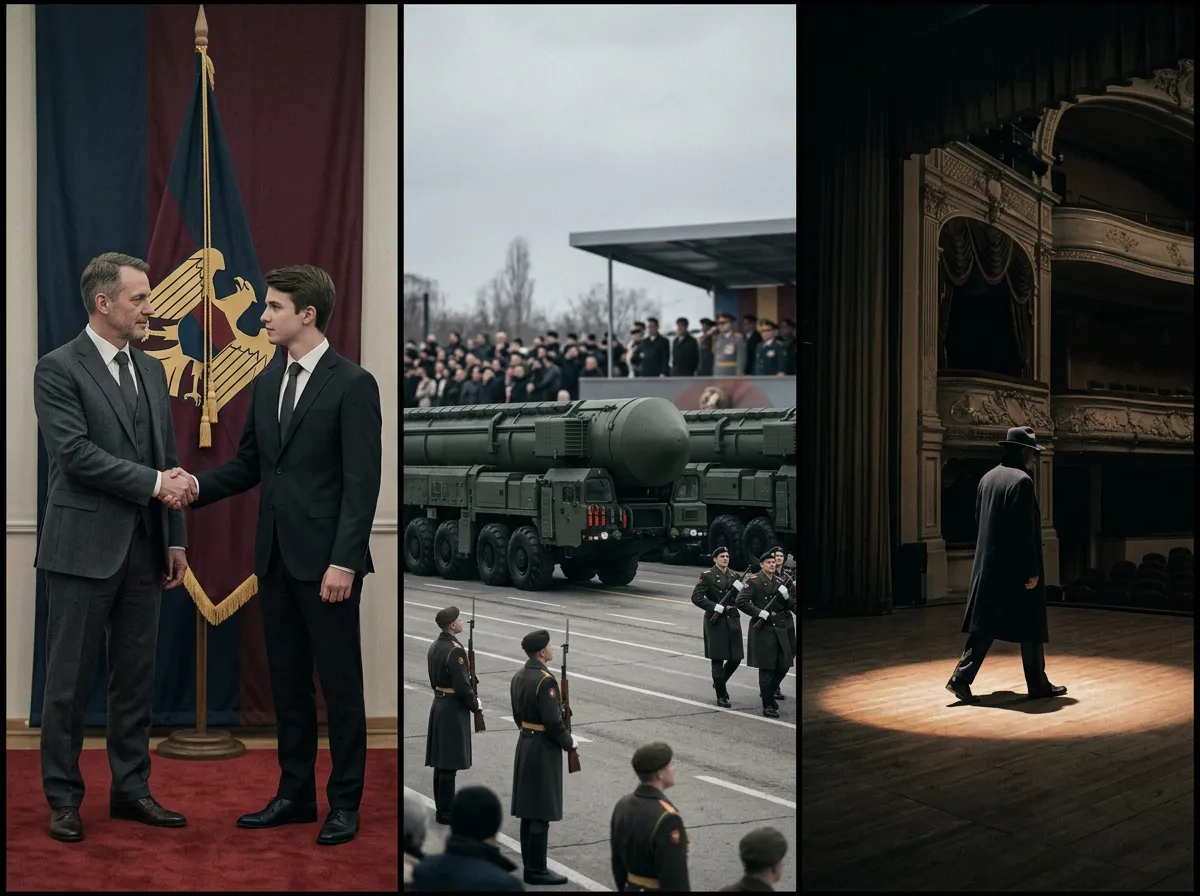
Yet the pattern of authoritarian regimes defaulting to dynastic succession under pressure is well-documented, and Iran's case fits the template precisely. North Korea's transition from Kim Il-sung to Kim Jong-il in 1994 occurred during a famine and nuclear crisis, with the military serving as the guarantor of continuity. Syria's transition from Hafez al-Assad to Bashar al-Assad in 2000 was engineered by security services that prioritized regime stability over the Ba'ath Party's formal structures. In both cases, the son inherited not because of personal qualifications but because the security apparatus preferred a known quantity during a moment of existential threat.
Iran's situation mirrors these precedents in critical ways. The IRGC, like the Korean People's Army and Syrian Mukhabarat before it, chose the candidate it could most reliably influence rather than the one with the strongest institutional credentials. Mojtaba's lack of formal governing experience is not a weakness from the IRGC's perspective; it is an asset. A supreme leader who owes his position entirely to the military establishment is a supreme leader who cannot easily challenge it.
The historical pattern also suggests what comes next. In both North Korea and Syria, dynastic succession produced initial instability followed by a consolidation period in which the new leader either asserted independent authority or became a figurehead for the security establishment. Kim Jong-un eventually executed his uncle and purged senior military leaders to establish personal control. Bashar al-Assad became dependent on Iranian and Russian military support that constrained his strategic options for decades. Mojtaba Khamenei's trajectory will likely follow one of these paths, though the active war with the United States and Israel compresses the timeline dramatically.
The World Reacts to a Wartime Succession
International responses to the announcement split along predictable lines, but the rhetoric from Washington was notably aggressive. President Trump stated that any new supreme leader would need "approval from us" or "won't last long," a direct threat that the Israeli military amplified by announcing it would target any Khamenei successor. Senator Lindsey Graham described the selection as "not the change we're looking for" and predicted Mojtaba would "meet his father's fate."
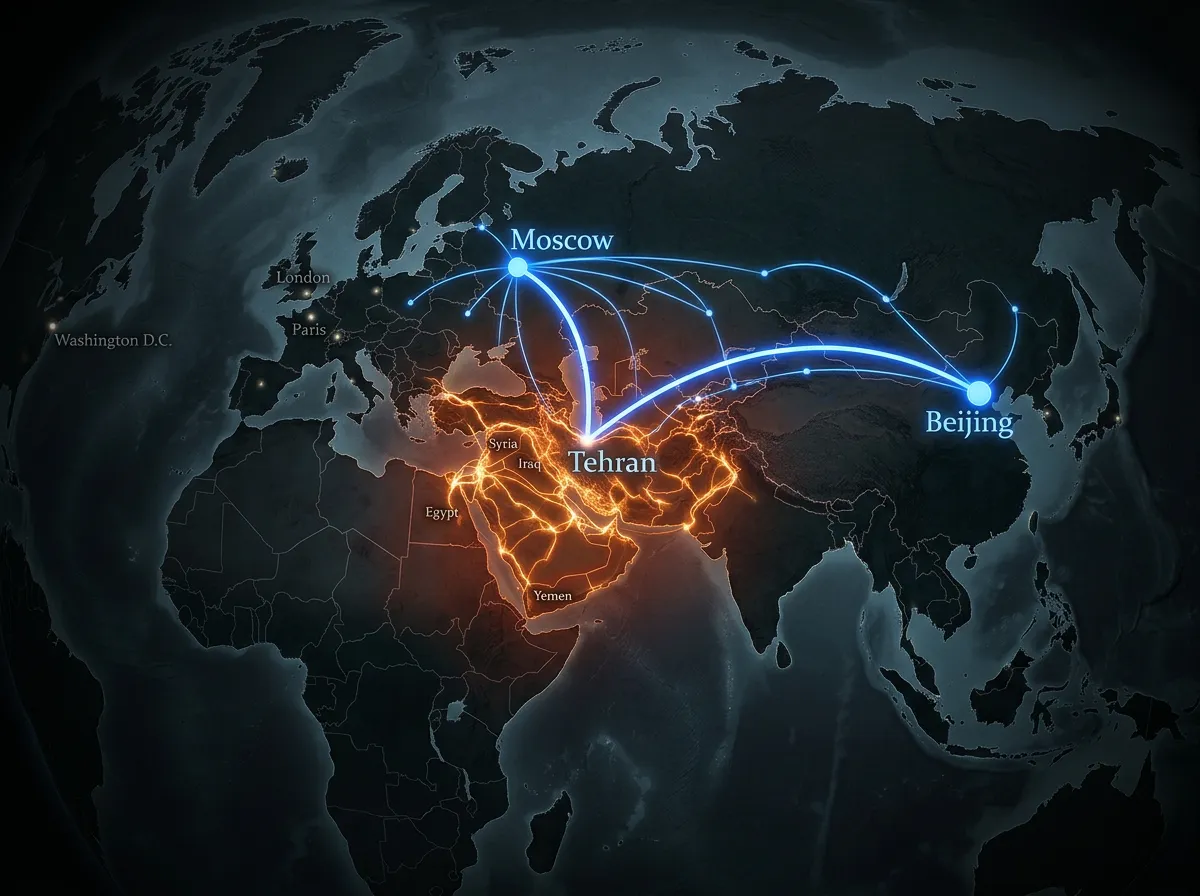
Russia and China moved quickly in the opposite direction. President Putin pledged "unwavering" support for the new leadership, while Beijing issued a statement opposing any targeting of Iran's head of state. The divergence reflects a broader dynamic in the conflict: the U.S.-Israeli military campaign against Iran has accelerated a realignment in which Russia and China position themselves as guarantors of Iranian state survival, deepening the very alliances that Washington's strategy was presumably designed to weaken.
Within Iran, the political establishment closed ranks rapidly. President Pezeshkian called Mojtaba's selection "a new era of dignity and strength." Parliament Speaker Ghalibaf declared following the new leader "a religious and national duty." The Defense Council stated its members would "obey the commander-in-chief until the last drop." Whether this unity reflects genuine consensus or wartime discipline imposed from above is impossible to determine from outside, but the speed of the pledges suggests the IRGC's consolidation campaign extended well beyond the Assembly of Experts.
The Impact
Mojtaba Khamenei's selection answers the immediate question of Iranian political continuity, but it creates a new set of problems. A supreme leader installed by the IRGC during wartime will face enormous pressure to maintain the confrontational posture that justified his selection. Any move toward negotiation with Washington would undermine the narrative of resistance that legitimizes both his position and the military establishment that put him there. Analysts quoted by Al Jazeera noted that Iran's government shows "little desire to agree to a deal or negotiations in the short term," a posture that Mojtaba's personal history and political debts make difficult to reverse.
The more concrete prediction centers on Iran's military strategy. The IRGC's influence over Iran's intelligence-sharing relationship with Russia will likely deepen under a leader who owes his position to the Guard Corps. And the congressional authorization that gave Washington broad latitude for military action now confronts a regime that has doubled down on its most hardline elements rather than producing the kind of internal fracture that American policy appeared to anticipate.
The Islamic Republic has survived its first leadership transition during active war. Whether it survives the second depends on whether Mojtaba can consolidate authority before the military campaign eliminates his ability to govern. Based on the North Korean and Syrian precedents, the most likely short-term outcome is a period of IRGC-dominated decision-making in which the new supreme leader functions as a legitimizing figurehead rather than an independent power center. The question is whether Iran's war footing makes that arrangement sustainable, or whether it accelerates the very fractures that dynastic succession was supposed to prevent.
Sources
- Iran names Mojtaba Khamenei as new supreme leader after father's killing - Al Jazeera
- Who is Mojtaba Khamenei? Iran's hardline next supreme leader, explained - Axios
- How Khamenei's successor is to be chosen and who he might be - Asia Times
- Iran's Assembly of Experts says consensus reached on Khamenei's successor - Al Jazeera
- 2026 Iranian Supreme Leader election - Wikipedia