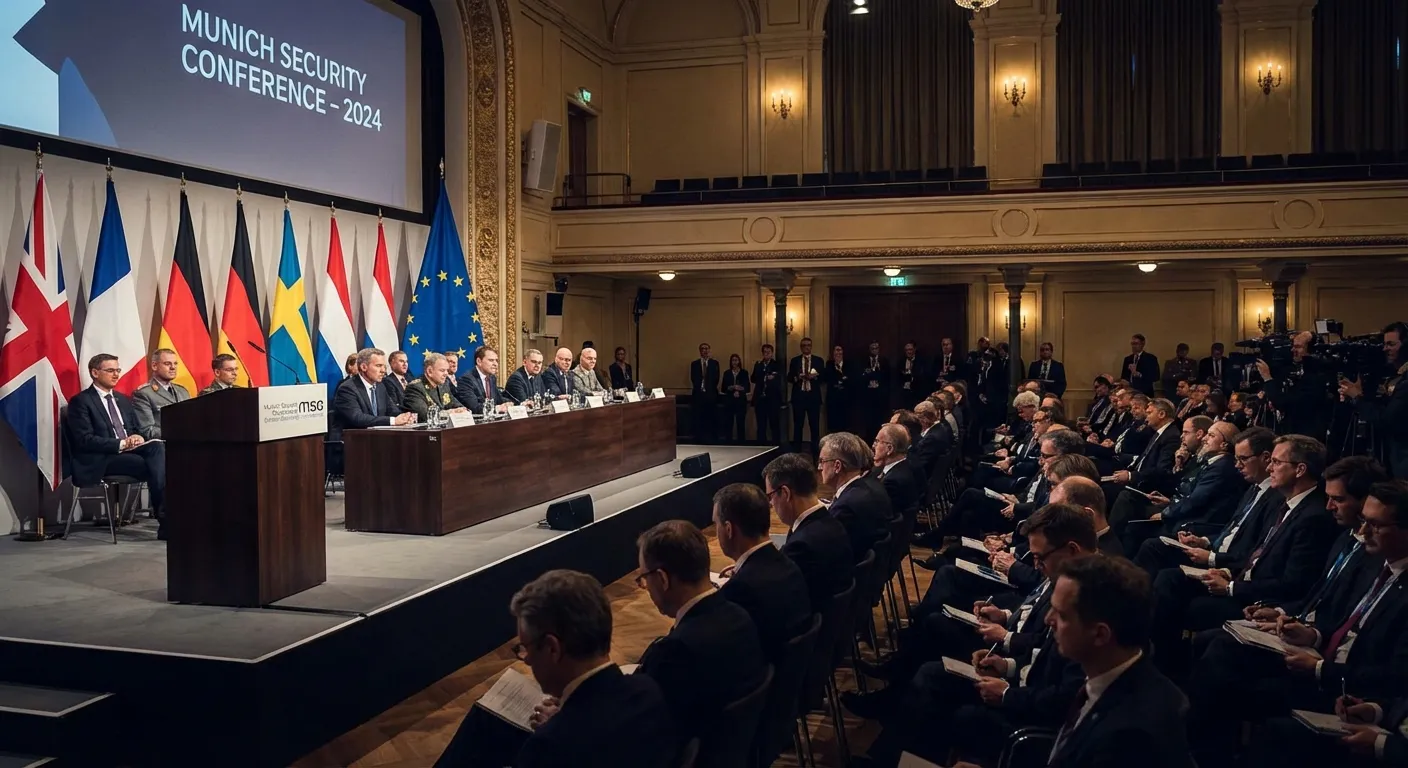
Five European nations dropped a geopolitical bombshell on Saturday at the Munich Security Conference, confirming what Alexei Navalny's family had long insisted: Russia's most prominent opposition figure was poisoned to death in prison. The weapon was not Novichok, the nerve agent that nearly killed him in 2020. It was something far more exotic, a neurotoxin derived from a tiny, brightly colored frog found only in the rainforests of South America.
The United Kingdom, France, Germany, Sweden, and the Netherlands issued a joint statement declaring that laboratory analysis of biological samples from Navalny "conclusively confirmed the presence of epibatidine." The five governments simultaneously reported Russia to the Organisation for the Prohibition of Chemical Weapons for breaching the Chemical Weapons Convention. "Only the Russian state had the combined means, motive and disregard for international law to carry out the attacks," the statement read.
Two years after Navalny collapsed and died in an Arctic penal colony on February 16, 2024, Europe has now put the formal accusation on paper. Russia, predictably, dismissed the findings as a "political pageant." But the implications of this announcement reach well beyond one man's death.
The Science of a Calculated Kill
Epibatidine is not a conventional weapon. It is a chlorinated alkaloid neurotoxin secreted by Epipedobates anthonyi, a small poison dart frog native to Ecuador. First identified by scientist John Daly in 1974, the compound initially attracted medical interest because it is roughly 200 times more potent than morphine as a painkiller. Researchers abandoned it as a pharmaceutical in the 1990s because the gap between a therapeutic dose and a lethal one was vanishingly small.

At toxic doses, epibatidine binds to nicotinic acetylcholine receptors with extraordinary affinity, flooding the nervous system and triggering a cascade of symptoms: full-body numbness advancing to total paralysis, respiratory failure, convulsions, and death. Dr. Alexander Polupan, the intensive care specialist who treated Navalny after his 2020 Novichok poisoning, noted that the clinical picture "is in some ways similar to poisoning by organophosphorus compounds" but with a critical difference. Unlike Novichok, there is no widely available antidote. Atropine, the standard treatment for nerve agent exposure, is essentially useless against epibatidine.
The joint statement underscored a crucial detail: "Dart frogs in captivity do not produce this toxin, and it is not found naturally in Russia." Synthesizing epibatidine requires "a state-level chemical program or access to an advanced research laboratory." Scientists at Russia's Institute of Organic Chemistry and Technology, the same institution that developed the Novichok nerve agent family, have reportedly produced epibatidine in laboratory settings.
A Two-Year Investigation Built on Smuggled Samples
The path from Navalny's death to Saturday's announcement was neither quick nor straightforward. When Navalny collapsed during a walk in his Arctic prison colony on February 16, 2024, Russian authorities declared his death natural, attributing it to "a combined disease" with "an arrhythmogenic character." The Investigative Committee of Russia formally concluded his death "does not have a criminal nature."
But Navalny's family and supporters were not convinced. Biological tissue samples were covertly obtained and smuggled out of Russia to the West. Two independent laboratories in different countries analyzed the material and reached identical conclusions: epibatidine was present.
In September 2025, Yulia Navalnaya announced publicly that laboratory tests proved her husband had been poisoned, though she did not identify the specific toxin at that time. German Foreign Minister Johann Wadephul acknowledged that the delay was the result of "a complicated process," suggesting that confirming the presence of an obscure frog-derived neurotoxin required painstaking scientific work.
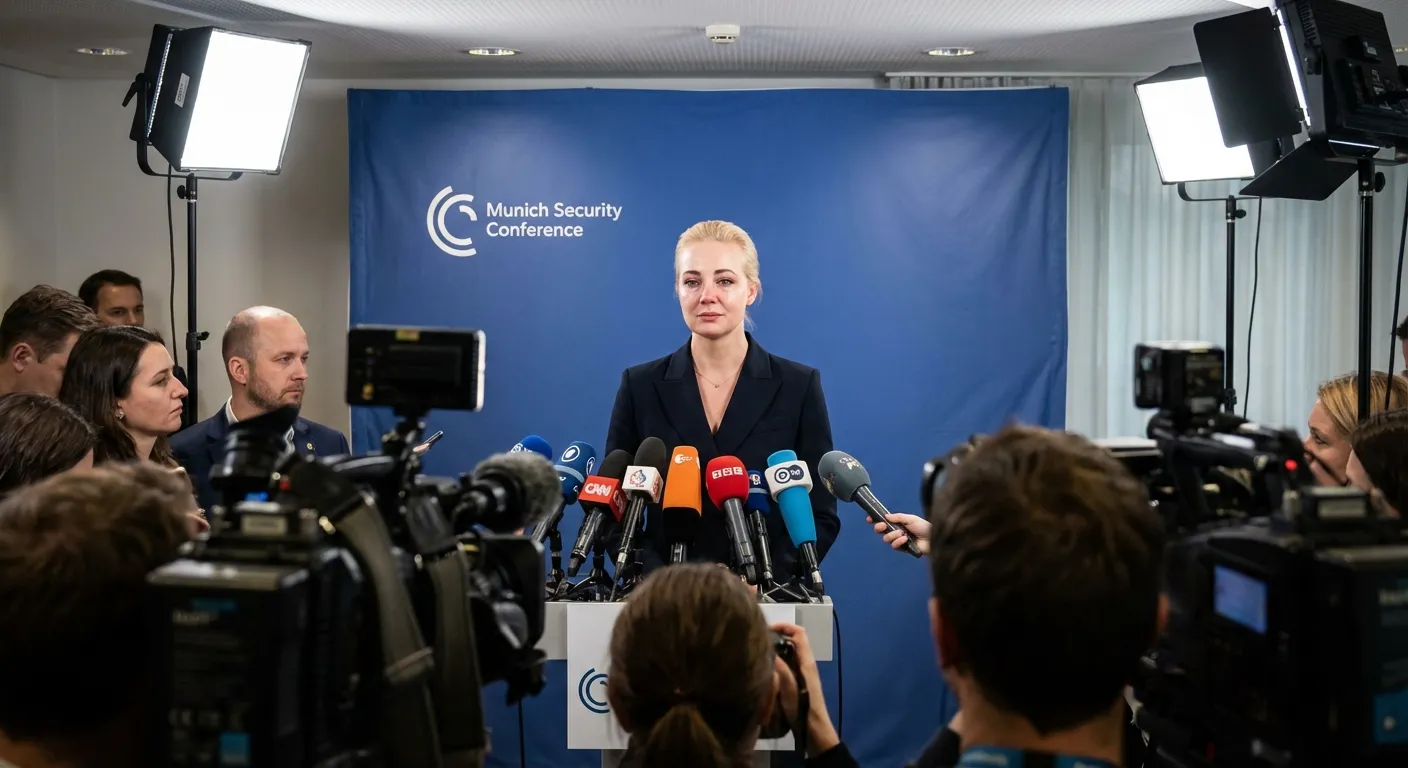
On Saturday, Navalnaya appeared at the Munich Security Conference, where she received a standing ovation. "I was certain from the first day that my husband had been poisoned, but now there is proof," she said. "Putin killed Alexei with chemical weapon. Vladimir Putin is a murderer. He must be held accountable for all his crimes."
The Kremlin's Evolving Playbook: From Polonium to Dart Frogs
The most significant analytical question raised by Saturday's announcement is not whether Russia killed Navalny. The pattern of Russian state assassinations is well-documented. The question is what the choice of weapon reveals about the Kremlin's strategic calculus.
Consider the trajectory. In 2006, Alexander Litvinenko was killed with polonium-210, a radioactive isotope that left a detectable trail across London. In 2018, the Skripals were targeted with Novichok in Salisbury, contaminating a public park and killing an uninvolved British citizen. In 2020, Navalny himself survived a Novichok attack on a domestic flight. Each of these weapons was eventually traced back to Russia, and each produced significant diplomatic fallout.
Epibatidine represents something different. It is not a military-grade nerve agent with a known Russian pedigree. It is a biological compound that, in theory, could be dismissed as a naturally occurring substance, despite the fact that it does not exist naturally anywhere near a Russian prison. The shift suggests the Kremlin learned from the diplomatic costs of previous assassinations and sought a weapon that would be harder to attribute definitively. The two-year gap between Navalny's death and Europe's formal confirmation suggests that calculation partially worked: tracing an exotic frog toxin required more time and specialized analysis than identifying a Novichok signature.
This evolution in assassination methodology carries implications beyond the Navalny case. As British Foreign Secretary Yvette Cooper stated, the poisoning demonstrates "the despicable tools [Russia] has at its disposal." The joint statement drew a direct line from Navalny to the broader pattern: "This alarming pattern of behaviour follows the targeting of the Skripals with Novichok on the streets of Salisbury in 2018 and Russian troops' frequent use of chemical weapons on the battlefield in Ukraine." The five nations also made a broader accusation: "It is clear Russia did not destroy all its chemical weapons as claimed in 2017, and that it has not renounced biological weapons."
For intelligence agencies tracking Russian capabilities, epibatidine opens a troubling new chapter. The weapon pool is no longer limited to the Novichok family and radioactive materials previously linked to Kremlin operations. It now includes biological toxins synthesized from compounds found in nature, a category that is inherently more difficult to attribute and regulate.
Moscow's Response and the Diplomatic Fracture
Russia's response followed a now-familiar script. The Russian Embassy in London called the findings a "political pageant," drew parallels to the Skripal case ("strident accusations, media hysteria, zero evidence"), and described the Western claims as "necro-propaganda." Foreign Ministry spokeswoman Maria Zakharova said Russia would only comment "where there are test results, where there are formulas of the substances," despite the five nations having submitted their technical findings to the OPCW.
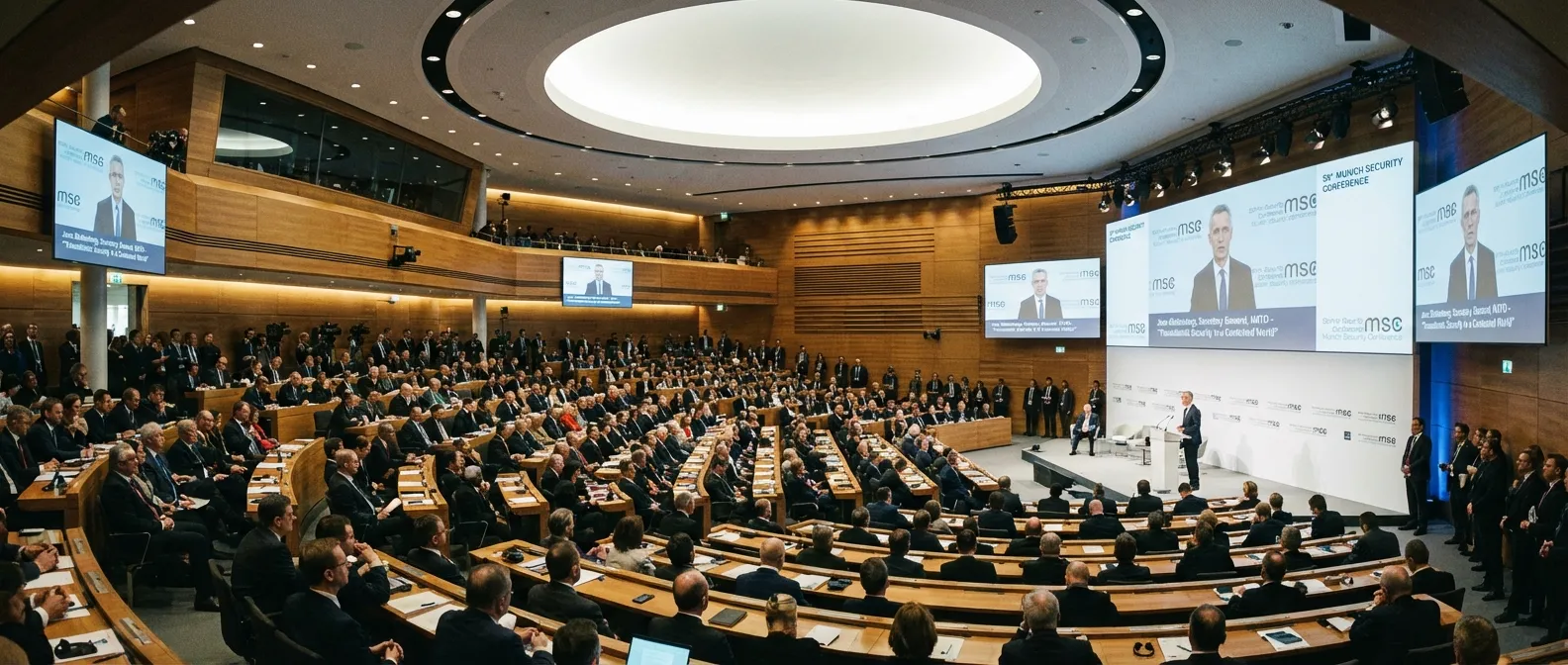
The more interesting diplomatic dynamic played out on the American side. US Secretary of State Marco Rubio, attending the Munich conference, called the European report "very troubling" and "very serious" but stopped short of co-signing the statement. "We don't have any reason to question it, or we're not disputing or getting into a fight with these countries over it," he said from Slovakia on February 15. The United States held a position of tacit acknowledgment without formal endorsement, a posture that reflects the Trump administration's ongoing recalibration of US-Russia relations.
That gap between European directness and American ambiguity is itself significant. The five nations pledged to "make use of all policy levers at our disposal to continue to hold Russia to account." Cooper suggested new coordinated sanctions could follow. But without American participation, the diplomatic pressure loses considerable weight, particularly as Moscow continues to view Western sanctions as manageable costs of its current foreign policy trajectory.
A Chemical Weapons Crisis Beyond One Assassination
The formal OPCW referral transforms this from a political accusation into a legal and institutional challenge. The five nations' Permanent Representatives to the OPCW wrote to the Director General on February 14, notifying him of Russia's breach of the Chemical Weapons Convention. This is the OPCW's second involvement with a Navalny case, following its investigation of the 2020 Novichok attack.
French Foreign Minister Jean-Noel Barrot framed the stakes directly: the poisoning demonstrates "that Vladimir Putin is prepared to use biological weapons against his own people in order to remain in power." The joint statement went further, accusing Russia of maintaining undisclosed chemical and biological weapons programs in violation of two separate international treaties.
The OPCW, however, has limited enforcement mechanisms. Russia retains its seat in the organization despite previous findings against it. The most likely outcome is a formal investigation, a public report, and additional diplomatic pressure, but not the kind of accountability Navalnaya demanded when she called Putin "a murderer" who "must be held accountable."
What Happens Next
The five nations have set specific institutional machinery in motion. The OPCW is expected to publish a summary of the technical report submitted on Saturday. Cooper's suggestion of new sanctions points toward coordinated European action in the coming weeks, though the scope and targets remain unspecified.
The more concrete indicator to watch is whether the United States moves from tacit acknowledgment to active participation. Rubio's careful phrasing, neither endorsing nor disputing, leaves room for the administration to engage if political conditions shift. If Washington joins the European position, the diplomatic consequences for Moscow escalate significantly. If it does not, Saturday's announcement, however damning the science, risks becoming another well-documented grievance in a growing file that Russia has shown little interest in addressing.
The Navalny case has always been about more than one opposition leader. It is a test of whether the international system can hold a nuclear-armed state accountable for assassinating its own citizens with banned weapons. Two years after his death, Europe has provided the evidence. The question now is whether evidence translates into consequences.
Sources
- PBS NewsHour: Russia poisoned opposition leader Alexei Navalny with dart frog toxin, five European nations say
- NBC News: Dart frog poison believed to have killed Alexei Navalny points to Kremlin
- NPR: Five European nations say Russia poisoned Navalny
- Al Jazeera: US not disputing European assessment of Navalny poisoning, Rubio says
- UK Government: Joint statement on Alexei Navalny's death