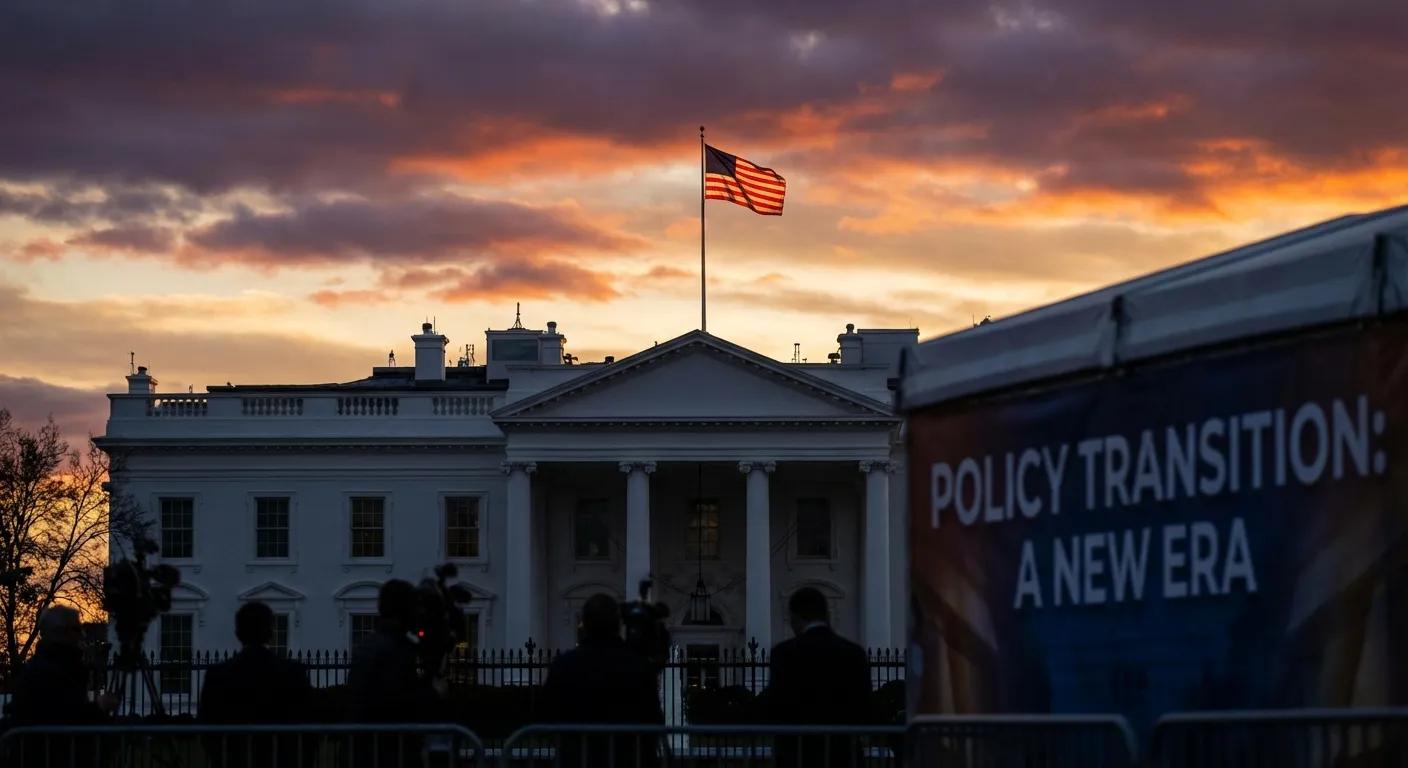
It has been exactly one year since Donald Trump returned to the Oval Office, and the transformation in American foreign policy can be measured in concrete numbers: withdrawal from 66 international organizations, the Paris Climate Agreement, and the World Health Organization. Tariffs of 20% to 30% imposed on European allies. A record $1.2 trillion Chinese trade surplus that grew 20% despite (or because of) American economic pressure. These are not adjustments at the margins. They represent the most significant shift from multilateral to bilateral foreign policy since the United States helped construct the post-World War II international order.
Hal Brands, a foreign policy historian at the American Enterprise Institute, characterizes the administration's goal as seeking "to extract more privileges from the international order while bearing fewer responsibilities for upholding them." That framing captures the strategic logic, but it understates the structural consequences. When the world's leading power abandons multilateral frameworks in favor of one-on-one negotiations, every other nation must recalculate its interests. One year in, those recalculations are producing measurable results that neither Washington's supporters nor its critics fully anticipated.
The Bilateral Doctrine: What It Means in Practice
The shift from multilateral to bilateral foreign policy is not simply a stylistic preference. It reflects a theory of power: that the United States extracts better terms in one-on-one negotiations, where its economic and military leverage is maximized, than in multilateral forums where smaller nations can form coalitions. The January 2026 presidential memorandum withdrawing the United States from 66 international organizations made this theory operational policy.
The withdrawals span the consequential and the symbolic. Leaving the WHO eliminates $261 million in annual American funding (approximately 18% of the agency's budget) and removes U.S. scientists from early pandemic warning systems. Exiting UNESCO, the UN Human Rights Council, and UNRWA severs decades of institutional involvement. The non-UN withdrawals include bodies like the Organization for Economic Cooperation and Development, which coordinates tax policy among wealthy nations, and the International Criminal Court.
Combined with the Paris Climate Agreement withdrawal on day one and the earlier suspension of engagement with multiple UN bodies, the cumulative effect is that the United States now participates in fewer international frameworks than at any point since 1945. The administration frames each withdrawal as a discrete cost-benefit decision. But the aggregate pattern sends a signal that transcends any individual institution: American commitments are conditional, reversible, and subject to renegotiation every four years. That signal is reshaping how every other nation plans its future.
The Greenland Test Case
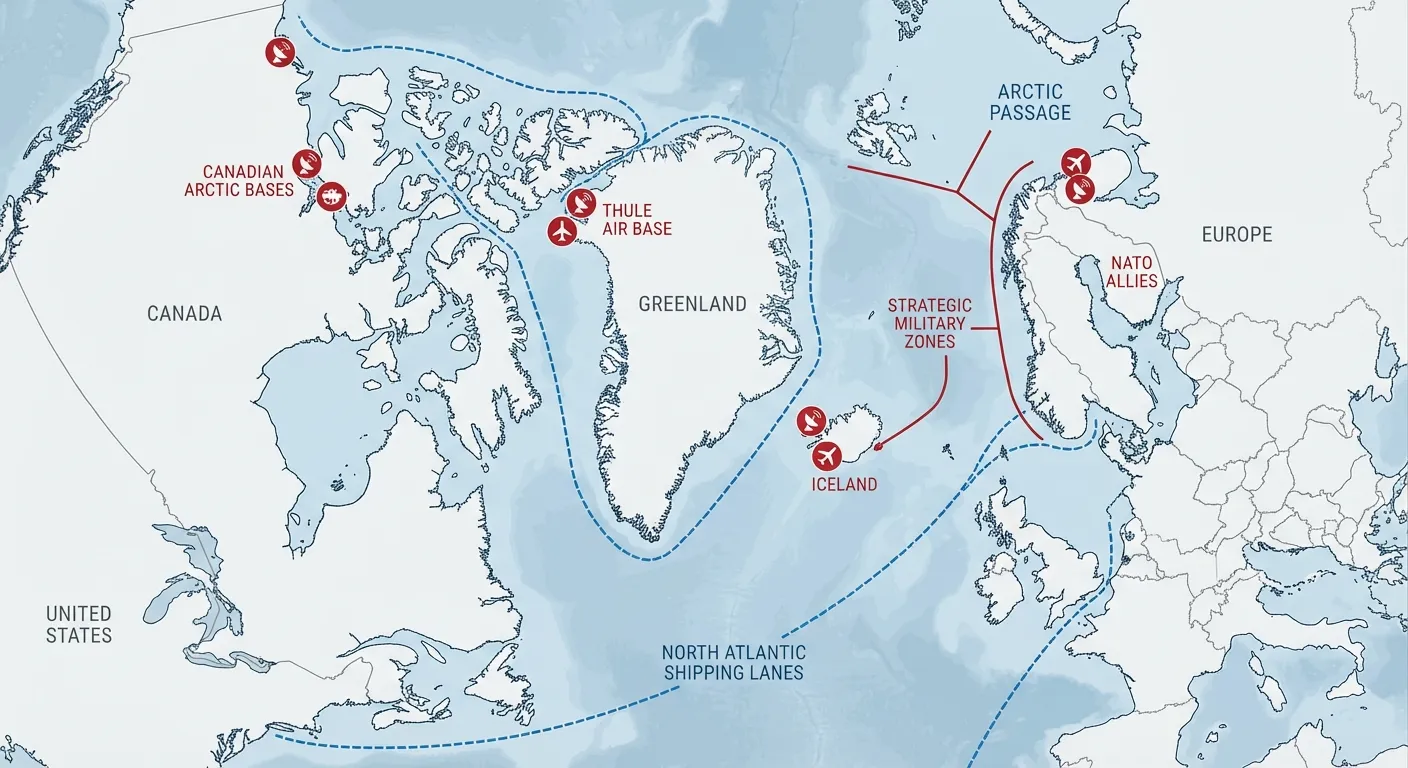
Nothing better illustrates both the logic and the limits of the bilateral approach than the ongoing push to acquire Greenland. The strategic rationale is genuine: Greenland sits atop critical Arctic shipping routes and rare earth mineral deposits that grow more accessible as ice retreats. The Thule Air Base (now Pituffik Space Base) already hosts American military assets essential for missile early warning systems.
But the bilateral approach, treating a NATO ally's sovereign territory as a potential acquisition, has produced measurable diplomatic damage that extends far beyond the Arctic. Eight European nations now face tariff threats for opposing the push. Thousands protested in Copenhagen and Nuuk in January against the proposed takeover. Denmark, a NATO founding member that has consistently supported American security priorities (including deploying forces to Afghanistan and Iraq), now faces economic coercion from the alliance's leading power.
The Greenland gambit reveals a structural flaw in the bilateral doctrine. In a multilateral framework, the United States could pursue Arctic interests through NATO coordination, shared infrastructure investment, and negotiated access agreements that preserved Danish sovereignty while expanding American capability. The bilateral approach, by contrast, frames the relationship as a zero-sum negotiation where American leverage (tariffs, diplomatic pressure, public threats) is deployed against an ally. The short-term gain, if any, comes at the cost of alliance credibility that took seven decades to build.
The broader pattern is instructive. European allies now openly question whether NATO's mutual defense commitment means what it once did. Not because Article 5 has been formally abandoned, but because the Greenland precedent demonstrates that alliance membership does not protect against economic coercion from within the alliance itself.
Europe Responds: The Strategic Autonomy Pivot
The most consequential development of year one may not be any single American action but the European response to the aggregate pattern. European leaders are no longer merely discussing strategic autonomy as a theoretical aspiration. They are building it through trade deals, defense investments, and institutional frameworks designed to reduce dependence on American reliability.
The numbers tell the story. EU member states spent 343 billion euros on defense in 2024, a 19% increase from 2023, with projections reaching 381 billion euros in 2025. At the June 2025 NATO summit in The Hague, allies committed to spending 5% of GDP on combined defense and security requirements by 2035, up from the 2% target that most members only recently achieved. The average expenditure across all 32 NATO members reached 2.76% of GDP in 2025, compared to just three members meeting the 2% threshold in 2014. Poland now spends 4.48% of GDP on defense, Lithuania 4.0%, Estonia 3.4%.
The EU's ReArm Europe plan, anchored by the 150 billion euro SAFE ("Security Action for Europe") loans-for-arms program, represents the most ambitious European defense industrial initiative since the Cold War. The stated goal is to build European defense manufacturing capacity that reduces structural dependence on American weapons systems, even as short-term procurement from U.S. defense contractors surged to $68 billion in 2024 (up from an $11 billion annual average between 2017 and 2021).
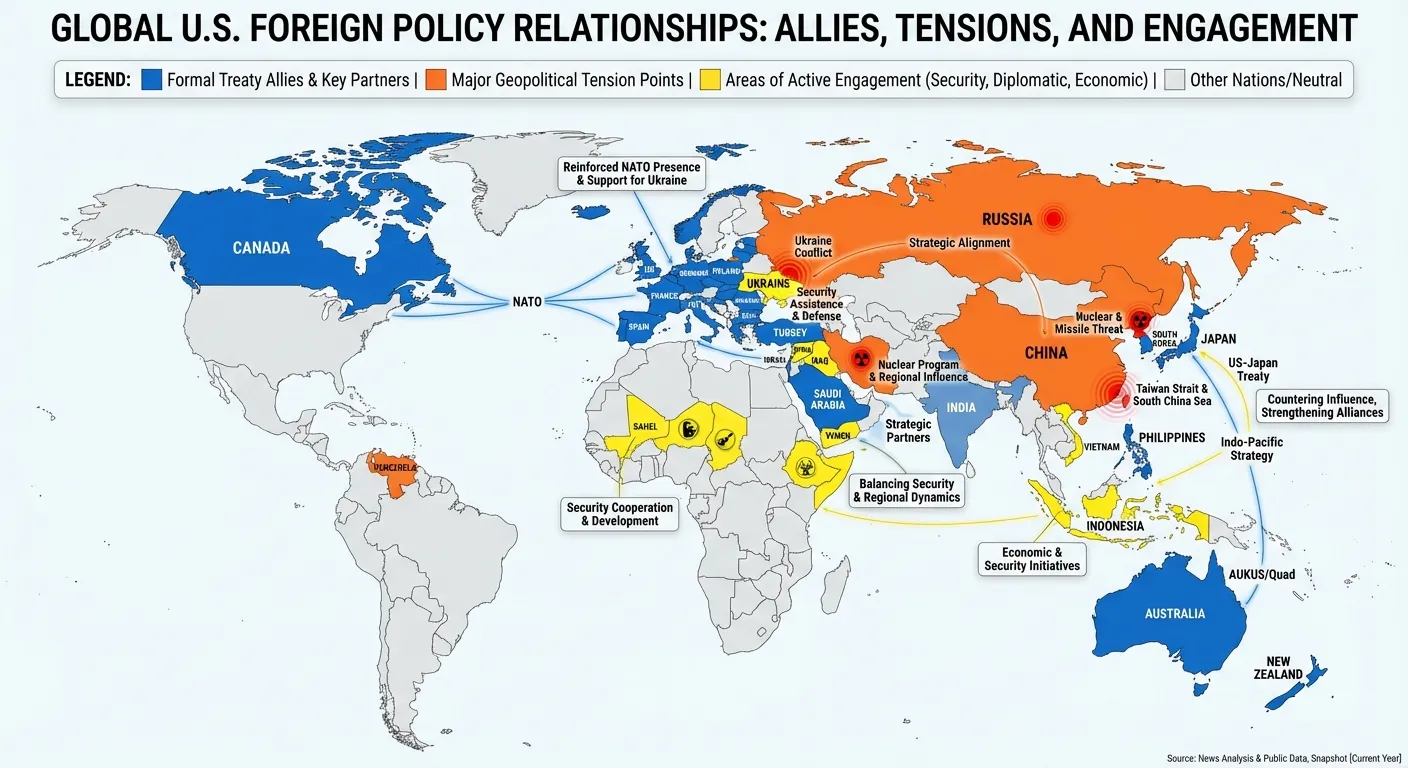
But the trade diversification is where the strategic autonomy push becomes most tangible. At Davos in January 2026, European Commission President Ursula von der Leyen announced the EU-India free trade agreement, calling it the "mother of all deals." Concluded on January 27, the agreement covers two billion people and nearly 25% of global GDP, cutting or eliminating tariffs on 97% of EU goods exports to India. The EU-Mercosur trade agreement, approved by 21 of 27 EU member states, creates the world's largest free trade area encompassing over 700 million people and saving European businesses an estimated 4 billion euros annually in tariffs.
Von der Leyen has signed deals with Japan, Indonesia, Mexico, and South America under the explicit banner of "strategic autonomy," a phrase that in practice means reducing vulnerability to coercion while keeping markets open. The pattern is unmistakable: while the United States withdraws from multilateral trade frameworks, Europe is constructing an alternative network of bilateral and regional agreements designed to ensure that no single power (including the United States) can use trade dependence as a weapon.
The China Paradox: Tariffs Without Results
The administration's China policy has been the most consistent element of its foreign approach, building on first-term positions with expanded tariffs, technology transfer restrictions, and continued military presence in the Pacific. It also provides the clearest data on the bilateral doctrine's effectiveness.
The numbers are unambiguous. China posted a record $1.2 trillion trade surplus in 2025, 20% larger than the previous record of $992 billion in 2024. Exports to the United States fell 20% as tariffs reached 145% at their peak. But shipments to the rest of the world more than compensated: exports to Africa surged 26%, Southeast Asia grew 13%, the EU increased 8%, and Latin America rose 7%. Chinese auto exports jumped 21% to more than 7 million vehicles, driven by electric vehicles that are increasingly competitive on price and quality.
The U.S. goods trade deficit with China stood at $295.4 billion in 2024 (the lowest since 2009, but still America's largest bilateral trade deficit with any country). The October 2025 trade deal between Trump and Xi reduced tariffs to 20% from their peak, an implicit acknowledgment that maximum pressure had not produced maximum results. The Tax Foundation estimates American consumers bore approximately $80 billion annually in higher prices from tariffs, costs that did not achieve the strategic objective of forcing Chinese concessions on trade practices.
Tianchen Xu, senior economist at the Economist Intelligence Unit, notes that Chinese exporters navigated the tariffs by tapping into other markets "with great success," adding that "China's price competitiveness is extremely strong." The bilateral approach assumed that American market access was irreplaceable leverage. China's trade data demonstrates it was not. Beijing invested years building alternative trade infrastructure through the Belt and Road Initiative, establishing distribution networks and political relationships across the developing world that now pay dividends precisely when American markets become hostile.
This is the core paradox of the bilateral doctrine applied to China: the strategy depends on American market access being so valuable that its withdrawal forces concessions. But in a globalized economy with 190 other potential trading partners, that leverage is weaker than the theory assumes. China did not come to the negotiating table on American terms. It redirected its export machine.
Historical Parallels: What Retrenchment Produces
The current moment invites comparison to two previous periods of American retrenchment, and the historical record offers specific warnings.
The post-World War I period is the most frequently cited parallel. After rejecting the League of Nations in 1920, the United States pursued a foreign policy built on bilateral negotiations, tariff protection (the Fordney-McCumber Tariff of 1922, the Smoot-Hawley Tariff of 1930), and immigration restriction. The logic was similar to today's: American leverage was greatest in one-on-one negotiations, and international institutions constrained rather than enhanced American power. The consequences were measurable. The Smoot-Hawley Tariff triggered retaliatory tariffs from 25 trading partners, contributing to a 66% decline in global trade between 1929 and 1934. American withdrawal from the League left no credible enforcement mechanism for international agreements, contributing to the conditions that produced World War II.
The post-Vietnam retrenchment of the 1970s offers a different lesson. After the fall of Saigon in 1975, American credibility with allies declined sharply. The Soviet Union interpreted reduced American engagement as an opportunity, expanding influence in Africa, Central America, and Afghanistan. The "credibility gap" took a decade and massive defense spending increases under Reagan to partially close.
The current period differs from both precedents in important ways. The United States retains overwhelming military superiority, which 1930s America did not. The economic interdependence of 2026 is far deeper than anything in the 1920s. But the structural pattern is consistent: when the leading power in an international system withdraws from the institutions it built, other powers fill the vacuum. In the 1930s, that meant Germany and Japan. In the 2020s, it means China.
The specific prediction the historical record supports is this: the trade and institutional frameworks that allies are now building in response to American withdrawal (the EU-India deal, EU-Mercosur, European defense integration) will persist regardless of future American political shifts. Post-retrenchment reconstruction is always harder than pre-retrenchment maintenance. The institutions Biden rebuilt after Trump's first term were rebuilt because the withdrawal was brief and allies were willing to wait. A second, deeper withdrawal teaches allies that waiting is a losing strategy.
The Measurable Consequences
Kori Schake, director of foreign and defense policy studies at the American Enterprise Institute, warns that the approach risks "hollowing out the credibility of these alliances instead of improving them." One year in, the data supports that assessment with specificity.
The institutional ledger is stark. The United States now participates in fewer multilateral organizations than at any point since World War II. The 66-organization withdrawal, combined with Paris Agreement and WHO exits, eliminates American influence over global health policy, climate coordination, human rights oversight, and economic standards-setting. China has not filled every vacuum, but it is positioned to influence the direction of institutions the United States no longer shapes from within.
The economic ledger is mixed at best. American consumers pay an estimated $80 billion annually in tariff costs. China's trade surplus grew to record levels despite those tariffs. The EU has responded to tariff threats not with concessions but with trade diversification, signing agreements with India, Mercosur, Japan, and Indonesia that reduce European dependence on American markets. The ECB cut interest rates seven consecutive times through June 2025, citing trade policy uncertainty as a key factor, but EU GDP growth projections declined by only 0.2 percentage points, suggesting manageable economic impact from American tariffs.
The alliance ledger is the most concerning for long-term American interests. NATO allies are spending more on defense (the 2% target is now universally met, with the average at 2.76%), which the administration counts as a success. But that spending increasingly funds European defense industrial capacity designed to reduce dependence on American systems. The 150 billion euro ReArm Europe program is not allies spending more within the American-led framework. It is allies building an alternative framework.
Based on the trajectory of the first year, three specific outcomes are probable by early 2027. First, the EU-India and EU-Mercosur trade agreements will reach implementation phases that make them structurally irreversible, regardless of future American trade policy shifts. Second, European defense procurement from non-U.S. sources will exceed 40% of total spending as the ReArm Europe program accelerates domestic production. Third, China's trade surplus will remain above $1 trillion (Natixis economist Gary Ng forecasts 3% export growth in 2026), with continued geographic diversification away from American markets. The bilateral doctrine has not made American power more effective. It has accelerated the construction of a world designed to function without American leadership.
Sources
- Trump 2.0 Enters 2026 in Full Force - Chicago Council on Global Affairs
- How Trump's Foreign Policy Gambits Are Reshaping the World - TIME
- The Most Significant Question for Trump's America in 2026 - Atlantic Council
- As Trump Dismantles the Existing World Order - NPR
- Foreign Policy of the Second Trump Administration - Wikipedia