On April 20, one of the most powerful surveillance tools in the U.S. government's arsenal will expire unless Congress acts. Section 702 of the Foreign Intelligence Surveillance Act allows spy agencies to collect the communications of foreign targets abroad without a warrant. In practice, it also sweeps up the emails, text messages, and phone calls of an unknown number of Americans who happen to communicate with those targets. The FBI then searches that database for Americans' information without any court approval, a practice critics call the "backdoor search loophole."
How extensively is that loophole used? According to the most recent data published by the Foreign Intelligence Surveillance Court, the FBI conducted approximately 278,000 warrantless backdoor searches targeting Americans' communications in a single year. That number, which the bureau itself disclosed under pressure, is the backdrop for a congressional fight that splits both parties down the middle and pits national security hawks against civil libertarians in each caucus.
With 32 days until the deadline, two competing visions are on the table: a clean extension that keeps the program running as-is, and a bipartisan reform bill that would require a warrant before the FBI can search Americans' data. The last time Congress voted on a warrant requirement, in April 2024, the amendment failed on a 212-212 tie.
What Section 702 Actually Does
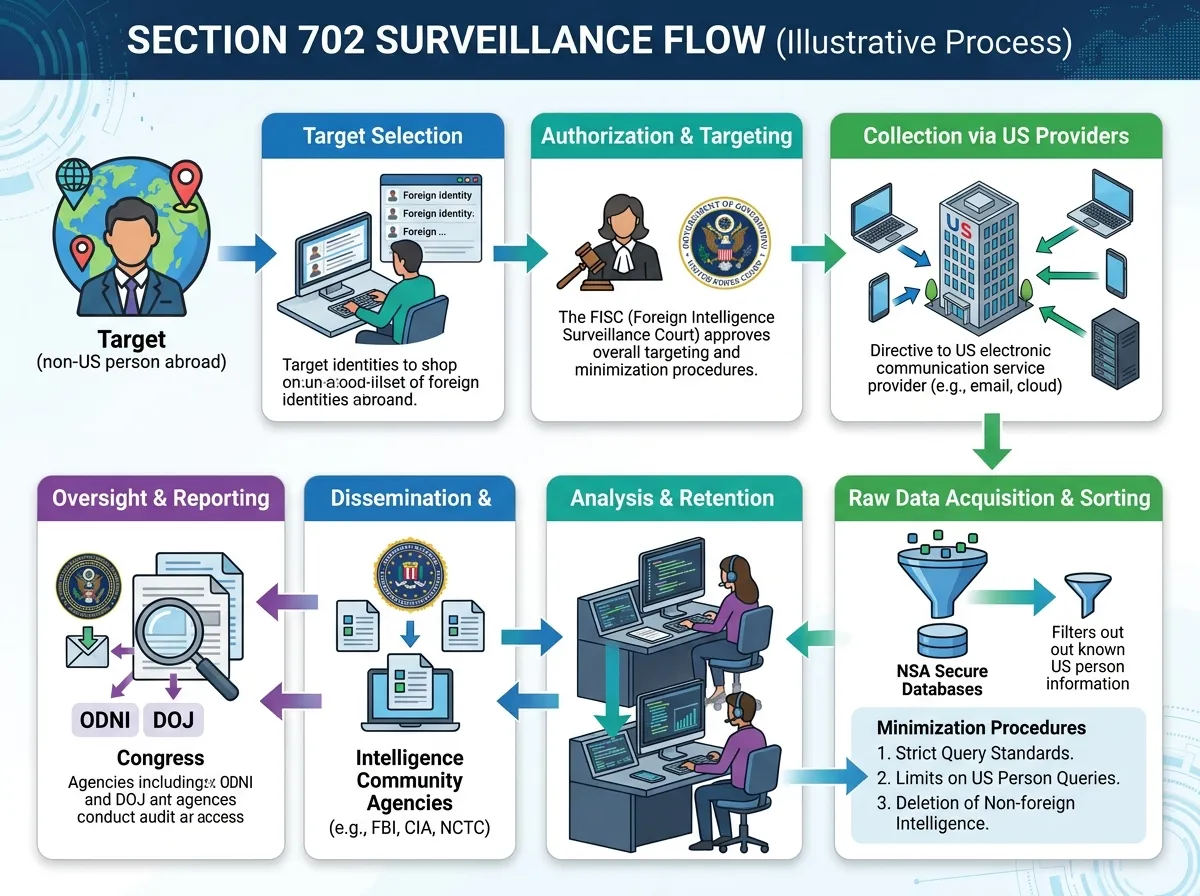
Section 702, enacted in 2008, authorizes the NSA, CIA, and FBI to compel U.S. telecommunications companies and internet platforms to provide communications data on foreign persons reasonably believed to be located outside the United States. The targets must be non-U.S. persons, and the surveillance must be aimed at collecting "foreign intelligence information," a broad category that encompasses counterterrorism, counterintelligence, and cybersecurity.
The program does not require individualized court orders for each target. Instead, the government submits annual certifications to the Foreign Intelligence Surveillance Court describing broad categories of intelligence collection. The court approves targeting procedures and minimization procedures but does not review individual surveillance targets. In practice, this means the NSA can direct Google, Microsoft, Apple, and other providers to hand over specific accounts' communications with a single certification rather than thousands of individual warrants.
Intelligence officials have called Section 702 "the crown jewel" of U.S. foreign intelligence collection. The program has contributed to the disruption of terrorist plots, the identification of foreign cyber actors, and the tracking of weapons proliferation networks. Its defenders, including the directors of the NSA and FBI, argue that requiring warrants for each target would cripple the program's speed and scope.
The Backdoor That Caught 278,000 Americans
The controversy centers on what happens after the initial collection. When the NSA collects a foreign target's emails, it inevitably picks up communications from Americans on the other end of those conversations. If you email a business contact in Berlin who happens to be a surveillance target, your message enters the database. If a foreign journalist under surveillance interviews an American politician, that exchange is collected too.
This "incidental collection" is, by itself, not the primary objection. The problem is what agencies do with the data afterward. The FBI maintains access to the Section 702 database and routinely queries it using American names, phone numbers, and email addresses to check whether U.S. persons appear in foreign intelligence intercepts. These queries, known as "U.S. person queries" or "backdoor searches," require no warrant, no probable cause, and no court approval of any kind.
The scale is staggering. The FISA Court's most recent annual transparency report revealed that the FBI conducted approximately 278,000 U.S. person queries in a single reporting year, a figure that includes searches related to criminal investigations with no connection to national security. An internal FBI audit found that agents had repeatedly violated even the bureau's own internal guidelines for conducting these searches, including running queries on January 6 Capitol breach suspects, Black Lives Matter protesters, and a sitting member of Congress.
Elizabeth Goitein, co-director of the Liberty and National Security Program at the Brennan Center for Justice, told Brookings that the backdoor search loophole "effectively transforms a foreign intelligence program into a domestic surveillance tool. The Fourth Amendment is supposed to require a warrant before the government searches Americans' private communications. Section 702 lets the FBI skip that step entirely."
The Vote That Died in a Tie
The closest Congress has come to closing the loophole was April 2024. During floor debate on the Reforming Intelligence and Securing America Act (RISAA), Representatives Andy Biggs (R-AZ) and Pramila Jayapal (D-WA) introduced an amendment that would have required the FBI to obtain a court order before conducting U.S. person queries of the Section 702 database, with exceptions for emergencies and imminent threats.
The amendment produced one of the most unusual coalitions in recent congressional history. It was supported by 128 Republicans and 84 Democrats, a combination of libertarian-leaning conservatives who view government surveillance with suspicion and progressive Democrats who prioritize civil liberties. Opposing the amendment were 86 Republicans aligned with the national security establishment and 126 Democrats who sided with the intelligence community's warnings that a warrant requirement would be operationally devastating.
The final vote was 212 in favor, 212 against. Under House rules, a tie means the amendment fails. A single additional vote in either direction would have changed the outcome. The program was reauthorized without the warrant requirement but with a sunset date of April 20, 2026, ensuring that the fight would resume.
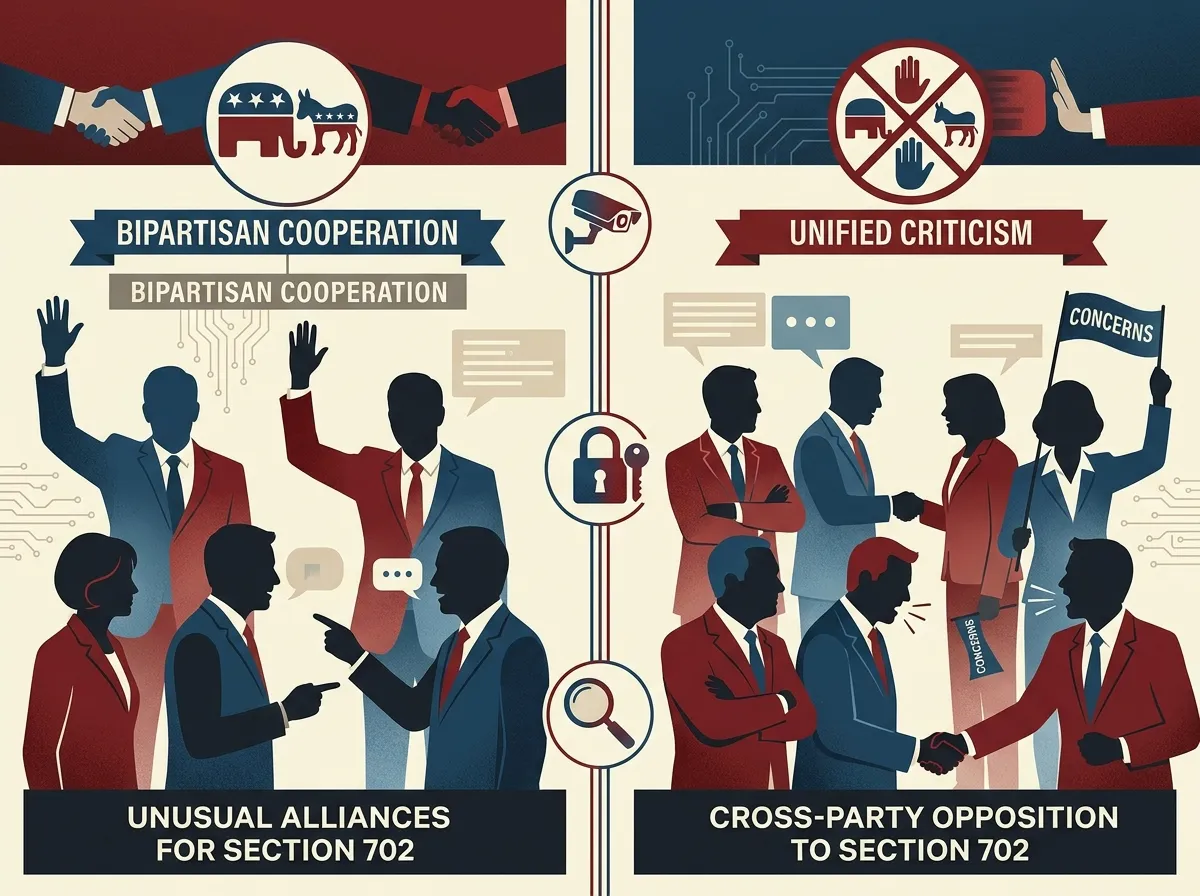
Two Paths Forward: Clean Extension vs. Reform
Speaker Mike Johnson is advancing an 18-month "clean" extension of Section 702 that would push the deadline to late 2027 without adding any new privacy protections. The Trump administration supports this approach. Representative Jim Jordan (R-OH), who chairs the Judiciary Committee and has historically been skeptical of government surveillance, surprised many by endorsing the clean extension in an interview this week, arguing that the current geopolitical environment, particularly the war with Iran, makes this the wrong time to restrict intelligence capabilities.
On the reform side, Senators Mike Lee (R-UT) and Ron Wyden (D-OR) have introduced the Government Surveillance Reform Act, which would reauthorize Section 702 but add a warrant requirement for U.S. person queries, mandate notification when Americans' communications are surveilled, require public reporting on surveillance orders, and allow individuals to challenge sealed surveillance applications. The bill has support from civil liberties organizations across the ideological spectrum, including the ACLU, the Brennan Center, the Electronic Frontier Foundation, and the conservative Cato Institute.
A third faction, smaller but vocal, wants Section 702 to expire entirely. Senator Rand Paul (R-KY) has argued that the program is unconstitutional and that no amount of reform can fix a structure that was designed to circumvent the Fourth Amendment. The Electronic Privacy Information Center (EPIC) has called for a full sunset, arguing that "the history of Section 702 demonstrates that internal compliance mechanisms cannot prevent systematic abuse."
The Post-9/11 Pattern: Why Wars Kill Surveillance Reform
The Iran conflict has fundamentally changed the political calculus around Section 702, and history suggests this is not coincidental. Major surveillance authorities have consistently expanded during wartime and contracted only during periods of relative peace, a pattern that privacy advocates call the "ratchet effect."
The most direct parallel is the USA PATRIOT Act, passed 45 days after the September 11 attacks with a 98-1 vote in the Senate and 357-66 in the House. The bill expanded the government's surveillance, search, and detention powers with minimal debate. Many of its most controversial provisions, including the "sneak and peek" delayed-notification search warrants and expanded National Security Letter authority, had been proposed and rejected by Congress in the years before 9/11. The attacks created the political conditions for their passage.
Section 702 itself was born from this dynamic. It was enacted in 2008 as an amendment to FISA, partly to retroactively legalize the NSA's warrantless wiretapping program that President George W. Bush had secretly authorized after 9/11. The program had been operating for years before Congress was asked to approve it, creating a fait accompli that lawmakers found politically impossible to dismantle.
The current moment follows the same script. The war with Iran has elevated intelligence collection to the top of national security priorities, making any restriction on surveillance tools politically toxic. Jordan's pivot from surveillance skeptic to clean-extension advocate is the clearest signal: even lawmakers who built their reputations on challenging government overreach feel unable to push for reforms while American forces are engaged in active combat. If the pattern holds, the window for meaningful reform will not reopen until the conflict subsides, and by then, Congress may have already conceded new authorities that become equally difficult to roll back.
The irony is that the 278,000 warrantless searches that fuel the reform movement occurred during peacetime. If the FBI conducts that many backdoor searches when the country is not at war, the number during an active military conflict is likely to be substantially higher. Reform advocates argue that wartime is precisely when surveillance guardrails matter most, because the combination of heightened threat perception and reduced political accountability creates the conditions for the most serious abuses.
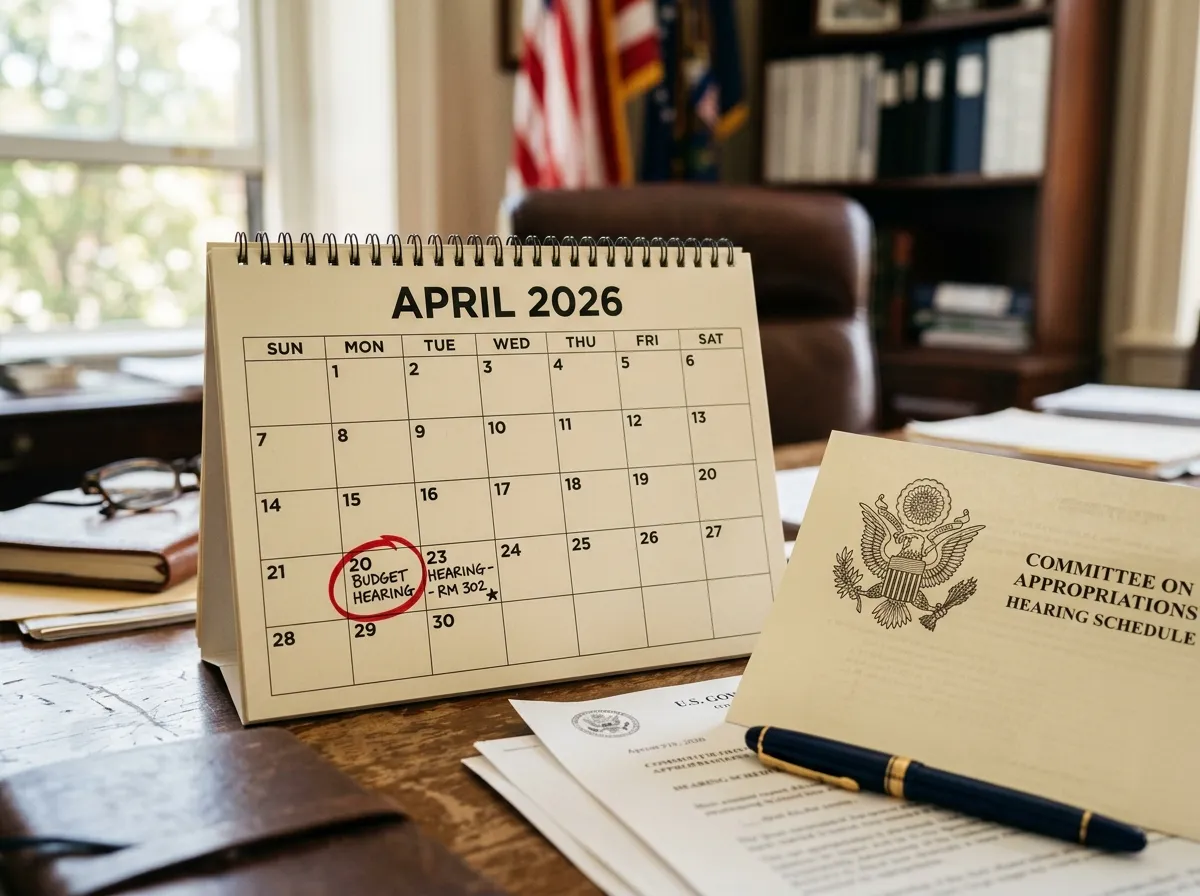
What This Changes
The most likely outcome, based on the current congressional math, is a clean short-term extension. Johnson has the votes in the House if Jordan holds the Republican conference, and the Senate is unlikely to block a reauthorization while the Iran war is active. The Lee-Wyden reform bill will get a hearing, generate compelling testimony, and fail to reach the floor for a vote.
But the 212-212 tie vote from 2024 has not been forgotten, and the political dynamics are shifting in ways that matter for the next reauthorization fight. Three of the House members who voted against the warrant amendment in 2024 have since been replaced by successors who have publicly committed to supporting privacy reform. If the clean extension passes with a two-year sunset, the next vote will take place in a different Congress with at least a slightly more favorable margin for reformers.
The specific indicator to watch is Jordan's behavior. His endorsement of the clean extension was conditional: he described it as a "bridge" that would give Congress time to develop "thoughtful reforms" after the current crisis passes. If Jordan reverts to his pre-war skepticism of government surveillance once the Iran conflict ends, the warrant requirement could have enough Republican support to pass. If he remains aligned with the national security establishment, the reform coalition loses its most influential House Republican champion, and the next deadline may produce the same result as this one.
Sources
- Section 702 of the Foreign Intelligence Surveillance Act (FISA): 2026 Resource Page - Brennan Center for Justice
- A key intelligence law expires in April and the path for reauthorization is unclear - Brookings Institution, 2026
- Section 702 Expires in April: Congress Can't Agree on Whether to Keep Warrantless Surveillance - gBlock, 2026
- Lee Introduces Bipartisan Government Surveillance Reform Act - Senator Mike Lee, March 2026
- FISA Section 702: Reform or Sunset - Electronic Privacy Information Center