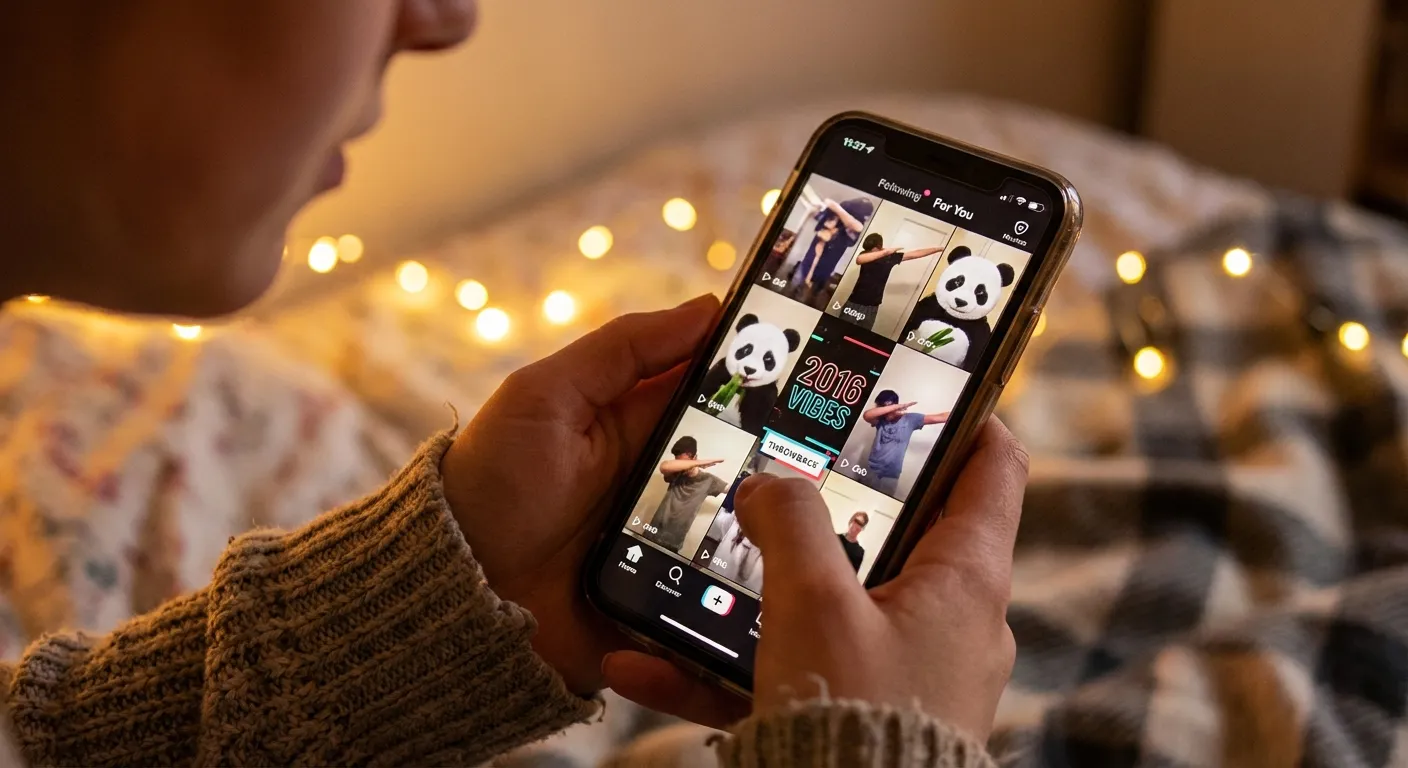
The year is 2016, and everything is fine. That's the premise of a TikTok trend that has consumed the platform's youngest users since mid-January, generating over 300 million views under hashtags like #2016nostalgia, #2016core, and #takemeback2016. The videos follow a formula: montages of 2016 cultural artifacts set to songs from that year, usually Drake's "One Dance" or The Chainsmokers' "Closer," overlaid with text that reads some variation of "you just don't understand how good it was."
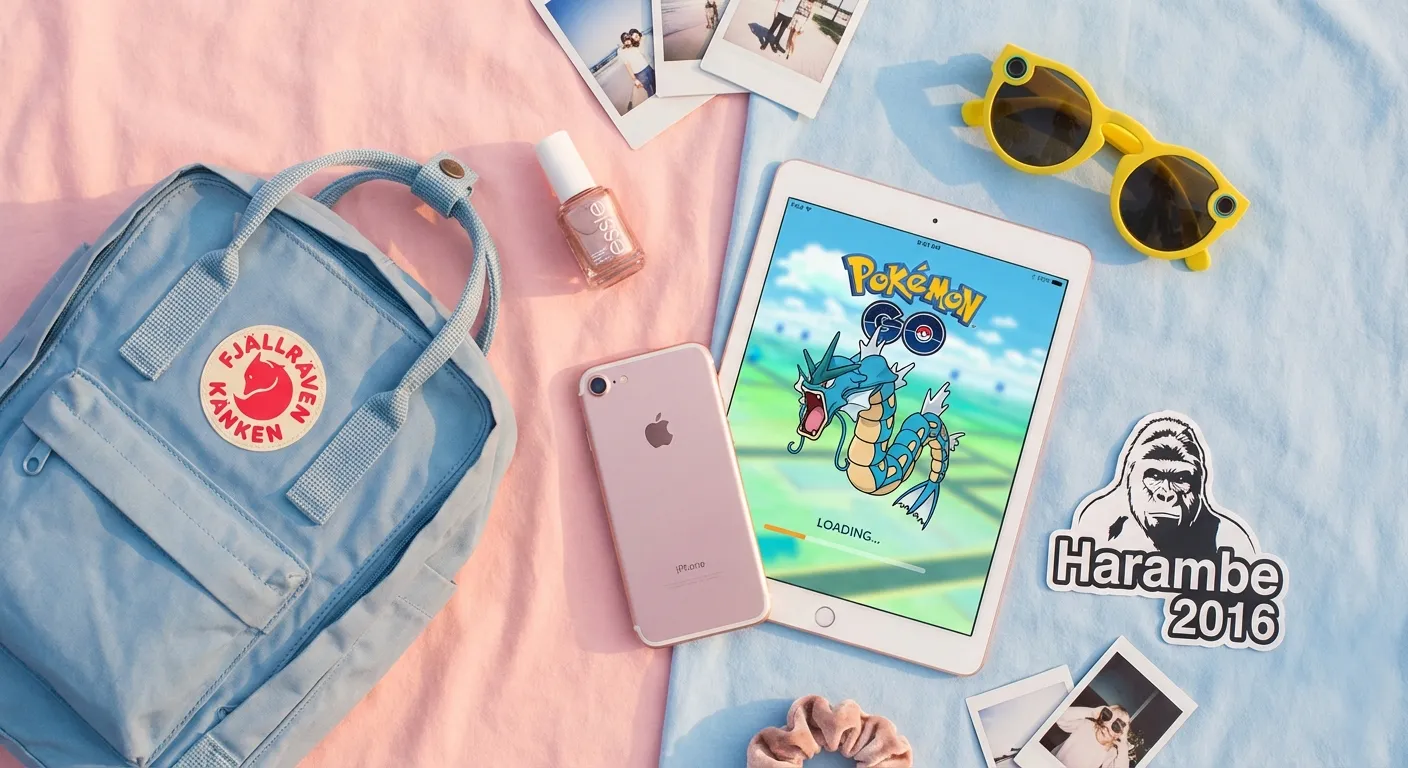
The artifacts are specific. Pokemon Go. Musical.ly (TikTok's predecessor). Vine compilations. Snapchat dog filters. Water bottle flipping. Harambe memes. The Mannequin Challenge. The videos are crafted with the same careful curation that previous generations applied to '80s or '90s nostalgia, except the era being mourned is only ten years old, and the people mourning it were children when it happened.
That last detail is what makes the trend worth paying attention to. This isn't adults wistfully remembering their youth. It's 18 to 24-year-olds romanticizing a period when they were 8 to 14, too young to have experienced most of what they're celebrating. The nostalgia is real, but the object of that nostalgia is something more complicated than a specific year.
The Timeline Before the Fracture
To understand why 2016 has become a fixation, you need to understand what came after it. For Gen Z, the years following 2016 represent an unbroken sequence of collective trauma. The 2016 election divided families and communities. School shootings, particularly Parkland in 2018, forced an entire generation to grow up inside active shooter drills. COVID-19 hit when current college-age Gen Z members were in high school, erasing proms, graduations, and the social milestones that define adolescence.
Then came the post-pandemic years: inflation, climate anxiety, social media's increasingly toxic dynamics, the war in Ukraine, political polarization that made even casual conversation feel like a minefield. By the time this cohort reached adulthood, crisis had become the default condition.
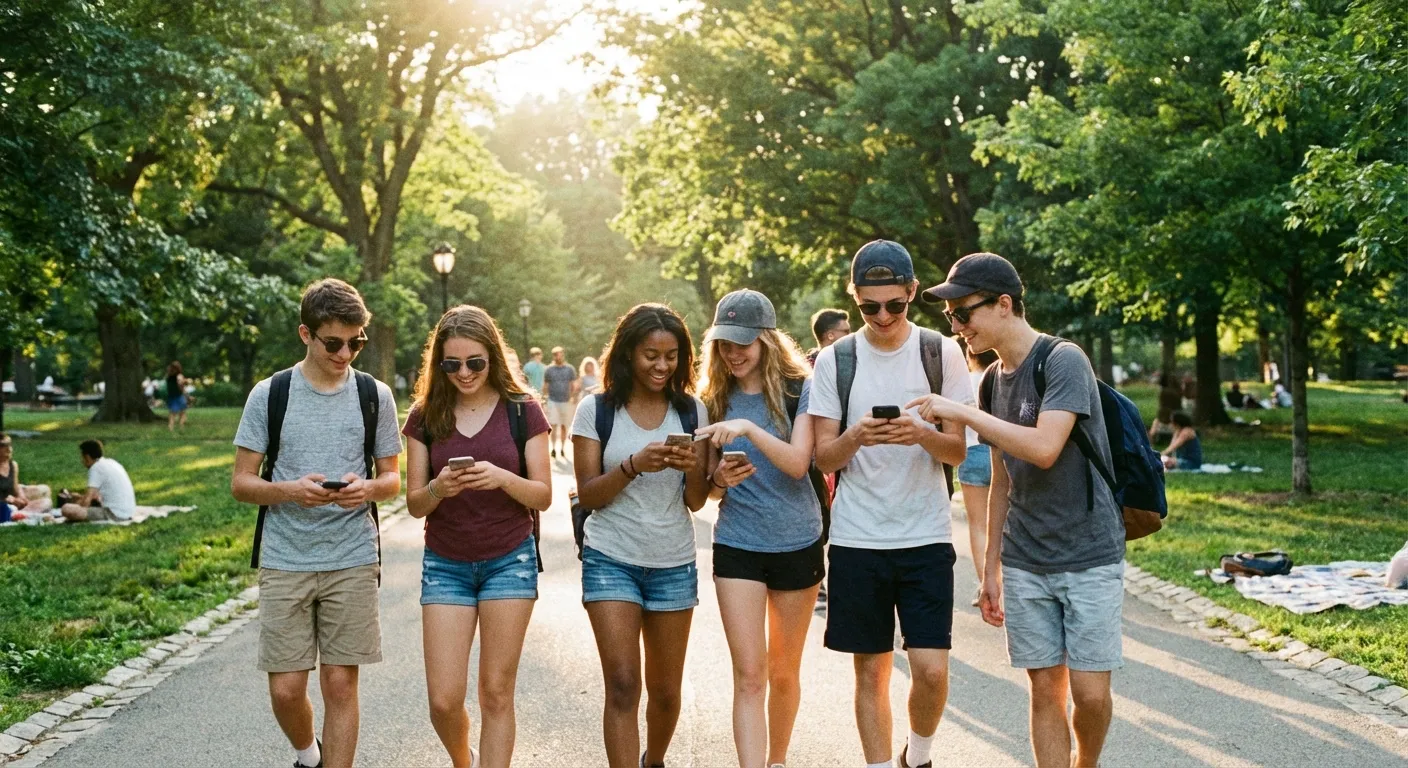
Against that backdrop, 2016 represents the last moment before things went wrong. It's not that 2016 was actually perfect. It had its own crises, its own political ugliness, its own problems. But for kids who were 10 or 12 years old, those problems were mostly invisible. What they remember is Pokemon Go bringing strangers together in parks, Vine making them laugh, and a world that felt, from a child's perspective, fundamentally stable.
Dr. Krystine Batcho, a psychology professor at Le Moyne College who has studied nostalgia for over two decades, told The Atlantic in January that the 2016 trend is "textbook nostalgic displacement. They're not mourning 2016 specifically. They're mourning the feeling of safety that came from being a child in a stable-seeming world. The year is just the container."
Why TikTok Is the Perfect Vessel
The platform's evolution from entertainment app to cultural barometer makes it the natural home for this kind of collective processing. TikTok's algorithm excels at identifying and amplifying emotional resonance. When one 2016 nostalgia video performs well, the algorithm surfaces similar content to users who engaged with it, creating a feedback loop that turns a personal feeling into a communal experience.
The format matters too. TikTok's short video structure is perfectly suited to nostalgia content. A 30-second montage of 2016 images set to music can evoke emotion more effectively than a 2,000-word essay about the same subject. The videos don't explain why 2016 matters. They show it, relying on shared cultural memory to do the interpretive work.
Musical.ly, the app that became TikTok after a 2018 merger with ByteDance, was itself a defining platform of the 2016 era. Many of the users now making 2016 nostalgia content were Musical.ly creators as kids. There's a circularity to the trend: using the evolved version of a 2016 platform to mourn the 2016 version of that platform.
The Nostalgia Economy
The trend hasn't gone unnoticed by brands. Snapchat ran a limited re-release of its "classic filters" in January that generated significant engagement. Spotify created a "2016 Core" playlist that reached the platform's viral charts within days. Fashion brands have noted increased searches for styles associated with the era: athleisure, chokers, rose gold everything, and the specific shade of millennial pink that defined mid-decade aesthetics.
This commercial dimension is familiar. Nostalgia has been a marketing tool for decades, from '80s revival fashion to '90s reboots in entertainment. What's different about the 2016 wave is the speed. Previous nostalgia cycles operated on roughly 20 to 30-year intervals: the '50s revived in the '70s and '80s, the '80s revived in the 2000s and 2010s. A 10-year nostalgia cycle is historically unusual, suggesting either that the nostalgia instinct is accelerating or that the specific conditions of the post-2016 period have compressed the timeline.
There's evidence for both explanations. Social media preserves cultural moments with a fidelity that earlier eras didn't have. A kid in 2016 had a smartphone full of photos, videos, and app memories that create a more vivid archive than a shoebox of Polaroids ever could. The nostalgia is sharper because the artifacts are more detailed.
Not Everyone Remembers It the Same Way
The 2016 nostalgia wave has drawn pushback from people who remember the year differently. For Black Americans, 2016 included the Pulse nightclub shooting, continued police violence, and the beginning of a political era defined by racial tension. For immigrants and children of immigrants, 2016's election campaign was defined by rhetoric that directly targeted their families. For LGBTQ+ communities, the year included both the Pulse tragedy and the bathroom bills that swept state legislatures.
A creator named Aaliyah Carter, who posts under @blackgirlnostalgia on TikTok, gained over 2 million views in late January with a response video listing everything 2016 nostalgia edits leave out: Alton Sterling, Philando Castile, the Standing Rock protests, and the rise of "All Lives Matter" as a counter-slogan. "Your 2016 was Pokemon Go," her caption read. "Mine was watching my mom cry at the news every night." The video spawned its own counter-trend of creators from Black, Indigenous, and immigrant communities posting their own 2016 montages, set to the same music but filled with entirely different images.
These critiques don't invalidate the nostalgic impulse, but they complicate it. The 2016 being mourned on TikTok is a selective version of the year, filtered through the experience of people who were young enough and privileged enough to experience it as uncomplicated. The trend's reliance on specific cultural touchstones from a particular demographic perspective means it inevitably excludes experiences that don't fit the narrative.
That selectivity is a feature of all nostalgia, not a unique flaw of this particular wave. But it's worth naming, especially as the trend moves from personal expression to commercial product.
The Takeaway
The 2016 nostalgia trend is, on its surface, a bunch of young people making montage videos about a year they barely remember. Underneath, it's a generation processing the fact that the world they inherited feels fundamentally unstable, and reaching back to the last moment it didn't. The specific year matters less than what it represents: a before, in a life defined by afters. Whether that impulse produces anything beyond TikTok content depends on whether the generation doing the mourning decides to build the kind of world they're nostalgic for, rather than simply grieving that it's gone.
Sources
- Gen Z's nostalgia for '2016 vibes' reveals something deeper - Fortune, January 2026
- 2026 is the new 2016 trend: meaning and why it's all over TikTok - Fast Company, January 2026
- Why reliving 2016 is the new social media trend - NPR, January 2026
- Gen Z is nostalgic for 2016. But was it such a great year? - The Washington Post, January 2026