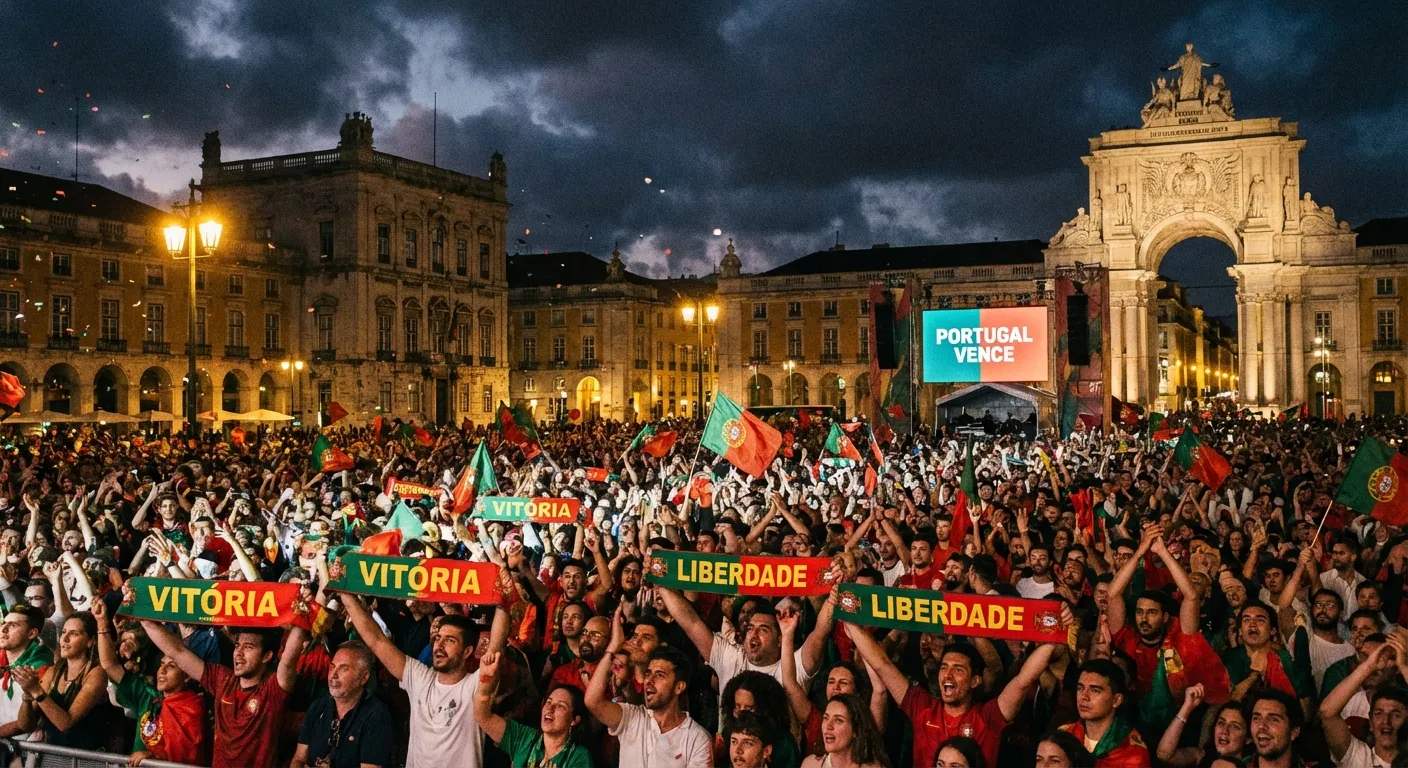
Portugal just delivered a message that much of Europe wasn't expecting. In a snap election triggered by the collapse of the center-right minority government, Socialist Party leader Pedro Nunes Seguro won a decisive victory, pulling in an estimated 38% of the vote. His main rival, Andre Ventura of the far-right Chega party, finished second with roughly 23%, a strong showing by historical standards but well short of what polls had suggested just weeks earlier.
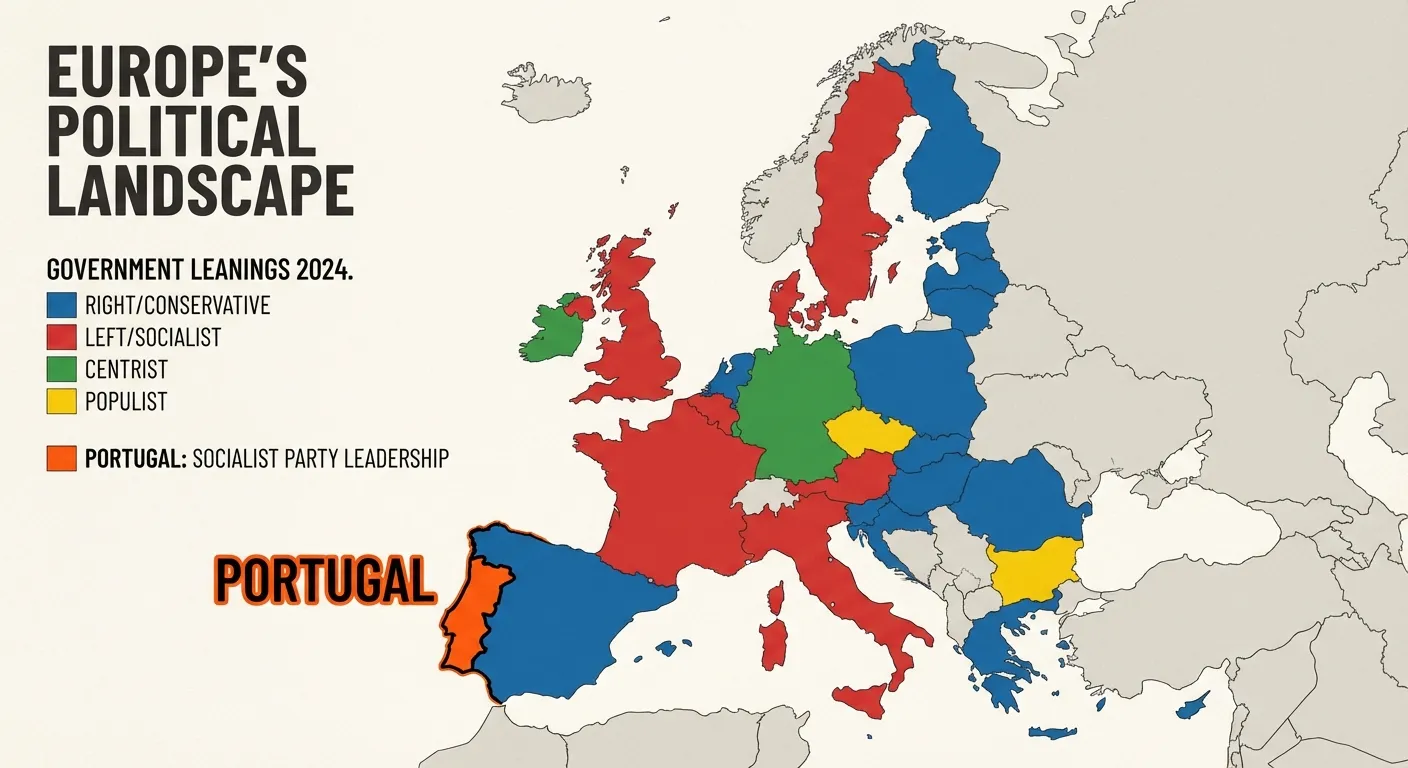
The result matters well beyond Lisbon. After years of far-right gains across the continent, from Italy's Giorgia Meloni to France's Marine Le Pen to the Netherlands' Geert Wilders, Portugal has become the first major European country to reverse that momentum at the ballot box. For a political establishment that has spent two years asking whether liberal democracy is losing ground, the answer from Portugal is: not necessarily.
A Country That Defied the Pattern
Portugal has long been something of an outlier in European politics. While anti-immigration populism reshaped electorates across the continent, Portugal maintained a relatively moderate consensus. The far right was marginal until Chega's emergence in 2019, when Ventura won a single parliamentary seat. By the 2024 election, Chega had surged to 50 seats in the 230-seat Assembly, becoming the third-largest party.
That rapid ascent tracked with broader trends. Rising housing costs, a strained healthcare system, and frustration with the corruption scandal that brought down former Socialist Prime Minister Antonio Costa in late 2023 all fed discontent. Ventura positioned himself as the outsider willing to name problems the establishment ignored, particularly on immigration and crime.
But the snap election told a different story. The center-right Social Democratic Party, which had led the minority government that collapsed in December, hemorrhaged votes in both directions. Some went to Chega. More went back to the Socialists. Seguro, a former European Parliament president who returned to domestic politics specifically for this race, ran a campaign centered on competence, housing investment, and healthcare reform. He avoided both the culture war framing Ventura preferred and the status quo defense that had sunk previous centrist campaigns.
How Seguro Won
Seguro's victory wasn't accidental. He made three strategic choices that separated his campaign from the defensive crouch that center-left parties across Europe have adopted when facing populist challengers.
First, he acknowledged the problems. Rather than dismissing voter frustration as misguided or racist, Seguro conceded that housing prices had become unaffordable, that hospital wait times were unacceptable, and that the previous Socialist government had made mistakes. Teresa Ribeiro, a political analyst at the University of Lisbon, told Euronews that this "disarmed the grievance narrative that Chega depends on."
Second, he offered specifics. The Socialist campaign centered on a detailed housing plan, including rent caps in major cities, fast-tracked public construction, and restrictions on short-term tourist rentals. These proposals addressed the issue that polling consistently identified as voters' top concern without resorting to the anti-immigrant framing that Ventura used to explain the same problem.
Third, he drew a clear moral line. In the final debate, Seguro said the choice was between "a Portugal that solves problems and a Portugal that finds someone to blame." The framing stuck. Exit polls showed that roughly 15% of Seguro voters cited "stopping the far right" as their primary motivation, according to data compiled by Politico Europe.
Ventura's Ceiling
Chega's 23% represents both a ceiling and a floor. The party more than tripled its 2022 result, confirming that a substantial minority of Portuguese voters are drawn to Ventura's confrontational style and hardline positions on immigration and law enforcement. But the party also underperformed the 28 to 30% range that several January polls had projected.
Several factors may explain the gap. Ventura's campaign rhetoric grew more extreme in the final weeks, including a proposal to deploy military patrols in immigrant neighborhoods that drew criticism even from some center-right figures. The pattern of far-right overreach that has characterized populist movements elsewhere, where the transition from opposition insurgent to potential governing party exposes contradictions and scares away moderate supporters, may have played a role.
Turnout also mattered. At 62%, participation was the highest for a Portuguese general election since 2005. Higher turnout tends to disadvantage parties whose appeal is concentrated among highly motivated but numerically limited bases. The Socialists' ground operation, rebuilt after the 2024 defeat, focused on mobilizing younger voters and urban progressives who might otherwise have stayed home.
What Europe Is Watching
The result has resonated across the continent. European Commission President Ursula von der Leyen called Seguro within hours of the projected result to offer congratulations. French centrist leaders cited the outcome as evidence that the far-right wave is not irreversible. German Social Democrats, facing their own challenge from the AfD ahead of federal elections, are already studying the Seguro playbook. Spain's PSOE has been the most direct in applying the lessons: party strategists have publicly cited Seguro's housing-first messaging as a model for upcoming regional elections in Andalusia, where Vox has made similar inroads to Chega's in Portugal.
But the lessons aren't straightforward. Portugal's specific conditions, including a proportional representation system, a far-right party without coalition experience, and a fresh Socialist candidate untainted by the previous government's scandals, don't map cleanly onto every European context. What translates is the strategic approach: acknowledge the problems, offer concrete solutions, and draw clear distinctions without demonizing voters.
The broader trend of European political realignment continues. The traditional left-right axis is increasingly complicated by new divides over immigration, sovereignty, and cultural identity. Portugal's result doesn't resolve those tensions. It does suggest that center-left parties can still win elections if they're willing to adapt.
The Bigger Story
Portugal's election won't reverse far-right momentum across Europe by itself. But it demonstrates that the wave is not inevitable, that voters are persuadable when offered credible alternatives to populist anger. Seguro now faces the harder task of governing, delivering on housing and healthcare promises that will determine whether this is a lasting realignment or a temporary reprieve. For the rest of Europe, the message is narrower but significant: the far right can be beaten, but only by candidates willing to compete on substance rather than nostalgia.
Sources
- Centre-left Antonio Jose Seguro beats far-right rival to Portuguese presidency - Euronews, February 2026
- Center-left Socialist candidate wins over populist in Portugal's presidential runoff - NPR, February 2026
- Portugal elects Socialist Party's Seguro as president in landslide - Al Jazeera, February 2026
- Portugal's far-right Chega party may have hit its ceiling in presidential election - U.S. News, February 2026