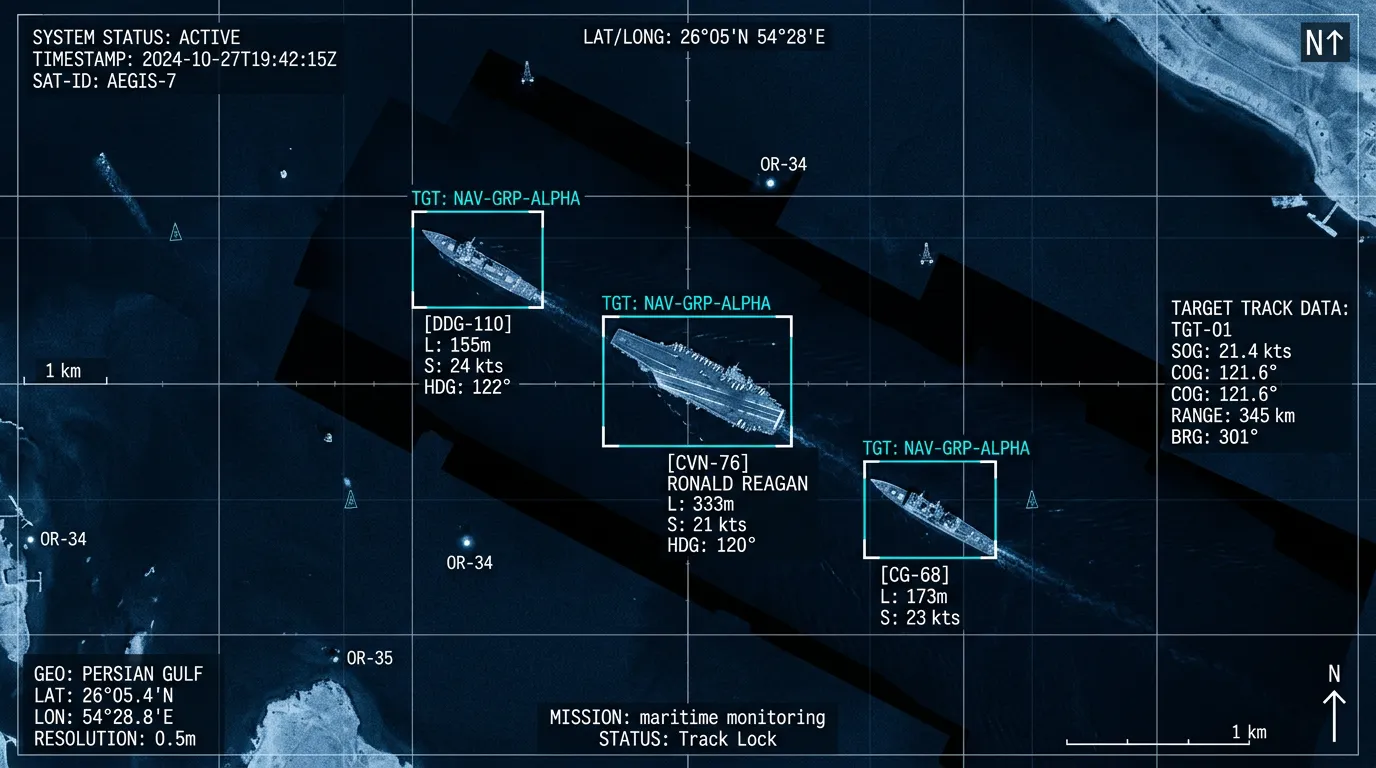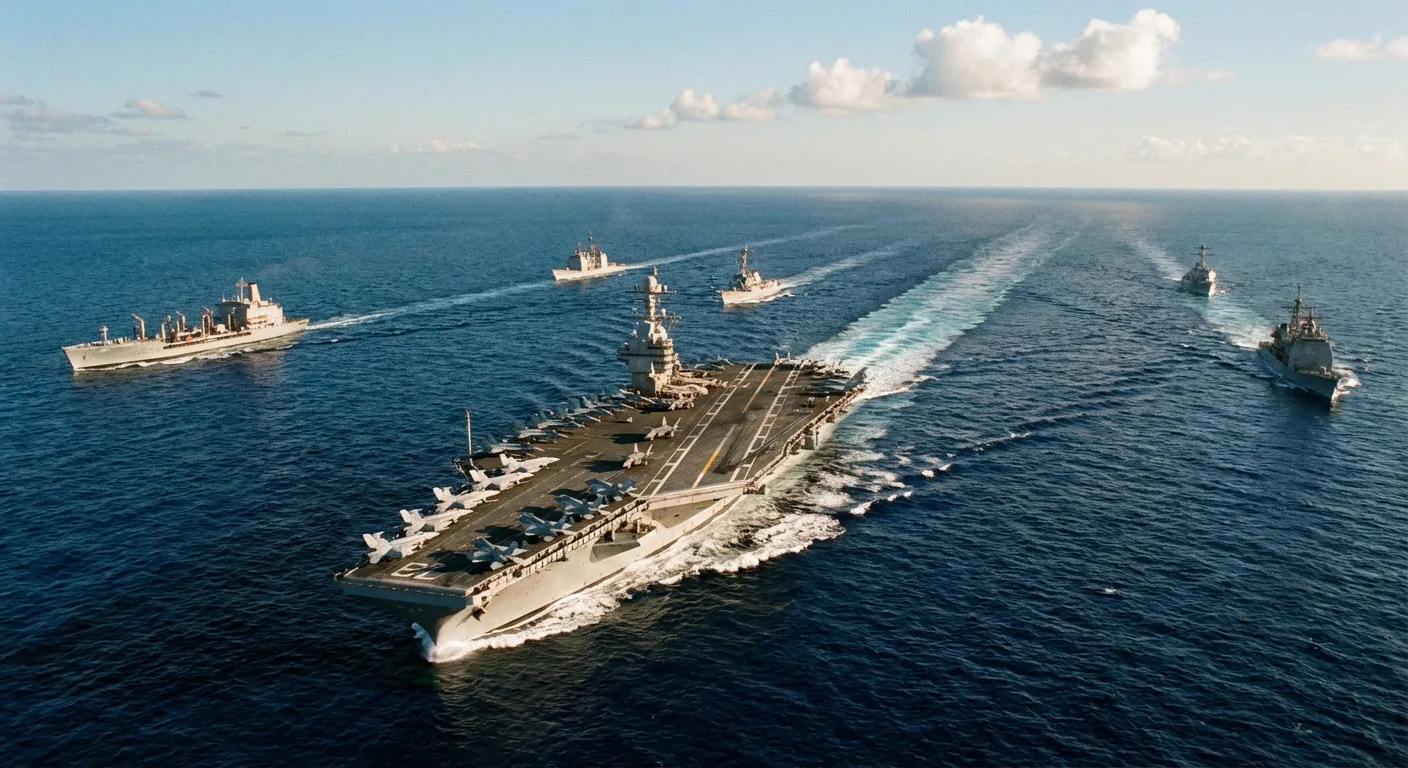
The Pentagon has told a second aircraft carrier strike group to prepare for deployment to the Middle East, according to three US officials who spoke to the Wall Street Journal on Wednesday. The order could come within hours, one official said. Another indicated that the carrier, likely the USS George H.W. Bush currently completing training exercises off the Virginia coast, could accelerate its drills and be en route within two weeks.
A single carrier strike group in the Middle East is standard American posture. Two carrier strike groups in the same theater is a signal, and historically, it precedes either a major military operation or a diplomatic push backed by the credible threat of one. The last time the US had two carriers positioned near Iran was in early 2020, after the killing of Qasem Soleimani.
President Trump has not given final authorization for a strike. The preparations are described as contingency planning for a potential military operation if diplomatic efforts fail. But the gap between contingency planning and execution is narrower than it appears, and the diplomatic track isn't going well.
The Diplomatic Picture
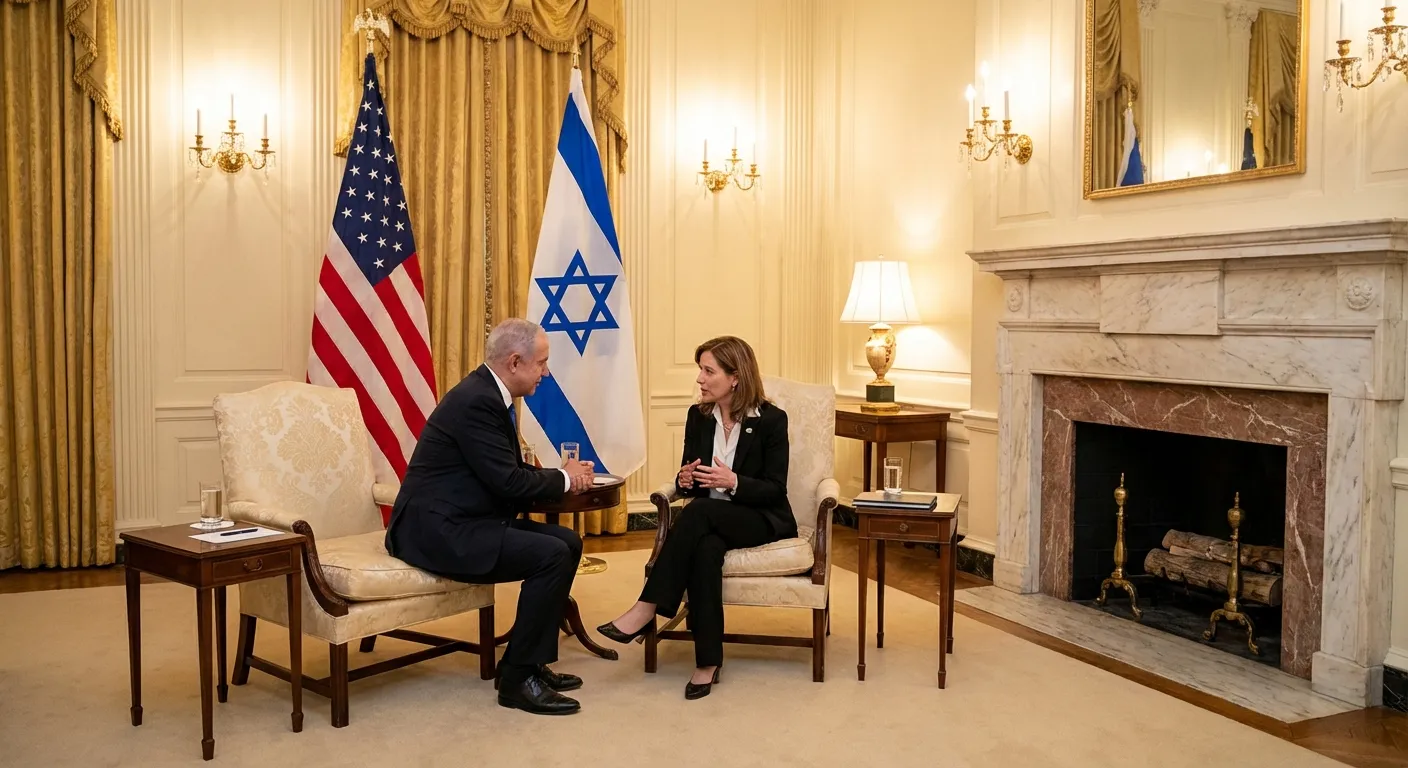
Trump met with Israeli Prime Minister Benjamin Netanyahu at the White House on Wednesday in a closed-door session that lasted roughly three hours. Afterward, Trump told reporters that the meeting was "very good" and that he had told Netanyahu the US would continue seeking a diplomatic arrangement with Iran. Netanyahu, for his part, emphasized Israel's security needs and the unacceptability of an Iranian nuclear weapon, language that has historically served as a predicate for military action.
The two leaders' public statements masked real tension over approach. Trump has maintained since entering office that he prefers a negotiated deal with Iran that would limit its nuclear program, drawing on the same instinct for dealmaking that drove his first-term engagement with North Korea. Netanyahu has been more hawkish, pushing for conditions that Iran is unlikely to accept and arguing privately that only credible military pressure will bring Tehran to the table.
Iran's position has also hardened. Negotiations between US and Iranian representatives, conducted through intermediaries in Oman over the past month, have stalled over Iran's insistence that sanctions relief precede any limits on enrichment activity. American negotiators have demanded the reverse. Neither side has shown flexibility, and the Omani channel has gone quiet in recent days.
What Two Carriers Mean
Military analysts read carrier deployments as a grammar of escalation, and two carriers in the Persian Gulf region is a sentence with a clear meaning.
A single carrier strike group, which typically includes the carrier itself, a guided-missile cruiser, two or three destroyers, and a submarine, provides power projection and deterrence. Its presence says: we're here and we're watching. Two strike groups double the available airpower and create the capacity for sustained operations. Their presence says: we're ready.
Retired Admiral James Stavridis, former NATO Supreme Allied Commander, told NBC News that "two carrier strike groups in the Gulf creates a force capable of conducting significant strike operations against Iranian nuclear and military infrastructure. You don't move that much firepower unless you're either going to use it or you want the other side to believe you will."
The USS Harry S. Truman is already deployed in the region, having arrived in the Persian Gulf in late January. If the Bush strike group deploys on the accelerated timeline officials described, both carriers could be in position by late February.
The Iran Calculation
Iran has been expanding its nuclear program steadily since the US withdrew from the 2015 nuclear deal in 2018. The International Atomic Energy Agency reported in January that Iran has enriched uranium to 60% purity, close to the 90% threshold for weapons-grade material, and has accumulated enough enriched uranium that, if further enriched, could theoretically produce multiple nuclear warheads. Iran insists its program is peaceful, but the technical gap between its current capabilities and a weapon has narrowed to the point where intelligence agencies measure it in weeks rather than months.
That timeline creates pressure on all sides. Israel has long maintained that it will act unilaterally to prevent an Iranian nuclear weapon if necessary, and Netanyahu's domestic political situation gives him additional incentive to push for decisive action. The US, while preferring diplomacy, has maintained that "all options are on the table," the diplomatic phrase that means military force hasn't been ruled out.
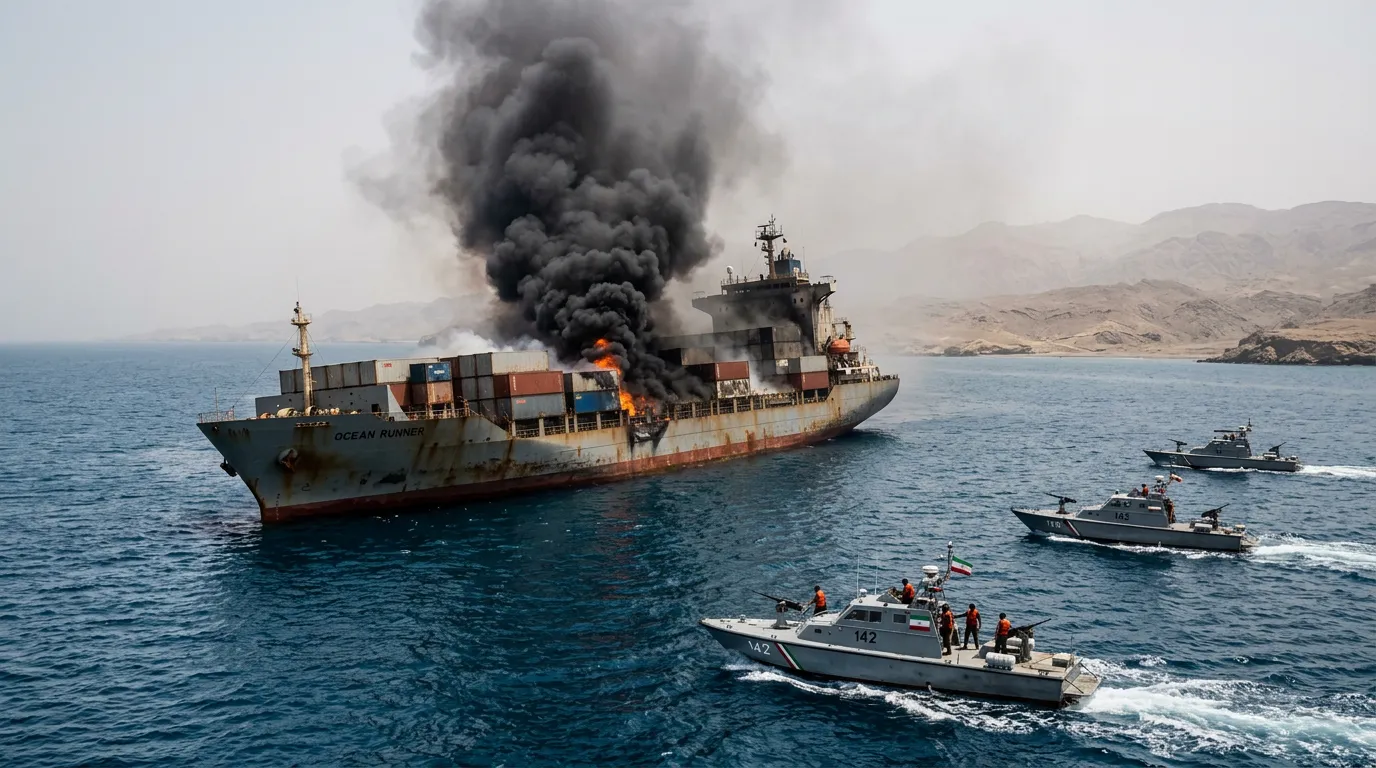
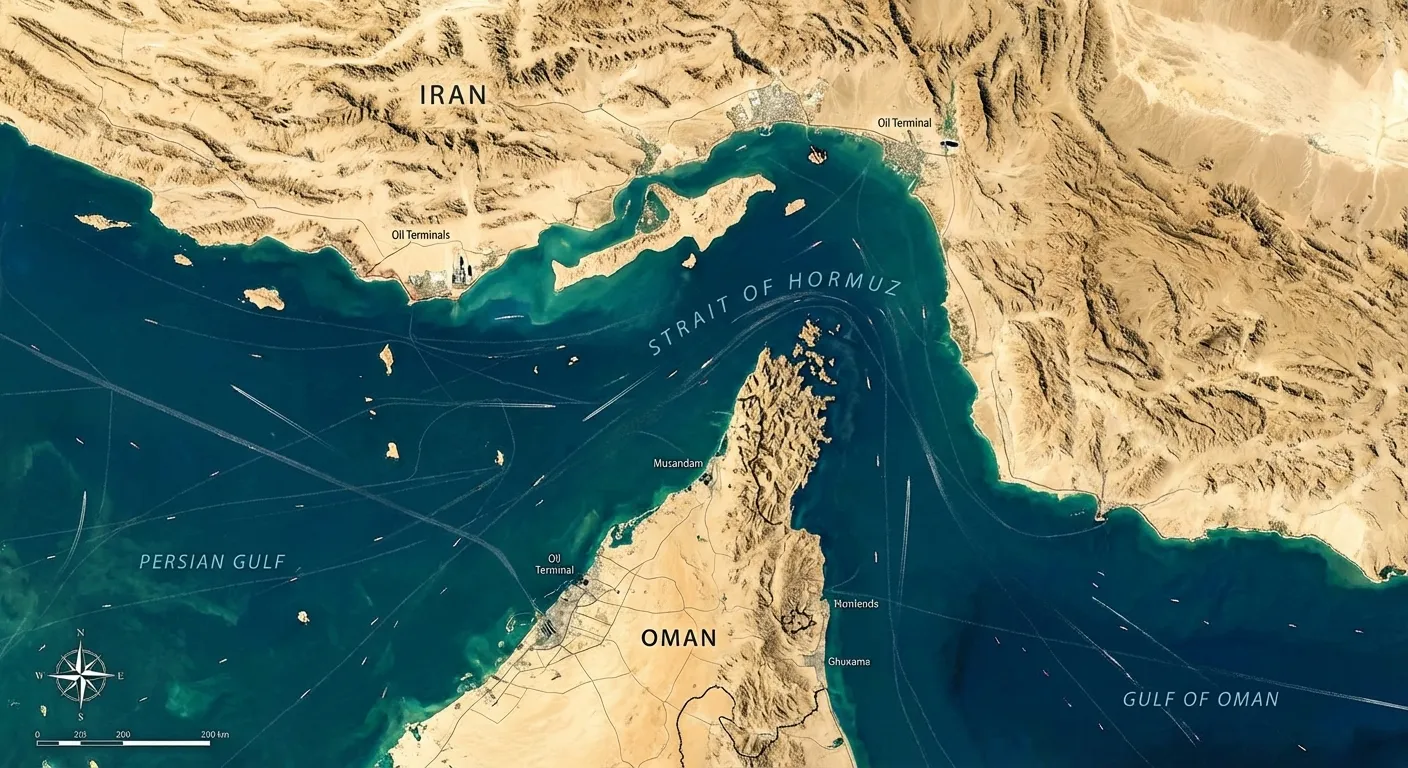
For Iran, the carrier deployment is both a threat and potential leverage. Tehran has historically responded to military pressure by escalating proxy operations, activating Hezbollah or Houthi assets, or threatening to close the Strait of Hormuz, through which roughly 20% of the world's oil supply flows. Any of those responses could trigger the very conflict the carriers are ostensibly meant to deter.
The Bigger Story
The most immediate global consequence of a US-Iran military confrontation would be the Strait of Hormuz. Roughly 20% of the world's oil supply, about 21 million barrels per day, transits the strait. Iran has repeatedly threatened to close it in response to military action, and its naval forces have the anti-ship missiles and mine-laying capability to disrupt traffic even if they cannot seal the waterway entirely. If the strait were blocked or significantly disrupted for even two weeks, oil prices could spike to $150 per barrel or higher, according to estimates from energy consultancy Rystad Energy. The economies most exposed would be Japan and South Korea, which import roughly 80% and 70% of their crude through the strait, respectively. Both are close US allies whose cooperation Washington depends on for its broader Asia-Pacific strategy. A Hormuz disruption would force Tokyo and Seoul to draw down strategic reserves, potentially triggering energy rationing and industrial slowdowns that would ripple through global supply chains for semiconductors, automobiles, and electronics.
Markets have already begun to react on a smaller scale. Oil futures rose 2.3% on Wednesday following the carrier deployment reports, and defense stocks rallied. But those moves reflect contingency pricing, not crisis pricing. The gap between the two is enormous, and the carriers moving toward the Gulf are narrowing it.
The diplomatic window isn't closed, but it's narrowing. The carriers are moving, and once they're in position, the pressure to either use them or withdraw them creates its own momentum. The next two weeks will determine whether the deployment serves its intended purpose as leverage, or whether it becomes the opening move in something much larger.
Sources
- Second carrier strike group ordered to spin-up for deployment to Middle East - The War Zone, February 2026
- Pentagon preparing second aircraft carrier for Mideast - Iran International, February 2026
- Pentagon prepares second aircraft carrier for possible deployment to Middle East - The Jerusalem Post, February 2026
- Report: U.S. preparing second aircraft carrier strike group ahead of possible Iran strike - Haaretz, February 2026