Netflix agreed today to acquire Warner Bros. Discovery for $72 billion in a deal that, if regulators approve it, will create the largest entertainment company by content library in history. The combined entity would control HBO, CNN, DC Comics, the Warner Bros. film studio, Discovery's cable networks, and Netflix's own production apparatus, serving more than 350 million subscribers across 190 countries. The deal was announced jointly by Netflix co-CEO Ted Sarandos and Warner Bros. Discovery CEO David Zaslav in a pre-market call with investors that sent Netflix shares up 7% and WBD shares up 34%.
The price represents a 58% premium over Warner Bros. Discovery's Friday closing price but significantly less than the company's components were valued at individually before the streaming era disrupted traditional media economics. Rich Greenfield, a media analyst at LightShed Partners, told CNBC that the deal "confirms what the market has been telling us for two years: standalone streaming outside of Netflix and Disney is not a viable business model. WBD's choice was merge or slowly disintegrate."
What Netflix Gains
The acquisition fills gaps in Netflix's portfolio that years of original content spending could not. HBO's prestige brand, widely regarded as the gold standard for premium television, brings critical credibility that Netflix has pursued but never fully achieved despite successes like "Squid Game" and "Stranger Things." Properties including "The Last of Us," "House of the Dragon," and the still-running "Euphoria" would join Netflix's library alongside future HBO originals.
The Warner Bros. film studio adds a century of cinema history and ongoing franchise value. DC's superhero universe, despite recent creative struggles, represents billions in potential revenue across films, television, gaming, and merchandise. The Harry Potter franchise alone generated $9.5 billion in theatrical revenue before accounting for theme parks, merchandise, and the forthcoming HBO adaptation series. "Dune," Looney Tunes, and the broader Warner library of over 100,000 hours of content become Netflix assets.
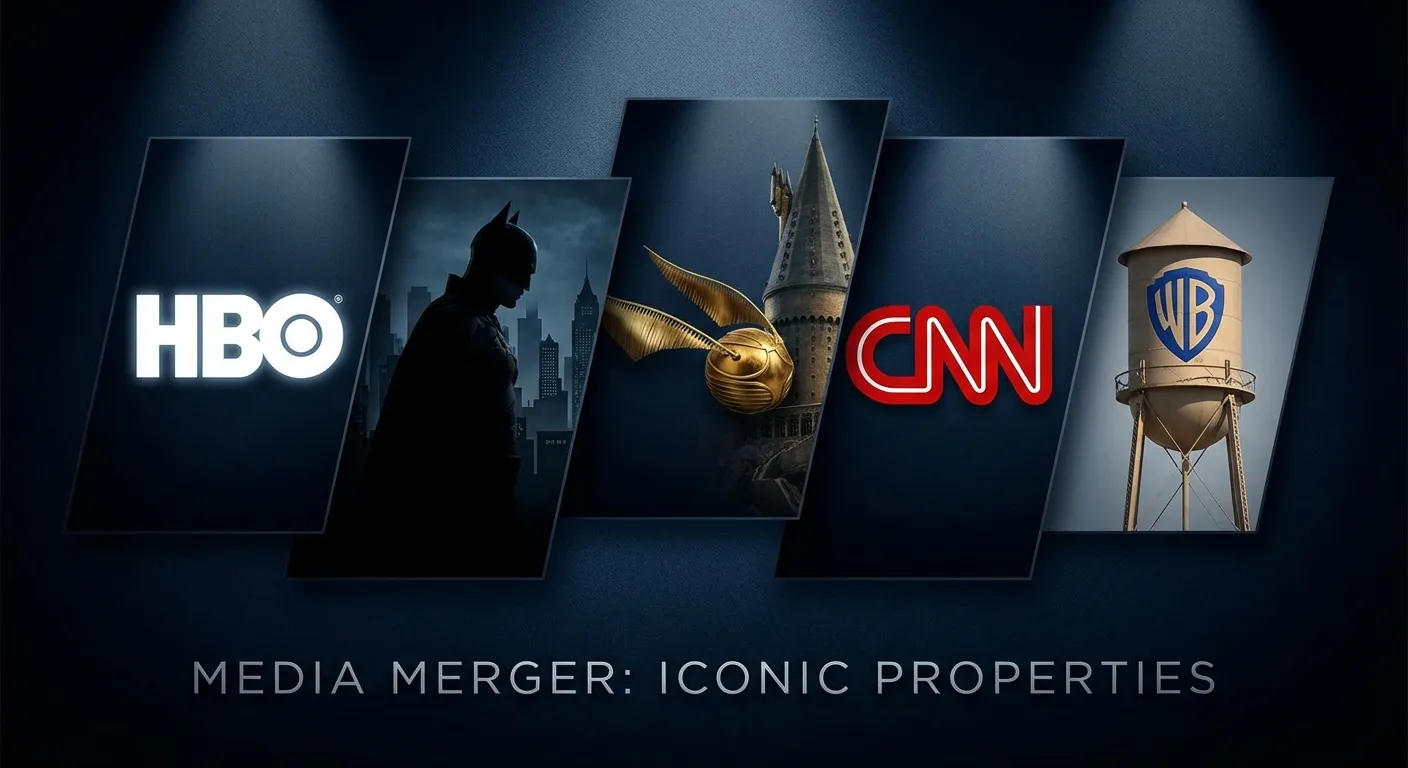
CNN presents a more complex strategic question. Netflix has no news operation and has historically avoided it. Sarandos addressed the topic directly on the investor call, saying that CNN would "continue to operate as an independent news brand with its own editorial leadership" while being distributed across Netflix's platform. Julia Boorstin, CNBC's senior media and entertainment correspondent, noted that Netflix likely values CNN primarily for its live event capability and brand recognition rather than its traditional cable news format, suggesting the network could evolve into a streaming-first news operation under new ownership.
Why Warner Bros. Discovery Capitulated
Warner Bros. Discovery has been struggling since its 2022 formation from the heavily leveraged merger of WarnerMedia and Discovery Inc. The combined company carried approximately $43 billion in debt from that transaction, a burden that constrained investment in streaming at precisely the moment when the industry required massive spending to compete. Max, the company's streaming service, launched in May 2023 to mixed reception and never achieved the subscriber scale necessary to justify its content costs.
CEO David Zaslav spent much of the past three years cutting costs with the subtlety of a chainsaw: cancelling nearly-completed films, shuttering the CNN+ streaming service within weeks of its launch, and reducing headcount across every division. The austerity stabilized the balance sheet but failed to reverse the fundamental problem. WBD was too leveraged to invest at the level Netflix and Disney were spending, and too small in subscribers to generate the revenue needed to close the gap.
Michael Nathanson, a media analyst at MoffettNathanson, wrote in his post-announcement research note that "Warner Bros. Discovery demonstrated conclusively that the middle tier of streaming, too small to compete on spending but too large to be niche, is not a sustainable position. Netflix offered Zaslav the best of a limited set of exits."
What Changes for Subscribers
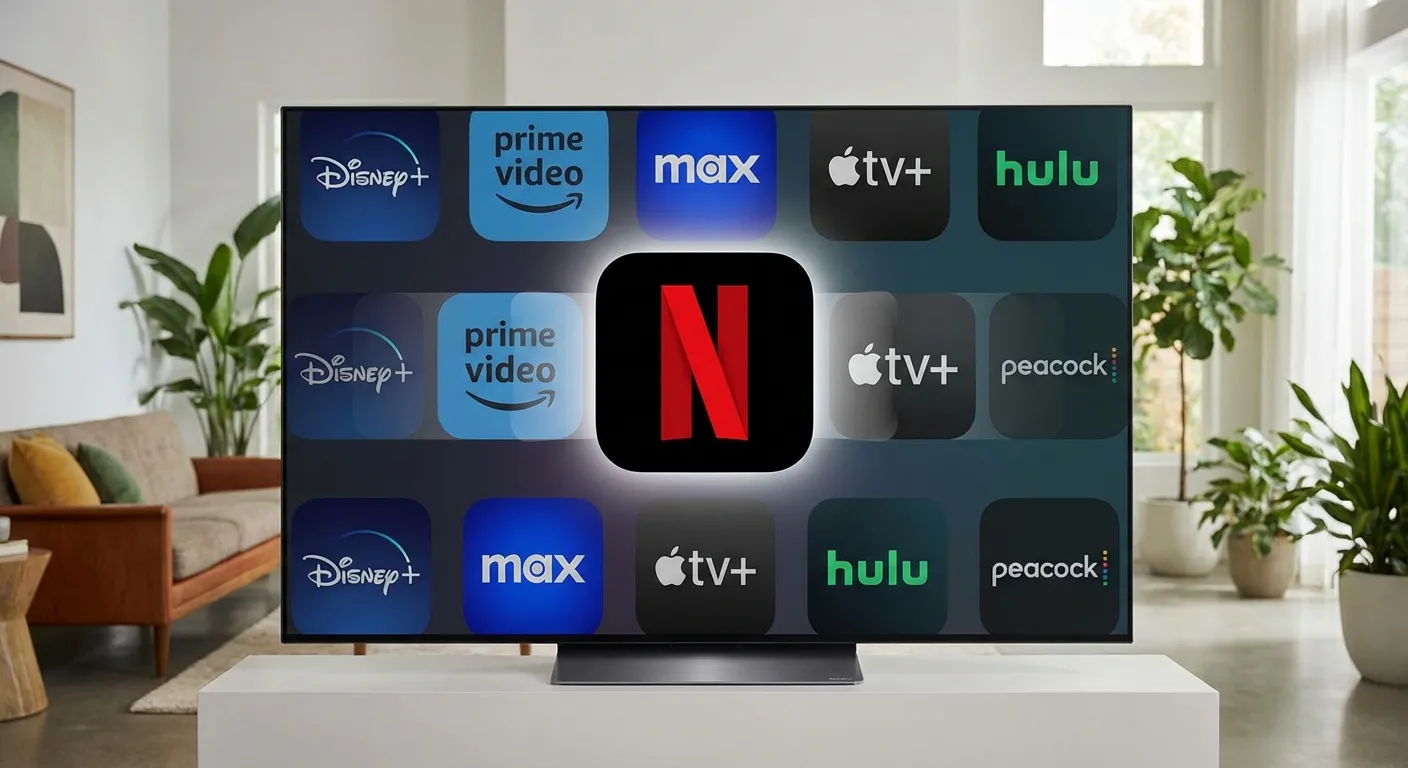
The consumer implications are genuinely mixed. Consolidation simplifies choice: rather than subscribing to Netflix and Max separately, viewers would eventually access everything through a single platform. Netflix has indicated it will maintain multiple pricing tiers, likely including a premium option that bundles HBO content.
The downside is the competition math. Fewer streaming services competing for subscribers means less pressure to keep prices low or invest aggressively in new content. Netflix has already raised prices five times since 2019, with its standard plan climbing from $13 to $17.99 over that period. Disney's integration of Hulu into Disney+ in 2024 was followed by a 33% price increase on the ad-free tier within a year, a pattern analysts expect the Netflix-WBD combination to repeat. Industry projections suggest the combined service's premium tier could reach $25 to $30 per month within two years of closing. With Max's subscriber base absorbed rather than competed for, the incentive for further increases only grows. Tim Wu, the Columbia Law professor who coined the term "net neutrality" and has written extensively about media consolidation, told the New York Times that "every major media merger in history has been pitched as good for consumers and resulted in higher prices. There is no reason to expect this one to break the pattern."
Content strategy may shift as well. Netflix is known for making renewal decisions based on completion rate data, frequently cancelling shows after one or two seasons that do not meet algorithmic benchmarks. HBO's model has historically been different, nurturing programs over multiple seasons and building critical reputations that attract talent. Whether HBO's creative culture survives integration into Netflix's data-driven framework is one of the most closely watched questions in the entertainment industry.
What to Watch
The deal faces significant regulatory hurdles before any of this becomes reality. The Federal Trade Commission under Chair Lina Khan has taken an aggressive stance toward media consolidation, and the European Commission will conduct its own review. Antitrust attorneys at both agencies will examine whether the combined company's market power in streaming, content licensing, and theatrical distribution creates competitive harms. The companies have estimated 12 to 18 months for regulatory clearance, but contested mergers can take longer. For the entertainment industry, the implications extend beyond this specific transaction. If the Netflix-WBD deal clears, it will likely trigger a wave of further consolidation as remaining players seek scale to compete against the new giant. Paramount, Lionsgate, and AMC Networks have all been the subjects of acquisition speculation. The streaming wars, it turns out, were not a permanent state of competition. They were a phase, and consolidation is what comes next.
Sources
- Netflix to Buy Warner Bros. Film and Streaming Assets in $72 Billion Deal - CNBC, December 2025
- Netflix to Acquire Warner Bros. Following the Separation of Discovery Global - Netflix Press Release, December 2025
- Decoding the Proposed $72 Billion Netflix-Warner Bros. Deal - Stanford Report, December 2025
- Netflix to Acquire Warner Bros. Discovery, Raising Antitrust Concerns - Al Jazeera, December 2025
- In Media MergerMania 2025, We All Lose - Jacobin, December 2025