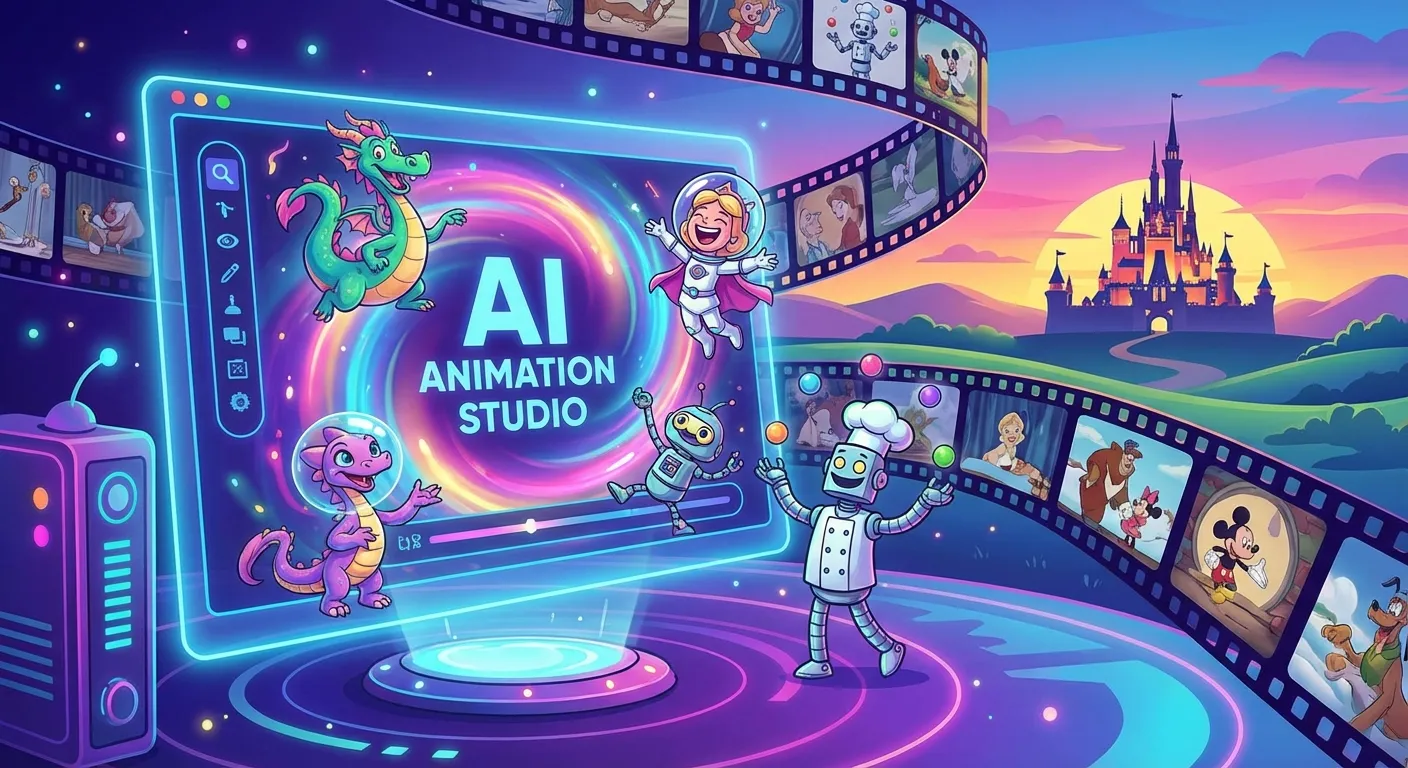
The company that once sued a Florida daycare for painting Mickey Mouse on its walls just licensed more than 200 of its characters to an AI platform. Disney's partnership with OpenAI, announced Thursday, allows users of the Sora video generation tool to create short clips featuring characters spanning the company's vast franchise library, from classic animated properties to Marvel superheroes to Star Wars icons. The deal represents the most significant IP licensing agreement in the brief history of generative AI, and it signals a fundamental shift in how Hollywood's most protective studio thinks about its most valuable asset.
The financial terms remain confidential, but Matthew Ball, a media analyst and author of "The Metaverse," estimated on his blog that the deal could generate $300 million to $500 million annually for Disney once user adoption matures. "This is Disney acknowledging that AI-generated content featuring its characters is going to happen whether they participate or not," Ball wrote. "They've chosen to be the landlord rather than the litigant."
How the Partnership Actually Works
Under the agreement, Sora subscribers at the $30-per-month Pro tier gain access to a Disney Character Library within the platform. Users can generate video clips of up to 60 seconds featuring licensed characters in original scenarios. The more than 200 available characters span Disney Animation (Mickey, Elsa, Moana), Pixar (Buzz Lightyear, Woody, WALL-E), Marvel (Spider-Man, Iron Man, Captain America), and Lucasfilm (Darth Vader, Grogu, Luke Skywalker).
Disney's content guardrails are extensive. An AI moderation layer, developed jointly by Disney's standards team and OpenAI's safety division, screens generated content against a detailed brand integrity framework. Characters cannot appear in violent, sexual, or politically charged contexts. Crossover content between Disney and non-Disney properties is blocked. Sean Bailey, Disney's president of production, told Variety that "the guardrails are the deal. Without them, this partnership doesn't exist."
Why Disney Reversed Course
The decision inverts decades of institutional instinct. Disney's legal department has been legendary for its aggressiveness in protecting intellectual property, pursuing cases against fan artists, small businesses, and content creators who used its characters without permission. The company was instrumental in lobbying for the 1998 Copyright Term Extension Act, sometimes called the "Mickey Mouse Protection Act," which extended corporate copyright terms to 95 years.
Three factors drove the reversal. First, the practical reality of enforcement. Unlicensed AI-generated Disney content was already flooding platforms like TikTok, YouTube, and Reddit, and the volume exceeded what even Disney's legal apparatus could address. Second, the competitive landscape: Universal, Warner Bros., and Sony were all negotiating similar deals, and Disney's leadership, particularly CEO Bob Iger, reportedly wanted to establish the terms rather than follow a competitor's template. Third, the revenue potential. Disney's direct-to-consumer segment has struggled with profitability, and AI licensing represents a new revenue stream with minimal production costs.
The Creative Community's Response
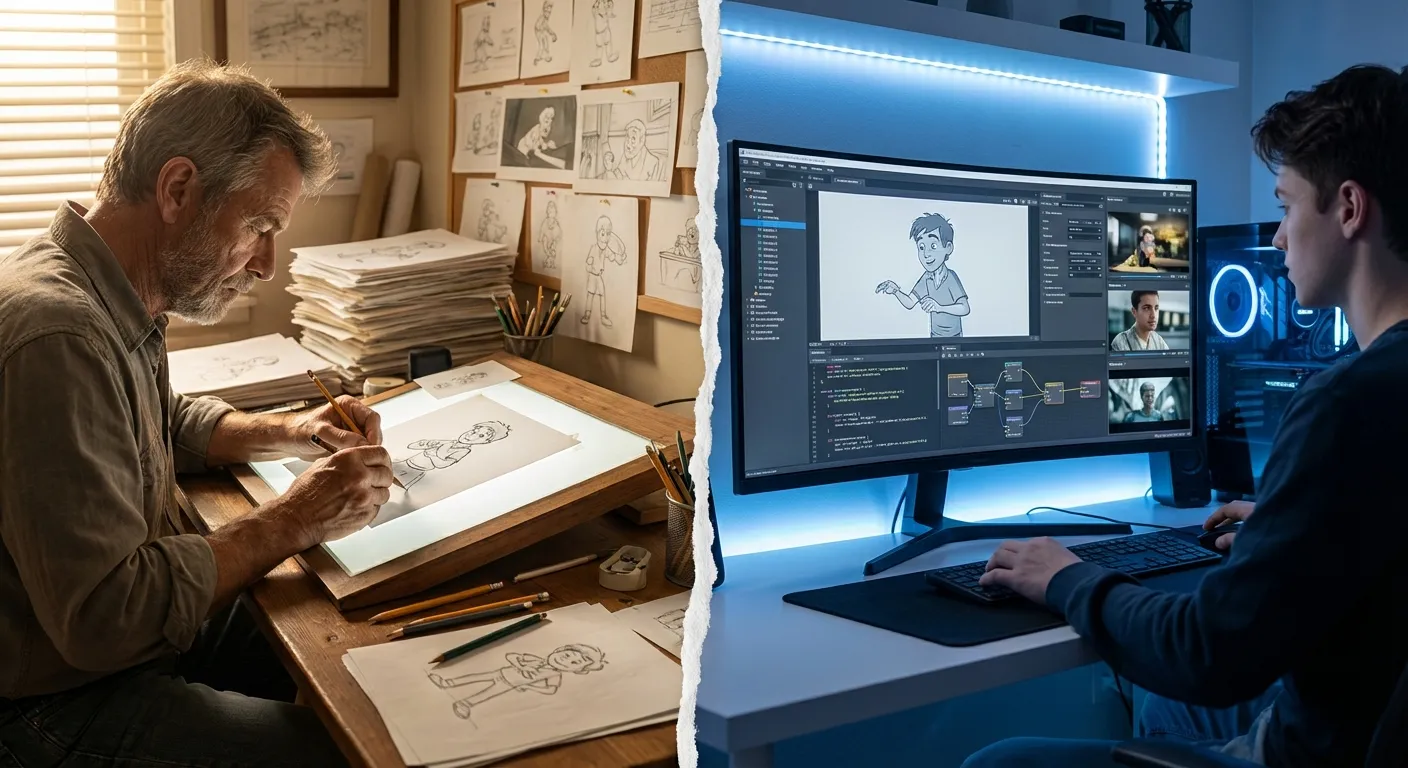
The reaction from artists and animators was swift and largely negative. The Animation Guild (IATSE Local 839) issued a statement calling the deal "a betrayal of the creative workforce that built the characters Disney is now renting to a machine." Several prominent Disney alumni posted on social media that the partnership devalued decades of artistic labor by reducing beloved characters to inputs for automated content.
Defenders of the deal offered a different framing. Chris Meledandri, the Illumination founder who sits on an industry AI advisory board, told The Hollywood Reporter that "the question isn't whether AI-generated character content will exist. It's whether creators and rights holders will have any role in shaping it. Disney chose to have a role." OpenAI CEO Sam Altman echoed the point, describing the partnership as "a model for how IP holders and AI platforms can work together rather than against each other."
Unresolved Legal Questions
The partnership resolves the narrowest copyright question, whether Sora users have permission to generate Disney character content, by answering yes, within defined parameters. But it leaves broader legal issues untouched. Several high-profile pending lawsuits challenge whether OpenAI's training data, which included copyrighted material scraped from the internet, constitutes fair use. The New York Times v. OpenAI, filed in December 2023, alleges that OpenAI's models were trained on millions of copyrighted articles without permission. Getty Images v. Stability AI, filed in early 2023, makes a parallel argument about image generation models trained on copyrighted photographs. Both cases remain unresolved and could establish precedents that reshape the legal foundations of generative AI. Disney's licensing deal does not settle or even address those cases. It is possible, legal scholars have noted, for Disney to simultaneously license its characters to OpenAI and support litigation against the company's training practices.
There are also enforcement concerns. AI guardrails have proven imperfect in every deployment to date. Determined users frequently find workarounds, and the reputational risk to Disney if its characters appear in offensive AI-generated content is significant. The partnership agreement reportedly includes provisions allowing Disney to suspend access to specific characters if brand safety failures occur, but the speed of viral content distribution means damage can precede any response.
What This Changes
Disney's deal with OpenAI will likely be remembered as the moment when Hollywood's relationship with generative AI shifted from resistance to engagement. The entertainment industry's most powerful IP holder decided that participating in the AI ecosystem, on carefully negotiated terms, offered better protection and better economics than fighting it from outside. Whether that calculation proves correct depends on factors that neither Disney nor OpenAI fully controls: user behavior, technological evolution, regulatory action, and the cultural verdict on AI-generated entertainment. What is already clear is that other studios will face the same decision, and Disney's precedent will shape every negotiation that follows.
Sources
- Variety: Why Disney's Sora Deal Marks a Turning Point in the AI Wars - Variety, December 2025
- The Hollywood Reporter: What Bob Iger's OpenAI Deal Means for Disney and Disney+ - The Hollywood Reporter, December 2025
- NPR: Billion-dollar OpenAI deal allows users to make content with Disney characters - NPR, December 2025
- Deadline: Disney's OpenAI Deal: Soulless Exploitation or Necessary Innovation? - Deadline, December 2025
- U.S. Copyright Office: Copyright and Artificial Intelligence - U.S. Copyright Office