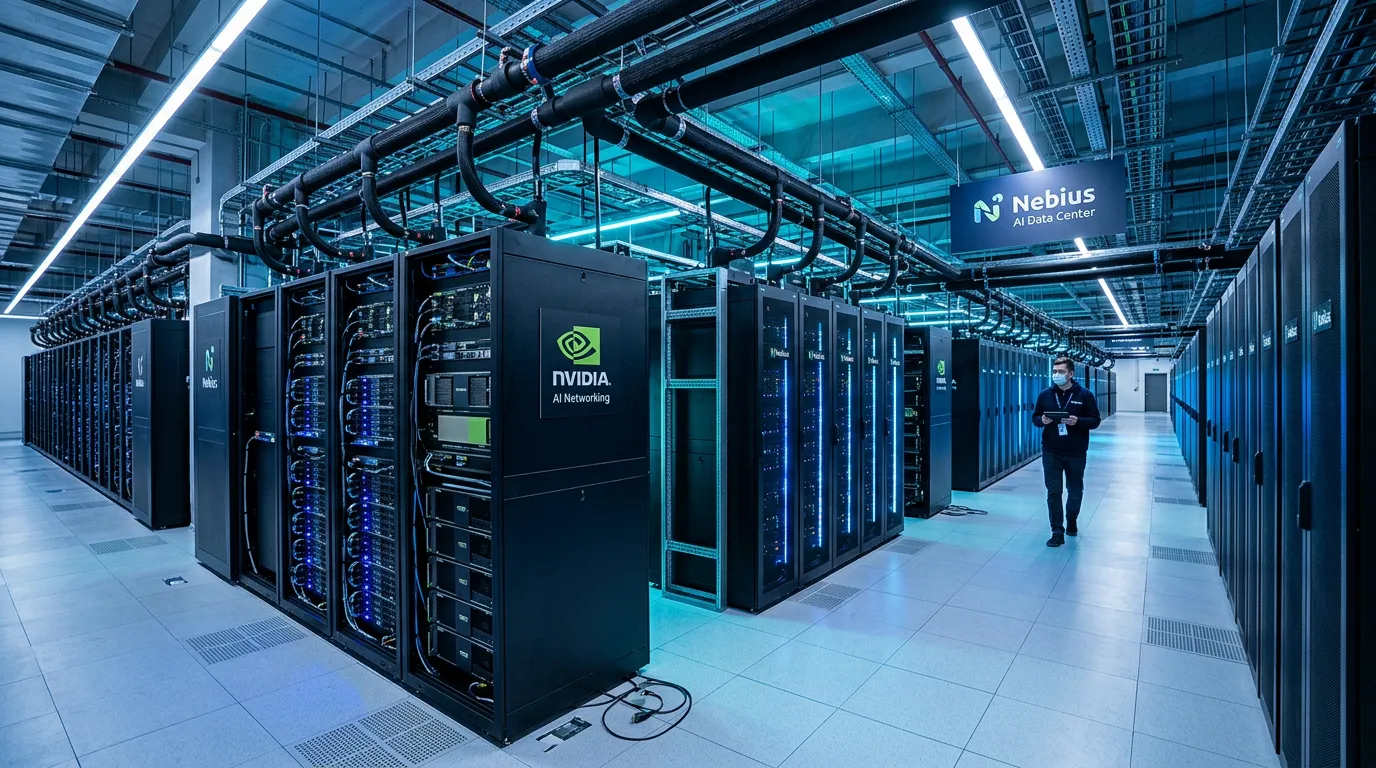
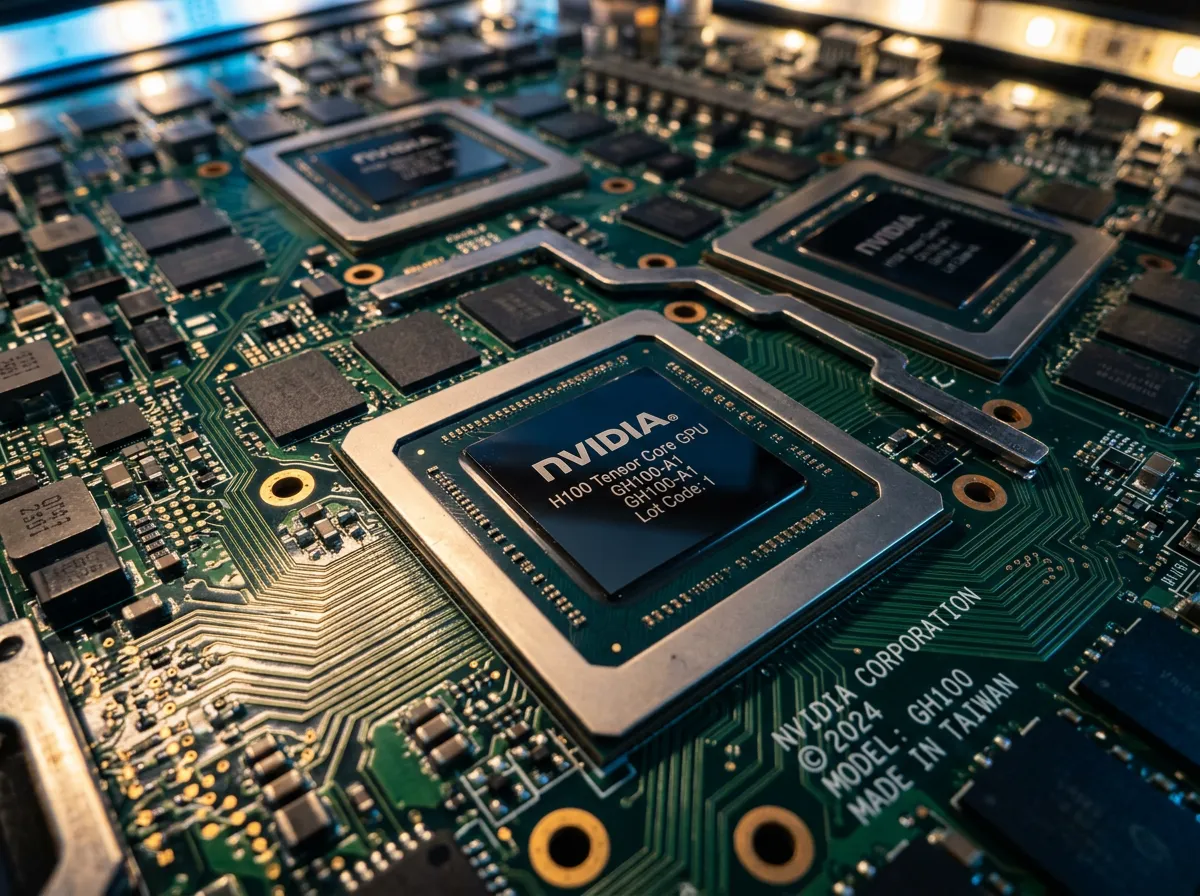
On Wednesday morning, NVIDIA announced it would invest $2 billion in Nebius Group, a company that most people outside the AI infrastructure world have never encountered. Nebius stock jumped 14 percent on the news. The partnership commits both companies to deploying more than 5 gigawatts of NVIDIA systems by the end of 2030, a figure that sounds abstract until you consider that 5 gigawatts is roughly the power output of five nuclear reactors, dedicated entirely to running artificial intelligence workloads. The deal includes early adoption of NVIDIA's next-generation Rubin chips, Vera CPUs, and BlueField storage systems, essentially giving Nebius first access to hardware that every major cloud provider in the world wants.
The investment is NVIDIA's largest single bet on what the industry calls "neoclouds," a new class of cloud providers built specifically for AI workloads rather than general computing. It also marks the most significant financial commitment to a company with an unusual origin story: Nebius is the international remnant of Yandex, Russia's largest technology company, reborn as a European-headquartered AI infrastructure firm after divesting all Russian assets in 2024. That combination of cutting-edge AI hardware, geopolitical backstory, and massive capital deployment makes this deal worth understanding, whether you follow tech stocks or simply want to know where the AI economy is actually heading.
What Nebius Actually Is
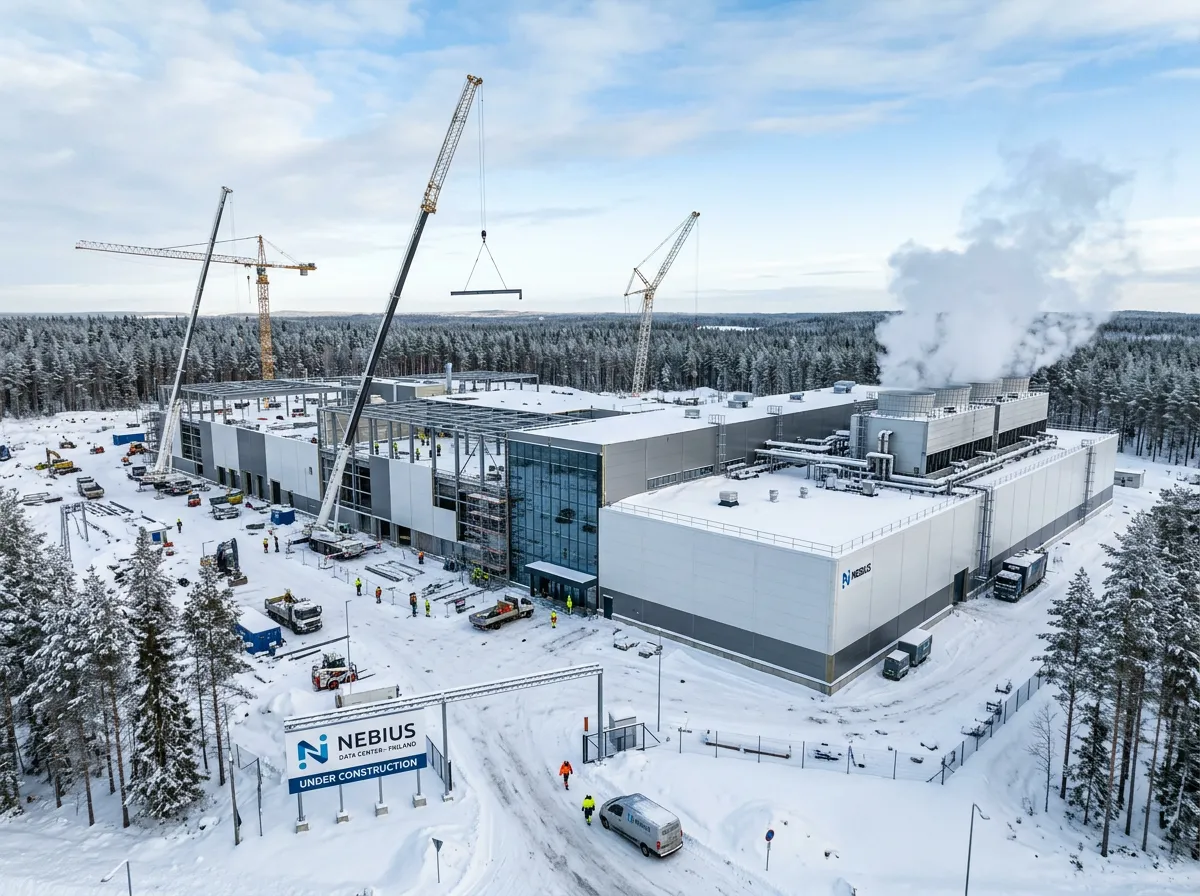
Nebius Group exists because of the war in Ukraine. When Western sanctions made it untenable for Yandex N.V., the Dutch parent company of Russia's dominant search engine, to maintain its Russian operations under a Western corporate umbrella, the company executed a split. In July 2024, Yandex N.V. sold all Russian-facing businesses to a consortium of Russian investors. What remained were the international operations: AI research teams, a Finnish data center, cloud infrastructure expertise, and roughly 1,000 former Yandex engineers. The company renamed itself Nebius Group N.V., installed former Yandex CEO Arkady Volozh as its leader, and set out to build a new identity as a pure-play AI cloud provider.
The pivot worked faster than most observers expected. Nebius signed a $3 billion deal with Meta in late 2025, sold out its available compute capacity, and announced plans for data centers in Finland, Paris, and Birmingham, Alabama. Management set a 2026 annual recurring revenue target of $7 billion to $9 billion, with more than 50 percent of that capacity already under long-term contracts. In February 2026, the company acquired Tavily, an agentic search startup, for approximately $400 million, signaling expansion beyond pure infrastructure into AI application layers.
The company's growth rate, 355 percent year-over-year revenue increase in its most recent quarter, places it among the fastest-growing firms in the AI sector. But growth alone does not explain why NVIDIA chose Nebius for a $2 billion investment. The answer lies in what neoclouds represent and why they matter.
Why NVIDIA Is Building Its Own Cloud Layer
NVIDIA's business model has always been straightforward: design the best chips and sell them to whoever can pay. That model generated $130 billion in revenue in fiscal 2026, a number that would have been unthinkable five years ago. But the company faces a strategic problem that money alone cannot solve. The three largest cloud providers, Amazon Web Services, Microsoft Azure, and Google Cloud, collectively purchase the majority of NVIDIA's data center GPUs. They are also NVIDIA's most dangerous long-term competitors, because all three are designing custom AI chips that could eventually reduce their dependence on NVIDIA hardware.
Amazon's Trainium chips, Google's TPUs, and Microsoft's Maia processors are not yet competitive with NVIDIA's best GPUs for most AI workloads. But the gap is narrowing with every generation, and the hyperscalers have a structural advantage: they control the software ecosystems and customer relationships that determine which hardware gets used. If Amazon can offer its Trainium chips at a lower price point through AWS and integrate them seamlessly with popular AI frameworks, many customers will switch from NVIDIA's offerings without looking back.
Investing in neoclouds like Nebius is NVIDIA's hedge against this scenario. By financing cloud providers that are architecturally committed to NVIDIA's hardware stack, the company creates a distribution channel that cannot easily be disrupted by hyperscaler chip programs. Nebius is not going to design its own GPU to compete with NVIDIA. Its entire business model depends on deploying NVIDIA systems at scale. That alignment is worth $2 billion to a company that needs to ensure its chips remain the default choice in an AI infrastructure market projected to exceed $2.5 trillion in annual spending.
The 5-Gigawatt Problem: AI's Power Appetite
The most striking number in the announcement is the deployment target: 5 gigawatts of NVIDIA systems by 2030. To put that in perspective, the entire U.S. data center industry consumed approximately 17 gigawatts in 2023. A single partnership between NVIDIA and one mid-sized cloud provider committing to nearly 30 percent of that figure, within four years, illustrates the scale of AI's power demands.
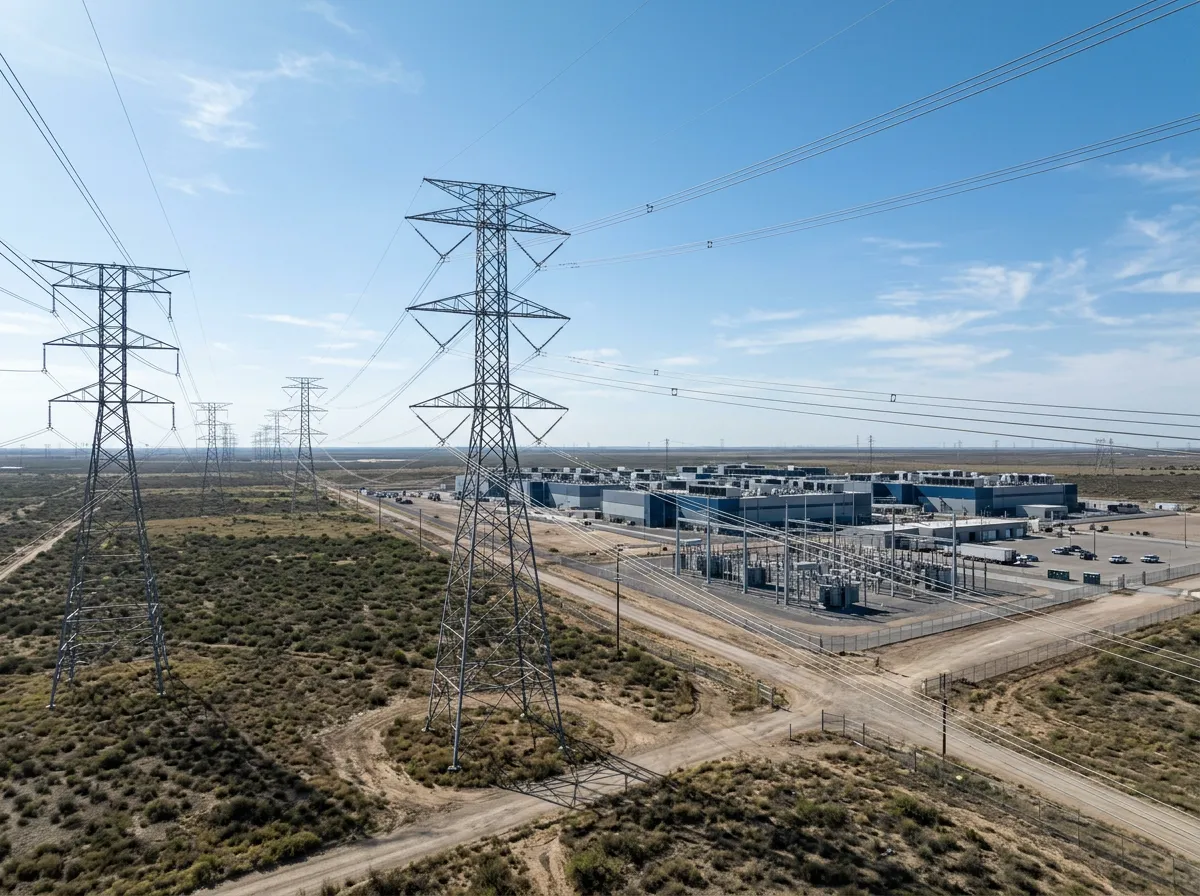
This is not a theoretical concern. Data center construction across the United States has slowed not because demand is insufficient but because power availability is constrained. Utilities in Virginia, Texas, and Arizona have warned that new data center connections could face wait times of three to five years as grid capacity struggles to keep pace with demand. The Department of Energy reported in January that AI-related power consumption could triple by 2028, creating competition for electricity between data centers, residential users, and industrial facilities.
Nebius has positioned itself to navigate this constraint by building in locations with relatively abundant and affordable power. Finland, where its first data center operates, has surplus hydroelectric and nuclear capacity. Birmingham, Alabama, where Nebius announced a new AI factory in February, offers lower electricity costs than Northern Virginia, the traditional epicenter of U.S. data center construction. The company's site selection strategy reflects an understanding that the next bottleneck in AI is not chips, software, or talent. It is electricity.
The Yandex Shadow and Geopolitical Risk
Nebius has worked aggressively to distance itself from its Yandex origins, but the connection has not disappeared. Volozh, Nebius's CEO, co-founded Yandex in 1997 and led it for over two decades. The company's AI expertise, the foundation of its current business, was developed within Yandex's research labs. The 1,000-plus engineers who form Nebius's workforce are predominantly former Yandex employees who chose to remain with the international entity rather than stay with the Russian business.
For NVIDIA, investing in a company with Russian-adjacent origins carries reputational and regulatory risk. Western governments have been aggressive about restricting technology transfers that could benefit Russia, and any perception that Nebius maintains connections to its former parent company could trigger scrutiny. Nebius has addressed this by completing a full legal separation, relocating its headquarters to Amsterdam, and ensuring that no Russian entity holds ownership in the company. U.S. regulators cleared the Yandex divestiture in 2024, and Nebius is listed on NASDAQ, subjecting it to American securities oversight.
The deeper question is whether geopolitical risk works in Nebius's favor. European governments, seeking to build AI infrastructure that is not dependent on American hyperscalers, have shown interest in supporting European-headquartered alternatives. France's data center plans for Nebius align with President Macron's stated goal of building sovereign AI capacity within Europe. If geopolitics pushes more nations toward technological self-sufficiency, companies like Nebius that operate across jurisdictions without being tied to a single hyperscaler may find themselves in high demand.
The Outlook
NVIDIA's $2 billion investment in Nebius is not primarily a financial bet. It is a strategic move to build a parallel cloud ecosystem that ensures NVIDIA's hardware dominance persists even as the largest cloud providers develop competing chips. The deal gives Nebius capital and first access to next-generation hardware. It gives NVIDIA a committed deployment partner that will never design chips to replace theirs. Both sides get what they need, which is why the partnership will likely deepen over time.
For the broader AI industry, the Nebius deal confirms that the infrastructure layer has become the decisive battleground. The companies that control where AI workloads physically run, the data centers, the chips, the power connections, will shape the industry's trajectory more than the companies building the models themselves. NVIDIA understands this. The hyperscalers understand it. And Nebius, a company that did not exist in its current form two years ago, has positioned itself at the center of that fight with $2 billion in fresh capital and a partner that cannot afford to let it fail.
The specific metric to watch is Nebius's 2026 ARR target of $7 billion to $9 billion. If the company hits the upper end of that range, it will have grown from effectively zero to a top-ten cloud provider in under two years, a pace that would validate NVIDIA's thesis that the neocloud model is not a niche but a structural shift in how AI infrastructure gets built and deployed.
Sources
- Nebius stock pops 14% on Nvidia $2 billion investment announcement - CNBC
- Nvidia to invest $2 billion in neocloud Nebius amid AI data center push - Yahoo Finance
- Nebius November digest: A new $3B agreement with Meta, data center expansion and more - Nebius
- The curious case of Nebius, the publicly traded AI infrastructure startup - TechCrunch