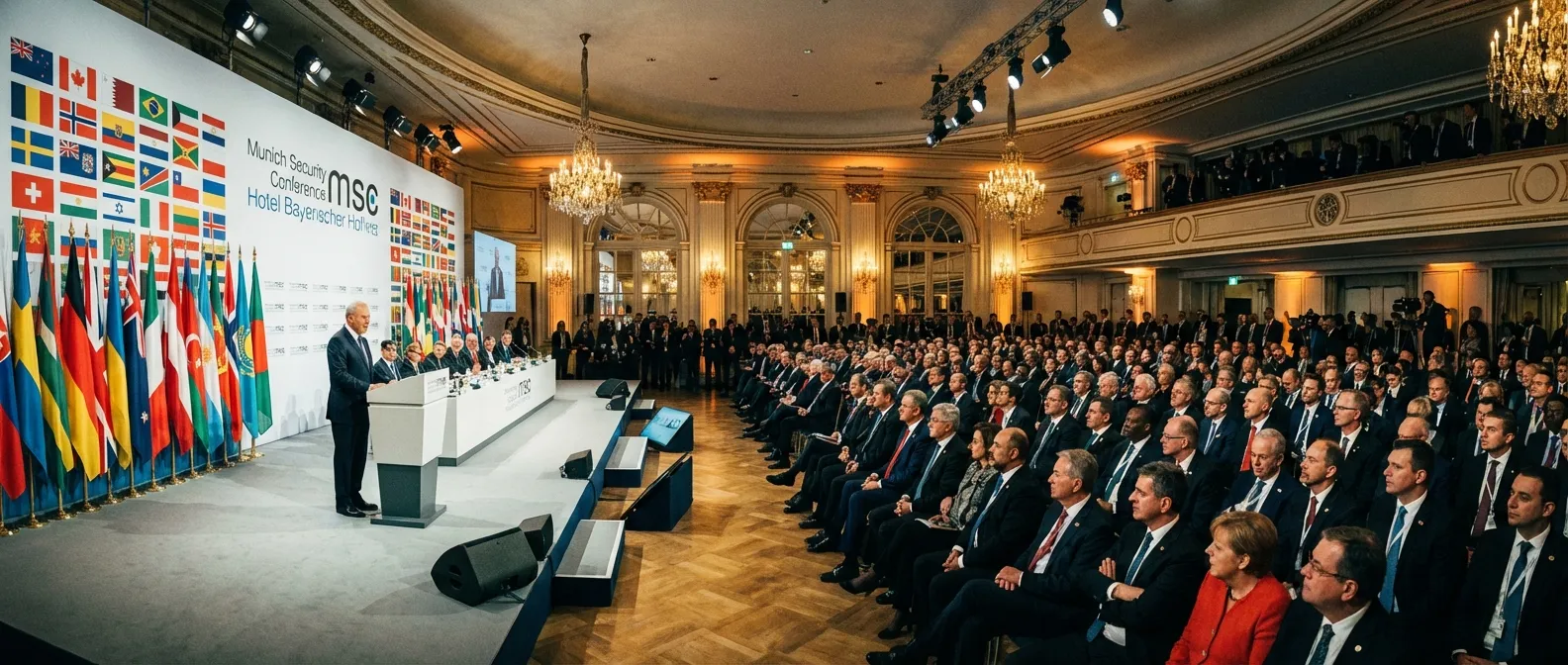
The 62nd Munich Security Conference ended Saturday with a message that would have been unthinkable five years ago: Europe doesn't need America to save it. That was the explicit declaration from EU foreign policy chief Kaja Kallas, who told U.S. Ambassador to the UN Mike Waltz on a packed panel, "You also need us." It was the conference's defining confrontation, and it captured a shift that went far beyond diplomatic posturing.
For three days at Munich's Hotel Bayerischer Hof, more than 70 heads of state gathered under the conference's starkest theme yet: "Under Destruction." The phrase wasn't aimed at an external enemy. It described the forces tearing apart the Western-led international order from within.
A Warmer Tone, the Same Demands
U.S. Secretary of State Marco Rubio delivered the conference's most anticipated keynote on Friday, striking a noticeably softer tone than Vice President JD Vance's combative 2025 address. "For the United States and Europe, we belong together," Rubio told the audience, earning a standing ovation. He called for a "new Western century" of shared prosperity.
But the warmth was conditional. Rubio framed Western unity around "Christian faith, culture, heritage, language, ancestry," a civilizational vision far narrower than the liberal democratic values most European leaders espouse. He denounced what he called a "climate cult" impoverishing Western nations, dismissed open migration as threatening "the cohesion of our societies," and made no mention of Russia, the security threat that dominates European strategic thinking.
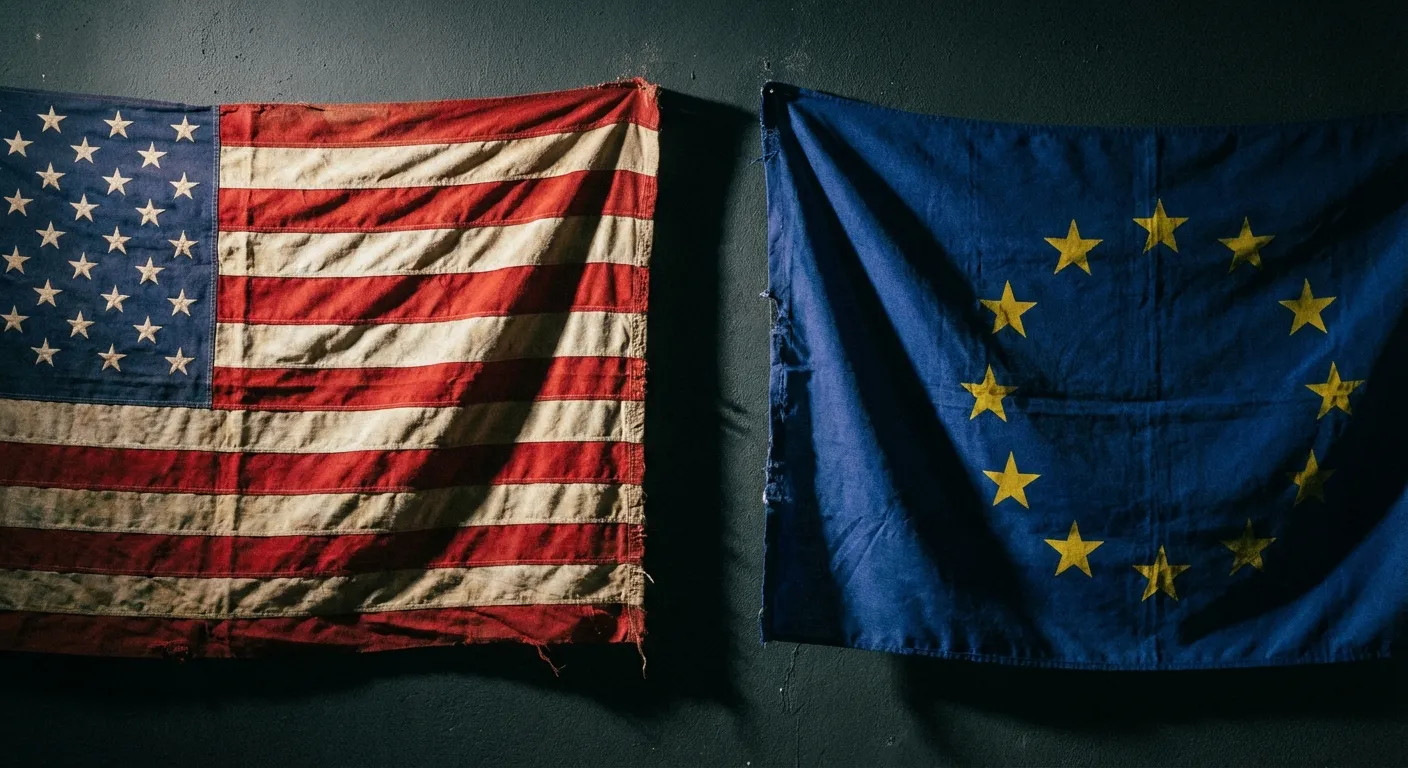
"We made these mistakes together," Rubio said, referring to climate policy and migration. "And now, together, we owe it to our people to face those facts and to move forward." European Commission President Ursula von der Leyen called the speech "reassuring." Other officials were less charitable, noting that Rubio's olive branch came wrapped in demands to abandon core European policy positions on climate, multilateralism, and immigration.
Europe's Defiant Response
The European response was unified in a way that previous Munich conferences have not produced. German Chancellor Friedrich Merz opened the conference by declaring that "freedom is no longer a given" and that the U.S. claim to leadership had been "challenged, and possibly lost." French President Emmanuel Macron called for Europe to "become a geopolitical power in its own right" and announced a strategic dialogue with Germany on extending France's nuclear deterrent to broader European protection.
UK Prime Minister Keir Starmer, signaling a post-Brexit reset, declared, "We are not the Britain of the Brexit years anymore," and called for "deeper economic integration" with the EU. He pledged to deploy Britain's carrier strike group to the Arctic against Russian threats, framing the moment in blunt terms: "We must build our hard power, because that is the currency of the age."
The pushback reached its peak when Kallas directly challenged Waltz on a panel about the international order. "Contrary to what some may say, 'woke, decadent Europe' is not facing civilisational erasure," she said, targeting what she termed "fashionable euro-bashing" from Washington. When Waltz argued that it was fair to ask 450 million Europeans to be more self-sustaining in defense, Kallas fired back: "When America goes to wars, then a lot of us go with you, and we lose our people on the way." Politico called the exchange "Munich's biggest fight."
In a theatrical gesture that captured the conference's odd mix of diplomacy and provocation, Waltz handed out blue "Make the UN Great Again" caps to fellow panelists, including one directly to Kallas, emblazoned with an American flag. The stunt drew nervous laughter in a room that wasn't sure whether to take it as a joke or a warning.
The De Gaulle Parallel: Why This Time Is Different
Europe has threatened strategic autonomy before. In 1966, Charles de Gaulle pulled France from NATO's integrated military command, declaring that American dominance was incompatible with French sovereignty. The rhetoric was fiery. The follow-through was limited. France remained in the alliance, European defense integration stalled, and within a decade the transatlantic bargain settled back into its familiar pattern: America leads, Europe follows, everyone complains but nothing changes.
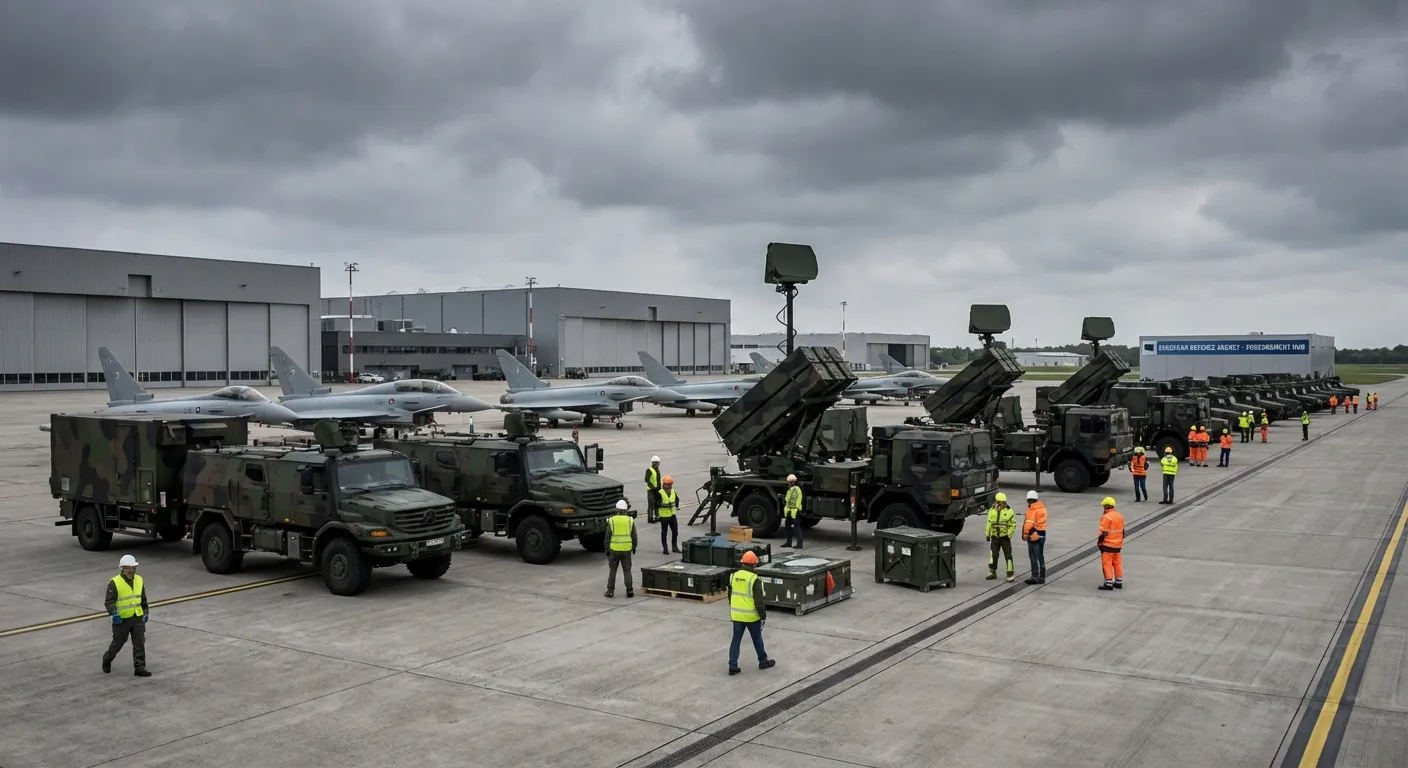
Munich 2026 echoes that moment, but with a critical difference. In 1966, de Gaulle's push was ideological, rooted in French nationalism with little material backing. In 2026, the European assertions come with money attached. NATO allies agreed at The Hague Summit to invest 5% of GDP annually in defense by 2035, up from the 2% target that most members were already struggling to meet. Germany has launched major procurement programs in air defense, deep precision strikes, and satellite technology. Merz confirmed active discussions with Macron on sharing France's nuclear deterrence, a step that was inconceivable even two years ago.
The spending trajectory matters because it determines whether European autonomy talk is aspirational or structural. The de Gaulle moment produced no lasting institutional change because it lacked a financial foundation. The current European commitment, if sustained, would represent the most significant rebalancing of transatlantic defense responsibility since NATO's founding. The question is no longer whether Europe wants to build independent defense capacity. It is whether domestic politics in Germany, France, and the UK will sustain defense budgets at these levels once the immediate sense of crisis fades.
A YouGov poll released during the conference found that favorability toward the United States among Europe's six largest countries is at its lowest point in a decade, providing the kind of sustained public support that makes long-term defense investment politically viable in a way that previous transatlantic tensions did not.
Ukraine's Shadow Over Every Conversation
Ukrainian President Volodymyr Zelenskyy delivered an emotional address that directly invoked the city's darkest historical association. "It would be an illusion to believe that this war can now be reliably ended by dividing Ukraine," he said, "just as it was an illusion to believe that sacrificing Czechoslovakia would save Europe from a greater war." The reference to the 1938 Munich Agreement, made in the very city where appeasement was born, was deliberate and pointed.
Zelenskyy laid out specific demands: a minimum of 20 years of security guarantees from the U.S., foreign troops stationed in Ukraine after any peace deal, and a timeline for EU accession by 2027. He offered a conditional proposal for democratic elections if the U.S. helped secure a two-month ceasefire. But he also voiced frustration that Washington "too often" pressures Ukraine rather than Russia for concessions.
NATO Secretary General Mark Rutte provided a sobering military update, reporting that Russia had suffered approximately 65,000 casualties over the last two months alone, advancing through Ukraine "at a garden snail's pace." The numbers underscored a grim reality: the war's human cost continues to mount while diplomatic progress remains elusive, and the military dynamics shape every calculation about what a sustainable European security architecture actually looks like.
The 2028 Factor
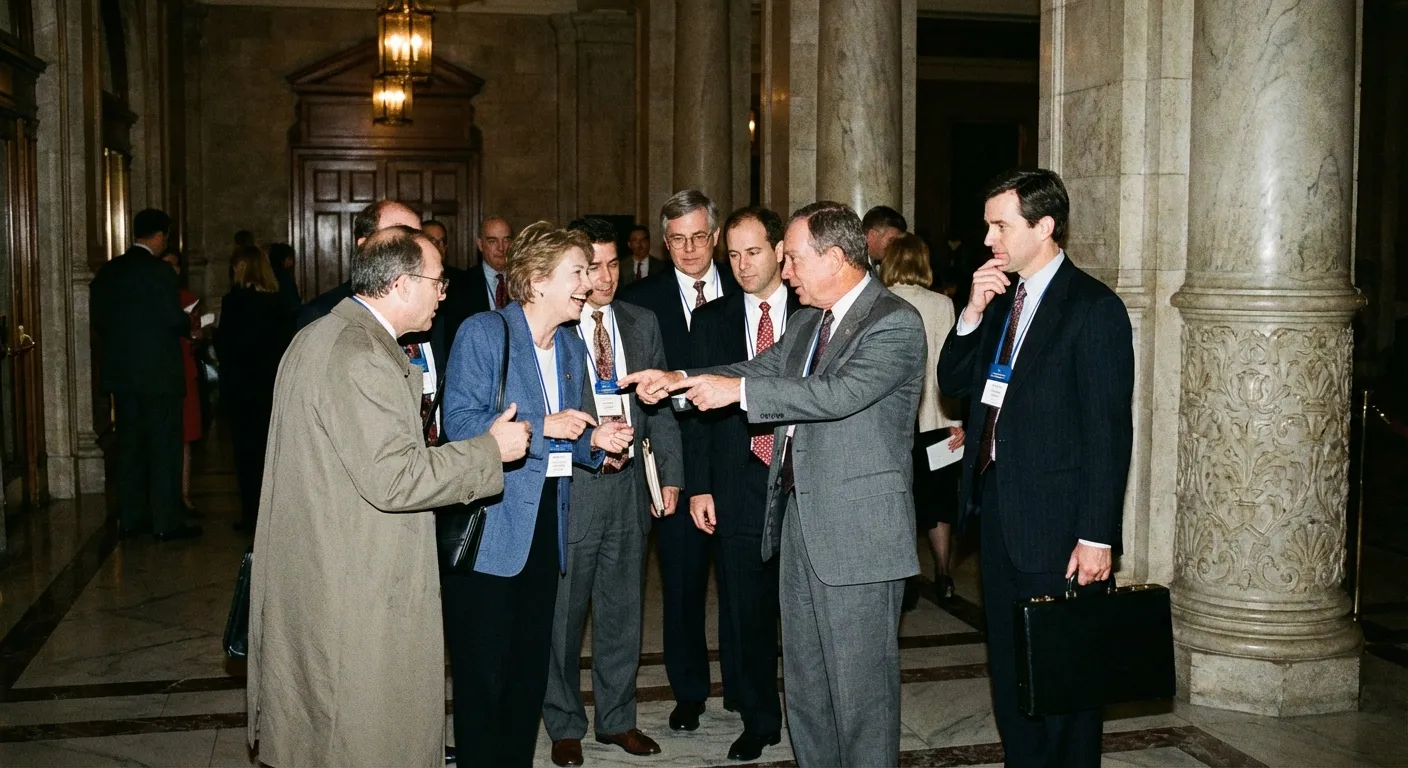
The conference also served as an unofficial stage for American domestic politics. A striking number of Democratic officials attended, including Representatives Alexandria Ocasio-Cortez and Jason Crow, California Governor Gavin Newsom, and Michigan Governor Gretchen Whitmer, all widely considered potential 2028 presidential candidates.
Ocasio-Cortez used the platform to advance what she and Crow called "a foreign policy vision for working people," arguing that "extreme levels of income inequality lead to social instability" and drive authoritarianism. Newsom told European leaders directly: "Donald Trump is temporary. He'll be gone in three years." The subtext was unmistakable: Democrats were reassuring allies that the current U.S. posture may not last, while building foreign policy credentials for the next election cycle.
The presence of so many 2028 hopefuls added an uncomfortable dimension to an already tense conference. European leaders found themselves navigating not just one American foreign policy, but auditions for its replacement, with no guarantee that any successor would be more to their liking.
The Impact
The Munich Security Conference has always been more about signaling than legislating, and the 2026 edition was no exception. No treaties were signed, no binding commitments made beyond those already agreed at The Hague. But the signals were unusually clear.
Europe is building defense capacity with real money for the first time since the Cold War. The U.S. is offering partnership on terms that many European leaders find culturally and politically unacceptable. And a generation of European politicians, from Merz to Starmer to Kallas, is staking their political identities on the proposition that Europe must stop outsourcing its security to a partner whose reliability can no longer be assumed.
Based on the defense spending commitments announced at The Hague and reinforced at Munich, European NATO members will likely reach 3.5% of GDP in core defense spending by 2030, a level that would fundamentally alter the transatlantic balance of power. The key indicator to track is whether Germany's next federal budget, due this spring, actually funds the procurement programs Merz described. If it does, Munich 2026 will be remembered as the moment European strategic autonomy stopped being a slogan and became a policy.
Sources
- Euronews: Munich Security Conference 2026: Wind of Change 2.0
- NPR: Rubio Speech at Munich Security Conference
- NBC News: AOC Warns Democracies Must Deliver for Working Class
- Chatham House: The West vs the West at the Munich Security Conference
- France 24: Macron Tells Munich Europe Must Become Its Own Geopolitical Power