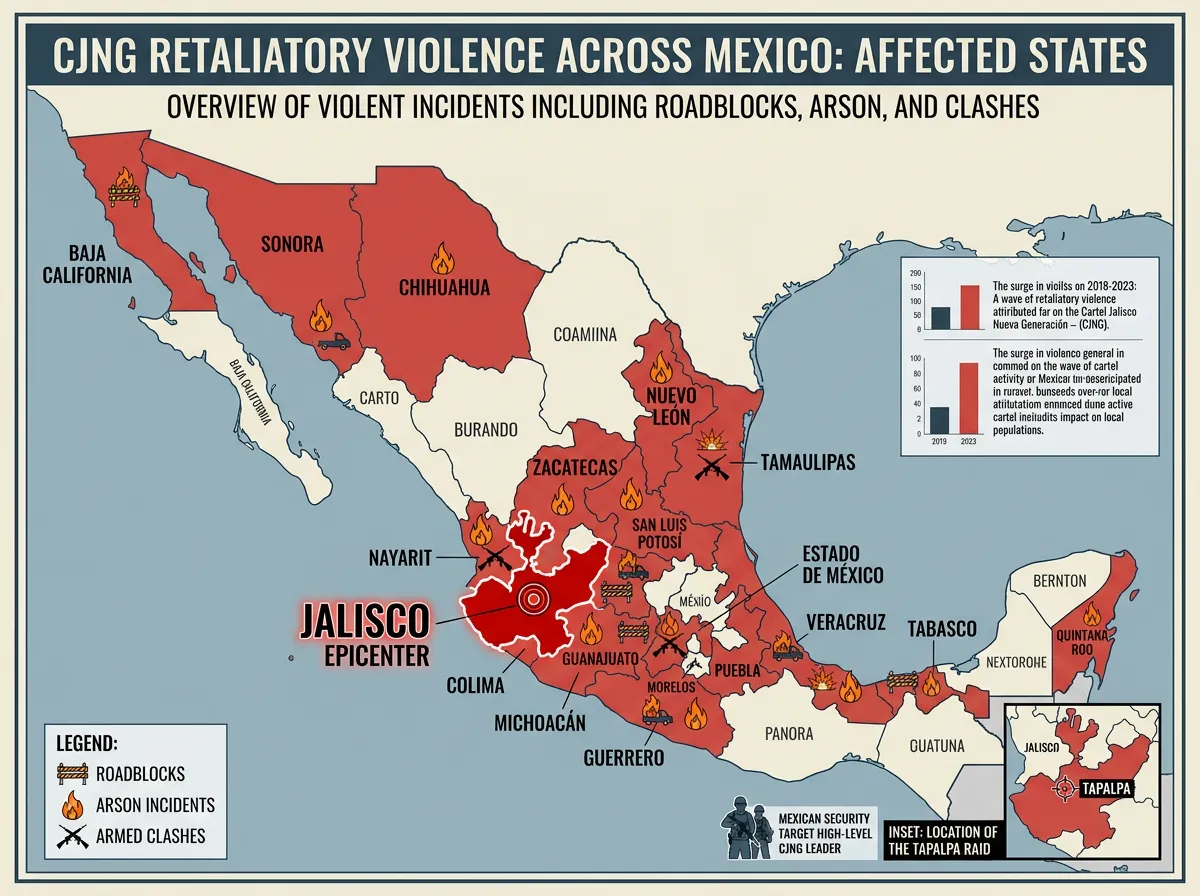
Nemesio Oseguera Cervantes, known as El Mencho, was the most wanted drug trafficker in the Western Hemisphere. The US government had a $10 million bounty on his head. He led the Jalisco New Generation Cartel, CJNG, an organization that in less than a decade grew from a regional operation into Mexico's most powerful and violent criminal enterprise. On February 22, Mexican security forces tracked one of his romantic partners to a gated community in Tapalpa, Jalisco, confirmed his presence, and launched a raid that ended with his death and six of his bodyguards killed in an intense firefight.
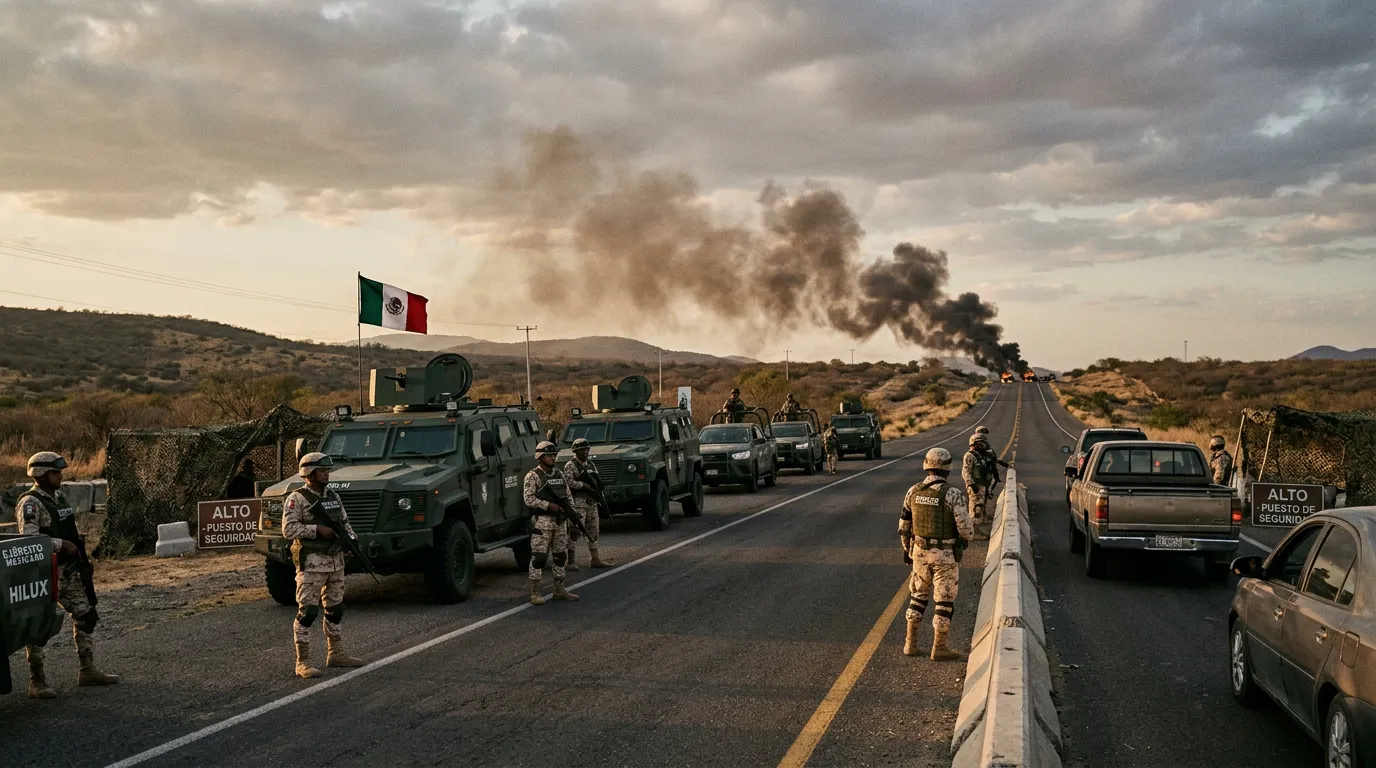
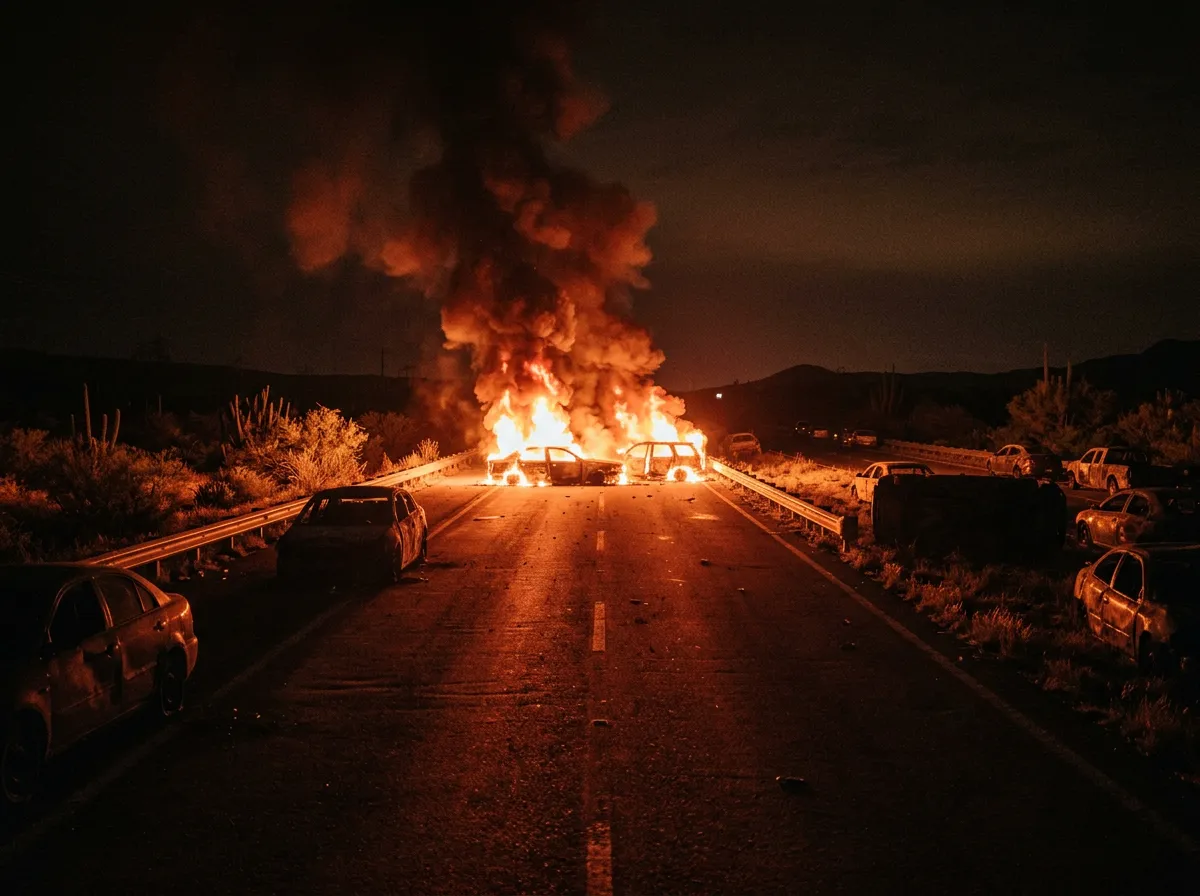
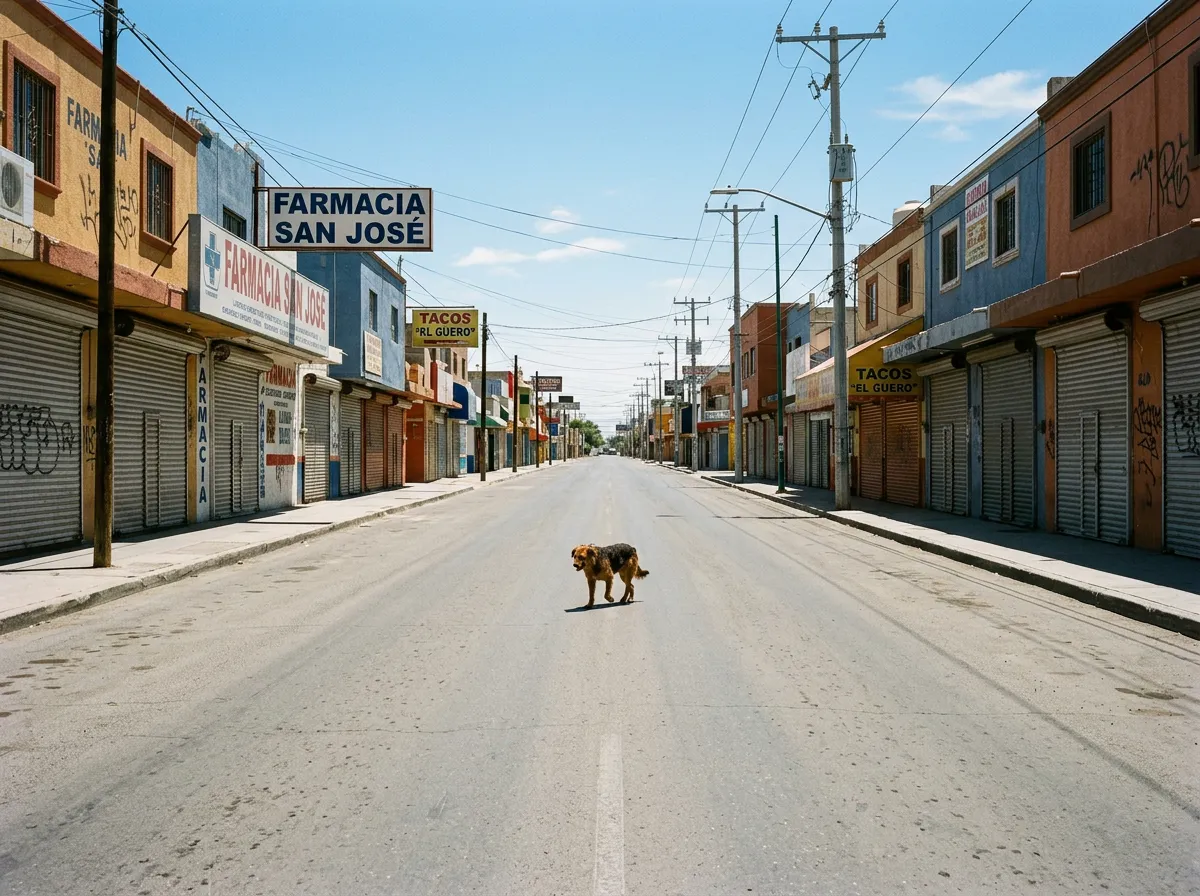
Within hours, the cartel's response made clear why killing a cartel leader is not the same as defeating a cartel. CJNG operatives erected more than 250 roadblocks across 20 Mexican states, set fire to vehicles blocking major highways, and launched coordinated attacks on government forces. At least 70 people have died in the operation and its aftermath, including 25 National Guard members killed in six separate ambushes in Jalisco. Major cities turned into ghost towns overnight. The US Embassy issued shelter-in-place warnings for all American citizens in Mexico.
How the Operation Unfolded
Mexican Defense Secretary General Ricardo Trevilla provided the operational timeline at a Monday press conference. Intelligence agencies had been tracking El Mencho's network of safe houses for months, focusing on the movements of associates and romantic partners rather than attempting to locate him directly. When surveillance identified one of his partners traveling to a compound in Tapalpa, a mountain town in Jalisco's southern highlands, authorities moved to confirm his presence before launching the assault.
The raid itself was fast and violent. Federal troops advanced on the property from multiple directions. CJNG gunmen opened fire as the security cordon tightened, triggering an exchange that lasted approximately 45 minutes in mountainous terrain that favored the defenders. El Mencho was killed along with six members of his security detail. Several other cartel members were captured, though the Defense Ministry has not disclosed their identities or ranks.
The choice of Tapalpa was significant. El Mencho had avoided major cities for years, moving between remote properties in Jalisco's rugged highlands. The terrain made aerial surveillance difficult and ground approaches easy to detect. That he was found through human intelligence rather than signals intelligence suggests either a breakthrough in informant networks or a betrayal within his inner circle, a distinction that has direct implications for how the power vacuum plays out.
Why Decapitation Strategies Keep Failing
The killing of El Mencho follows a pattern that has repeated across two decades of Mexico's drug war, and the pattern offers a clear prediction about what happens next. When Mexican or US authorities kill or capture a cartel leader, the immediate result is retaliatory violence followed by a succession crisis that generates more sustained violence than the leader's tenure produced.
The data supports this. A 2019 study published in the Journal of Conflict Resolution by researchers at the University of Chicago analyzed 89 instances of cartel leadership removal between 2006 and 2018. They found that municipalities where leaders were captured or killed experienced an average 80% increase in homicides in the following 12 months, driven primarily by internal power struggles and opportunistic expansion by rival organizations.
The mechanism is straightforward. Cartel leaders like El Mencho serve as arbiters of violence. They decide which rivals to attack, which territories to contest, and which government actors to corrupt or confront. When that decision-making authority disappears, lieutenants compete for control, often through escalating violence intended to demonstrate strength. Simultaneously, rival cartels move into territories that the disrupted organization can no longer defend effectively.
CJNG's succession problem is particularly acute. El Mencho's son, Ruben Oseguera Gonzalez, known as El Menchito, was the presumed heir. But El Menchito has been imprisoned in the United States since his extradition in 2020, making him functionally unreachable. El Mencho's daughter, Jessica Oseguera Gonzalez, was convicted in the US on financial crimes charges in 2023. With the family leadership line broken, CJNG faces a succession crisis with no clear resolution.
David Mora, a Mexico analyst with the International Crisis Group, warned that the absence of a designated successor "will cause a power vacuum that could cause violent realignments within the organization." In practical terms, this means CJNG could fracture into competing factions, each controlling different territories and supply routes, each using violence to establish dominance.
The Fentanyl Connection
El Mencho's death has implications beyond Mexico's borders. CJNG has been one of the two primary organizations, alongside the Sinaloa Cartel, responsible for manufacturing and trafficking fentanyl into the United States. The synthetic opioid killed over 70,000 Americans in 2025, and disrupting its supply chain was a stated priority of both the Trump administration and the Mexican government.
The counterintuitive reality is that El Mencho's death may temporarily increase fentanyl trafficking rather than reduce it. Cartel fragmentation creates more independent operators, each seeking to generate revenue to fund their faction in the coming power struggle. Fentanyl, which is cheap to produce and enormously profitable, is the ideal product for smaller organizations that lack the infrastructure for large-scale marijuana or cocaine trafficking.
The precedent is the 2016 recapture of Joaquin "El Chapo" Guzman of the Sinaloa Cartel. In the years following his extradition, the Sinaloa Cartel splintered into at least three competing factions, and fentanyl seizures at the US border increased by over 300% between 2017 and 2022. Correlation is not causation, but the timing is difficult to ignore: leadership removal coincided with proliferation of the most dangerous drug in the supply chain.
What Mexico's Government Faces Now
President Claudia Sheinbaum's administration is navigating a situation with no good options. The operation that killed El Mencho was a genuine security achievement, the result of months of intelligence work and a high-risk military operation. But the aftermath has already demonstrated why security scholars have spent 20 years arguing that Mexico's approach to organized crime, focused on leadership targeting rather than institutional reform, produces tactical victories and strategic stalemates.
The 250 roadblocks across 20 states demonstrated CJNG's organizational depth. A cartel that can mount a coordinated nationwide response within hours of its leader's death is not an organization that depends on any single individual. It is an institution, with regional commanders, financial networks, and logistics chains that survive leadership transitions. Dismantling it requires dismantling those structures, not just the person at the top.
The US relationship adds another layer of complexity. The Trump administration, which has framed the drug war as a national security priority and has explored military cooperation with Latin American governments on security matters, will likely cite El Mencho's death as evidence that its pressure on Mexico is producing results. Mexico's government, which has historically resisted US involvement in domestic security operations, faces the tension of accepting credit for an operation while managing the consequences that American officials will not share.
The Outlook
The retaliatory violence will likely subside within two to three weeks as CJNG's regional commanders assess their positions and begin internal negotiations over succession. The more dangerous phase begins after the initial chaos subsides, when mid-level leaders start competing for territorial control and rival organizations, particularly the Sinaloa Cartel and the Northeast Cartel, test CJNG's boundaries.
Based on the pattern established by every major cartel leadership removal since 2006, Mexico should expect elevated homicide rates in CJNG-controlled territories for 12 to 18 months. The specific territories to watch are Jalisco, Colima, Guanajuato, and Michoacan, states where CJNG's control has been contested and where a weakened central command will create openings for rivals.
For American policy, the fundamental question remains unchanged: can you dismantle a $50 billion annual drug trafficking industry by arresting or killing the people who run it? Two decades of evidence suggest the answer is no. El Mencho's death is not meaningless. It disrupts operations, creates uncertainty, and demonstrates that no one is beyond reach. But the fentanyl will continue flowing, the violence will continue, and within a year, someone will fill the vacuum. They always do.