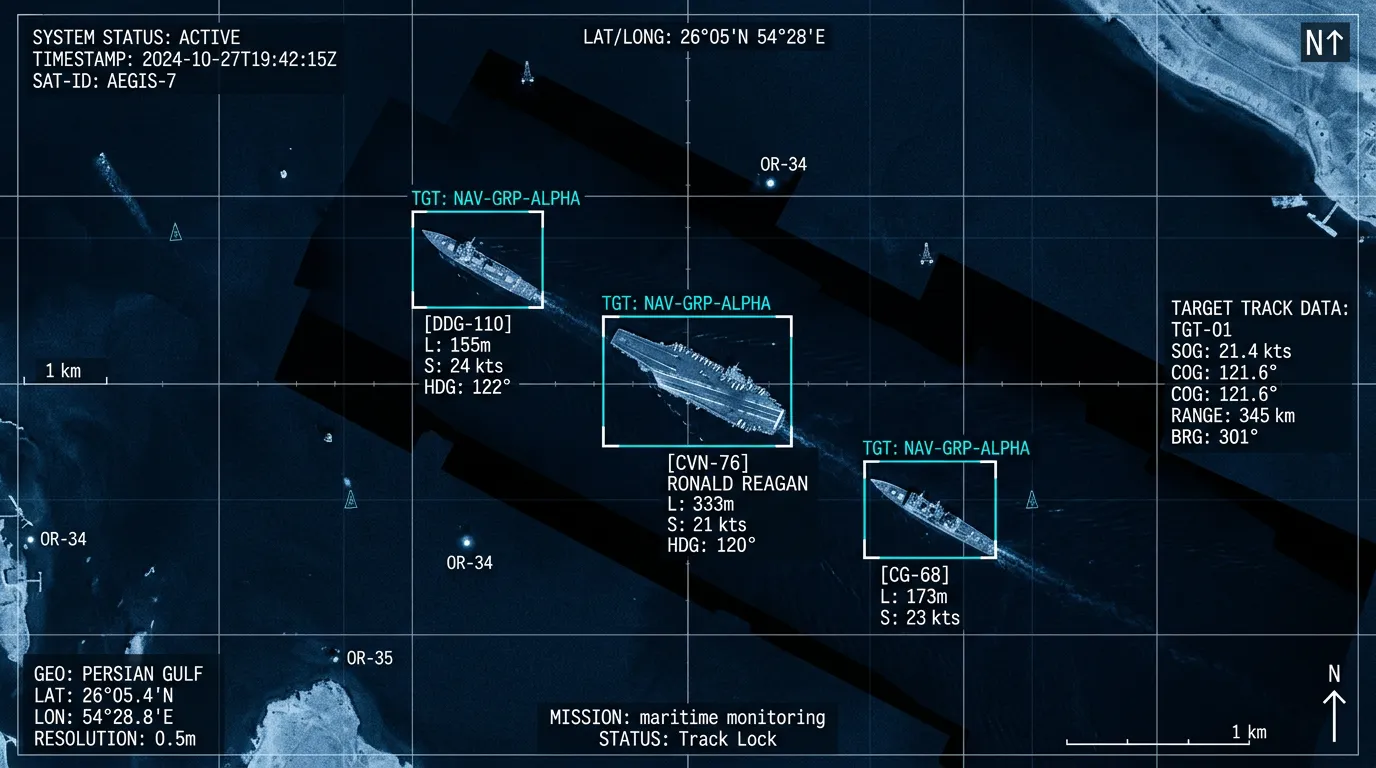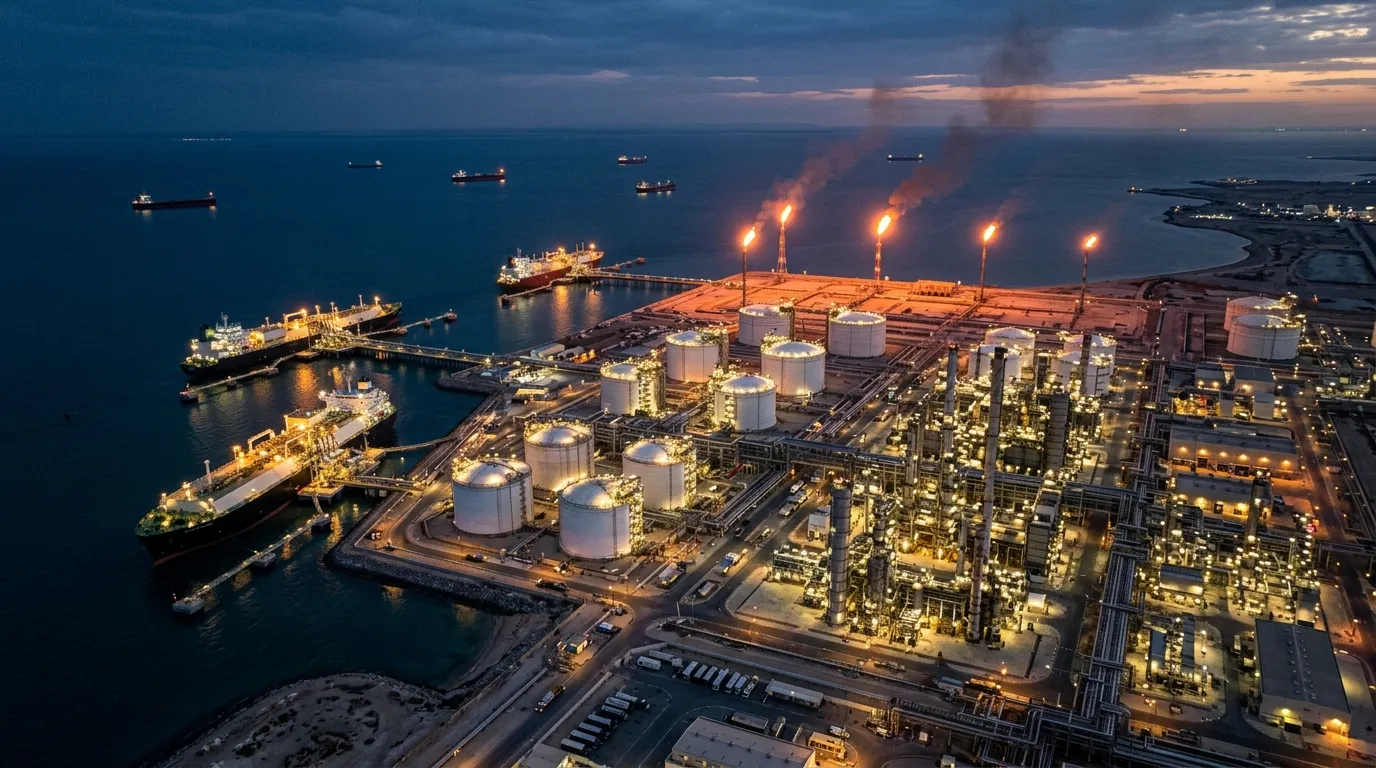
Iran's war with the United States and Israel claimed a new kind of casualty on Tuesday: the energy infrastructure of a country that isn't even a combatant. Iranian missiles struck Ras Laffan Industrial City, the largest liquefied natural gas export facility in the world, located 80 kilometers northeast of Doha. Qatar intercepted four of the five incoming missiles, according to the country's Interior Ministry, but the one that got through caused what QatarEnergy CEO Saad al-Kaabi called "extensive damage" to processing equipment.
The strike knocked out an estimated 17% of Qatar's LNG export capacity, damage that could take three to five years to fully repair, according to Reuters reporting confirmed by Bloomberg. Within hours, Qatar's Foreign Ministry declared the Iranian embassy's military and security attaches persona non grata and gave them 24 hours to leave the country. Brent crude briefly touched $119 a barrel on Wednesday morning, and European natural gas futures surged 15%.
This was not a stray missile or an accident. Iran explicitly warned last week that it would target energy infrastructure in Qatar, Saudi Arabia, and the UAE in retaliation for Israeli strikes on Iran's South Pars natural gas field. Tehran made good on the threat. And in doing so, it opened a dimension of the conflict that goes far beyond the Strait of Hormuz blockade that has dominated energy market fears for three weeks.
What Happened at Ras Laffan
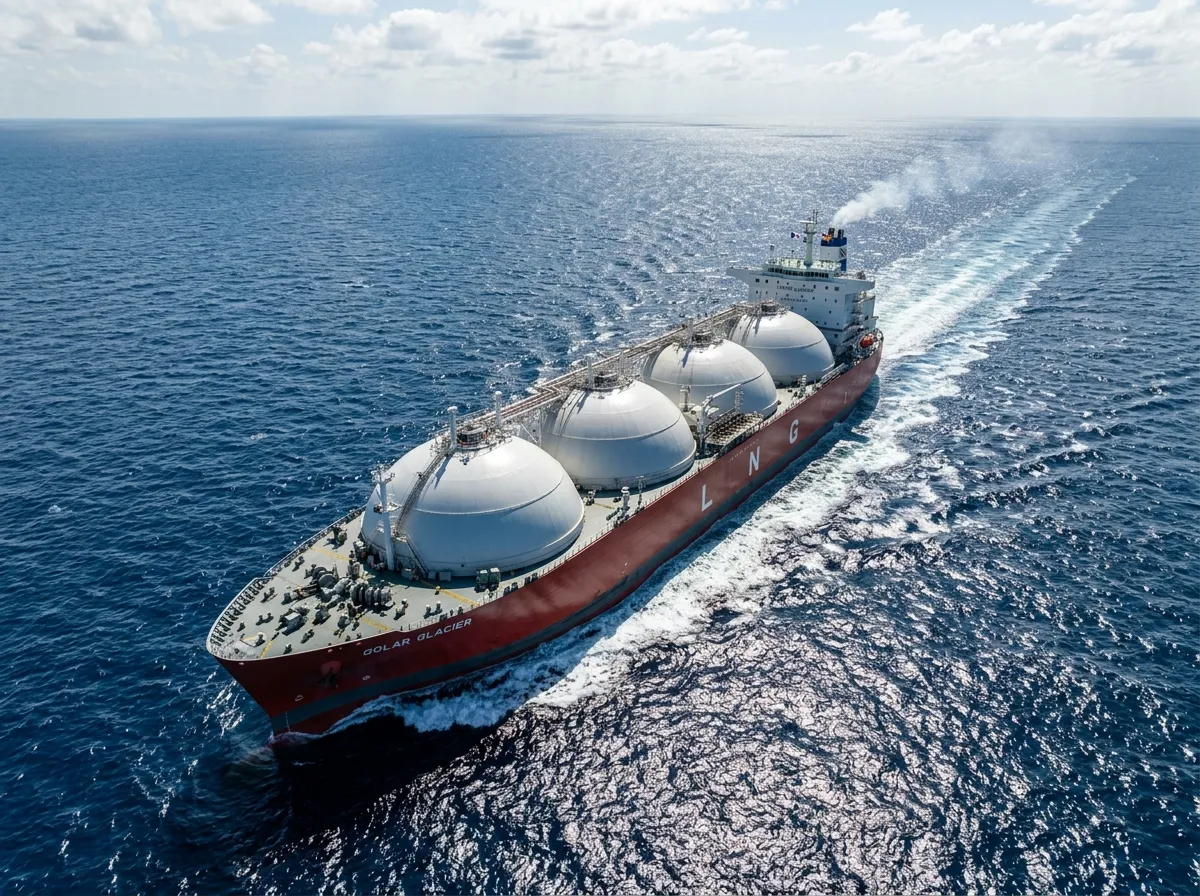
Ras Laffan Industrial City is not just another gas facility. It produces roughly 20% of the world's LNG supply, making it the single most consequential piece of energy infrastructure on the planet. The complex stretches across a massive coastal zone and serves as the export hub for Qatar's North Field, the largest natural gas reservoir ever discovered. The facility feeds long-term supply contracts with buyers across Europe and Asia, and its output is a foundational pillar of global energy security.
The Iranian missile that penetrated Qatar's air defenses struck a processing train, the precision-engineered equipment that cools natural gas to minus 162 degrees Celsius to convert it into a liquid for shipping. Processing trains cannot be patched or jury-rigged. Damaged components must be manufactured, shipped, and installed by specialist contractors. QatarEnergy acknowledged that repairs would be "extensive and prolonged," a characterization consistent with the three-to-five-year timeline reported by Bloomberg.
Emergency crews contained the resulting fire within hours, and QatarEnergy reported no casualties. But the physical damage is only part of the story. The attack forced Qatar to halt LNG loading operations at the affected portion of the facility, immediately reducing the volume of gas available to global markets. Even when the conflict ends and the Strait of Hormuz reopens, this particular capacity will not return for years.
The Tit-for-Tat That Broke a Taboo
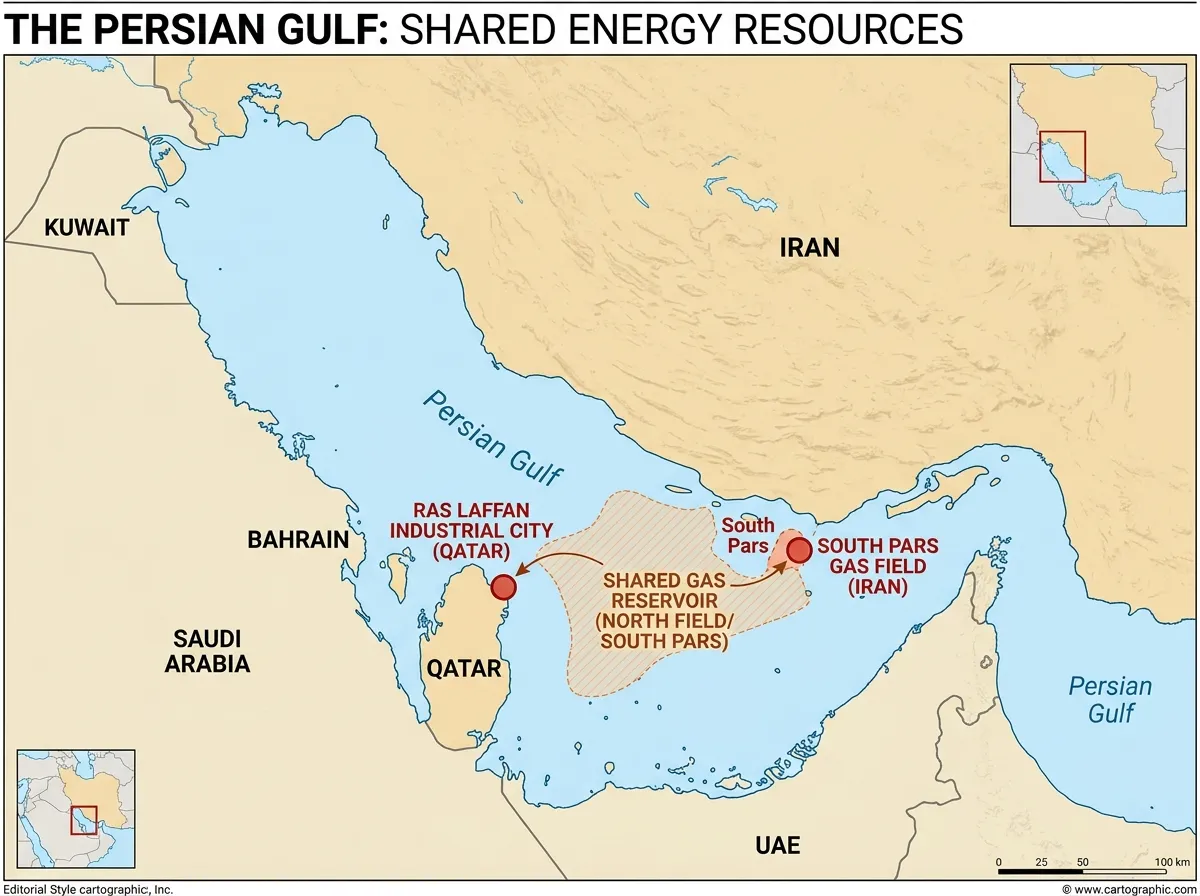
The Ras Laffan attack did not happen in isolation. It was a direct response to an Israeli strike on Iran's South Pars gas processing facility earlier in the conflict. South Pars and Qatar's North Field sit on opposite sides of the same massive geological gas reservoir that straddles the Persian Gulf. When Israel bombed South Pars, it didn't just hit an Iranian facility. It struck at the shared geology that Qatar depends on too.
Iran's logic, stated explicitly by a spokesperson for the Islamic Revolutionary Guard Corps, was straightforward: "If our energy infrastructure is a legitimate target, then so is theirs." The "theirs" referred not to Israel, which has negligible LNG infrastructure, but to Qatar, a Gulf state that Iran accused of enabling the US-Israeli military campaign by allowing American forces to operate from Al Udeid Air Base on Qatari soil.
Qatar has denied that Al Udeid is being used for offensive operations against Iran, but the distinction didn't matter to Tehran. The decision to retaliate against a neutral Gulf state's civilian energy infrastructure marks a dramatic escalation. For three weeks, the conflict's energy dimension was largely concentrated in the Strait of Hormuz, where tanker traffic collapsed and oil prices climbed past $100. The Ras Laffan strike expands the battlefield to fixed infrastructure across the entire Gulf region.
When Wars Engulf Bystanders: A Pattern With Precedent
Iran's attack on Qatar's LNG facility fits a historical pattern that energy strategists and military historians recognize: when major conflicts reach a certain intensity, neutral states' infrastructure becomes a target regardless of formal neutrality.
During World War II, Germany's unrestricted submarine warfare targeted merchant ships from neutral nations including Sweden, Switzerland's trading partners, and Ireland, not because those countries were enemies but because their trade routes supplied Germany's adversaries. The calculus was simple: if you cannot hit the combatant's supply chain directly, hit the infrastructure that feeds it. During the Iran-Iraq War of the 1980s, both sides attacked oil tankers belonging to neutral Kuwait and Saudi Arabia in what became known as the Tanker War, leading the United States to reflag Kuwaiti vessels and provide military escorts.
The current situation follows the same logic at a larger scale. Iran cannot meaningfully strike US or Israeli energy infrastructure, so it targets the Gulf states whose facilities supply energy to American allies in Europe and the broader global market. The message is both military and economic: every country that profits from energy exports in the Persian Gulf region is now a potential target if the conflict continues to escalate. That principle, if established as a norm of this conflict, would fundamentally reshape the risk calculus for the $3.3 trillion global LNG industry.
The critical difference between 2026 and the 1980s Tanker War is the concentration of global LNG infrastructure. In the 1980s, oil production was distributed across dozens of facilities and export terminals. LNG processing, by contrast, is concentrated in a handful of mega-facilities: Ras Laffan in Qatar, Gorgon and Wheatstone in Australia, Sabine Pass and Cameron in the United States. Damaging even one of these facilities doesn't just reduce supply temporarily. It creates a structural deficit that no amount of emergency oil releases can fill, because oil and natural gas serve different markets and cannot be substituted for one another in power generation, heating, and industrial processes.
The LNG Ripple Effect: Europe and Asia Brace
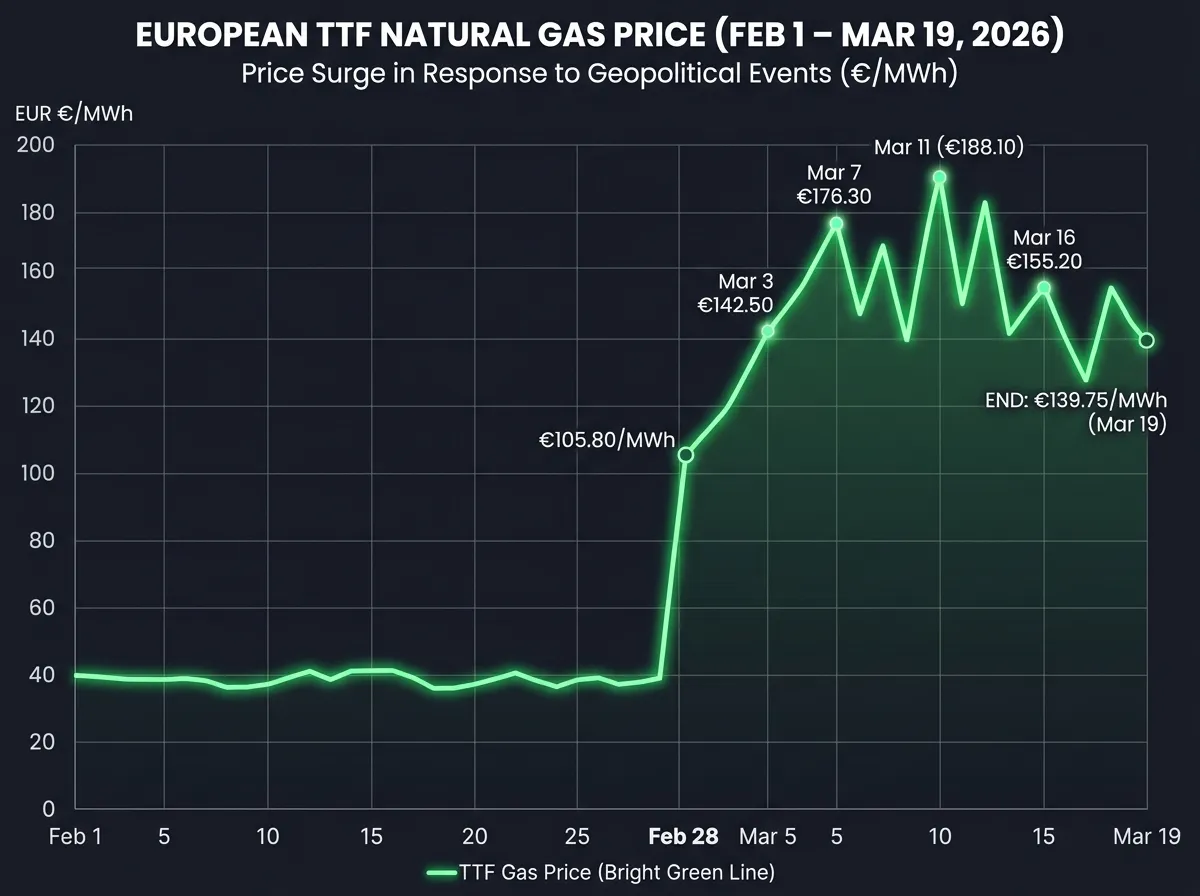
The immediate market reaction was severe. Oil prices surged past $119 per barrel before pulling back slightly, and the European TTF natural gas benchmark, the continent's most-watched energy price, jumped 15% on Wednesday to hover above 60 euros per megawatt-hour. That is roughly double the price from before the conflict began on February 28. Since Russia's invasion of Ukraine in 2022, Europe has become heavily dependent on LNG imports to replace Russian pipeline gas, and Qatar is one of its largest suppliers.
"This is the scenario European energy planners feared but didn't plan for," said Fatih Birol, executive director of the International Energy Agency, in a statement Wednesday. The IEA's emergency release of 400 million barrels of oil reserves earlier this month was designed to stabilize crude markets, but it does nothing for natural gas. There is no equivalent of a strategic gas reserve for most European countries. Germany's underground storage facilities are currently at 42% capacity, well below the 80% threshold that officials consider adequate heading into next winter.
Japan and South Korea, which together account for roughly 40% of global LNG imports, face a similar bind. Both countries had increased Qatari LNG purchases in recent years as part of long-term supply agreements. A 17% reduction in Qatar's export capacity for three to five years will force both nations to seek replacement supply from Australia, the United States, and emerging producers like Mozambique, all at significantly higher prices and with delivery timelines measured in months rather than weeks.
Qatar's Diplomatic Pivot
Qatar's decision to expel Iranian military attaches within hours of the attack signals a fracture in the careful diplomatic balancing act that the tiny Gulf state has maintained for decades. Qatar has long positioned itself as a mediator in regional conflicts, maintaining relationships with both Iran and the United States. It hosted Hamas's political office while also housing America's largest military base in the Middle East. That dual role made Qatar indispensable in hostage negotiations, ceasefire talks, and back-channel communications.
The expulsion of Iranian attaches, while stopping short of severing full diplomatic ties, marks the most serious deterioration in Qatar-Iran relations since the 2017 Gulf crisis, when Saudi Arabia, the UAE, and Bahrain blockaded Qatar partly over its ties to Tehran. Ironically, it was Iran that helped sustain Qatar during that blockade by keeping its airspace open and facilitating food imports.
"Qatar has spent twenty years building itself as the Switzerland of the Gulf," said Kristian Coates Ulrichsen, a Middle East fellow at Rice University's Baker Institute. "One missile just made that position untenable."
The diplomatic consequences extend beyond the bilateral relationship. Qatar's role as a mediator in the Israel-Hamas conflict, the Afghanistan peace process, and various Gulf disputes relied on its ability to talk to all sides. If Doha is now perceived as having been forced into the anti-Iran camp by the missile strike, its usefulness as a neutral broker diminishes. That loss matters, because there are very few countries in the region that maintain open channels with both Washington and Tehran.
The Outlook
Three specific developments will determine whether this attack marks a one-time escalation or the beginning of a sustained campaign against Gulf energy infrastructure.
First, Iran's next move. Tehran has warned that it will continue targeting "enablers" of the US-Israeli campaign. If Iran strikes Saudi Arabian facilities, particularly the Ras Tanura oil terminal or the Abqaiq processing plant, the global energy shock would dwarf what happened this week. Saudi Aramco has reportedly activated its highest level of air defense readiness, according to Reuters.
Second, Qatar's diplomatic response beyond the attache expulsion. If Doha restricts Iranian use of its airspace or revokes overflight permissions, it would effectively join the economic blockade of Iran, closing one of Tehran's last air corridors to the outside world. That step has not been taken yet, but officials in Doha are reportedly considering it.
Third, the LNG contract market. Qatar has long-term supply agreements with buyers in Europe and Asia that include force majeure provisions for events beyond the company's control. If QatarEnergy formally declares force majeure on contracts covering the damaged 17% of capacity, it will trigger a scramble for replacement supply that could push European TTF prices above 80 euros per megawatt-hour and keep them there for months. Based on the damage assessment and the three-to-five-year repair timeline, a force majeure declaration is probable within the next two weeks.
The broader implication is starker. For three decades, the global LNG market has operated on the assumption that production facilities in politically stable Gulf states are safe from military attack. That assumption ended Tuesday. The insurance and risk premiums for Gulf energy infrastructure will rise accordingly, adding a permanent cost layer to every LNG cargo that leaves the Persian Gulf. Even when this war ends, the prices will not fully come back down.
Sources
- Qatar says Iran attack caused significant damage at Ras Laffan gas facility - Al Jazeera, March 18, 2026
- Iran missile attack on Qatar causes 'extensive damage' to facility housing huge gas plant - CNBC, March 18, 2026
- Oil briefly hits $119 and Europe gas prices surge after attacks on energy facilities - CNBC, March 19, 2026
- Iran strike damages 17% of Qatar LNG for 3-5 years - Bloomberg, March 19, 2026
- Qatar expels Iranian attaches after LNG facility strike - Al Jazeera, March 19, 2026