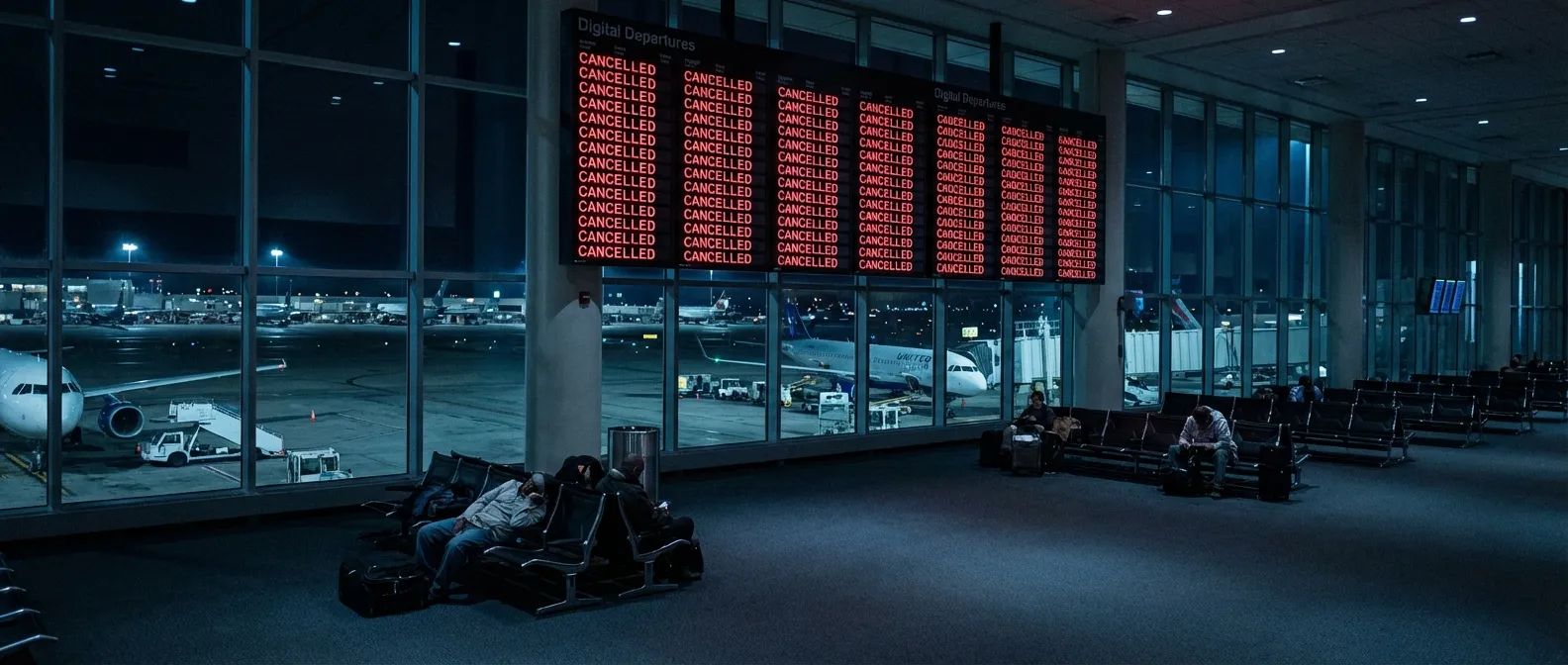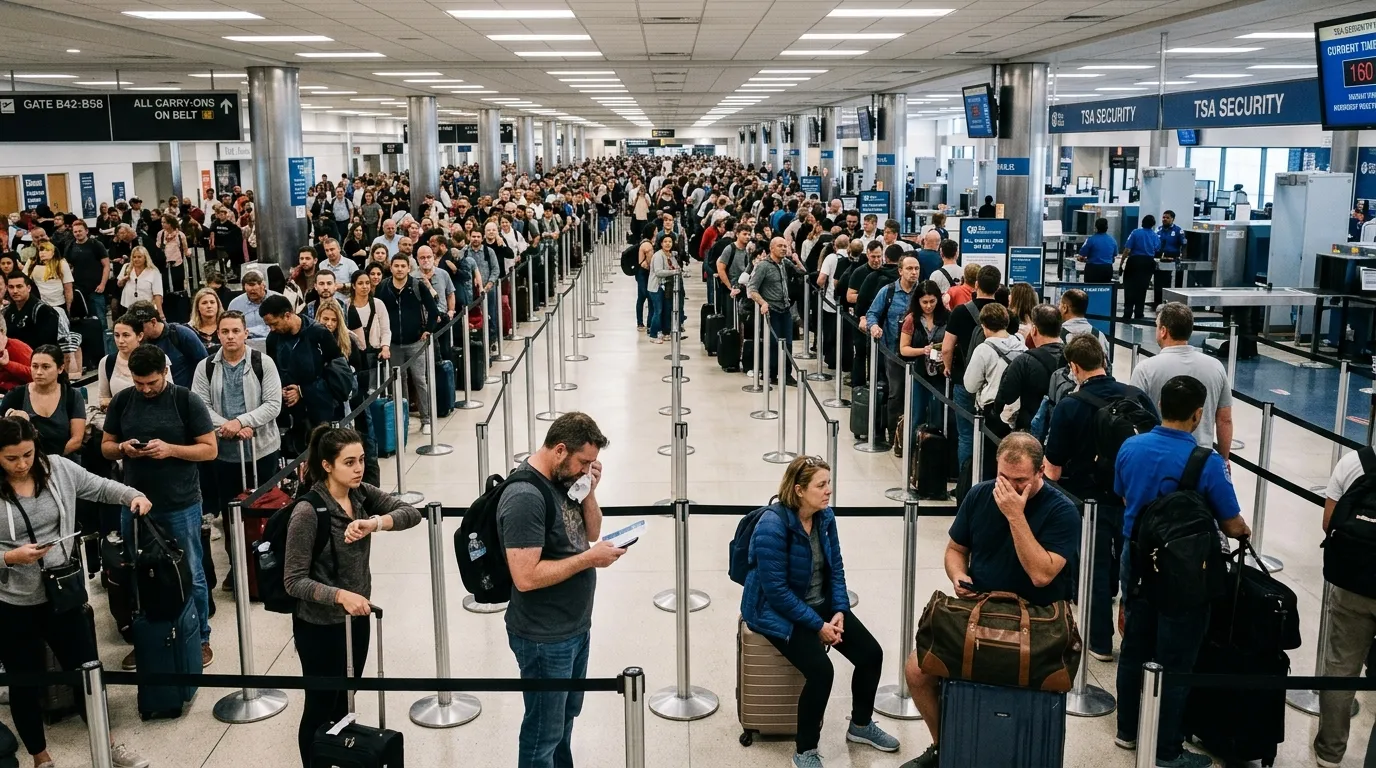
The partial Department of Homeland Security shutdown entered its 35th day on Thursday, and the consequences have moved well beyond Washington talking points. TSA officers at Houston Hobby International Airport called out at a rate of 55% on March 14, effectively halving the security workforce at one of America's busiest airports. Travelers at Atlanta, JFK, and New Orleans have reported wait times exceeding two hours. And on Tuesday, TSA Acting Deputy Administrator Adam Stahl issued a warning that would have been unthinkable a month ago: if call-out rates continue climbing, some airports, particularly smaller ones, may have to "quite literally shut down."
This isn't a hypothetical. It's happening during spring break, one of the busiest travel periods of the year, and there's no resolution in sight.
How We Got Here
The shutdown traces back to a single incident that ignited a political firestorm. In early 2026, Customs and Border Protection agents killed Alex Pretti during an enforcement operation, sparking nationwide protests and demands for reform. Congressional Democrats conditioned DHS funding on a package of immigration enforcement guardrails: requirements for judicial warrants before entering private property, mandatory body cameras for agents, prohibitions on enforcement near schools and hospitals, and bans on racial profiling during stops and searches.
Republicans rejected every condition. The White House called the demands an attempt to "handcuff" immigration enforcement. Democrats countered that they were willing to fund every part of DHS, including TSA, the Coast Guard, CISA, and FEMA, except for ICE and CBP, through a discharge petition that House Republican leadership blocked from reaching the floor. The stalemate hardened, DHS funding lapsed on February 14, and the agency entered partial shutdown.
The politics are familiar. The consequences are not. Unlike previous government shutdowns that spread pain across dozens of agencies, this one concentrates its damage on a single department, and that department happens to control airport security for the entire country.
The Math That Doesn't Work
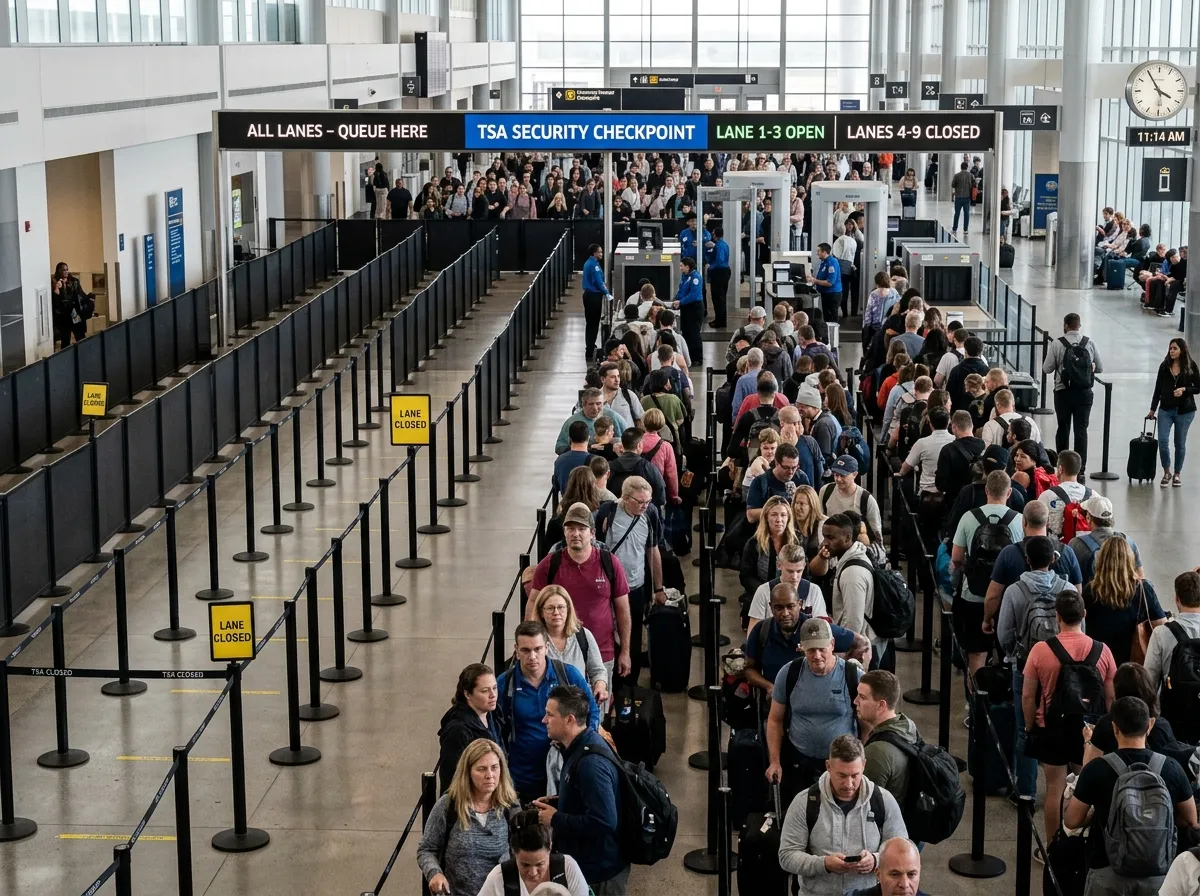
Here's what makes this shutdown different from the 2018-2019 partial government shutdown that also affected TSA: the labor market. During the last major shutdown, TSA officers worked without pay but largely stayed because jobs were harder to find. In 2026, the unemployment rate sits below 4%, and companies from Amazon to Costco are actively hiring at wages competitive with TSA's average starting salary of roughly $40,000.
The result is an accelerating exodus. DHS confirmed that 366 TSA officers have left the workforce since February 14. That number sounds manageable across a system employing around 50,000 screeners, until you factor in the training pipeline. Each new TSA officer requires four to six months of training and certification before they can work a checkpoint independently. Every departure today creates a staffing gap that persists well into the fall, long after any eventual funding deal.
The call-out rates tell the more immediate story. At major hubs like Atlanta, JFK, and Houston, daily absences have been running around 20% since the shutdown began. But the trend is worsening. On March 14 and 15, Houston Hobby hit 55%, New Orleans exceeded 30%, and Atlanta pushed past 30%. House Speaker Mike Johnson acknowledged on Tuesday that airports "are reaching a breaking point."
Transportation Secretary Sean Duffy was more direct. "This is gonna look like child's play, what's happening right now," he warned, projecting that conditions would deteriorate further if the shutdown extended into April.
The Weaponization Paradox: When Shutdowns Hit Services Both Sides Need
Most shutdown analysis focuses on who gets blamed. Polls, messaging, which party blinks first. But the DHS shutdown reveals something more structurally interesting about how government shutdowns function as political leverage, and why this one may have broken the model.
Traditional shutdowns work as pressure tools because they create diffuse pain: national parks close, tax refunds slow, government websites go dark. The pain is real but spread thin enough that most people experience it as an inconvenience rather than a crisis. The pressure builds gradually, and the party deemed responsible eventually concedes.
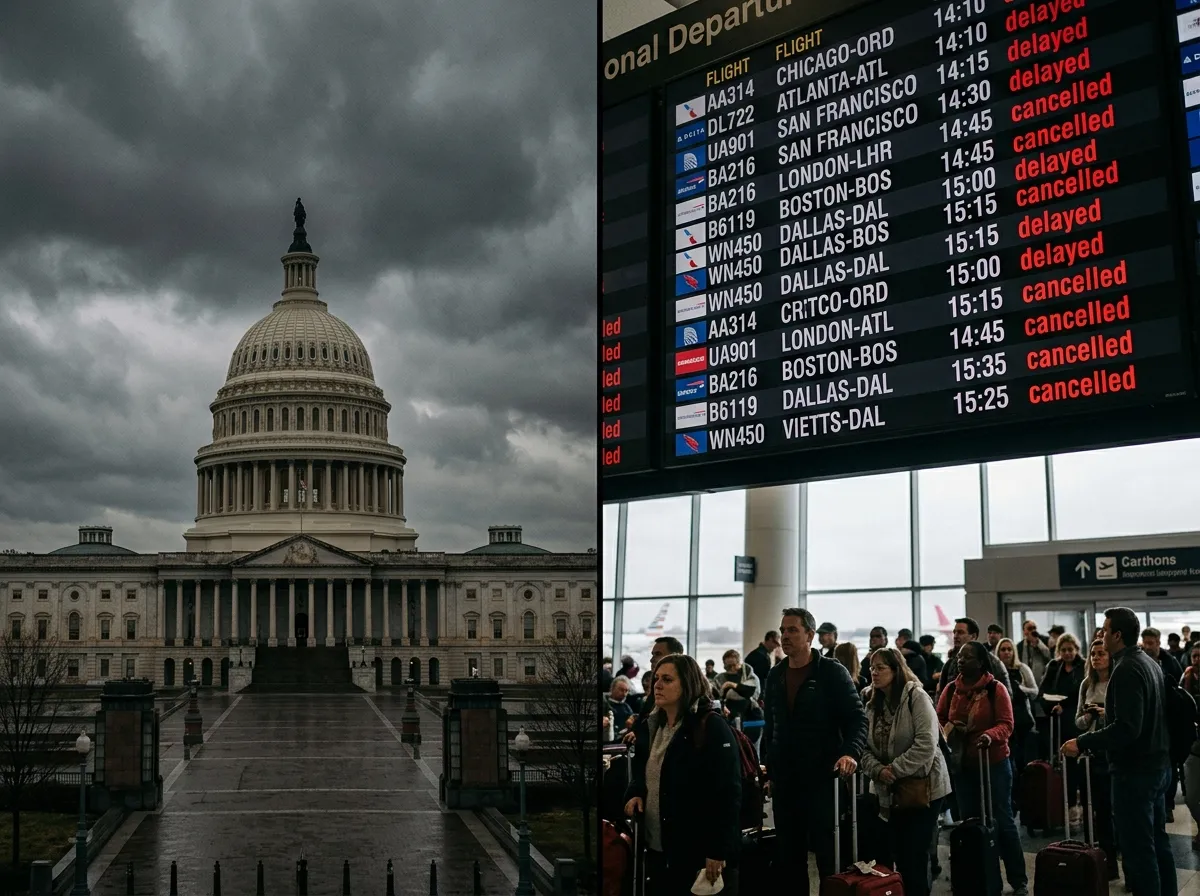
The DHS shutdown inverts this logic. By concentrating all the pain on a single department, it created a single, highly visible point of failure: airport security. Both parties need airports to function. Republican voters fly. Democratic voters fly. Business travelers, military families, spring breakers, everyone flies. There's no constituency that benefits from two-hour security lines, and no way to spin closed airports as acceptable collateral damage.
This creates what game theorists call a "mutual hostage" scenario. Democrats can't allow ICE and CBP funding without reforms, because their base watched agents kill an unarmed person. Republicans can't accept the reforms without appearing to capitulate on immigration enforcement. And neither party can tolerate airports shutting down during peak travel season. The usual shutdown playbook, outlast the other side, doesn't work when both sides are taking equal damage from the same mechanism.
The historical parallel is the 2011 FAA shutdown, which lasted 16 days and furloughed 4,000 workers before both parties rushed to resolve it precisely because aviation disruption is uniquely bipartisan pain. That shutdown cost an estimated $400 million in lost tax revenue. The current DHS shutdown, now twice as long and affecting 50,000 workers rather than 4,000, is operating at a scale the 2011 precedent didn't anticipate.
Who's Feeling It Most
The shutdown's impacts are not distributed equally. Smaller regional airports, which operate with thinner staffing margins, are closest to the closure threshold Stahl warned about. A major hub like Atlanta Hartsfield-Jackson can absorb 20% callouts by consolidating checkpoints and extending hours. An airport with 15 TSA officers can't function if five don't show up.
The airline industry has sounded increasingly urgent alarms. CEOs from American, Delta, Southwest, and JetBlue issued a joint statement urging Congress to restore funding and calling the situation a threat to "passengers and the broader economy." The Airlines for America trade group estimates the shutdown has already cost the industry $1.2 billion in lost bookings and operational disruptions.
TSA officers themselves are bearing the most direct burden. Fifty thousand screeners continue working without pay, relying on savings, credit cards, or side jobs to cover rent and groceries. CNN reported this week from Atlanta's Hartsfield-Jackson, where officers described the grim calculus of continuing to show up. "I love this job, but I have two kids," one officer said. "I can't love it more than I love feeding them."
The ripple effects extend beyond aviation. The shutdown has also frozen FEMA preparedness grants, stalled Coast Guard operations, and left cybersecurity agency CISA operating at reduced capacity during a period of elevated digital surveillance concerns. But airports remain the most visible pressure point, because airport chaos is something every American can see, experience, and post about on social media in real time.
What Comes Next
The White House took a step toward resolution on Monday, offering to sign a clean short-term DHS funding bill that would pay TSA officers retroactively while negotiations continue. Democrats called it a "bandaid on a bullet wound" and reiterated their demand for structural reforms. As of Thursday, no vote has been scheduled in either chamber.
The most likely resolution, based on the 2011 FAA precedent and the 2018-2019 shutdown, is a short-term continuing resolution that kicks the immigration debate to a later date while restoring TSA pay. Both parties have an incentive to clear airports before the Easter travel surge in mid-April. But "most likely" has been wrong before, and the immigration politics underlying this standoff are more entrenched than any previous shutdown dispute.
The concrete indicator to watch is the national TSA callout rate. It has been trending upward from 8% in the first week to roughly 20% in week four, with spikes above 50% at individual airports. If the national average crosses 25% sustained, the closure scenario Stahl described moves from warning to operational reality. Based on the current trajectory and the approaching Easter travel peak, that threshold could be reached by the first week of April, which gives Congress roughly two weeks to act before the crisis escalates from inconvenient to unprecedented.
The Bigger Story
The DHS shutdown that began as an immigration standoff has become something larger: a stress test of whether essential government services can survive as political bargaining chips. Airport security exists because of September 11. It was nationalized specifically to remove it from the cost-cutting pressures of private contractors. Twenty-five years later, 50,000 federal employees created to protect the flying public are working without pay because two parties can't agree on how immigration agents should behave during arrests. The connection between those two things is a political choice, not an operational necessity, and every hour-long security line is a reminder that the choice has consequences.
Sources
- U.S. Says It May Be Forced to Shut Down Some Airports Over Funding Standoff - CNBC, March 17, 2026
- TSA Workers Face Reality of Working Without Pay - CNN, March 18, 2026
- TSA Official Warns Some Airports May Close If DHS Shutdown Continues - Time, March 17, 2026
- Why the US Homeland Security Shutdown Is Raising Fears of Airport Delays - Al Jazeera, March 19, 2026
- 2026 United States Federal Government Shutdowns - Wikipedia