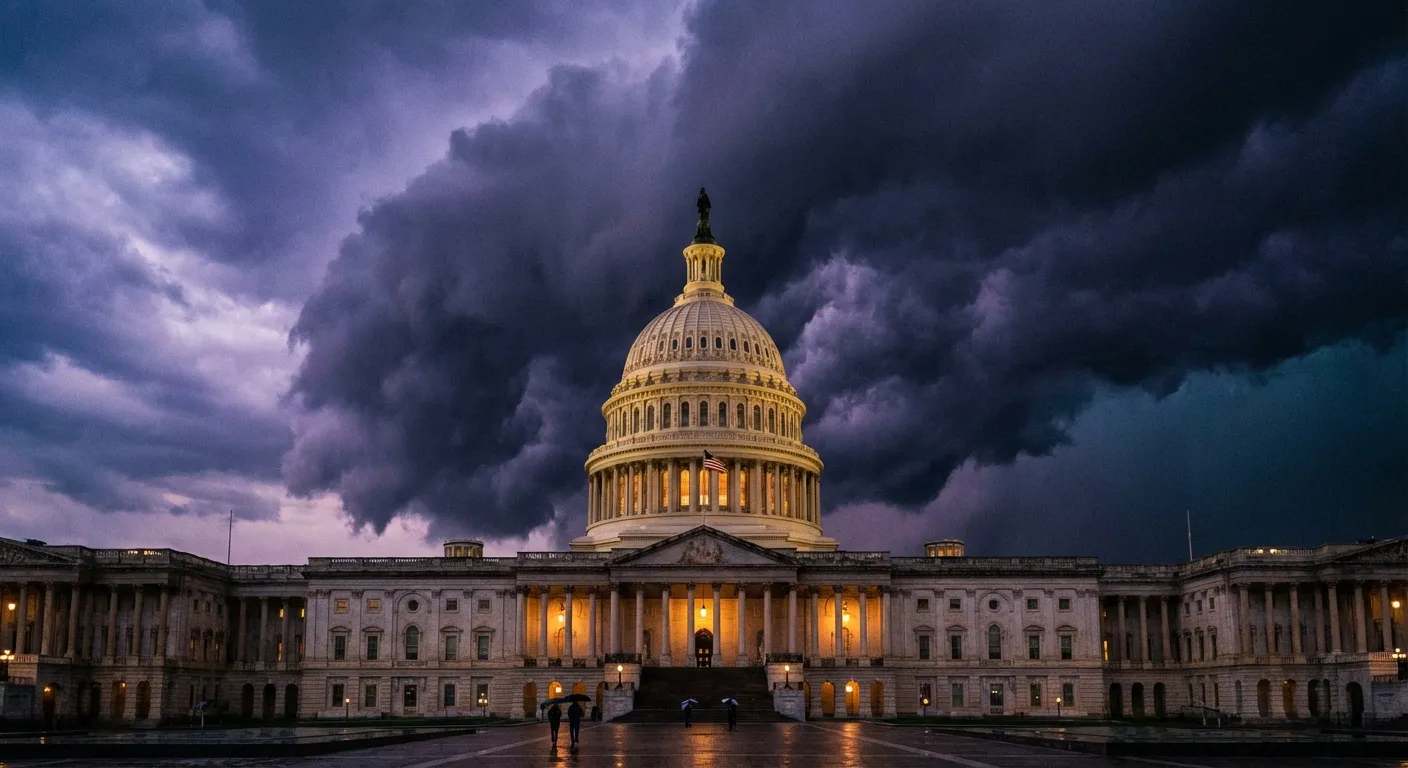
The Department of Homeland Security is about to run out of money. Again. Congress has until the end of Friday to fund DHS for the remainder of fiscal year 2026, and as of Tuesday evening, Democrats and Republicans remain far apart on the central sticking point: what rules should govern federal immigration agents in the wake of the Minneapolis shooting deaths that have consumed national politics since January.
DHS is the last major federal agency without a full-year spending bill. Congress passed funding for the rest of the government in stages since the record-long shutdown ended in mid-November, but Homeland Security got carved out each time because neither party could agree on immigration enforcement provisions. Now the deadline has arrived, and a partial shutdown affecting roughly 240,000 DHS employees looks increasingly likely.
What Democrats Want
The Democratic demands are specific and directly connected to what happened in Minneapolis. On January 8, ICE agents participating in Operation Metro Surge, the largest immigration enforcement operation in DHS history, fatally shot two people during a confrontation: Alex Pretti, 23, and Renee Nicole Good, 31. Neither was the target of the immigration operation. The shootings triggered weeks of protests, a federal lawsuit by the state of Minnesota, and a national reckoning over how immigration enforcement operations are conducted in American cities.
Senate Democrats are now conditioning their votes on four reforms: restrictions on roving patrols by ICE agents in non-target areas, tighter parameters around warrants for searches and arrests, strengthened use-of-force policies, and a requirement that ICE agents wear body cameras and remove face coverings during operations. Senate Majority Leader Chuck Schumer told reporters Tuesday that "these aren't radical demands, they're the bare minimum accountability measures that any law enforcement agency should meet."
What Republicans Want
Republicans have resisted nearly all of the Democratic proposals. Senator Ron Johnson of Wisconsin, who leads the Senate Homeland Security Committee, argued that Trump's immigration enforcement bill from last summer already provided billions in funding and oversight mechanisms, and that Democrats are "holding national security hostage to score political points against ICE." Some Republican senators have pushed for counter-demands, including provisions that would penalize sanctuary cities by withholding federal law enforcement grants.
The White House has signaled that President Trump would veto any bill that significantly restricts ICE's operational authority. Press Secretary Karoline Leavitt said Monday that "the president will not sign legislation that handcuffs the brave men and women protecting our borders."
The core disagreement isn't really about body cameras or warrant procedures. It's about whether the Minneapolis shootings represent a systemic problem requiring structural reform or an isolated incident being exploited for political leverage. Those two framings are fundamentally incompatible, which is why negotiators haven't been able to bridge the gap.
What a Shutdown Actually Means
A DHS shutdown is not the same as a full government shutdown, but its effects are far-reaching. The department encompasses far more than immigration enforcement. Here's what gets hit:
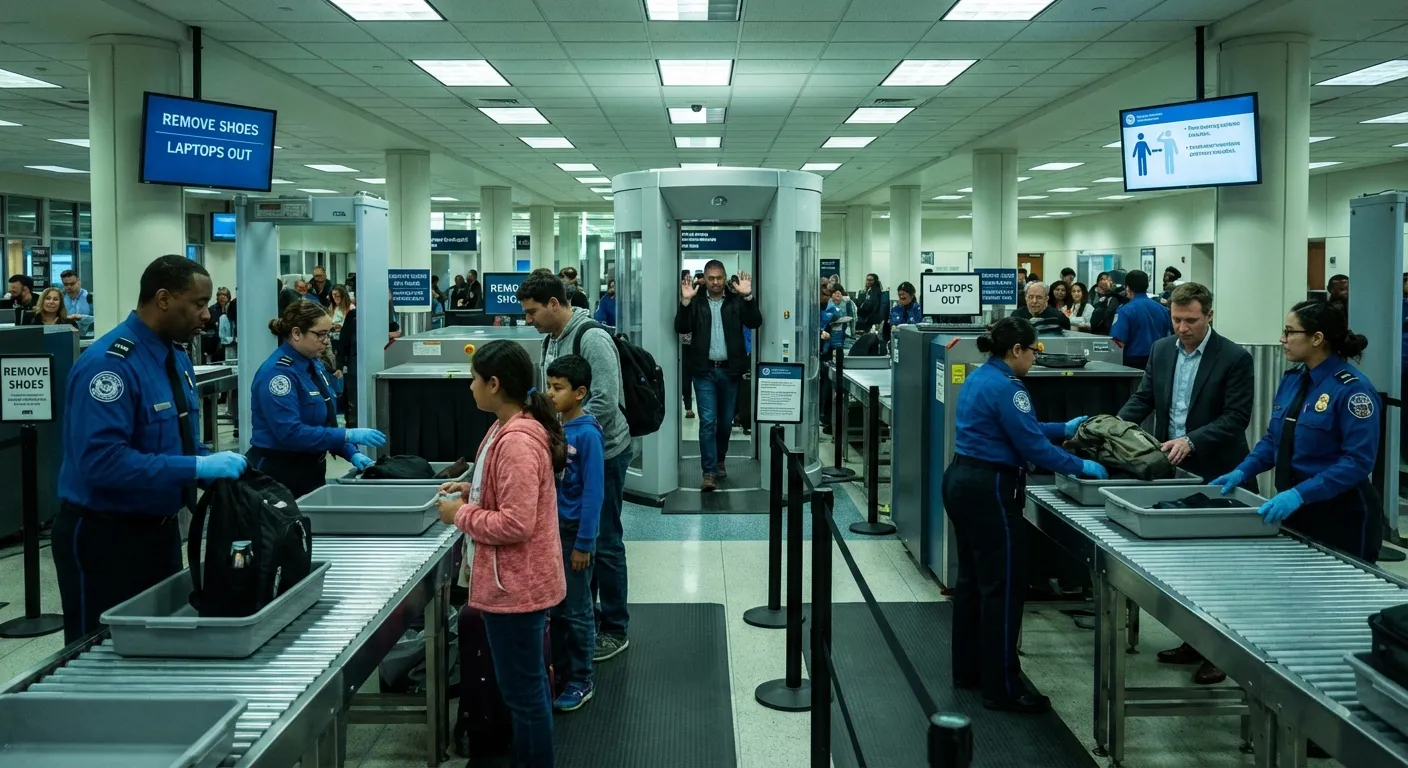
The Transportation Security Administration would require its 60,000-plus airport screeners to work without pay. The Coast Guard, which handles maritime safety, drug interdiction, and search-and-rescue operations, would see non-essential operations suspended. FEMA disaster response funding would freeze, a particular concern during a winter storm season that has already strained resources. The Cybersecurity and Infrastructure Security Agency, which monitors threats to critical infrastructure, would furlough much of its staff. The Secret Service would continue protective operations but delay investigations.

Ironically, ICE itself, the agency at the center of the dispute, would be largely unaffected. Immigration enforcement is classified as an essential function, meaning agents would continue working even without a funding bill. The shutdown would punish almost everyone at DHS except the agency whose conduct prompted the standoff.
Why This Keeps Happening
This is the fourth time in eighteen months that some portion of the federal government has faced a funding lapse. The pattern has become familiar: Congress passes most spending bills under deadline pressure, carves out one or two politically toxic agencies, and then plays a separate game of chicken over those agencies' funding. DHS has been the carved-out agency three of those four times, always because immigration policy is the issue where compromise is most politically expensive for both parties.
The ongoing legal battles over federal enforcement in Minnesota have only hardened positions. Democrats see the Minneapolis shootings as proof that enforcement operations need external constraints. Republicans see the same shootings as justification for giving agents more authority in hostile environments. Both sides have constituencies that would punish compromise, and with 2026 midterms approaching, neither party's leadership is incentivized to take the political risk.
What Happens Next
If Congress fails to pass a DHS funding bill by Friday at midnight, the partial shutdown begins Saturday morning. Essential personnel report to work without pay. Non-essential employees are furloughed. The practical effects ripple outward from there: longer airport security lines, delayed disaster response, reduced cybersecurity monitoring.
The most likely resolution is a short-term continuing resolution, a stopgap bill that funds DHS at current levels for a few weeks while negotiations continue. That approach would avoid the worst immediate consequences but wouldn't resolve the underlying dispute. It would simply push the same fight into March, when it would collide with the debt ceiling debate and make everything harder.
The Senate Appropriations Committee has a markup session scheduled for February 19 to consider a full-year DHS bill, but that timeline only matters if negotiators agree on enforcement language before then. If Congress passes a two-week continuing resolution this week, the next funding cliff lands on February 28, just days before a separate March 1 deadline when the Treasury Department expects to hit the debt ceiling. At that point, DHS funding negotiations would merge with the debt limit debate, compressing two of the most politically toxic fiscal fights into the same legislative window.
Sources
- Republicans urge Trump to hold firm against Democrats' DHS demands as clock ticks toward shutdown - CNN, February 2026
- Partial government shutdown looms as ICE negotiations stall - The Washington Post, February 2026
- Top immigration officials to testify before Senate as a potential DHS shutdown looms - NPR, February 2026
- A partial government shutdown is about to hit DHS. Here's what that means - CNN, February 2026