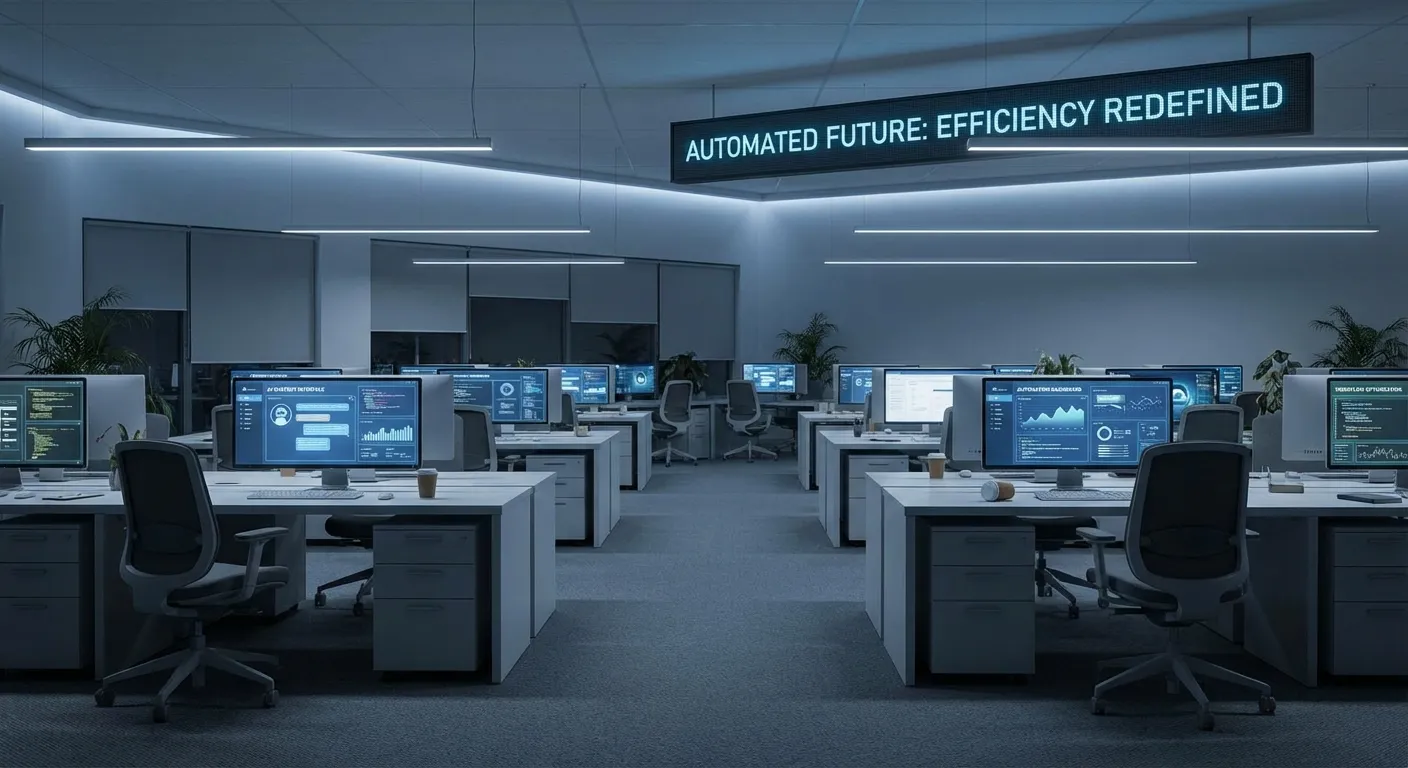
The figure landed with the force of a confirmation rather than a surprise. According to year-end data from Challenger, Gray & Christmas, the outplacement firm that has tracked corporate layoffs since 1989, artificial intelligence directly contributed to approximately 55,000 job cuts across U.S. companies in 2025. Andrew Challenger, the firm's senior vice president, called it "the first year where AI appeared as a named factor in a statistically significant number of layoff announcements," noting that the actual displacement is almost certainly higher since many companies cite "restructuring" or "efficiency improvements" without specifying AI as the driver.
The 55,000 figure, while representing a small fraction of total U.S. employment, carries outsize significance because of where the cuts landed. These were not assembly line positions or warehouse roles. They were knowledge worker jobs, the kind of white-collar positions that previous waves of automation had largely spared. Content moderators, junior analysts, customer service specialists, paralegals, and entry-level writers found themselves replaced not by robots but by software.
Where the Cuts Hit Hardest
The technology sector accounted for the largest share, with companies that once hired aggressively for roles in content moderation, data labeling, and basic software testing discovering that large language models could handle much of this work at a fraction of the cost. Amazon announced plans to reduce its corporate workforce by 14,000 positions in the second half of 2025, with executives citing AI-powered automation as a key factor in the restructuring during the company's Q3 earnings call.
Media and entertainment followed closely. Over 17,000 positions disappeared from television, film, news, and streaming operations in the first eleven months of 2025, an 18% increase from the previous year according to Challenger's data. Many of these cuts targeted roles in content summarization, transcription, basic reporting, and administrative support, all areas where generative AI tools crossed the quality threshold that made them acceptable substitutes for human output.

Financial services rounded out the top three affected sectors. Banks and insurance companies accelerated the deployment of AI-powered customer service systems, fraud detection algorithms, and automated compliance monitoring throughout 2025. JPMorgan Chase disclosed in its annual report that AI tools had reduced the need for approximately 2,000 operations positions, while simultaneously creating roughly 400 new roles focused on AI development and oversight, a net reduction that the bank framed as an "efficiency gain."
The Speed Problem
What distinguishes this displacement from previous automation cycles is velocity. Carl Benedikt Frey, the Oxford economist whose 2013 paper on automation risk became a foundational text in the field, told the Financial Times in November that "the gap between AI capability and workforce adaptation has never been wider." Previous technological disruptions, from the mechanization of agriculture to the computerization of manufacturing, played out over decades, giving workers and institutions time to adjust. The current AI wave is compressing that timeline into years or even months.
Companies are making deployment decisions at a pace that outstrips any retraining effort. Starbucks announced it would lay off 1,100 corporate employees as part of a broader efficiency push that includes AI-driven scheduling and inventory management. Recruit Holdings, which owns Indeed and Glassdoor, cut approximately 1,300 positions from its HR Technology segment after deploying AI tools that automated much of the job matching and resume screening that human recruiters previously performed.
Who Bears the Cost
The displacement creates two distinct groups of affected workers, and their experiences diverge sharply. Mid-career professionals who spent years developing expertise in tasks that AI can now perform face the most difficult transitions. A paralegal with fifteen years of document review experience or a financial analyst who built a career on earnings report analysis cannot easily retrain for roles that require fundamentally different skills. The seniority and compensation levels that made their positions targets for automation also make them less competitive for the entry-level technical roles that are growing.
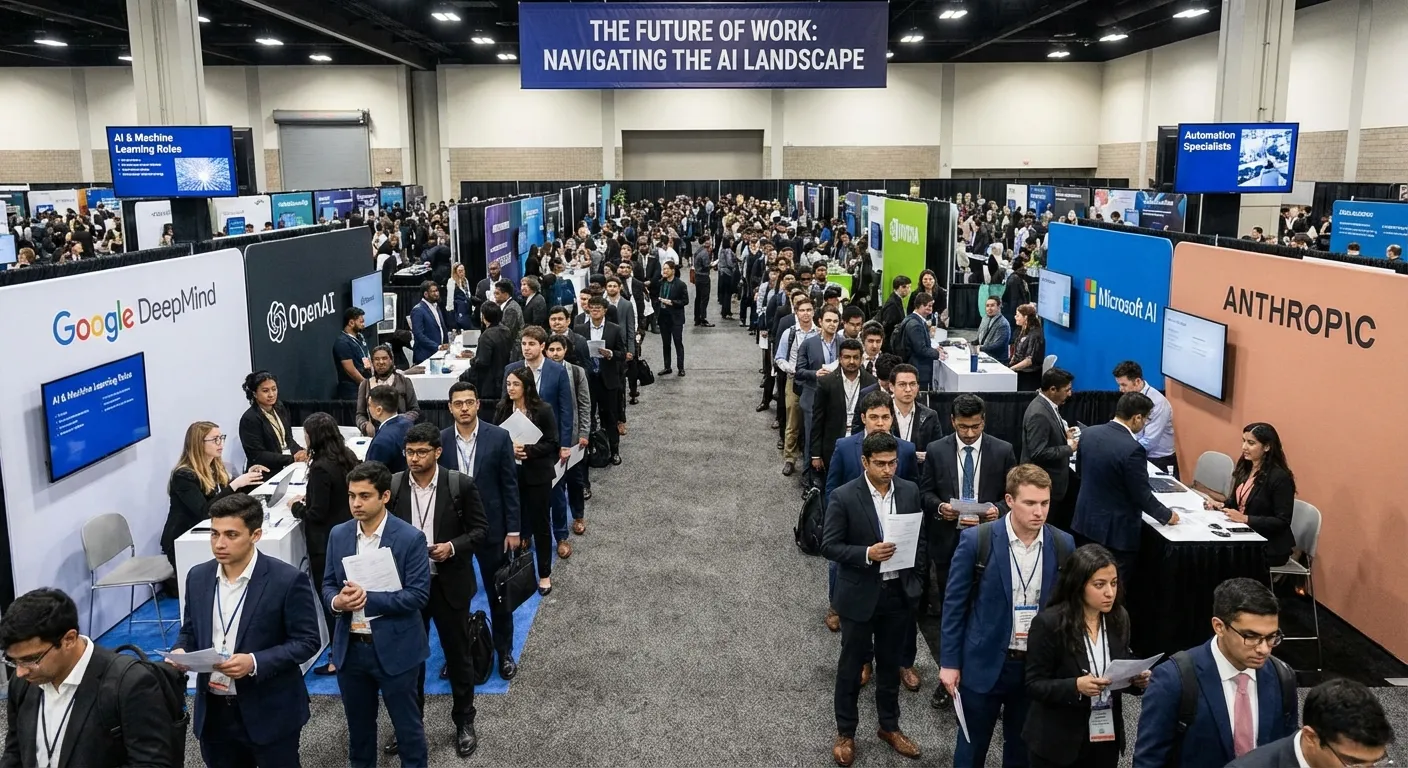
Younger workers face a different but equally concerning challenge. Companies that once hired junior staff with the expectation of training them on the job are instead deploying AI tools that skip the entry-level tier entirely. The traditional career ladder, where new graduates learned by doing routine work before advancing to more complex tasks, is losing rungs at the bottom. Daron Acemoglu, the MIT economist and 2024 Nobel laureate, has warned that this pattern risks creating a "missing generation" of workers who never develop the foundational skills that AI cannot yet replicate.
The Policy Vacuum
Government response has lagged conspicuously behind the pace of change. No major federal legislation addressing AI-driven workforce displacement passed in 2025. The most significant policy action came from the Department of Labor, which in September issued updated guidance on unemployment benefits eligibility for workers displaced by automation, a modest step that acknowledged the problem without proposing structural solutions.
Some state-level initiatives have shown more ambition. California's proposed AI Workforce Transition Act, introduced in October, would require companies with over 500 employees to provide 90 days notice and retraining support before implementing AI systems that eliminate positions. The bill remains in committee, and business groups have lobbied aggressively against it, arguing that compliance costs would push companies to relocate.
The Outlook
Challenger's own projection estimates AI-related displacement will reach 120,000 to 150,000 positions in 2026, roughly triple the 2025 figure, as enterprise AI adoption moves from pilot programs to full-scale deployment. The next concrete policy test comes in March 2026, when California's AI Workforce Transition Act faces its committee vote. If it passes, California would become the first state to mandate advance notice and retraining support for AI-driven layoffs, potentially creating a template for federal legislation. Meanwhile, the Department of Labor's proposed rulemaking on automation disclosure requirements, expected by mid-2026, would for the first time require companies to report AI as a specific factor in mass layoff filings. Without those policy guardrails, the 55,000 figure from 2025 will look modest compared to what follows.
Sources
- Challenger, Gray & Christmas: 2025 year-end report on Q4 layoffs and hiring - Challenger, Gray & Christmas, December 2025
- CNBC: AI was behind over 50,000 layoffs in 2025 - CNBC, December 2025
- CNBC: Big banks like JPMorgan Chase and Goldman Sachs are already using AI to hire fewer people - CNBC, October 2025
- MIT Economics: Daron Acemoglu research on automation and labor markets - MIT Economics
- Fisher Phillips: California bills would require 90-day notice for AI layoffs - Fisher Phillips, 2025