Apple built its empire on doing things itself. The company that designs its own chips, writes its own software, and controls every detail of its ecosystem just admitted it can’t build the AI it needs for Siri’s next era. The solution: pay Google approximately $1 billion per year to use Gemini, Google’s most advanced AI model.
The deal, announced Sunday in a joint statement from both companies, represents the biggest shift in Apple’s AI strategy since Siri launched in 2011. It’s also the clearest sign yet of who’s actually winning the AI race, and it’s not OpenAI.
What the Deal Actually Is
Starting later this year, Apple’s Foundation Models will run on Google’s Gemini technology. This means the AI brain powering Siri, Apple Intelligence features, and other Apple services will use Google’s 1.2 trillion parameter model rather than Apple’s smaller, internally developed systems.
The partnership extends beyond Siri. According to MacRumors, Gemini will power future Apple Intelligence features more broadly, positioning Google’s technology as core infrastructure for Apple’s entire AI roadmap. Apple currently uses a 150 billion parameter model for Apple Intelligence, eight times smaller than what Gemini offers.
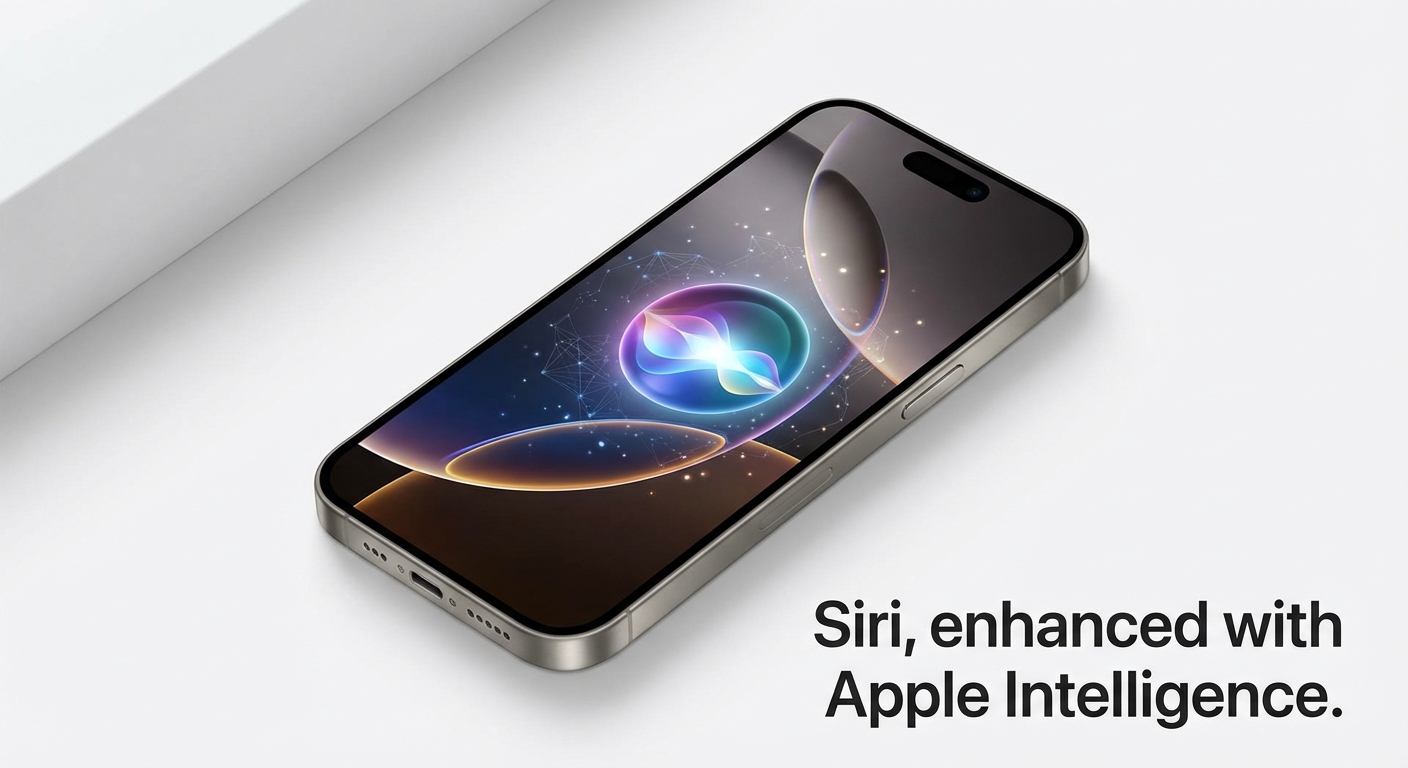
Apple emphasized that its privacy framework remains intact. All processing still happens on-device or through Apple’s Private Cloud Compute infrastructure. The Gemini technology provides the AI model’s capabilities, but data handling follows Apple’s existing privacy standards. Users concerned about their queries going to Google should note that the architecture keeps personal data within Apple’s systems.
The new Siri is expected to debut with iOS 26.4 in March or April, following what Apple has acknowledged was a lengthy delay in its AI roadmap.
Why Apple Couldn’t Build This Alone
Apple’s in-house AI efforts have consistently lagged behind Google, OpenAI, and Anthropic. Despite hiring aggressively and investing billions, the company never produced a model competitive with GPT-4, Claude, or Gemini. The reasons are structural.
AI model development requires massive datasets scraped from the web, a practice that conflicts with Apple’s privacy-first positioning. Google has decades of search queries, Gmail messages, YouTube videos, and web crawl data to train its models. Apple, which built its brand on not collecting user data, lacks comparable training resources.
The talent gap matters too. Google’s DeepMind and Brain teams have been working on transformer architectures since before ChatGPT existed. Apple entered the race later, poached researchers from competitors, but never achieved the critical mass of AI expertise that Google accumulated over 15 years.
This deal is Apple acknowledging reality. Rather than ship a mediocre Siri in an era when ChatGPT and Google Assistant set user expectations, Apple is licensing the best technology available and wrapping it in Apple’s privacy and user experience frameworks.
What This Means for the AI Industry
The deal carries significant implications beyond Apple and Google.
For OpenAI: This is a major setback. Apple already has a partnership with OpenAI to integrate ChatGPT into Siri for complex queries, but the Gemini deal positions Google’s technology as the core foundation while ChatGPT becomes an optional add-on. Apple tested OpenAI, Anthropic, and Google before choosing Gemini, essentially declaring Google’s model superior for its needs.
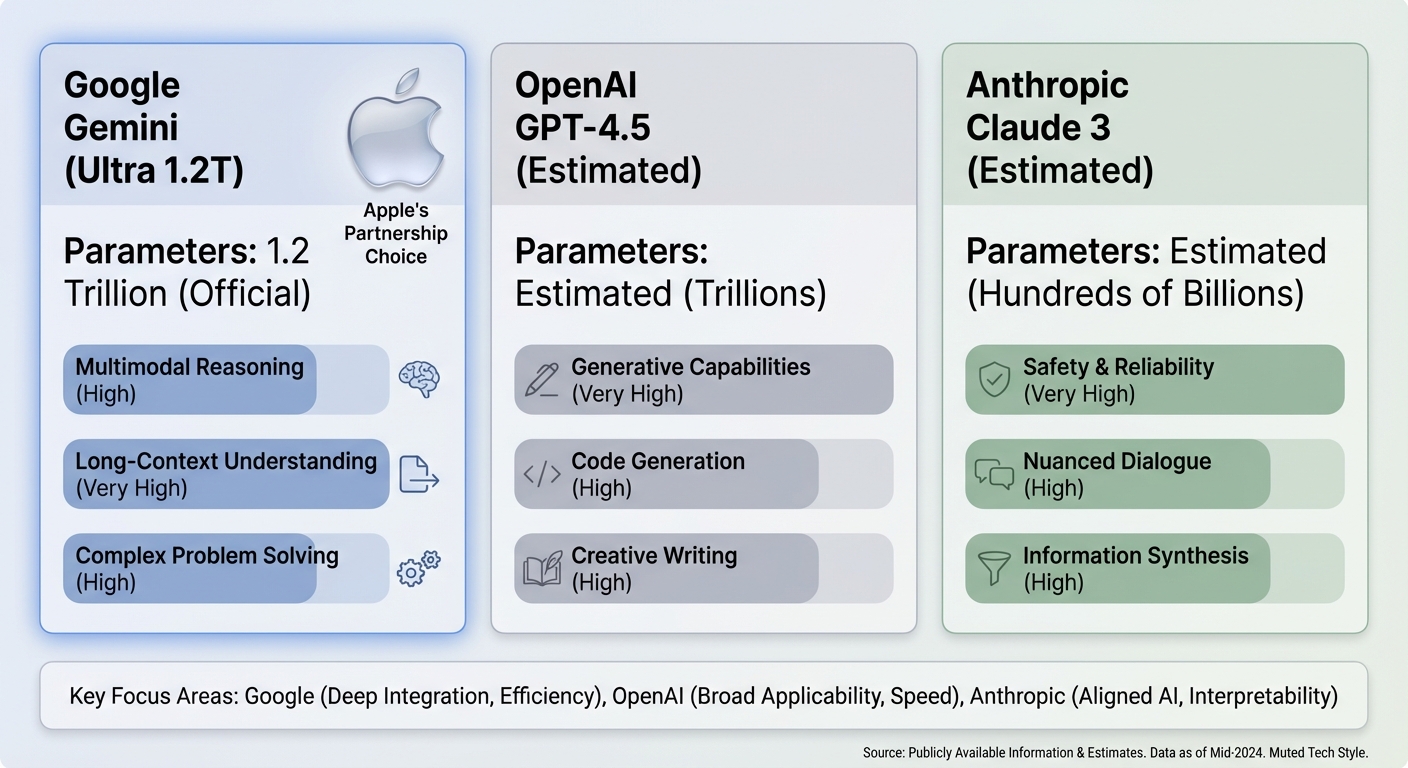
For Google: The validation is enormous. After years of being perceived as behind OpenAI in the AI race, Google can point to Apple’s choice as evidence that Gemini leads the market. The AI model wars now have a clear frontrunner in enterprise adoption.
For consumers: Siri should finally become useful. The assistant has been a punchline for years, reliably misunderstanding queries and offering inferior responses compared to Google Assistant or ChatGPT. With Gemini’s capabilities, Apple users may finally get an AI assistant that meets 2026 expectations rather than feeling stuck in 2015.
The Privacy Question
Critics will ask whether Apple compromised its privacy principles by partnering with Google, a company whose business model revolves around user data collection. Apple’s response focuses on architecture: Gemini provides model capabilities, but Apple controls data flow and storage.
Think of it like licensing an engine for a car. Google built the engine (the AI model), but Apple controls the fuel system (user data). Your Siri queries process through Apple infrastructure using Google’s model weights, but Google doesn’t receive your personal information.
Whether this distinction satisfies privacy advocates remains to be seen. The partnership does put Apple in the awkward position of paying its biggest competitor $1 billion annually while simultaneously positioning itself as the privacy-respecting alternative to Google’s services.
What’s Next
The upgraded Siri arrives in approximately two to three months with iOS 26.4. Apple’s marketing will emphasize how the new assistant handles complex queries, provides “world knowledge” responses, and integrates more naturally into daily tasks.
Long term, the deal raises questions about Apple’s AI independence. Paying Google $1 billion yearly creates dependency on a competitor. Apple will likely continue developing internal AI capabilities, but for now, it has essentially admitted that Google builds better AI models than Apple can.
For users frustrated with Siri’s limitations, none of that matters much. What matters is whether Siri finally works. If Gemini delivers the improvement Apple promises, most people won’t care whose technology powers it.
The Bottom Line
Apple’s $1 billion deal to use Google’s Gemini AI for Siri represents the most significant acknowledgment yet that the company can’t win the AI race alone. It’s a strategic retreat disguised as a partnership, trading independence for capability. Whether it fixes Siri remains to be seen, but Apple’s choice signals something important: in the AI era, even Apple needs help from its competitors.
Sources: Google/Apple Joint Statement, TechCrunch, CNBC, MacRumors, Fortune, CNN Business, 9to5Google