Taiwan Semiconductor Manufacturing Company released fourth-quarter results Friday that beat analyst estimates, providing the strongest evidence yet that global demand for AI chips remains robust. TSMC reported revenue of T$1.046 trillion (approximately $33 billion) for the October-December period, up more than 20 percent from the same quarter last year. For a company that sits at the absolute center of the AI supply chain, producing the advanced chips that power everything from ChatGPT to autonomous vehicles, the results suggest that the AI infrastructure buildout continues unabated despite growing questions about valuations and adoption timelines.
The beat came as welcome news to an industry parsing mixed signals about AI’s trajectory. Gartner recently placed generative AI in its “trough of disillusionment,” suggesting that early enthusiasm has given way to more measured expectations. Enterprise software companies have reported slower-than-hoped AI adoption. Yet someone keeps ordering TSMC’s chips in enormous quantities, and the company’s forward bookings suggest that demand will remain strong well into 2026. The gap between AI skepticism in some quarters and chip demand in the real economy represents one of the more confusing dynamics in current technology markets.
The Numbers
TSMC’s fourth-quarter revenue of approximately $33 billion compares to $27.6 billion in the same period of 2024 and $20.1 billion in Q4 2023. The compound growth rate tells a story of sustained demand expansion driven primarily by AI applications. Analysts surveyed by Refinitiv had expected revenue of around T$1.036 trillion, making the actual result a modest but meaningful beat.
The full-year 2025 results were equally impressive. TSMC achieved record annual revenue of approximately $90 billion with gross margins around 59 percent and return on equity of 36 percent. These are not numbers characteristic of a company whose products face weakening demand. For context, TSMC’s margins and profitability significantly exceed most other semiconductor companies, reflecting its dominant market position in advanced manufacturing processes that rivals cannot easily replicate.
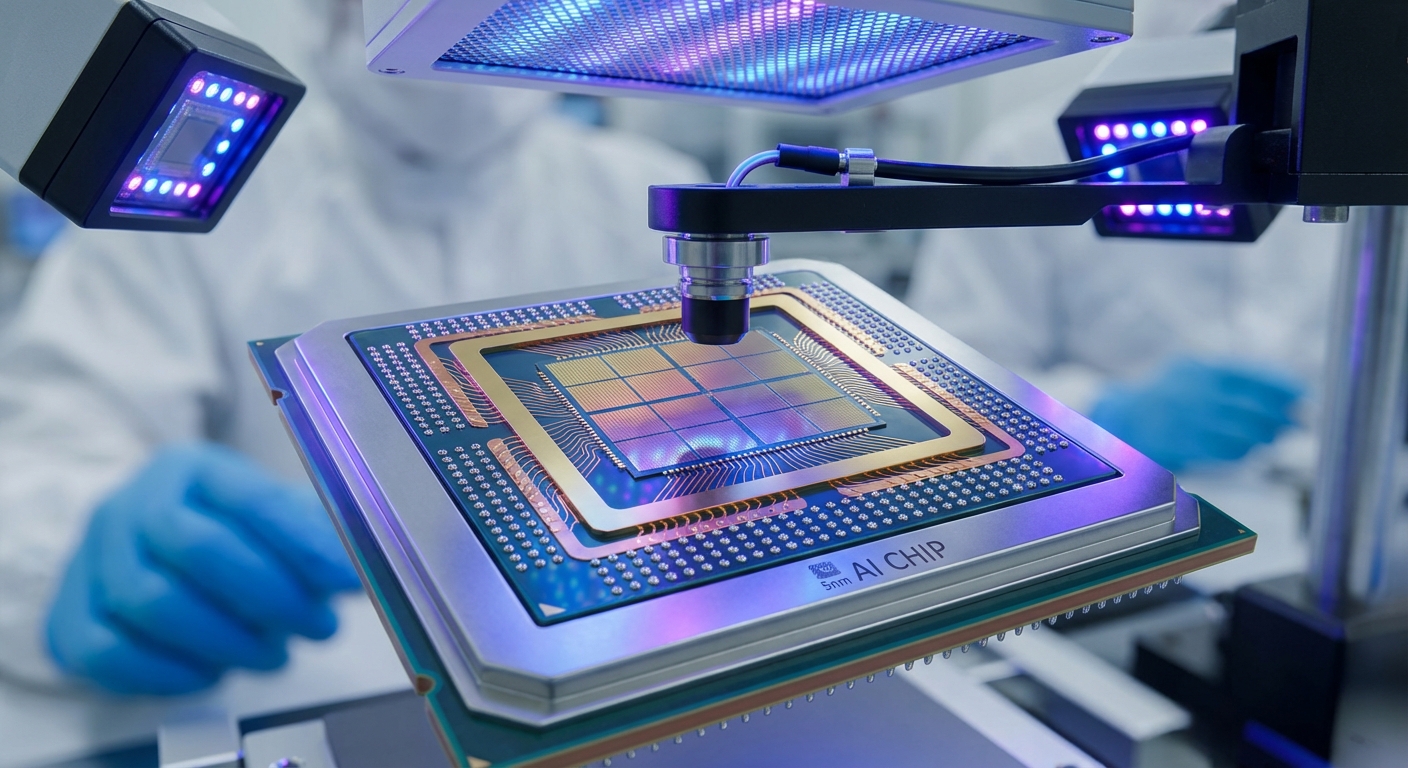
TSMC’s customer list reads like a roster of the world’s most valuable technology companies. Nvidia, whose GPUs power the vast majority of AI training workloads, relies entirely on TSMC for manufacturing. Apple sources its custom chips for iPhones, Macs, and iPads from TSMC. AMD, Qualcomm, and dozens of other semiconductor designers depend on TSMC’s manufacturing capabilities. When these companies need more chips to meet AI demand, they have few alternatives to TSMC, giving the Taiwanese company remarkable pricing power and revenue visibility.
The quarterly results set up next week’s earnings call on January 15 as a significant event for technology investors. Management is expected to announce a 2026 capital expenditure budget exceeding $48 billion, a 20 percent increase over 2025 spending. Capital expenditure at that scale signals confidence in continued demand growth and positions TSMC to capture the next wave of AI infrastructure buildout.
Why It Matters
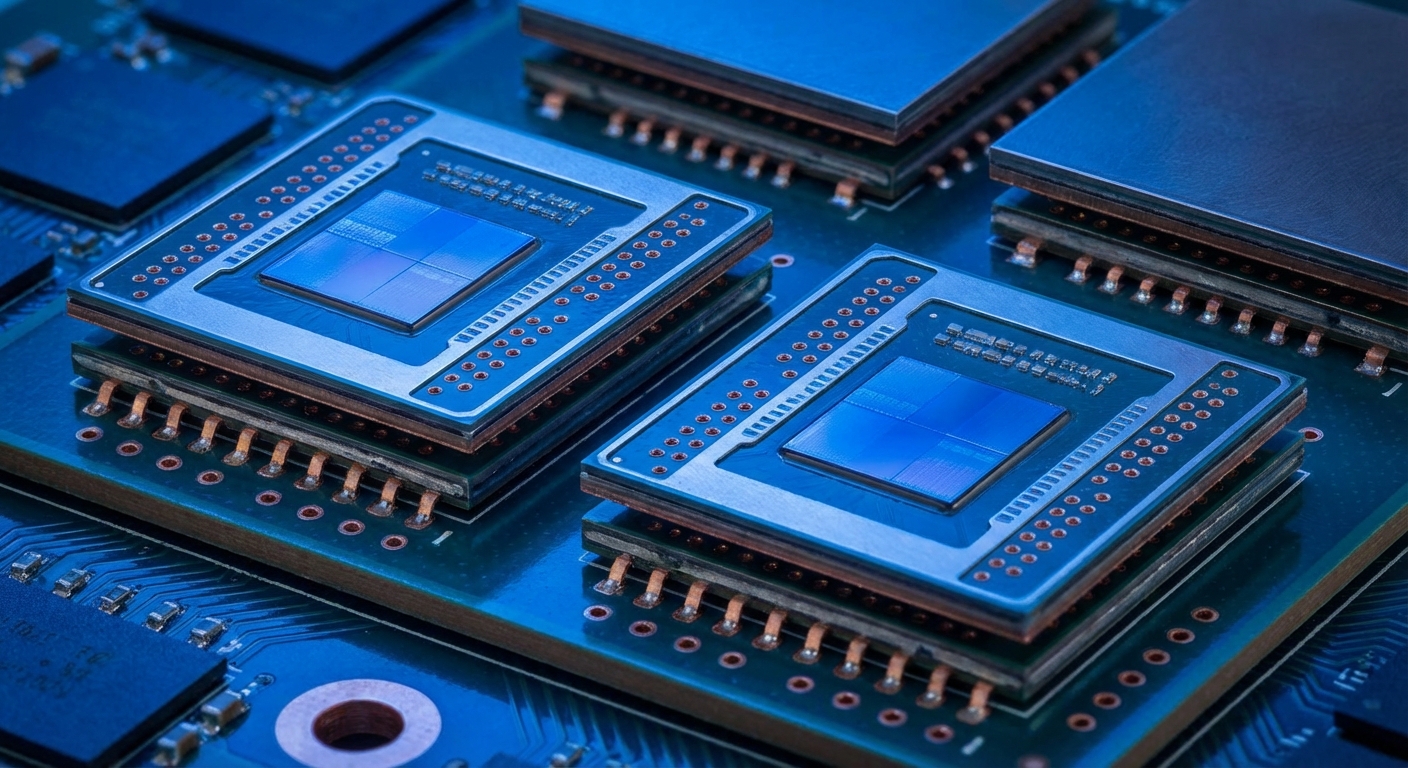
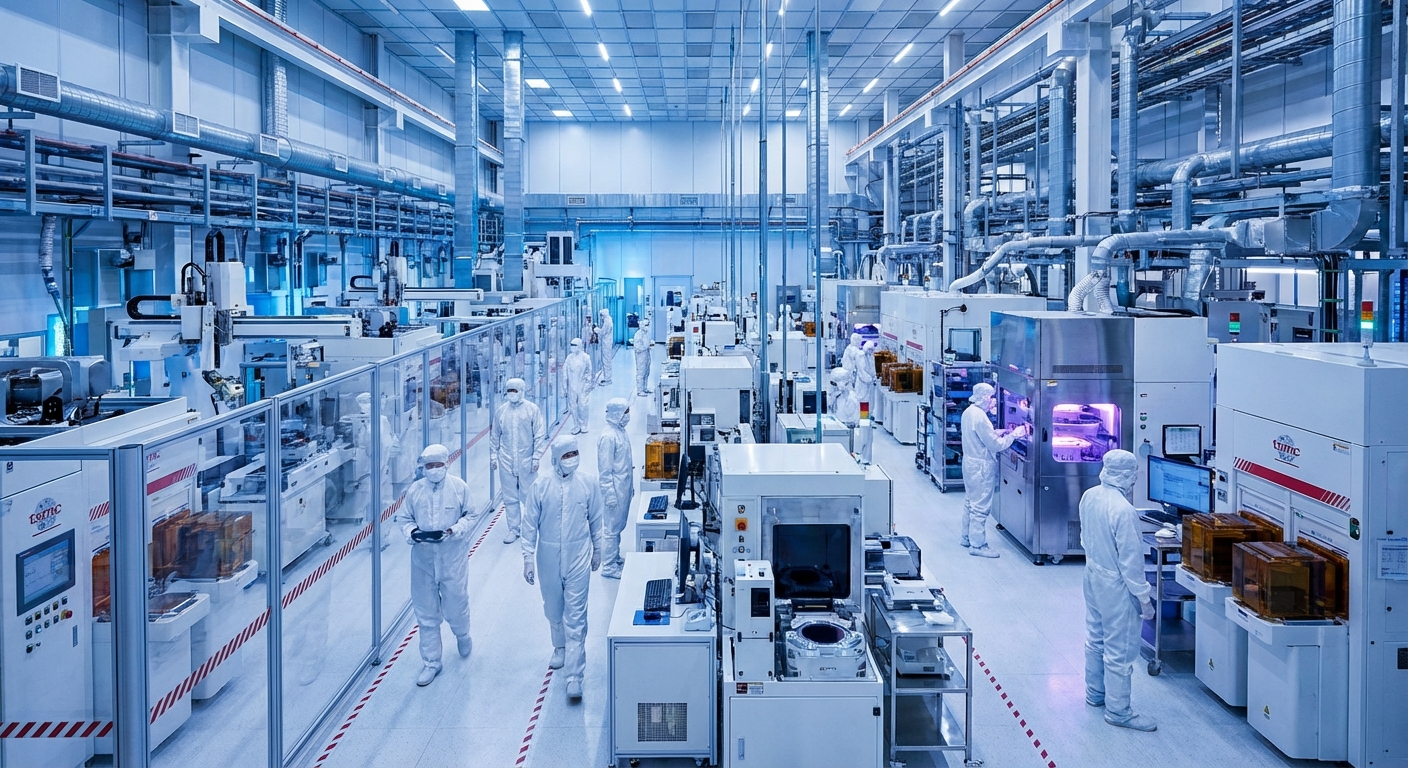
TSMC occupies an irreplaceable position in the global technology supply chain. No other company can manufacture chips at the 3-nanometer and 5-nanometer process nodes at scale. The company’s upcoming 2-nanometer process, which begins production in 2025 and ramps through 2026, represents the next frontier in chip miniaturization and performance. TSMC has announced that 2nm capacity is fully booked for the entirety of 2026, meaning customers have already committed to purchasing everything the company can produce at its most advanced node.
This booking pattern addresses one of the key questions about AI investment: are companies actually buying AI infrastructure, or is the excitement primarily speculative? TSMC’s order book provides direct evidence that major technology companies are committing billions of dollars to AI hardware purchases. Nvidia’s ability to sell record quantities of its H100 and H200 GPUs depends on TSMC manufacturing those chips. When TSMC reports strong results driven by AI demand, it validates that the AI infrastructure buildout has substance beyond stock market enthusiasm.
The geopolitical dimensions of TSMC’s dominance add complexity to the picture. Taiwan’s position vis-à-vis China makes TSMC a potential flashpoint in any escalation across the Taiwan Strait. The United States has provided significant subsidies to encourage TSMC to build manufacturing facilities in Arizona, partly to reduce supply chain concentration in Taiwan. These facilities are under construction but won’t produce leading-edge chips at scale for several years. For now, cutting-edge AI chip production remains overwhelmingly concentrated in Taiwan.
Competitors have struggled to close the gap with TSMC. Samsung and Intel both offer foundry services but have faced technical challenges in matching TSMC’s yields and performance at advanced nodes. Intel’s foundry business in particular has been troubled, with the company recently announcing significant restructuring and delays to its process technology roadmap. The competitive landscape suggests TSMC’s advantages may be durable rather than temporary, supporting premium valuations for the company’s stock.
The AI Infrastructure Question
Friday’s results arrive amid intensifying debate about whether AI infrastructure investment has outpaced actual adoption. The AI bubble concerns that have emerged in recent months reflect genuine uncertainty about when and how AI applications will generate returns sufficient to justify current spending levels. If companies are building AI infrastructure that they won’t fully utilize for years, the investment could eventually prove wasteful.
TSMC’s results suggest a different interpretation. The companies ordering chips, including hyperscale cloud providers, enterprise software companies, and automotive manufacturers, are presumably making rational business decisions about their infrastructure needs. They have access to internal data about AI adoption and revenue that outside observers lack. Their continued commitment to purchasing expensive chips implies they see value that justifies the investment, even if that value isn’t yet visible in public financial statements.
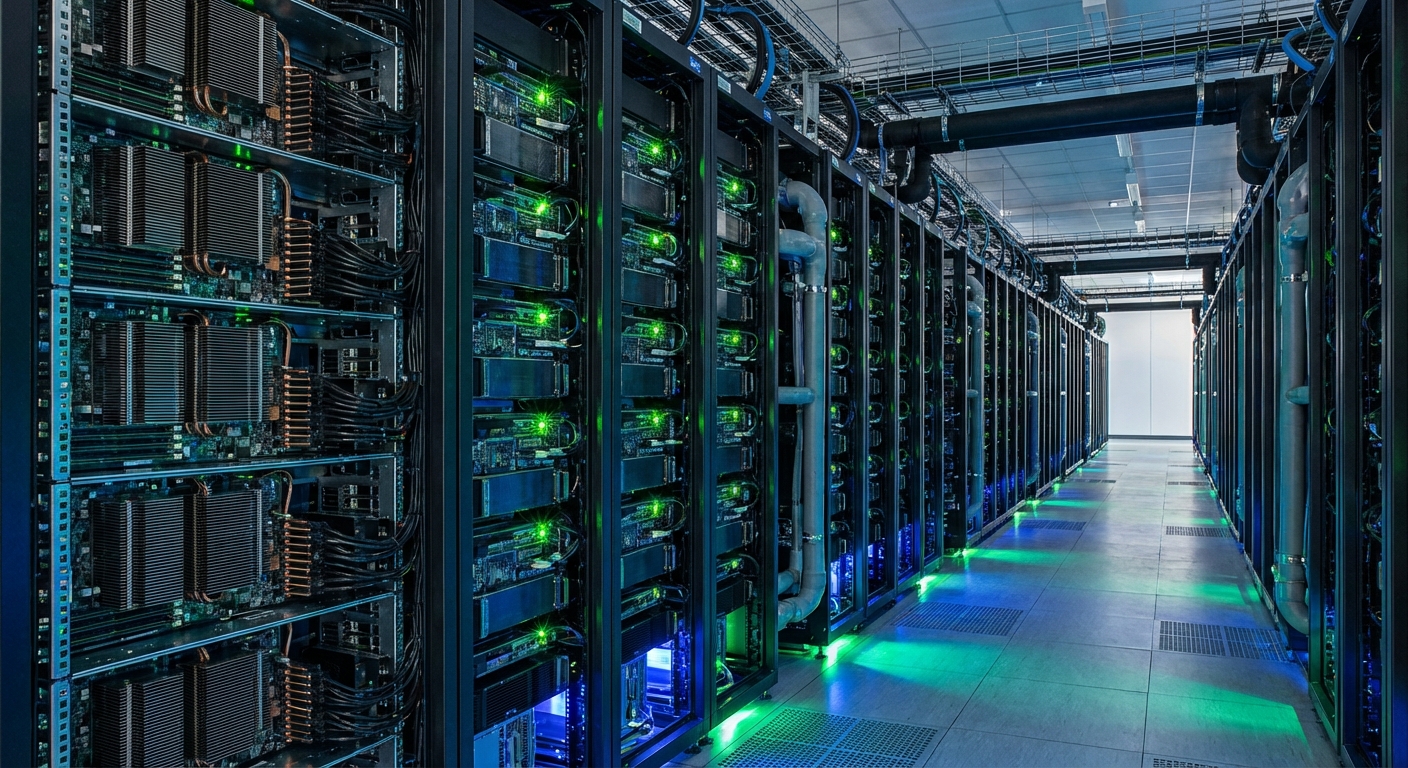
The counterargument notes that large technology companies have been wrong before. The blockchain infrastructure buildout of 2017-2018 saw companies purchasing hardware for applications that never materialized at scale. Cloud computing investments during periods of enthusiasm sometimes exceeded actual adoption. History provides examples of infrastructure buildout running ahead of utilization, and AI could follow a similar pattern. TSMC’s strong results don’t preclude the possibility that its customers are making mistakes.
What the results do suggest is that any AI correction would be slower and more gradual than a sudden bubble pop. Companies that have committed to TSMC capacity for 2026 aren’t going to cancel those orders based on a few quarters of disappointing AI revenue. The infrastructure buildout has momentum that will continue regardless of near-term sentiment shifts. If AI does enter a prolonged trough of disillusionment, it will unfold over years rather than months, and TSMC will likely see demand soften gradually rather than collapse.
What to Watch
TSMC’s January 15 earnings call will provide more detailed guidance about demand trends and capacity plans. Management commentary on customer mix, geographic distribution, and end-market applications will help investors understand whether AI demand is broadening or concentrating. The capital expenditure announcement will signal the company’s confidence in continued growth.
The competitive landscape bears watching as Intel and Samsung attempt to improve their foundry offerings. Any sign that rivals are closing the technology gap would affect TSMC’s pricing power and market position. For now, the company appears secure in its leadership, but semiconductor technology can shift faster than observers expect.
Geopolitical risks remain elevated. The Arizona facilities under construction represent a partial hedge against Taiwan-related disruption, but they won’t produce leading-edge chips for several years. Any significant escalation in cross-strait tensions would create immediate supply chain concerns regardless of TSMC’s fundamental business strength. Investors pricing TSMC must account for tail risks that have little to do with chip demand or manufacturing execution.
The Bottom Line
TSMC’s fourth-quarter beat provides concrete evidence that AI infrastructure demand remains strong despite growing skepticism about AI adoption timelines. The company’s position at the center of the AI supply chain makes its results a meaningful signal about the broader technology sector’s health. When TSMC reports strong numbers driven by AI chip demand, it validates that major technology companies are continuing to invest heavily in AI capabilities.
The results don’t resolve the larger debate about whether AI investments will ultimately prove productive. They do suggest that any AI correction will unfold gradually rather than suddenly. Companies have already committed to significant chip purchases through 2026, and that infrastructure will be built regardless of near-term sentiment shifts. For now, the AI buildout continues, and TSMC remains the biggest beneficiary of technology companies’ collective bet that artificial intelligence will transform their industries.
Sources: Bloomberg, Yahoo Finance, Apple Insider, Seeking Alpha, WCCFTech, Invezz.