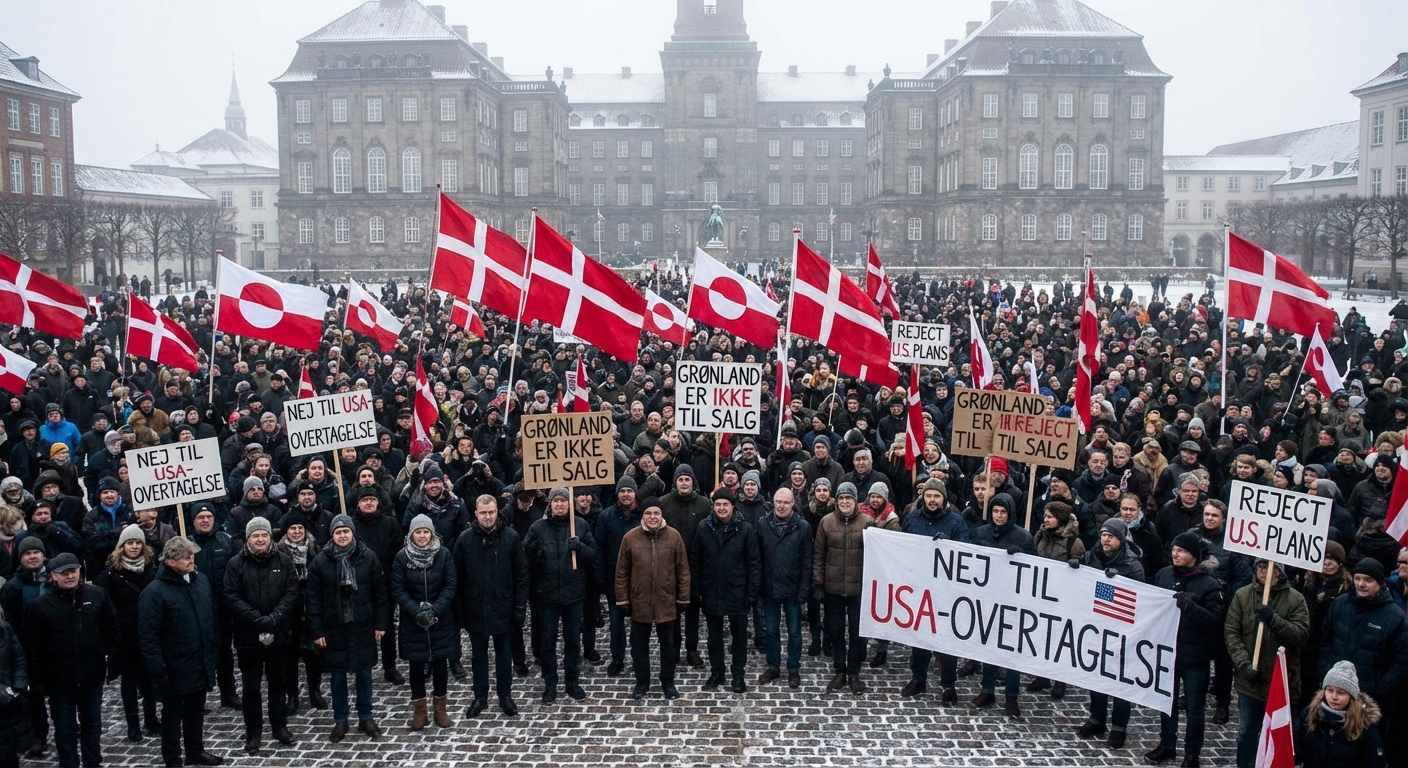
Greenland’s political establishment delivered its most unified and emphatic rejection yet of President Trump’s acquisition ambitions on Friday, with all five major party leaders issuing a joint statement declaring they “strongly oppose” any U.S. takeover. Hours later, Trump escalated his rhetoric, warning that if the United States can’t acquire Greenland “the easy way,” it would do so “the hard way.”
The confrontation marks the most serious diplomatic clash between the United States and a NATO ally since Trump took office, and it’s putting strain on alliances that have underpinned Western security since World War II. What started as seemingly outlandish statements about purchasing a Danish territory has evolved into a genuine international crisis with implications for Arctic strategy, NATO cohesion, and the rules-based international order.
Greenland’s Response
The statement from Greenland’s party leaders left no room for diplomatic ambiguity. Prime Minister Jens-Frederik Nielsen and the leaders of all four other major parties declared: “We don’t want to be Americans, we don’t want to be Danes, we want to be Greenlanders.” The phrase captured Greenlandic sentiment in terms even the most casual observer could understand.
The leaders went further, characterizing recent American statements as “extremely disrespectful” and demanding that “the United States’ contempt for our country ends.” They emphasized that Greenland’s political future “takes place in dialogue with the Greenlandic people and is prepared on the basis of international laws.” On the question of outside interference, they were explicit: “No other country can interfere in this. We must decide the future of our country ourselves, without pressure for quick decision, delay or interference from other countries.”
The unified front is significant. Greenland’s political landscape typically features robust disagreement between parties on questions of independence from Denmark, economic development, and relations with the outside world. That every major party leader signed onto the same statement suggests the U.S. pressure has actually consolidated Greenlandic opinion rather than divided it. Polling from the BBC found that 85 percent of Greenlanders oppose a U.S. takeover.
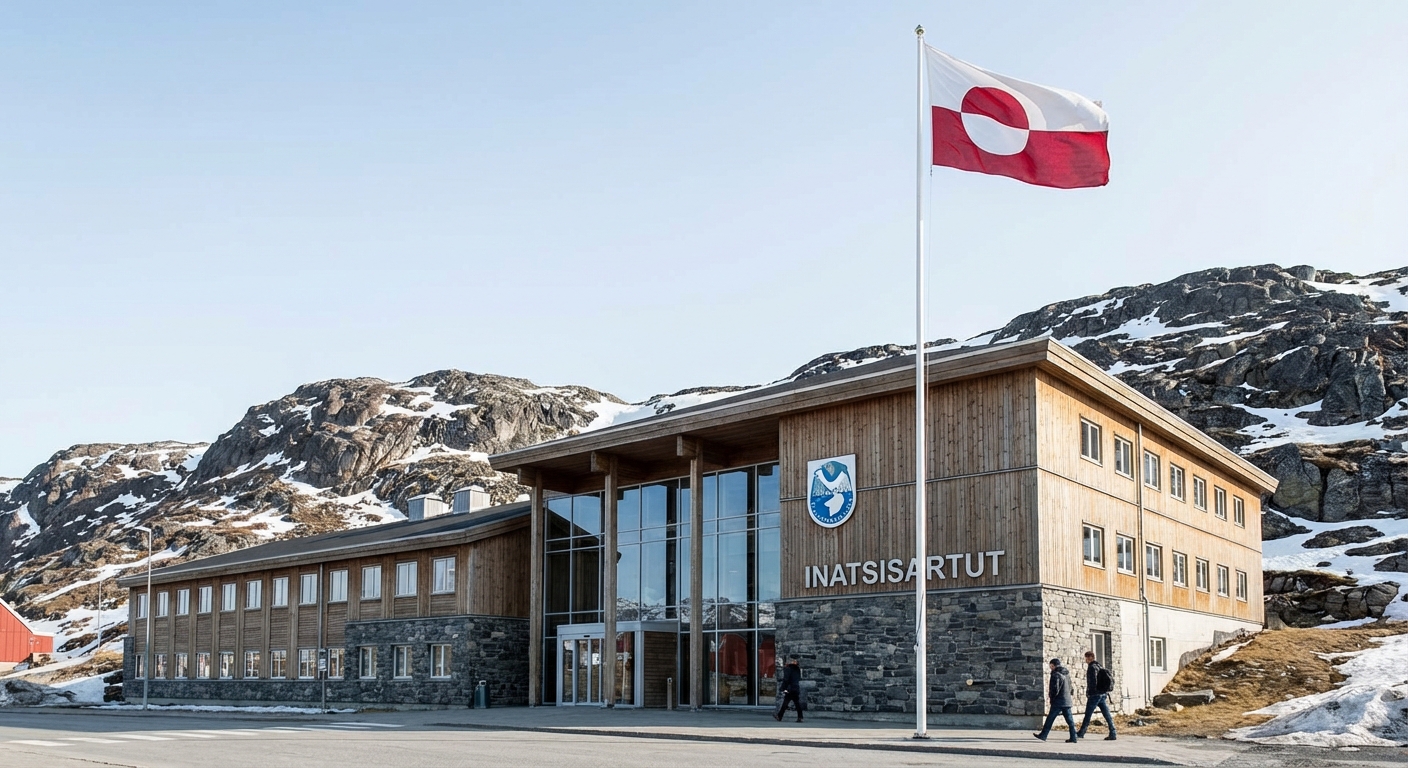
The party leaders announced that a planned meeting of Greenland’s parliament, the Inatsisartut, would be moved forward to discuss the territory’s response to the Trump administration’s demands. This suggests Greenland may be preparing a more formal institutional rejection beyond the political statement, potentially including resolutions that would complicate any future acquisition scenario.
Trump’s Escalation
President Trump’s response Friday afternoon raised the stakes considerably. “We are going to do something on Greenland, whether they like it or not,” Trump told reporters. “If we don’t do it the easy way, we’re going to do it the hard way.” When pressed on what “the hard way” might entail, Trump declined to elaborate.
The president framed the situation in stark geopolitical terms, arguing that U.S. acquisition is necessary to prevent Russian or Chinese influence in the Arctic. “If we don’t do it, Russia or China will take over Greenland, and we’re not going to have Russia or China as a neighbor,” Trump said. This reasoning echoes earlier administration statements about Greenland’s strategic importance, but the implied threat of non-voluntary acquisition represents a significant escalation.
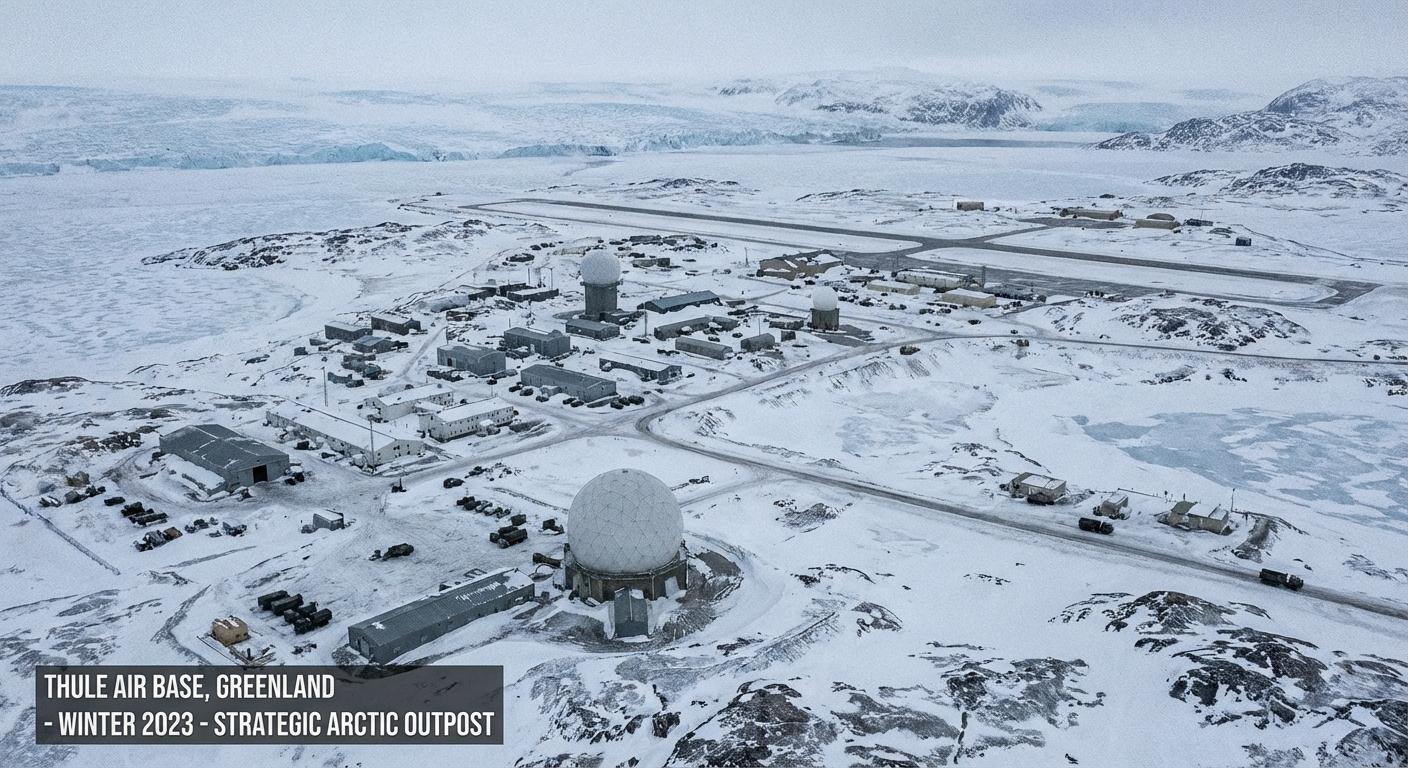
The “hard way” language has generated intense speculation about what options the administration might be considering. Military action against a NATO ally would be unprecedented and almost certainly illegal under international law. Economic coercion could include threatening to withdraw U.S. forces from Thule Air Base, America’s northernmost military installation, or imposing trade restrictions. Some analysts have suggested the administration might try to negotiate directly with individual Greenlandic communities or businesses, bypassing the territorial government entirely.
European Response
The crisis has triggered alarm across Europe. Leaders of France, Germany, the United Kingdom, Italy, Poland, and Spain issued a joint statement declaring that “Greenland belongs to its own people,” a remarkable display of solidarity with a territory that most Europeans rarely think about. The statement represents the first time these six major powers have felt compelled to jointly rebuke U.S. foreign policy ambitions toward a European-linked territory.
Danish Prime Minister Mette Frederiksen delivered perhaps the starkest warning, stating that an American takeover of Greenland “would mark the end of NATO.” The claim might sound hyperbolic, but it reflects genuine European concern about what U.S. acquisition of a NATO member’s territory would mean for the alliance’s foundational principles. NATO is built on the premise that members don’t threaten each other’s territorial integrity. If the United States can take Danish territory by coercion, the alliance’s security guarantees become meaningless.
The European Union has not issued a formal statement, but individual member states have made their positions clear through the six-power declaration. EU foreign policy mechanisms move slowly, and the situation may evolve before Brussels can coordinate an official response. However, EU officials have privately expressed concern that the standoff could complicate ongoing trade negotiations with the United States.
Why Greenland Matters
The dispute reflects genuine strategic stakes that extend beyond any one president’s ambitions. Greenland sits astride shipping lanes that are becoming increasingly navigable as Arctic ice melts due to climate change. The territory contains significant deposits of rare earth minerals essential for electronics manufacturing and clean energy technology. Its position makes it valuable for military early warning systems and potential missile defense installations.
China has shown growing interest in Greenland’s resources and Arctic access, though actual Chinese investment in the territory remains limited. Russia has been more active in the broader Arctic region, expanding military presence and asserting claims to undersea resources. The Trump administration’s framing of Greenland as a prize that will be claimed by someone isn’t entirely wrong, even if the proposed solution, U.S. acquisition, creates more problems than it solves.
Greenland’s relationship with Denmark is already evolving. The territory enjoys substantial autonomy and has been gradually moving toward greater independence. Some Greenlandic politicians support eventual full sovereignty. But independence from Denmark is very different from becoming part of the United States. Greenlanders who want self-determination generally don’t want to trade Danish oversight for American control.
The Bottom Line
Greenland’s political leaders have delivered an unambiguous answer to President Trump’s acquisition push: no. The unanimous rejection from all five major parties demonstrates that U.S. pressure has unified rather than divided Greenlandic opinion. Trump’s response, threatening unspecified action “whether they like it or not,” has only deepened European alarm about American intentions.
What happens next depends largely on whether the Trump administration treats Greenlandic and Danish rejection as the final word or as the opening position in a negotiation. The “hard way” language suggests the administration isn’t ready to drop the matter. European allies are watching closely, aware that how this dispute resolves could define the boundaries of American power within the Western alliance. Greenland’s parliament will convene soon to formalize its response. For now, the island’s 57,000 residents have made their position clear: they intend to remain Greenlanders.
Sources: CBS News, CNN, Al Jazeera, The Hill, Fox News.