Iran plunged into darkness Thursday night, both literally and digitally, as the government imposed a nationwide internet blackout while security forces moved to crush the largest protests since the 2022 uprising over Mahsa Amini’s death. Supreme Leader Ali Khamenei signaled Friday that the crackdown would intensify, dismissing protesters as “vandals” destroying their own streets “for Trump” and promising the government would “not back down.” With at least 45 people dead and over 2,200 detained according to human rights groups, Iran stands at a critical moment that could determine the regime’s future or lead to bloodshed that dwarfs previous crackdowns.
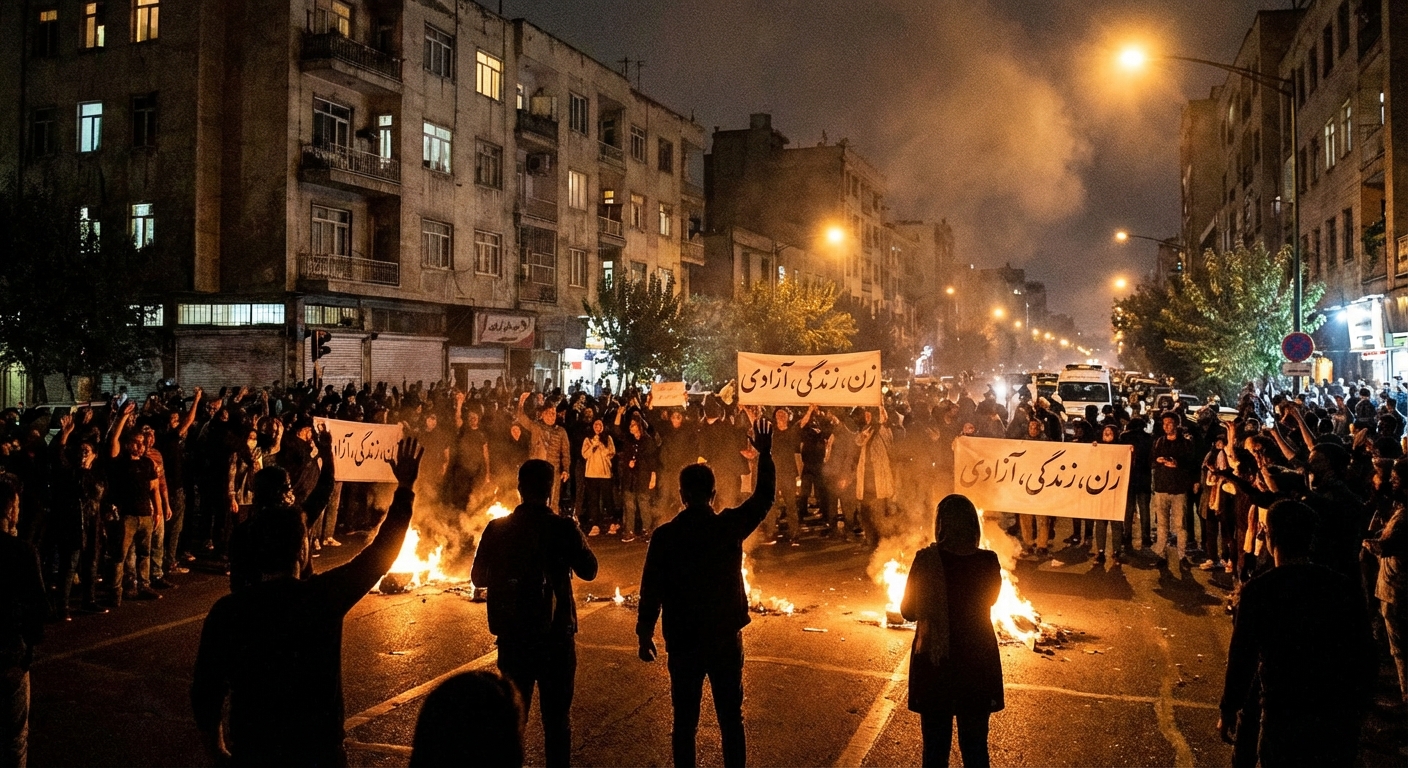
The protests began on December 28 when Tehran’s Grand Bazaar shut down after the Iranian rial crashed to record lows against the dollar. What started as economic grievances has transformed into something far more dangerous for the regime: direct challenges to Khamenei’s authority. Protesters are chanting “Death to Khamenei” and “Death to the dictator” in the streets, slogans that carry potential death sentences in the Islamic Republic but have become commonplace in cities across the country.
What’s Happening Now
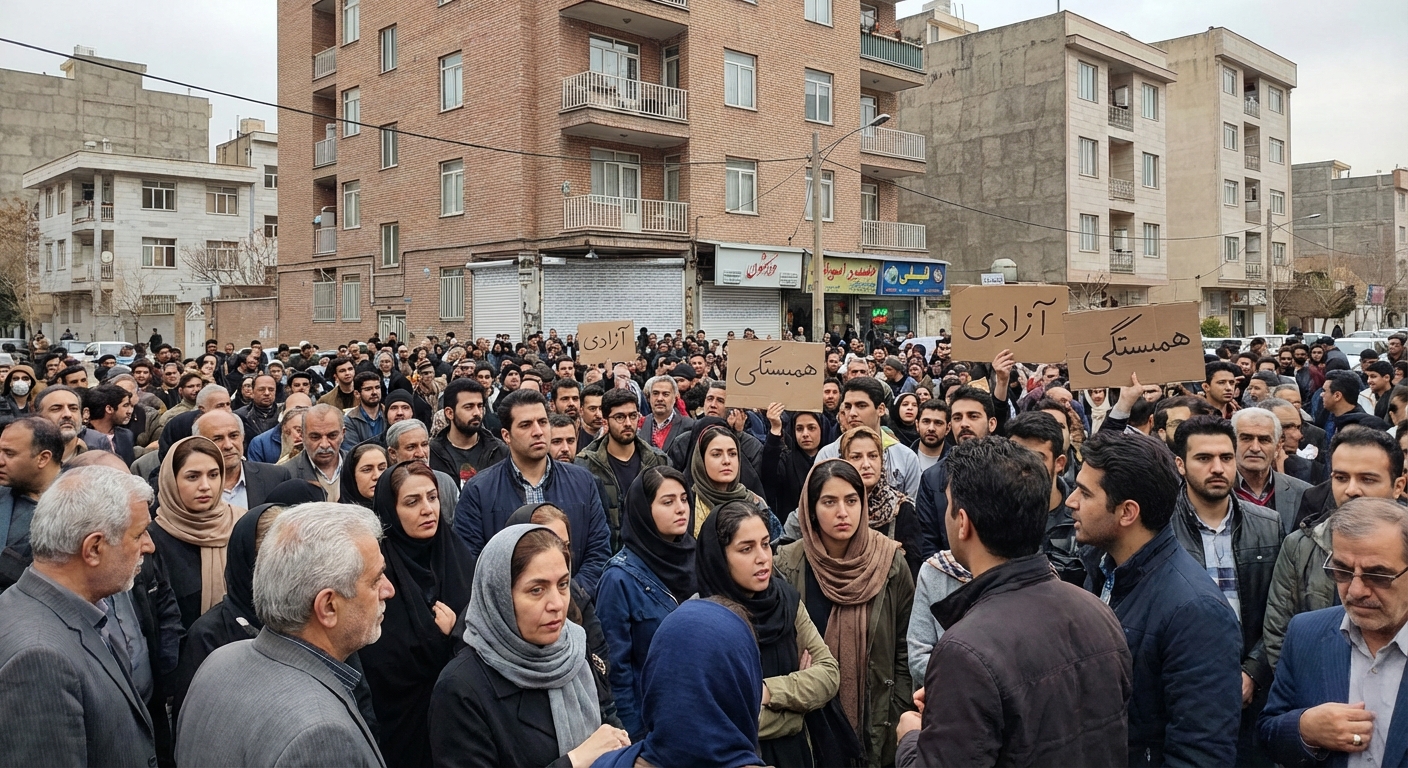
Millions of Iranians took to the streets Wednesday night, January 8, following a call from exiled Crown Prince Reza Pahlavi urging people to gather at 8 p.m. local time. The response exceeded expectations. Videos posted before the internet shutdown showed massive crowds in Tehran, Isfahan, Shiraz, Mashhad, and dozens of smaller cities. People screamed from windows, banged pots, and marched through neighborhoods in scenes reminiscent of the 1979 revolution that brought the current regime to power.
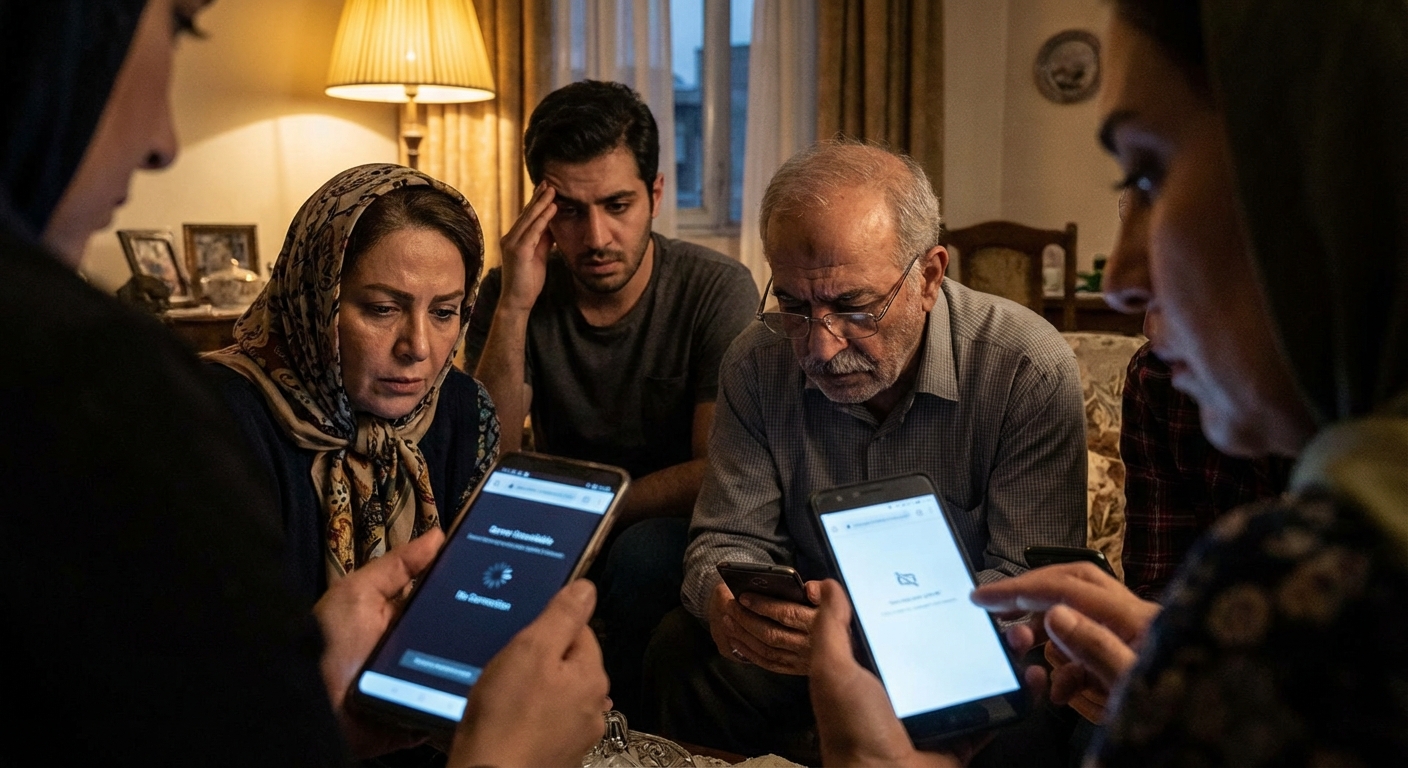
The government responded by cutting off nearly all internet access nationwide. NetBlocks, a cybersecurity watchdog that monitors global connectivity, reported that Iran dropped to near-zero connectivity late Thursday. “National blackouts tend to be the regime’s go-to strategy when deadly force is about to get used against protesters,” the organization’s director noted. Previous internet shutdowns have preceded violent crackdowns that killed hundreds, including during the 2019 protests when human rights groups estimate more than 1,500 people died.
Iran’s judiciary chief Gholamhossein Mohseni-Ejei promised that punishment for protesters “will be decisive, maximum and without any legal leniency.” This echoes language used before executions following the 2022 protests, when the government hanged at least four people on charges related to the demonstrations. The Norway-based Iran Human Rights organization, which has documented the current unrest, reports 45 deaths so far, though the actual number is likely higher given the communications blackout.
The economic backdrop makes these protests different from purely political uprisings. The rial has lost roughly 70 percent of its value against the dollar over the past year. Inflation has devastated the middle class. Basic goods that Iranians could afford five years ago are now beyond reach for many families. When the bazaar merchants who form the commercial backbone of Iranian society join protests, it signals a breakdown in the social contract that has kept the regime stable through decades of sanctions and isolation.
Khamenei’s Response
Supreme Leader Khamenei broke his silence Friday morning with a speech that left no room for compromise. Calling the protesters “vandals” and “rioters,” he drew a distinction between legitimate grievances and what he characterized as foreign-backed insurrection. “Protest is legitimate, but protest is different from rioting,” Khamenei said. “We talk to protesters, but there is no use in talking to rioters. Rioters must be put in their place.”
Khamenei directed particular venom at President Trump, calling him “arrogant” and claiming his “hands were stained with the blood of Iranians.” The Supreme Leader predicted Trump would be “overthrown like other arrogant leaders,” a reference to both American and Iranian history. The regime has consistently framed the protests as a CIA operation directed from Washington, though evidence for this claim remains thin. Protesters are motivated by domestic economic collapse and frustration with clerical rule, not instructions from abroad.
The “will not back down” language is significant because it mirrors statements made before previous violent crackdowns. Khamenei has positioned himself as defending the Islamic Revolution itself, not merely his own authority. This framing justifies extreme measures in the regime’s worldview. Security forces that might hesitate to fire on fellow Iranians protesting high bread prices may feel differently about what they’re told are foreign-backed attempts to overthrow the Islamic Republic.
International observers are watching to see whether the Revolutionary Guard Corps, Iran’s most powerful military force, deploys in full force. The IRGC has been present at protest sites, but large-scale military intervention against civilian populations would mark an escalation. The regime faces a calculation: crush the protests quickly and risk international condemnation, or allow them to continue and risk their spread to segments of society that have previously remained loyal.
International Response
President Trump has inserted himself directly into the crisis, threatening to “hit Iran very hard” if the government “starts killing people.” This language is imprecise, since people are already dying, but it signals that Washington is watching closely. Trump’s public support for the protesters, while potentially galvanizing to some Iranians, also provides ammunition for regime claims that the unrest is American-orchestrated.
EU foreign policy chief Kaja Kallas condemned Iran’s leadership for showing “true colours” by using excessive force against peaceful demonstrators. European governments have generally been more cautious than the U.S. in their statements, wary of giving the regime propaganda material. The EU remains invested in diplomatic channels with Tehran, though those channels have produced little progress on nuclear negotiations or human rights.
The role of exiled Crown Prince Reza Pahlavi, son of the last Shah, has given the protests a figurehead that previous uprisings lacked. Pahlavi’s call for Wednesday’s mass gatherings produced a response that suggests significant coordination and communication networks survived even as internet access degraded. Whether Pahlavi represents a genuine alternative to clerical rule or merely a symbol around which disparate opposition groups temporarily unite remains unclear. His family’s legacy is complicated: the Shah’s repression created conditions that led to the 1979 revolution in the first place.
The international community’s options are limited. Additional sanctions on Iran are possible but unlikely to affect regime behavior quickly enough to matter for protesters in the streets now. Military intervention is not seriously contemplated. The most practical forms of support involve technology that helps Iranians circumvent internet blocks and communicate with the outside world, though even these tools become less effective during complete network shutdowns.
What’s at Stake
Iran’s protests represent more than another cycle of unrest in a country that has seen periodic uprisings for decades. The combination of economic collapse, generational change, and open challenges to Khamenei’s legitimacy creates a more volatile situation than the regime has faced since 1979. Young Iranians who form the majority of the population have no memory of the Shah’s rule and see only the Islamic Republic’s failures. They’re less susceptible to regime narratives about foreign interference when they can’t afford basic necessities.
The regime’s legitimacy depends partly on its claim to represent authentic Iranian values against Western imperialism. That narrative becomes harder to sustain when millions of Iranians voluntarily take to the streets demanding change, when bazaar merchants close their shops in protest, when women defy hijab requirements not as a political statement but as routine behavior. The social transformation underway in Iran may be more significant than any single protest movement.
What happens in the coming days likely depends on decisions made by relatively few people. If Khamenei orders full military force against protesters, the death toll could rise dramatically but the protests might be suppressed. If security forces hesitate or split, the situation could escalate unpredictably. If protests continue despite the crackdown, the regime faces a drawn-out confrontation that strains its resources and legitimacy. Previous Iranian revolutions have seemed impossible until suddenly they weren’t.
The Bottom Line
Iran stands at an inflection point. Khamenei has signaled that the government will use force to restore order, but the scale of protests suggests that force alone may not be sufficient. The internet blackout prevents real-time information about what’s happening inside the country, but the underlying grievances, economic desperation, political frustration, and generational alienation from clerical rule, won’t disappear when connectivity is restored.
The next 48 to 72 hours are critical. Watch for reports of mass casualties, which would indicate the regime has chosen violent suppression. Watch for any signs of fractures within the security establishment, which would indicate the situation is more unstable than the regime wants to acknowledge. And watch for the internet to come back on, which would suggest the government believes it has regained control, or that international pressure has forced a partial retreat. Iran’s future, and the broader trajectory of the Middle East, may depend on what happens next.
Sources: NPR, Washington Post, CNN, Euronews, NBC News, Iran International.