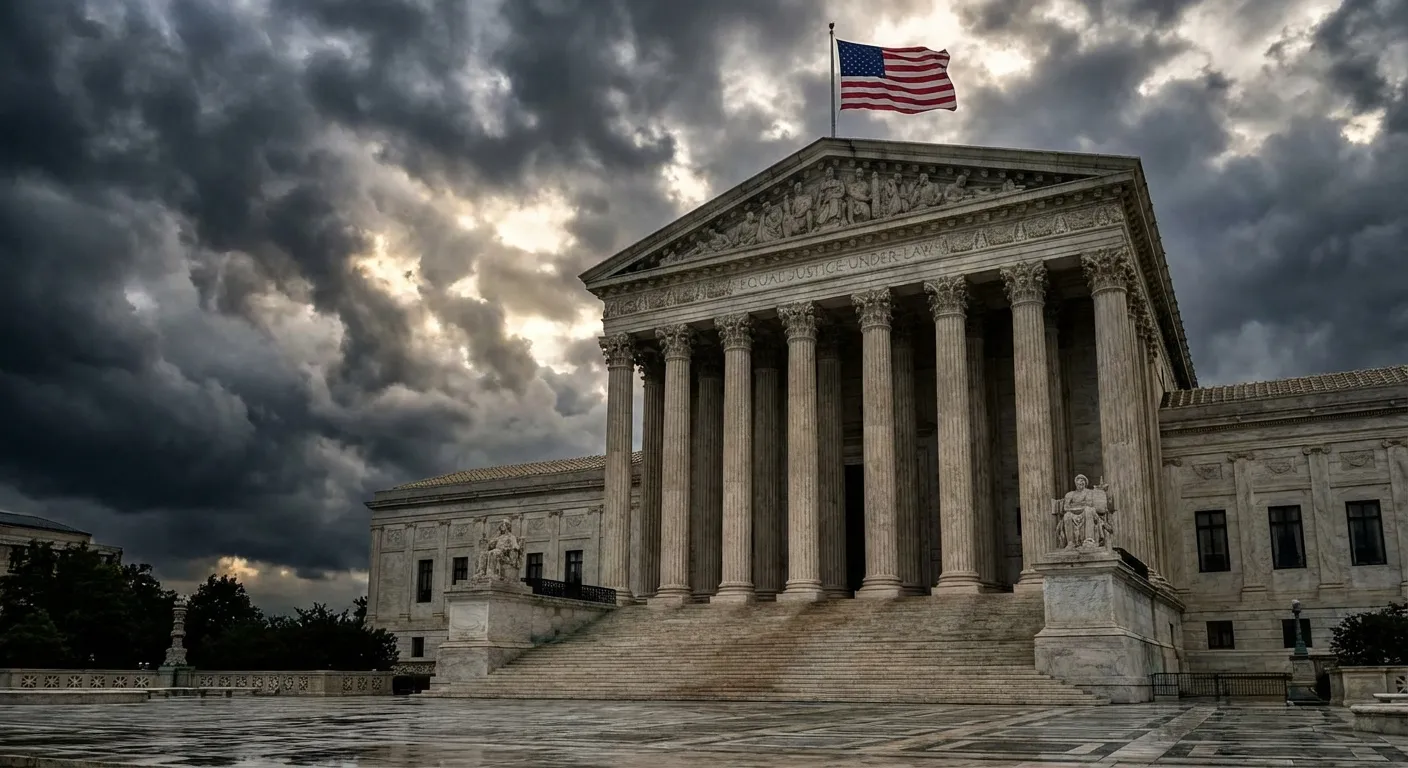
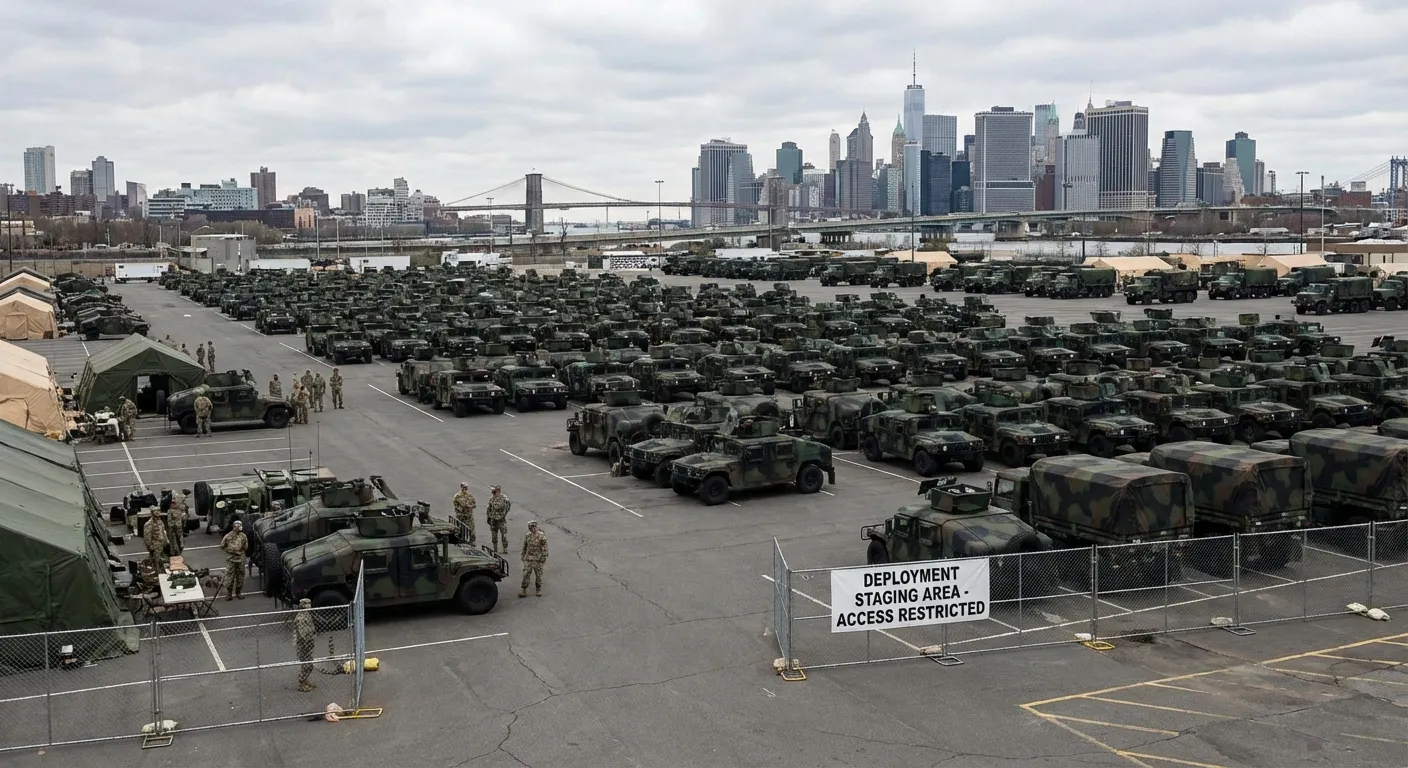
Chief Justice John Roberts sided with the four liberal justices and Justice Amy Coney Barrett today to block the Trump administration from deploying 500 National Guard troops to Chicago, delivering a 6-3 ruling that legal scholars are calling the most significant federalism decision in a generation. The majority held that the federal government cannot deploy military forces to an American city over the objection of state authorities absent specific statutory authorization or an emergency that state forces are unable to address. Neither condition existed here.
The decision landed in the middle of a political firestorm. The administration had framed the planned deployment as federal assistance to a city overwhelmed by violent crime. Illinois Governor JB Pritzker and Chicago Mayor Brandon Johnson had both publicly rejected the plan. The constitutional question at the center, whether a president can send troops into a state that does not want them, touches foundations of American governance that date to the nation's founding debates over federal power.
The Constitutional Collision
The administration's legal theory rested on two pillars. First, officials argued that National Guard troops, once federalized by presidential order, fall under executive authority that supersedes state objections. Second, they pointed to historical precedents from the desegregation era, when Presidents Eisenhower and Kennedy deployed federal troops to southern states over fierce gubernatorial opposition to enforce court-ordered school integration.
Illinois and Chicago countered that crime, even persistent and serious crime, does not constitute the kind of constitutional emergency that justified those extraordinary Cold War-era interventions. The desegregation deployments occurred to enforce specific court orders and vindicate constitutional rights that states were actively violating. Deploying troops to address general public safety conditions, over the explicit objection of the state's governor and the city's mayor, presented a fundamentally different question.
Steve Vladeck, a constitutional law professor at Georgetown University who filed an amicus brief in the case, told NPR that the ruling "draws a line that should have been obvious but needed the Court to say explicitly: the president's commander-in-chief power does not include the power to occupy American cities over the objection of their elected leaders."
How the Majority Reasoned
Roberts' opinion took a deliberately narrow approach. Rather than issuing broad constitutional pronouncements, the majority focused on the absence of statutory authority for this particular deployment. The Insurrection Act, the primary federal statute authorizing domestic military action, requires either a state request for assistance or conditions so severe that state authorities cannot maintain public order. Chicago's crime rate, while serious, did not meet that threshold, particularly when state and local authorities were actively policing and explicitly refusing federal military involvement.
The desegregation precedents were "readily distinguishable," Roberts wrote, because those deployments enforced specific judicial decrees and constitutional guarantees that states were defying. "There is a constitutional chasm," the opinion stated, "between deploying federal forces to vindicate rights that a state is suppressing and deploying them to address conditions that a state is actively working to remedy through its own law enforcement."
Barrett's concurrence, which attracted attention for its bluntness, emphasized that the administration's theory would effectively allow any president to deploy troops to any city by citing crime statistics. "That cannot be the law," she wrote, "unless we are prepared to accept a federal police power that the Constitution's framers specifically rejected."
The Conservative Dissent's Warning
Justice Samuel Alito's dissent, joined by Justices Clarence Thomas and Neil Gorsuch, argued that the majority's reading was dangerously restrictive. The federal government, Alito contended, possesses inherent authority to protect its citizens and enforce federal law. Requiring state consent for all domestic military deployments would give governors effective veto power over federal law enforcement.
The dissent placed particular emphasis on Chicago's violence, citing annual homicide totals and arguing that hundreds of murders per year constitute a failure of state and local governance that the federal government should be able to address. Ilya Somin, a law professor at George Mason University who has written extensively on federalism, noted that the dissent's reasoning "would have implications far beyond this case, essentially creating a federal police power that could override state authority whenever the president determines local conditions are insufficiently safe."
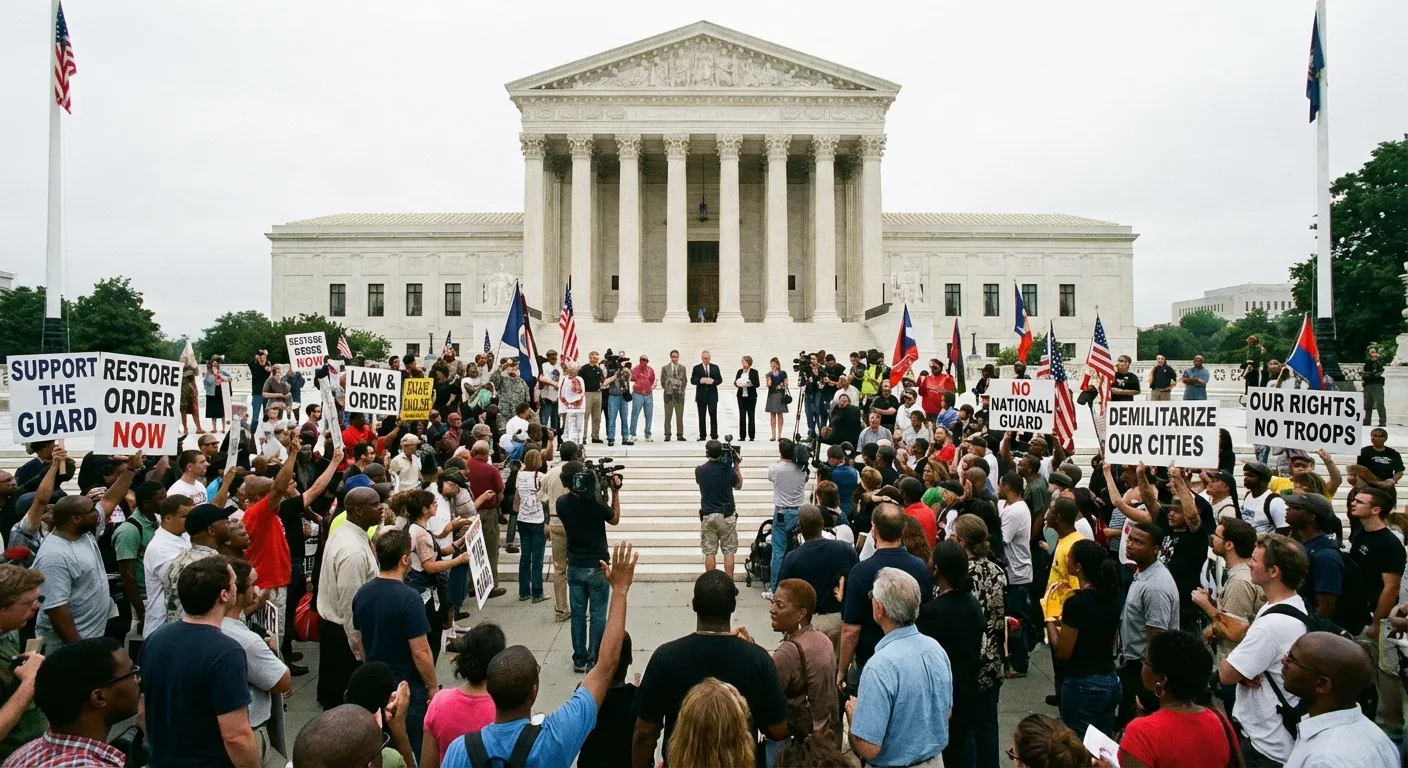
Implications Beyond Chicago
The ruling immediately constrains the administration's stated plans to deploy National Guard troops to other cities with high crime rates. Detroit, Memphis, and Baltimore had all been mentioned as potential targets for similar operations. Those plans now face clear legal obstacles unless governors in those states consent.
The administration retains other federal law enforcement tools. Increased FBI and ATF presence, joint task forces with willing local agencies, and federal prosecution of gun crimes do not raise the same federalism concerns. Attorney General Pam Bondi signaled in a statement that the DOJ would "pursue every lawful avenue to protect American communities," suggesting a pivot toward these alternative approaches.
For state and local officials, the decision provides clear precedent. Governors who oppose federal military presence in their jurisdictions can now cite a Supreme Court majority opinion holding that their consent is constitutionally required under non-emergency conditions.
What Happens Next
The administration has already signaled its next move. Attorney General Bondi confirmed on December 27 that the DOJ is drafting proposed amendments to the Insurrection Act that would lower the threshold for federal deployment in cities exceeding specific per-capita violent crime rates. Constitutional scholars view the legislative effort as a direct response to Roberts' majority opinion, which emphasized the absence of statutory authorization rather than issuing a blanket prohibition. "The Court left the door open for Congress to act," Georgetown's Vladeck noted. "Whether Congress walks through it is a political question, not a legal one."
Meanwhile, Chicago Mayor Johnson announced a $180 million public safety investment package on December 28, framing it as proof that local solutions can address the crime concerns the administration cited. The package includes 500 additional police officers, expanded violence intervention programs, and a summer youth employment initiative. The political subtext is clear: demonstrate that state and local efforts are working, which reinforces the Court's reasoning that federal military intervention was unnecessary. The ruling's durability will be tested when the Insurrection Act amendments reach committee, likely by spring 2026. If they pass, the constitutional question returns to the Court in a fundamentally different posture.
Sources
- Supreme Court rejects Trump's effort to deploy National Guard in Illinois - SCOTUSblog, December 2025
- Supreme Court rules against Trump in National Guard case - NPR, December 2025
- Supreme Court blocks National Guard deployment to Chicago in defeat for Trump - The Washington Post, December 2025
- Four Takeaways From the National Guard Ruling - Steve Vladeck, December 2025
- Trump v. Illinois, 25A443 - Supreme Court of the United States, December 2025