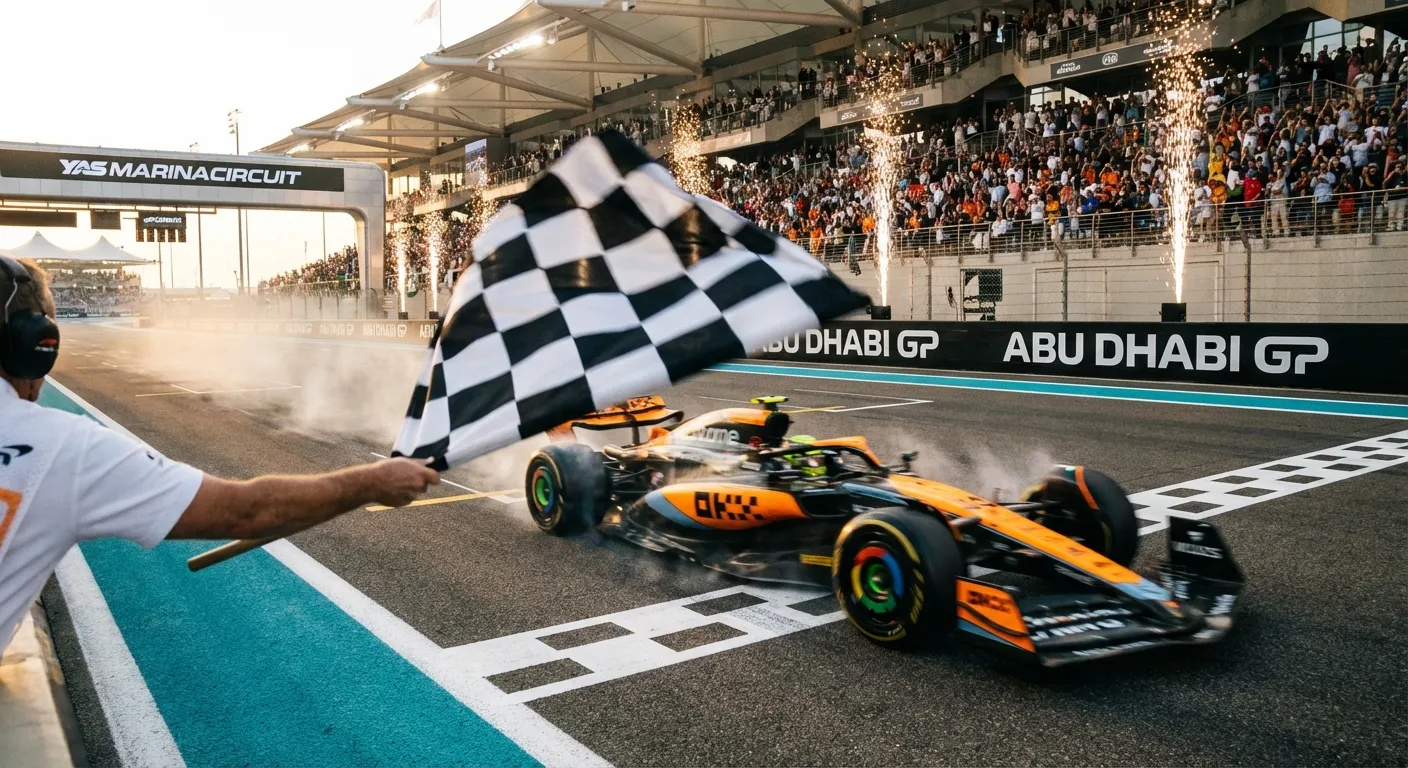
Two points. That is the margin separating Lando Norris from Max Verstappen in the final 2025 Formula One World Drivers' Championship standings, making it the closest title fight since the controversially decided 2021 season in the same Abu Dhabi venue. Norris, 26, clinched the championship at today's season finale by finishing second while Verstappen, battling a gearbox issue that cost him pace in the final stint, could only manage fourth. The result hands McLaren its first drivers' title since Lewis Hamilton won with the team in 2008 and establishes Norris as the new face of a sport that has grown its global audience by 40% since 2019, according to Formula One Management's own viewership data.
The championship was not won in Abu Dhabi alone. It was assembled across 24 races on five continents, through six victories, eleven podiums, and a consistency that Norris himself called "the thing I had to learn the hard way." His 2024 season, when he led the championship before a mid-season collapse cost him the title, provided the painful education. This time, the lessons held.
McLaren's Engineering Renaissance
The story of Norris's championship is inseparable from the story of McLaren's technical resurrection. As recently as 2018, the Woking-based team finished sixth in the constructors' standings, a position that would have been unthinkable during the Senna and Prost era. The turnaround began with the hiring of Andrea Stella as team principal in early 2023 and accelerated when technical director Rob Marshall, recruited from Red Bull, redesigned the car's aerodynamic philosophy around a concept he had developed but never fully implemented at his former team.
The 2025 MCL39 was the result. Its innovative front wing design, which F1 technical analyst Craig Scarborough described to Autosport as "the most significant aerodynamic development since the ground effect revolution of 2022," generated downforce more efficiently than any car on the grid. The advantage was not overwhelming, typically worth two to three tenths of a second per lap, but it was consistent, and in a sport where hundredths decide races, consistency compounds.
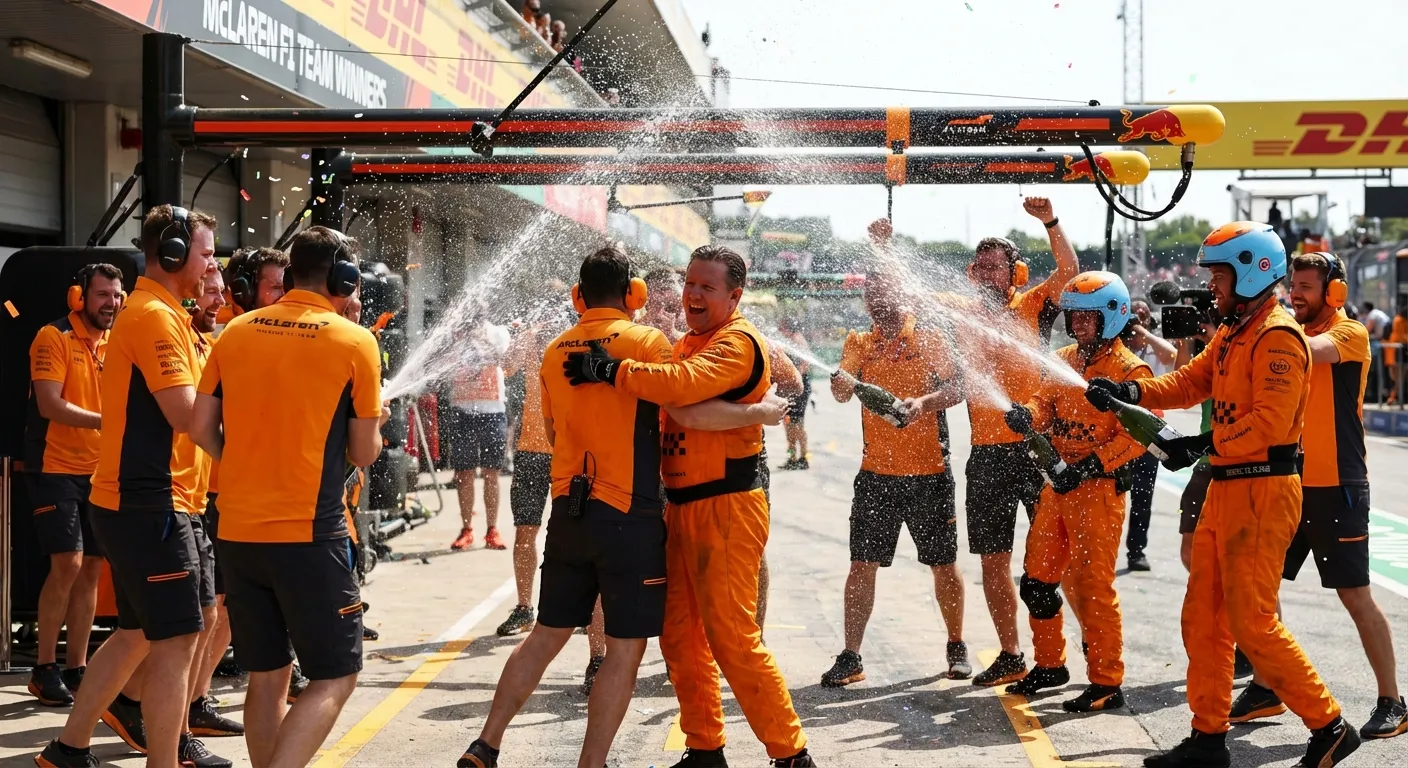
Red Bull, the dominant force of the previous four seasons, struggled to match McLaren's development pace. Adrian Newey's departure to Aston Martin at the end of 2024 left a gap in Red Bull's design leadership that proved impossible to fill mid-season. Verstappen, widely regarded as the most talented driver of his generation, extracted extraordinary performances from an inferior car, but talent alone could not overcome the engineering deficit.
The Season's Defining Moments
Three races, more than any others, decided the championship. At the British Grand Prix in July, Norris delivered what former F1 driver and Sky Sports analyst Martin Brundle called "the single greatest wet-weather drive I've seen since Senna at Donington in 1993." Starting fifth in treacherous conditions at Silverstone, Norris carved through the field to win by 14 seconds, a margin almost unheard of in the current era. The victory swung the championship momentum decisively in his direction.
The Singapore Grand Prix in October nearly destroyed it. A first-lap collision with Ferrari's Charles Leclerc left Norris with a damaged car and forced him to retire, handing Verstappen a 15-point swing that closed the championship gap to just six points with four races remaining. The pressure that followed would have broken many drivers, but Norris responded with victories in the next two races, in Mexico and Brazil, that demonstrated a mental resilience he had lacked in 2024.
The finale in Abu Dhabi was less about speed than nerve. Norris needed only to finish within two places of Verstappen to secure the title, but the mathematics of a championship fight have a way of making simple objectives feel impossible. He drove a controlled, intelligent race, managing tire degradation and positioning himself to respond to any threat, while Verstappen's gearbox problem removed the final obstacle.
F1's Streaming Generation Gets Its Champion
Norris's championship carries significance beyond the sport itself. He is the first world champion to have built his public persona primarily through digital media and social platforms rather than traditional motorsport press. His Twitch streams, YouTube content, and candid social media presence have attracted a younger, more diverse audience to F1 than the sport has historically enjoyed.
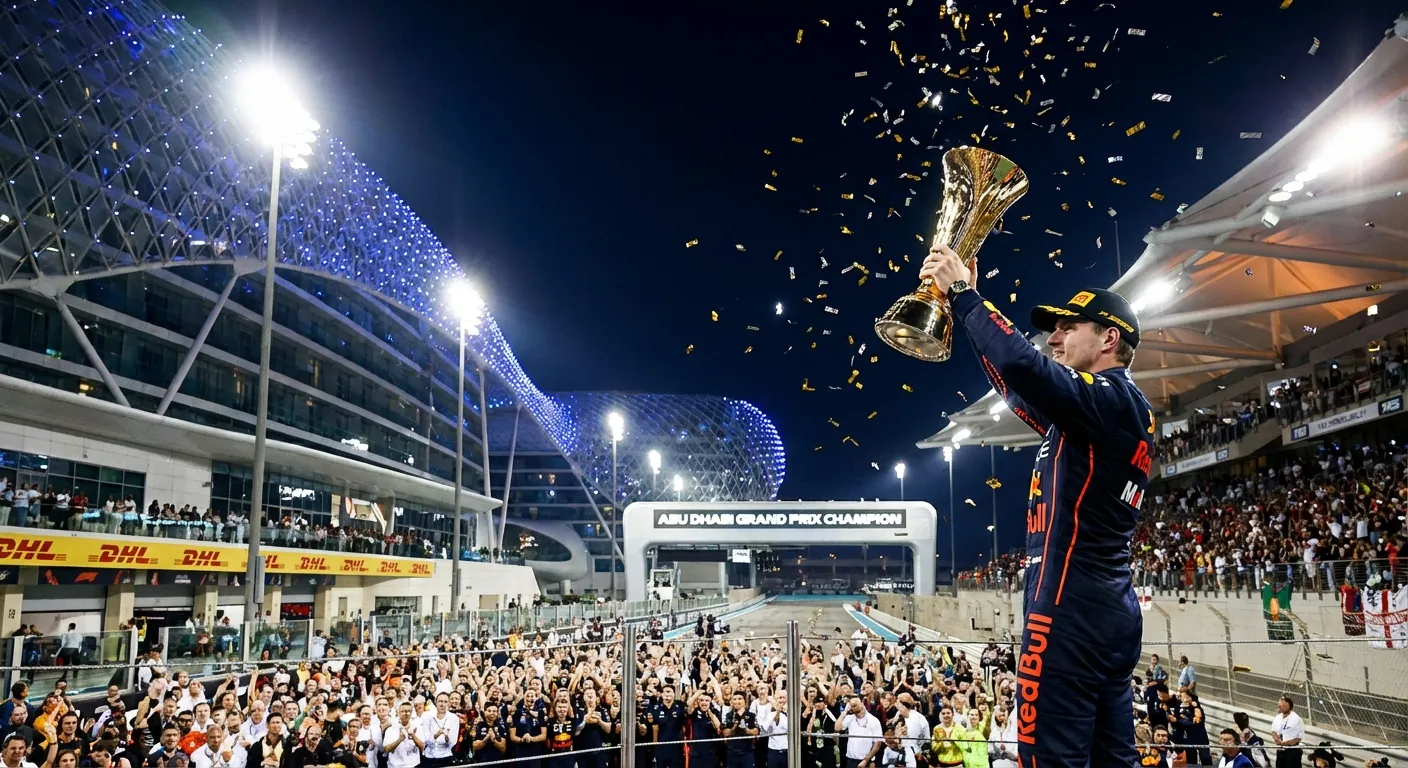
He has also been unusually open about the psychological challenges of elite sport. His public discussions of anxiety, performance pressure, and the mental health costs of competing at the highest level have resonated with fans and fellow athletes alike. Stefano Domenicali, F1's CEO, told the Financial Times that Norris represents "the kind of champion that modern audiences connect with, authentic, vulnerable, and brilliantly fast."
The commercial implications are substantial. F1's American viewership has grown from 547,000 average viewers per race in 2018 to over 1.2 million in 2025, driven by the Las Vegas and Miami races plus the cultural penetration of Netflix's "Drive to Survive" series. A young, charismatic, English-speaking champion with significant social media reach is precisely what F1's expansion into the U.S. market requires.
Why It Matters
Lando Norris's championship is a story about patience rewarded, engineering excellence, and a sport that has successfully reinvented itself for a new generation. The two-point margin ensures this season will be remembered as one of F1's greatest, a contest decided not by a single dramatic moment but by the accumulated weight of 24 races, thousands of engineering decisions, and the relentless pressure of competing against the best driver of the modern era. For McLaren, the title validates a rebuild that took the better part of a decade. For Norris, at 26, it establishes a foundation for what could be a multi-championship career. And for Formula One, a sport that has fought the perception of predictability for years, this season delivered the most compelling argument yet that the competition is real.
Sources
- In Numbers: All the Key Statistics from Norris' World Championship-Winning Season - Formula 1, December 2025
- TECH ANALYSIS: How McLaren's MCL39 Has Benefitted from an 'Aggressive' Evolution Approach - Formula 1, 2025
- Martin Brundle's Verdict on 2025 F1 Season Title Fight Between Norris, Verstappen, Piastri - Sky Sports F1, 2025
- F1 CEO Stefano Domenicali Reflects on a 'Phenomenal' 2025 Season - Formula 1, 2025
- F1 Sets New U.S. Viewing Record in 2025 with 135% Overall Growth in Final Year of ESPN Stint - RACER, December 2025