The entertainment industry enters 2026 with a paradox that its own executives struggle to explain publicly. Studios are spending more than ever on content, yet producing fewer shows. Audiences have more choices than at any point in television history, yet cultural consensus around any single show has all but evaporated. And the most anticipated projects of the year aren't bold original visions but revivals of series that ended five, ten, even twenty years ago. The common thread connecting all of these trends is straightforward: the economics of streaming have fundamentally changed, and every creative decision flowing from Hollywood in 2026 is, at its core, a financial one.
The shift can be summarized in a single metric. During the peak TV era from 2019 to 2022, streamers operated under a "spend to grow" model where the goal was maximizing subscriber acquisition at nearly any cost. Netflix alone spent $17 billion on content in 2025, a figure that sounds staggering until you divide it by total subscribers. At roughly 300 million global subscribers, that works out to about $57 per subscriber per year in content costs. The question every platform now asks is not "what should we make?" but "what delivers the most engagement per dollar spent?" That question has reshaped everything coming to your screen this year.
The Economics Behind the Revival Wave
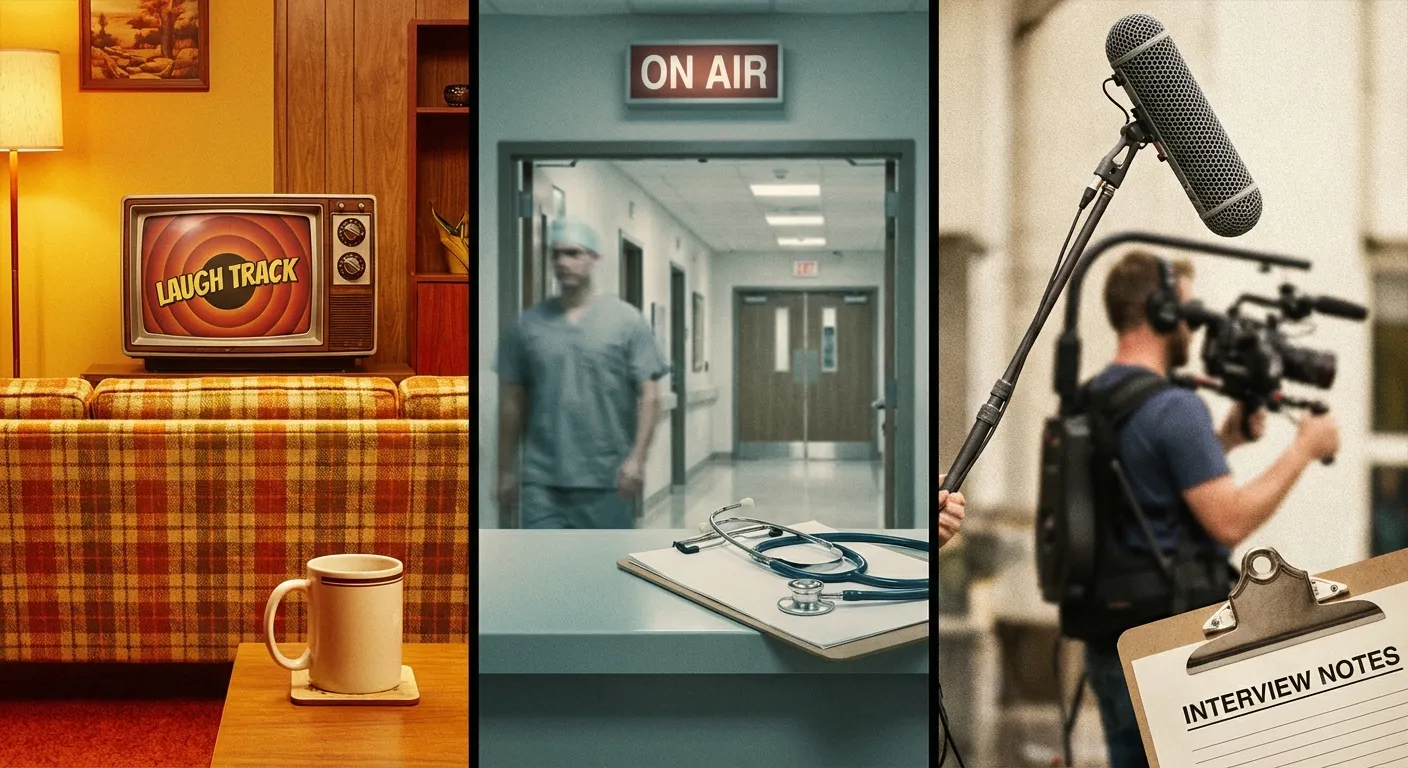
The most striking trend of 2026 is the sheer volume of returning favorites. Three beloved comedies not seen in more than a decade are all returning this year: "The Comeback," Lisa Kudrow's criminally underrated HBO comedy about a former sitcom star clawing her way back to relevance; "Malcolm in the Middle," which ran for seven seasons before ending in 2006; and "Scrubs," the medical comedy that concluded its original run in 2010. These aren't reboots with new casts but actual continuations, picking up where the original stories left off.
The wave is not primarily driven by nostalgia, though nostalgia certainly helps. It is driven by customer acquisition costs. Launching a new original IP in streaming requires massive marketing spend to build awareness from zero. Industry estimates from Ampere Analysis put the average marketing cost for a new original series at $30 to $50 million, on top of production budgets that frequently exceed $10 million per episode for prestige content. A revival, by contrast, arrives with built-in brand recognition, a pre-existing fan community that generates organic social media buzz, and search engine visibility from years of accumulated interest. The marketing spend for a revival typically runs 40% to 60% lower than for a comparable original, according to data from media consultancy MoffettNathanson.
Beyond the comedy revivals, prestige drama is also revisiting past glories. "Bridgerton" returns for another season of Regency-era romance. "Ted Lasso" is back despite what appeared to be a definitive series ending. "Euphoria," which faced well-publicized production delays and cast availability issues, will finally deliver new episodes. These are shows that defined streaming eras, and their return reflects a cold calculation: the proven concept carries lower creative risk. When a streamer greenlights a revival, it has data on exactly how much engagement the original generated, what demographics it reached, and how effectively it retained subscribers. With an unproven original, those numbers are projections. In an era where every platform is under pressure to demonstrate profitability rather than growth, the certainty of a known quantity has become more valuable than the potential upside of something new.
Fewer, Bigger, Better: The New Content Strategy
Jeff Goldstein, partner and managing director at AlixPartners, notes that the industry is confronting structural change, with platforms scaling back output and focusing on "fewer, bigger, and more strategically positioned releases." This framing deserves more scrutiny than it typically receives, because it represents a complete inversion of the strategy that built the streaming era.
From 2018 through 2023, the dominant strategy was volume. Netflix famously aimed to release something new every week, and competitors followed suit. The logic was simple: more content means more reasons for subscribers to stay, more surface area for algorithmic recommendation to work with, and more chances of producing an unexpected hit. This approach peaked in 2022, when the U.S. market saw a record 599 original scripted series across all platforms, according to FX Research. By 2025, that number had dropped below 500, and the trajectory for 2026 points lower still.

The "fewer, bigger, better" strategy is really a euphemism for "maximize engagement per dollar." Consider the math from Netflix's perspective. If the company spends $17 billion annually and produces 400 original titles, that averages to $42.5 million per title. But engagement is wildly uneven. Netflix's own data from its biannual engagement reports shows that the top 10% of titles generate roughly 50% of total viewing hours. The bottom 30% barely register. The new strategy concentrates spending on projects likely to land in that top tier, which disproportionately means franchise extensions, star-driven vehicles, and revivals. The casualties are mid-budget originals, the kinds of shows that built critical reputations but never broke into mainstream conversation.
This explains the shape of 2026's most ambitious slates. Amazon Prime Video has assembled perhaps the most concentrated lineup in the company's streaming history: "Spider-Noir," starring Nicolas Cage reprising his role from the animated "Spider-Verse" films; "Blade Runner 2099," continuing the sci-fi franchise with Michelle Yeoh, Hunter Schafer, and Tom Burke; and "Elle," a "Legally Blonde" prequel. Every single one is a franchise play. Netflix, which recently acquired Warner Bros. Discovery, is betting heavily on literary adaptations with "East of Eden" starring Florence Pugh and a new "Pride and Prejudice" with Emma Corrin and Jack Lowden. Even these "originals" are working from pre-existing intellectual property with built-in audiences. HBO's "A Knight of the Seven Kingdoms," premiering January 18, extends the "Game of Thrones" universe into George R.R. Martin's Dunk and Egg novellas: a smaller-scale story about a hedge knight and his squire, positioned as a correction to the escalating spectacle that defined the franchise.
The Superhero Box Office Reckoning
The franchise dependency is most visible, and most fraught, in the superhero genre. 2026 will test whether superhero content can recover its cultural dominance or has entered a structural decline driven by audience saturation and diminishing returns.
The numbers tell a stark story. During Phases 1 through 3 of the MCU (2008 to 2019), the average domestic gross per film was approximately $350 million, with "Avengers: Endgame" peaking at $858 million. Phase 4 and 5 films (2021 to 2024) averaged roughly $215 million domestically, a 39% decline. Several entries, including "The Marvels" at $84 million domestic, performed below the threshold that analysts consider profitable after marketing costs. The per-film return on investment has compressed dramatically: the MCU's early films regularly returned 3x to 4x their production budgets at the box office alone, while recent entries have struggled to reach 2x.

Marvel's 2026 strategy reflects this reality. "Wonder Man," streaming on Disney+ starting January 27, takes an unusually meta approach: Simon Williams is an actor who happens to be a superhero, pursuing movie roles in a Hollywood that increasingly casts actual superheroes. The concept acknowledges audience fatigue while trying to subvert it. "VisionQuest" will conclude the story begun in "WandaVision" and continued in "Agatha All Along," representing Disney's bet that television can build sustained engagement with characters who might not carry feature films. Tom Holland's fourth Spider-Man film, "Brand New Day," arrives in July as the year's highest-profile theatrical superhero release, with Sony banking on Holland's personal star power to counteract genre fatigue.
DC is repositioning under James Gunn and Peter Safran with an approach that implicitly concedes the MCU's interconnected-universe model has reached its limits. "Lanterns," described as more "True Detective" than traditional superhero fare, follows two Green Lantern Corps members investigating a murder mystery on Earth. Kyle Chandler and Aaron Pierre star, with "Ozark" creator Chris Mundy and "Watchmen" showrunner Damon Lindelof shaping the creative direction. The strategy is genre hybridization: use superhero IP as a wrapper for stories that could stand on their own as crime dramas, horror films, or character studies. It is an acknowledgment that the audience for "superhero movie" as a genre has contracted, but the audience for well-known characters in compelling stories has not.
The Post-Strike Pipeline and What It Means for Quality
Understanding what's coming to screens in 2026 also requires understanding the production disruptions still rippling through the industry. The 2023 writers' and actors' strikes shut down production for months, creating a pipeline backlog that 2026 is finally clearing. Many shows that would have premiered in 2024 or 2025 were delayed, which means more content than usual is hitting screens simultaneously and intensifying competition for audience attention.
There is a counterintuitive upside to the disruption. The strike forced a pause that allowed some projects more development time than they would have received under normal production pressure. Writers who would have been grinding through 10-episode seasons on compressed timelines instead had months to refine scripts. This doesn't guarantee quality, but it removes one of the most common complaints from showrunners during the peak TV era: that the sheer pace of production left no room for revision.
Studios and streamers are simultaneously recalibrating content strategies in response to political and demographic shifts. Industry insiders describe a conscious effort to develop programming that appeals to conservative, rural, and faith-oriented audiences who have felt underserved by recent Hollywood output. This represents less an ideological pivot than an economic one. The subscriber growth that remains untapped in the U.S. market skews toward demographics that current content slates don't effectively serve. Nic Newman, lead author of the Reuters Institute's annual trends report, observes that creators and influencers are driving a shift toward "personality-led news at the expense of media institutions," a dynamic that extends beyond journalism into entertainment. The creator economy is reshaping Hollywood as studios increasingly view influencers as marketing partners and sometimes as talent, while AI-powered video tools begin to reshape production workflows in ways the industry is still processing.
What the 2026 Slate Reveals
The pattern across every genre and platform points to the same conclusion: Hollywood has shifted from a growth-at-all-costs model to a return-on-investment model, and every creative decision reflects that shift. Revivals dominate because they reduce customer acquisition costs. Franchise extensions persist because they lower marketing risk. Mid-budget originals shrink because their engagement-per-dollar ratio is the hardest to predict.
For prestige drama that rewards close attention, "Industry" Season 4 on HBO (premiering January 11) continues one of the most underrated shows on television, a caustic examination of investment banking culture. Netflix's "Beef" returns with Carey Mulligan and Oscar Isaac. For genre entertainment, "A Knight of the Seven Kingdoms" and "Blade Runner 2099" represent the most ambitious efforts, both carrying franchise expectations that can smother originality. For comedy, "The Bear" Season 5 on FX is the safest bet for sustained quality, while "It's Always Sunny in Philadelphia" Season 18 continues the longest-running live-action comedy in American television history. The returning classics represent higher risk and higher potential reward.
The specific predictions grounded in these economics are straightforward. At least two of the three major comedy revivals ("The Comeback," "Malcolm in the Middle," "Scrubs") will underperform relative to their marketing spend, because revivals of shows with cult followings rarely translate those followings into mainstream streaming numbers. The superhero genre's domestic box office will continue declining in 2026, with "Brand New Day" likely the only entry to clear $300 million domestically, propped up by Holland's star power rather than genre enthusiasm. DC's genre-hybrid approach with "Lanterns" has the highest probability of critical success precisely because it doesn't rely on the superhero audience showing up. And the "fewer, bigger, better" strategy will produce at least one spectacular failure, because concentrating bets means each individual bet carries more downside when it misses. The entertainment industry is not just resetting its content in 2026. It is resetting its entire business model, and the shows that succeed will be the ones that deliver engagement efficiently, not just artistically.