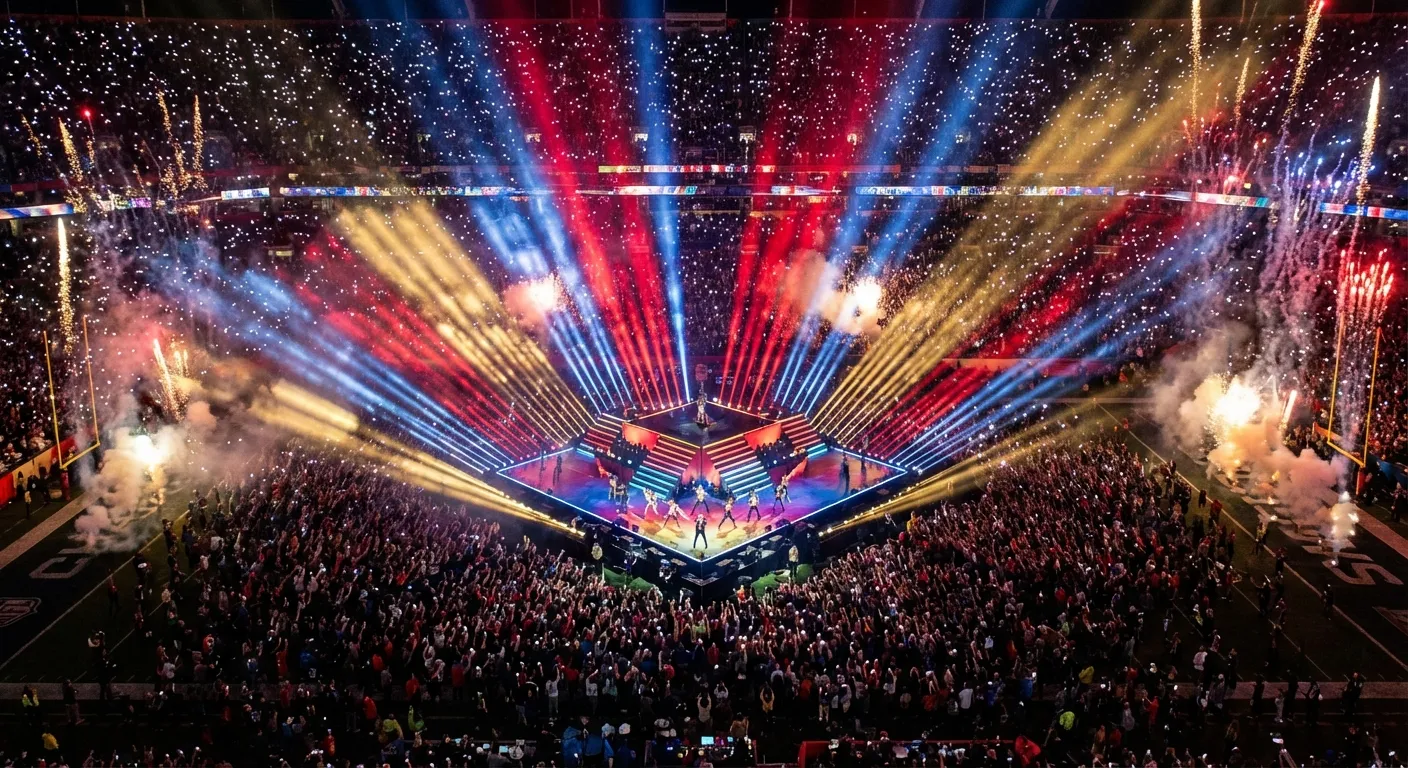
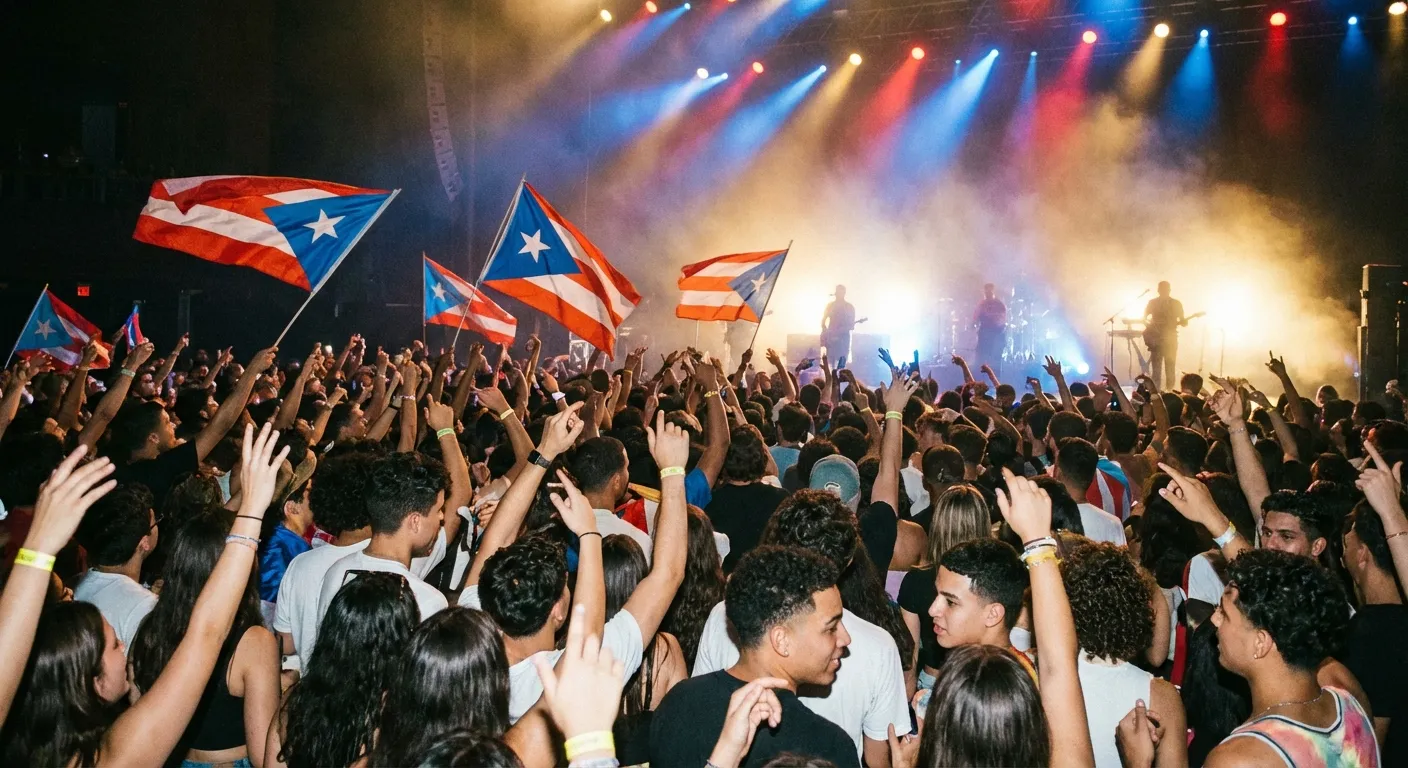
Bad Bunny performed the Super Bowl LX halftime show on Sunday night at Levi's Stadium in Santa Clara, California, and the reaction was immediate, enormous, and split almost perfectly along predictable lines. An estimated 130 million viewers watched the 14-minute set, which featured an all-Spanish setlist, a massive stage designed to resemble a Caribbean island, guest appearances by Daddy Yankee and Rosalia, and a closing sequence in which Bad Bunny waved a Puerto Rican flag while fireworks exploded overhead.
The performance was, by any technical measure, a success. The staging was the most ambitious in halftime show history, incorporating augmented reality elements visible only through the broadcast. The audio mix was clean. The choreography was tight. Bad Bunny, born Benito Antonio Martinez Ocasio, performed with the kind of energy that justifies why the NFL chose the most streamed artist on the planet for its biggest stage.
And then the discourse started.
What Actually Happened
The 14-minute set opened with "Yo Perreo Sola," moved through hits including "Diles," "Titi Me Pregunto," and "Monaco," and closed with a new track from his forthcoming album. Every song was performed entirely in Spanish, a first for the Super Bowl halftime show. Bad Bunny addressed the crowd briefly in English at the midpoint, saying "This is for every Latino kid who was told to speak English," before transitioning into "Dakiti" with Daddy Yankee joining from a raised platform.
The Puerto Rican flag moment, which came during the final 90 seconds, was clearly planned and coordinated with the broadcast. Bad Bunny had draped the flag across his shoulders while the camera pulled back to reveal the stadium bathed in red, white, and blue lighting. The NFL had approved the flag in advance, according to two people briefed on production planning who spoke to ESPN.
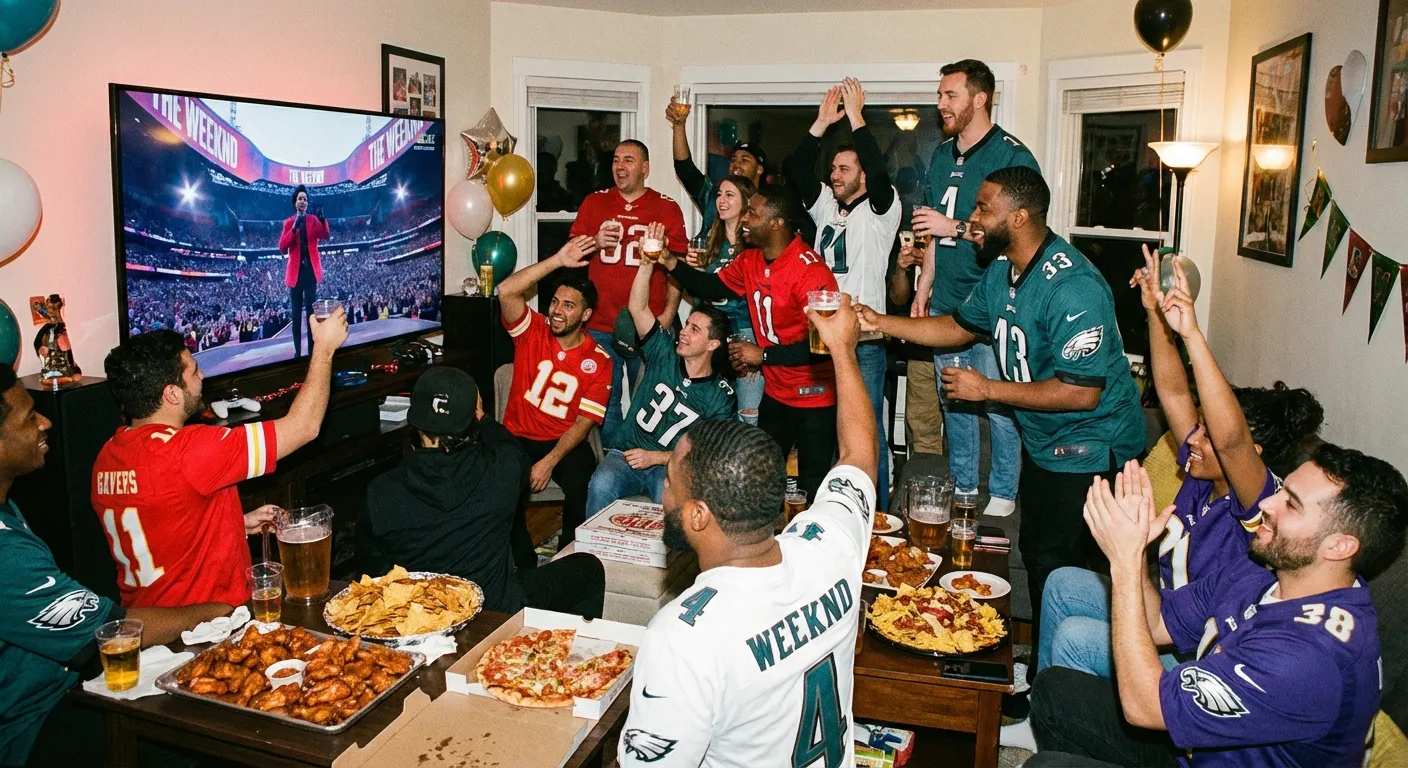
Within minutes, social media divided. On one side, celebration. Latino viewers, particularly Puerto Ricans, described the performance as a watershed cultural moment. "My mom is crying," one post with 2 million views read. "She said she never thought she'd see this on the biggest stage in America." On the other side, complaint. "I couldn't understand a single word," became the rallying cry for critics, many of whom demanded subtitles, an English-language segment, or a different performer altogether. The hashtag #SpeakEnglish trended on X (formerly Twitter) within 30 minutes of the performance ending.
The Numbers Tell a Different Story
The backlash, while loud, was a minority position. Nielsen's overnight ratings showed the halftime drew 130 million viewers, making it the third most-watched in history behind Shakira and Jennifer Lopez's 2020 performance and Rihanna's 2023 return. Engagement metrics from X, Instagram, and TikTok showed that positive sentiment outweighed negative by a ratio of roughly four to one, according to data from social analytics firm Brandwatch.
Those numbers reflect a demographic reality that the "speak English" crowd tends to overlook. There are approximately 65 million Hispanic and Latino people in the United States, making them the country's largest minority group. Bad Bunny is the single most-streamed artist on Spotify globally, a position he has held for four of the past five years. His audience isn't niche. It's enormous, international, and younger than the average Super Bowl viewer, which is precisely why the NFL chose him.
Robert Thompson, a media professor at Syracuse University who has studied halftime shows since the 1990s, told NPR that the selection was "the NFL doing what the NFL always does, chasing the biggest possible audience. Bad Bunny is that audience now. The controversy is the sound of demographics changing."
A Long History of Halftime Outrage
Controversy over the Super Bowl halftime show is itself a tradition. Janet Jackson's 2004 "wardrobe malfunction" led to FCC fines and a years-long conservative backlash against broadcast content. Prince's 2007 performance in the rain generated complaints about a shadow that some viewers interpreted as a suggestive silhouette. Beyonce's 2016 performance of "Formation," with dancers in Black Panther-inspired costumes, drew boycott calls from police unions.
The pattern is consistent: the halftime show reflects cultural currents, and cultural currents generate friction. Bad Bunny's performance lands in the specific context of heightened political tension around immigration, language, and national identity that has defined the past year of American politics. An all-Spanish set on the country's biggest cultural stage was always going to be read through that lens, regardless of artistic quality.
What distinguishes this particular controversy from previous ones is the explicitly linguistic dimension. Previous halftime disputes centered on visuals, choreography, or political symbolism. The Bad Bunny reaction is, at its core, about language, about whether Spanish belongs on a stage that many Americans consider inherently English-speaking. It's a question that has practical implications for everything from education policy to workplace regulations, and the halftime show briefly made it unavoidable.
What the NFL Wanted
The NFL's decision to book Bad Bunny was strategic, not accidental. The league has spent three years expanding its Latin American presence, launching a regular-season game in Sao Paulo in 2024, broadcasting games in Spanish on ESPN Deportes, and pursuing media rights deals across Central and South America. Bad Bunny's halftime show fit a global growth strategy that requires appealing to audiences who don't speak English as their first language.
The entertainment industry's broader recalibration toward global audiences is part of the same trend. Netflix, Spotify, and YouTube have all found that their fastest growth comes from non-English-speaking markets. The Super Bowl halftime show operating on the same logic isn't surprising. It's inevitable, given the economics.
Jay-Z, who has produced the halftime show through his Roc Nation partnership with the NFL since 2019, told Billboard before the game that the performance was about "meeting the audience where they are. The most popular artist in the world happens to perform in Spanish. That's not a political statement. That's a fact."
What It Means for the Industry
The commercial implications of Bad Bunny's set are already rippling through the entertainment and advertising business. Spanish-language ad spots during Super Bowl LX commanded rates 18% higher than the previous year, according to data from media buying firm GroupM, and several brands that ran bilingual ads, including Toyota and T-Mobile, reported higher post-game engagement than their English-only counterparts. For the NFL, the performance fits a growth strategy that depends on international audiences: the league reported a 40% increase in Latin American viewership for the game compared to the prior year, and league sources told Bloomberg that Bad Bunny's set accelerated discussions about hosting a regular-season game in Mexico City as early as 2027.
Future halftime show booking will reflect this shift. Roc Nation's selection pipeline, which balances cultural impact with global streaming numbers, now has a proven template for non-English headliners. Artists like Karol G, Peso Pluma, and Burna Boy are the kinds of names that fit the same logic: massive global audiences, streaming dominance, and the ability to generate the cultural conversation that keeps the halftime show relevant in a fragmented media landscape. The 130 million viewers who tuned in made a commercial case that the NFL's programming strategy will follow for years.
Sources
- Bad Bunny's Super Bowl LX halftime show makes waves on social media - ESPN, February 2026
- Bad Bunny makes Puerto Rico the home team in a vivid Super Bowl halftime show - NPR, February 2026
- Wait, Why Was Bad Bunny's Super Bowl Halftime Show Controversial? - Rolling Stone, February 2026
- Bad Bunny's Super Bowl Halftime Show 2026: Everything You Missed - Billboard, February 2026
- Super Bowl LX Delivers 124.9 Million Viewers - Nielsen, February 2026