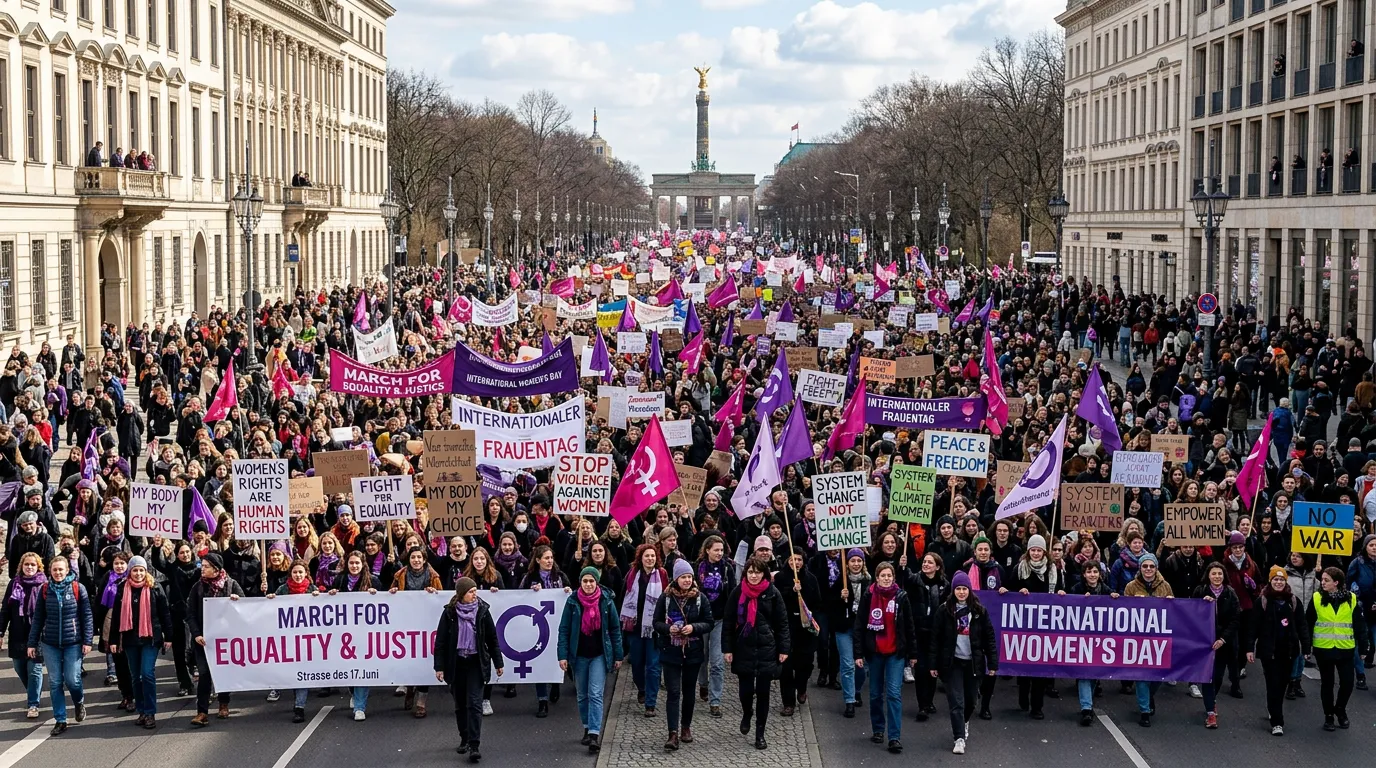
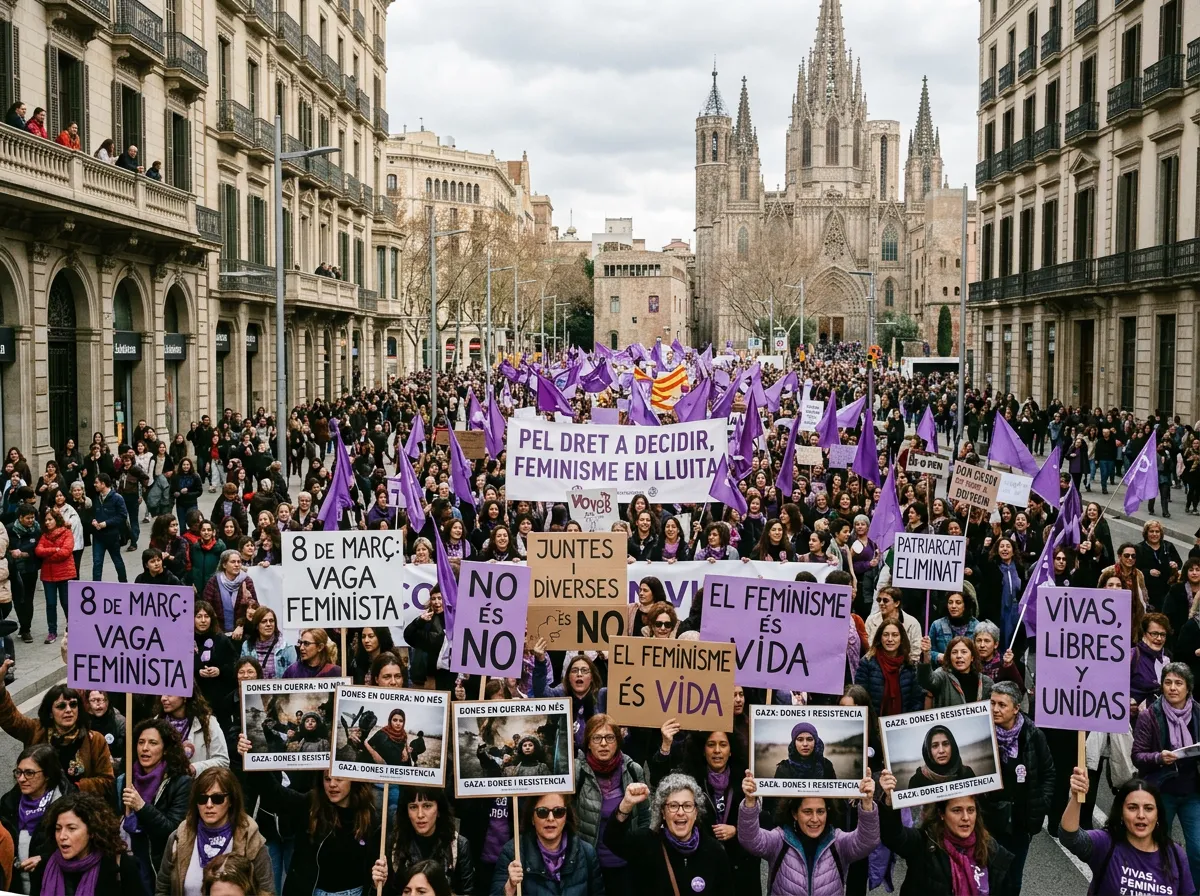
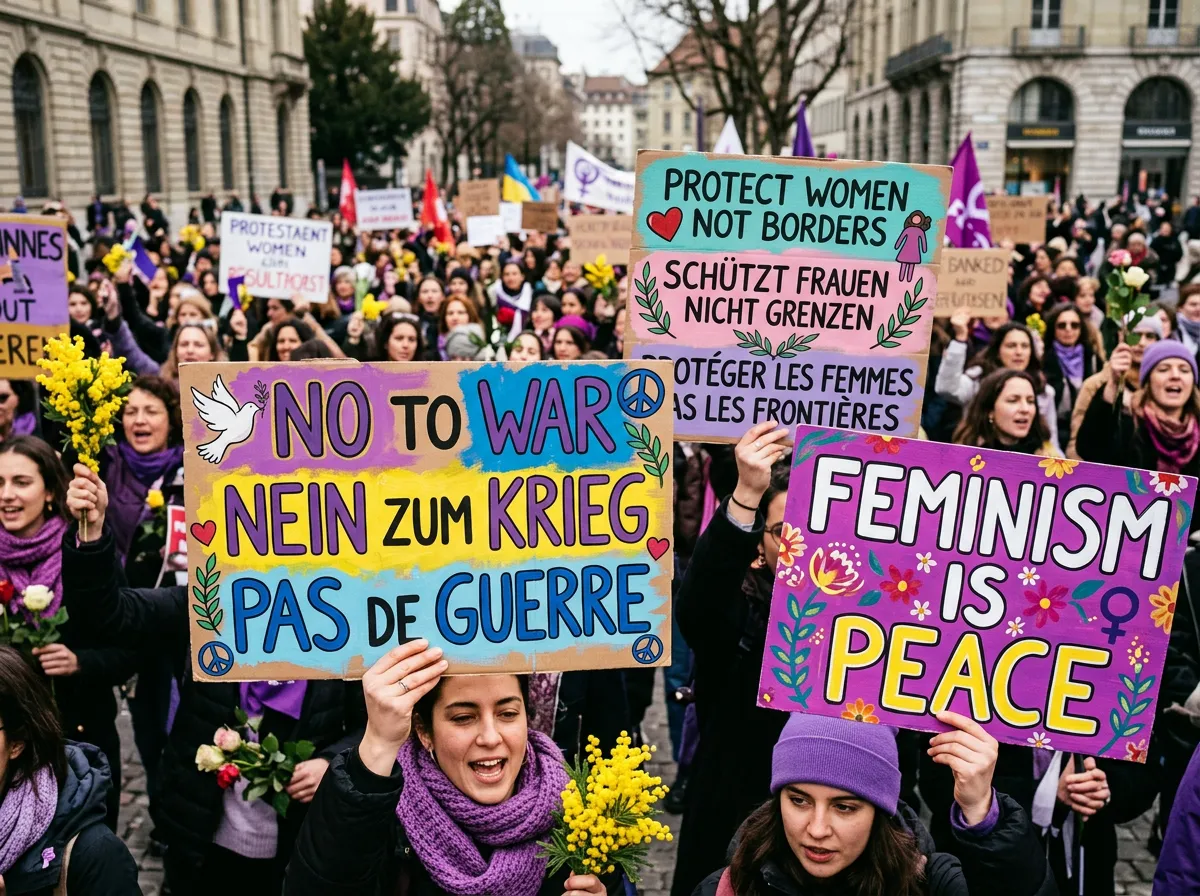
Roughly 20,000 people filled the streets of Berlin on Sunday, double the number police had anticipated, for International Women's Day marches that carried a sharply different tone than in years past. Across Europe, from Barcelona's 22,000-strong demonstration to rallies in Madrid, Valencia, and Istanbul, the 115th International Women's Day became less a celebration of progress and more a demand for accountability, with the ongoing US-Israeli strikes on Iran and the broader toll of war on women driving much of the anger in the streets.
This year's official UN theme, "Give to Gain," focused on fundraising for women's organizations and the less tangible forms of support: teaching, mentoring, and challenging discrimination. But the demonstrators who turned out in European capitals largely bypassed the official messaging. Their signs read "No to war" and "Anti-fascist feminists against imperialist war." Their chants named the women killed in Iran, Gaza, and Ukraine. And their numbers, significantly larger than organizers expected in several cities, reflected a moment when gender equality and geopolitics are no longer separate conversations.
The Scale of Sunday's Protests
The turnout across Europe exceeded expectations in nearly every major city. Berlin's 20,000 marchers doubled the police estimate, a significant indicator of organic mobilization rather than top-down organizing. Barcelona drew over 22,000, according to reporting from Catalan News, making it one of the largest IWD marches in the city's history.
Spain saw demonstrations in at least seven major cities, including Madrid, Valencia, Seville, Granada, Bilbao, and San Sebastian. The protests denounced violence against women and the wars in the Middle East, themes that organizers said were inseparable. "You cannot talk about women's rights in 2026 without talking about the women being killed in Iran," one Madrid organizer told Euronews during Sunday's march.
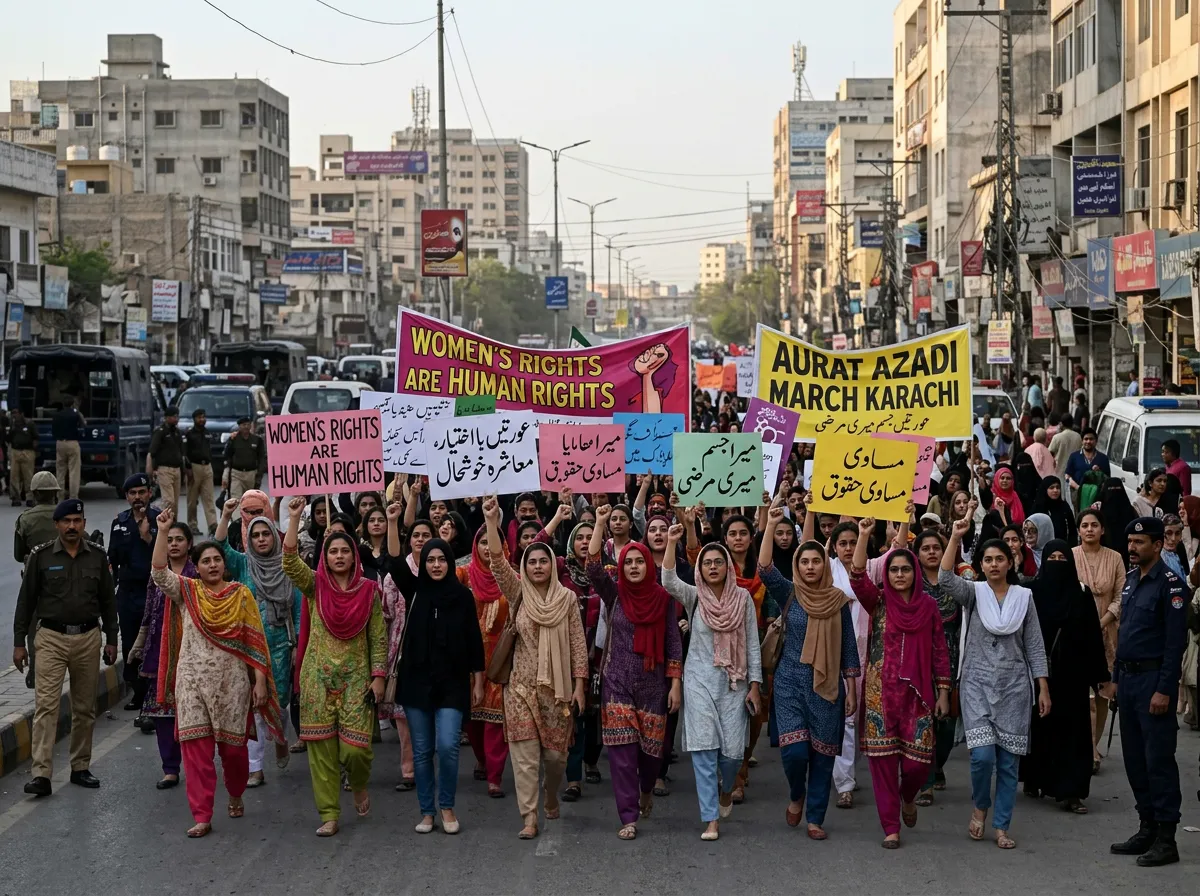
Beyond Europe, the day saw rallies across multiple continents. In Karachi, Pakistan, women's rights activists marched despite security concerns. In Istanbul, protesters shouted slogans demanding an end to femicide. In Phnom Penh, Cambodia, local workers lifted fists and umbrellas in solidarity. Brazil's marches served as a rallying cry against gender-based violence, with organizers connecting domestic violence statistics to broader patterns of institutional failure.
Why War Became the Central Theme of IWD 2026
Previous International Women's Days have centered on pay equity, reproductive rights, and workplace harassment. Those issues remain on the table, but the ongoing military conflict with Iran, now in its ninth day, has reframed the conversation in ways that organizers say they haven't seen since the Iraq War protests of 2003.
UNICEF reported Friday that at least 181 children have been killed in the strikes on Iran. The displacement of nearly half a million residents in Lebanon, per the Norwegian Refugee Council's estimates, has disproportionately affected women and children, a pattern that repeats across virtually every modern military conflict.
The connection between war and women's rights is well-established in feminist theory, but Sunday's protests marked an unusually explicit integration of anti-war activism into mainstream IWD events. Historically, IWD marches have been organized around domestic policy demands: equal pay legislation, workplace protections, reproductive healthcare access. The 2026 edition was different not because these issues disappeared but because the immediacy of armed conflict pushed anti-war messaging to the front of the march, literally and figuratively.
This shift carries a historical parallel that deserves examination. The 2003 Iraq War protests, the largest coordinated global demonstrations in history at the time, drew much of their organizational strength from existing feminist and labor networks. Women's groups in Europe and the United States provided the logistical infrastructure, the phone trees and email lists and meeting spaces, that made those marches possible. What's happening in 2026 is the inverse: an established feminist protest day is absorbing anti-war energy because it provides a ready-made platform for expressing it. Social media organizing, already faster than 2003's methods, has collapsed the timeline between event and response. The US-Israeli strikes began on February 28, just eight days before IWD, and Sunday's protests already reflected organized, sustained anti-war messaging integrated into pre-planned women's marches.
Spain's Feminist Movement Fractures on Its Biggest Day
Amid the large turnout, Spain's feminist movement continued to grapple with internal fractures that have persisted for two years. Competing marches hit both Madrid and Barcelona, with separate demonstrations organized around disagreements over transgender rights and the regulation of prostitution, per The Olive Press.
The split reflects a tension within global feminism that extends well beyond Spain. Trans-exclusionary feminist groups organized separate demonstrations in several Spanish cities, while mainstream feminist organizations marched inclusively. The result was two parallel sets of demonstrations in several cities, both drawing significant numbers but built on fundamentally different visions of what feminism means in 2026.
The division is significant because Spain has been at the forefront of feminist legislation in Europe, passing landmark laws on consent and gender violence in recent years. The country's feminist movement is large, politically influential, and historically unified, making the visible split on IWD a notable departure. Whether this fracture persists or heals will likely depend on whether broader feminist coalitions can find common ground on trans inclusion, a question that is playing out differently in every country but that Spain's public, large-scale demonstrations make impossible to ignore.
The Structural Data Behind the Marches
Beyond the protests, the data underlying International Women's Day's core demands remained stark. The World Economic Forum's 2025 Global Gender Gap Report estimated that gender parity remains 131 years away at current rates of progress. Women globally earn approximately 77 cents for every dollar earned by men, with the gap wider in developing nations and in sectors like technology and finance.
The congressional debates over war authority have featured notably few women's voices in committee hearings, a reminder that political representation gaps extend beyond electoral numbers into the substantive decisions that shape foreign policy. Of the 29 senators who voted against the war powers resolution last week, only six were women, despite women holding 27% of Senate seats.
These structural imbalances are precisely what IWD was created to address, and the 2026 protests suggest that the movement's participants increasingly see them as connected to one another. Pay equity, reproductive rights, political representation, and anti-war activism are not separate causes to these marchers. They are facets of the same demand: that women's lives, labor, and safety be valued equally across every domain.
The Conversation
Sunday's marches will fade from headlines by midweek. The structural inequalities they protested will not. What distinguished IWD 2026 from its predecessors was not just the size of the turnout but the breadth of the demands. By linking anti-war activism to traditional feminist issues, the marchers in Berlin, Barcelona, Istanbul, and Karachi made an argument that extends beyond any single policy fight: that gender equality and peace are not separate goals, and that progress on one requires progress on the other.
The question for feminist organizers is whether the energy of Sunday's protests can be sustained into concrete policy pressure. The 2003 anti-war marches were massive but did not prevent the Iraq War. The 2017 Women's Marches drew millions but achieved uneven legislative results. Based on the turnout data and the organizational infrastructure visible on Sunday, this year's IWD movement has the scale to influence policy debates around the Iran conflict and gender equity legislation. The 131-year timeline to gender parity will not shorten on its own. Whether it shortens at all depends on whether what happened in the streets on March 8 translates into what happens in legislatures and boardrooms in the months that follow.
Sources
- Europe Marks International Women's Day Amid Increasing Global Conflict - Euronews
- International Women's Day Is a Celebration and a Call to Action - PBS NewsHour
- Rival Marches Hit Madrid and Barcelona as Trans Row Splits Feminist Movement - The Olive Press
- Over 30 Organizations to Take the Streets of Barcelona on IWD - Catalan News