Harry Styles has not released an album in three and a half years. He has not toured since 2023. He gave no major interviews in 2024 and spent most of 2025 in Berlin and London, working on music that almost no one outside his production team heard until a lead single, "Aperture," dropped in January. On Friday, "Kiss All the Time. Disco, Occasionally." arrived on streaming platforms, and within hours it was the number-one album on Spotify, Apple Music, and Amazon Music in more than 40 countries. Rolling Stone UK awarded it four out of five stars. The Times gave it four stars while calling it "musically deep and lyrically shallow." The 12-track album, produced by longtime collaborators Kid Harpoon and Tyler Johnson on the Erskine and Columbia labels, is simultaneously the most anticipated and most opaque pop release of the year, a record made by an artist who spent three years refusing to explain what he was doing or why.
The album itself ranges from dance-floor funk to stripped-back balladry, with tracks like "Ready, Steady, Go!" and "Pop" delivering the uptempo hooks that will drive a 30-show Madison Square Garden residency starting in August. But the more interesting story is not what is on the record. It is what Styles's extended absence, and his sudden return, reveals about how pop stardom operates in 2026.
Three Years of Silence in the Age of Constant Content
The entertainment industry's conventional wisdom holds that visibility equals relevance. Social media algorithms reward consistency. Streaming platforms push artists who release frequently. The TikTok-to-playlist pipeline demands a steady supply of 15-second hooks. By every metric that the modern music industry uses to measure engagement, Harry Styles should have faded from the cultural conversation during his three-year absence. He did not.
Spotify data shows that Styles's monthly listeners never dropped below 45 million during his hiatus, sustained by catalog streams and playlist placements of older material. His social media following grew by 12 million across platforms despite posting almost nothing. When "Aperture" dropped on January 22 with no advance promotion beyond a cryptic Instagram post, it debuted at number three on the Billboard Hot 100 and reached number one in 28 countries. The demand was there before the supply, a dynamic that is the opposite of how the algorithm-driven music economy is supposed to work.
This is not unique to Styles. It reflects a broader pattern among pop's biggest acts, one that has become so consistent it deserves a name.
The Disappearance Cycle: A Framework for Modern Pop Stardom
Consider the release patterns of the five biggest pop acts of the past decade: Taylor Swift, Beyonce, Adele, Kendrick Lamar, and Harry Styles. Each has adopted a remarkably similar strategy, though none would describe it in the same terms. The cycle works like this: release an album, tour extensively, then vanish from public life for two to four years before returning with a project that dominates the cultural conversation for weeks.
Swift's "The Tortured Poets Department" in 2024 followed a two-year gap. Beyonce's "Renaissance" came after a six-year album hiatus. Adele's "30" arrived after a six-year gap. Lamar's "GNX" in late 2024 followed a two-and-a-half-year drought. Styles's gap of three and a half years fits squarely within this pattern. In every case, the absence did not diminish demand. It amplified it, because scarcity is the one thing the streaming economy cannot manufacture.
This is a structural inversion of how the music industry operated for decades. From the 1960s through the early 2010s, the standard model was annual releases and constant touring. Artists who took extended breaks, think Lauryn Hill or D'Angelo, were treated as cautionary tales of lost momentum. What changed is the economics of attention. In a media environment where every creator, brand, and platform is competing for the same finite pool of human attention, the artists who withdraw from the noise gain an asymmetric advantage. Their absence becomes content. Speculation about their return generates engagement. And when they finally deliver, the release becomes an event rather than just another Friday drop.
"Kiss All the Time. Disco, Occasionally." is the latest proof that this cycle works. Styles's three-year silence generated more discussion than most artists' actual albums. The lesson for the music industry is counterintuitive but increasingly undeniable: in the attention economy, the most powerful marketing strategy is to stop marketing entirely.
What the Critics Are Hearing, and What They Are Missing
The critical reception of "Kiss All the Time. Disco, Occasionally." has been positive but divided along a familiar fault line. Reviewers who prioritize sonic craftsmanship have praised the album's production, which layers 1970s disco textures with contemporary pop architecture in ways that feel genuinely inventive. "Season 2 Weight Loss" and "Carla's Song" have been singled out as career-best tracks. The Consequence of Sound review noted that Styles "is at his best when he's crashing out," suggesting the album's raw, less polished moments are its strongest.
Reviewers focused on lyrics have been less generous. The Times's Will Hodgkinson captured the consensus when he called the album "musically deep and lyrically shallow." Several critics have pointed to a pattern of evocative imagery that resists specific interpretation, lines that sound meaningful without committing to a concrete emotional statement. This has been a thread in Styles's work since "Fine Line," and "Kiss All the Time" does not resolve it.
What the lyrical criticism misses, though, is that Styles's audience has never primarily connected with his music through textual analysis. His appeal is atmospheric and performative, and the Berlin recording sessions, which Styles described in one of his rare interviews as "making music the way we used to, just playing until it felt right," produced an album that functions more as a sonic environment than a lyrical narrative. Whether that constitutes depth or its absence depends entirely on what you think pop music is for.
The Together, Together Tour and the Residency Model
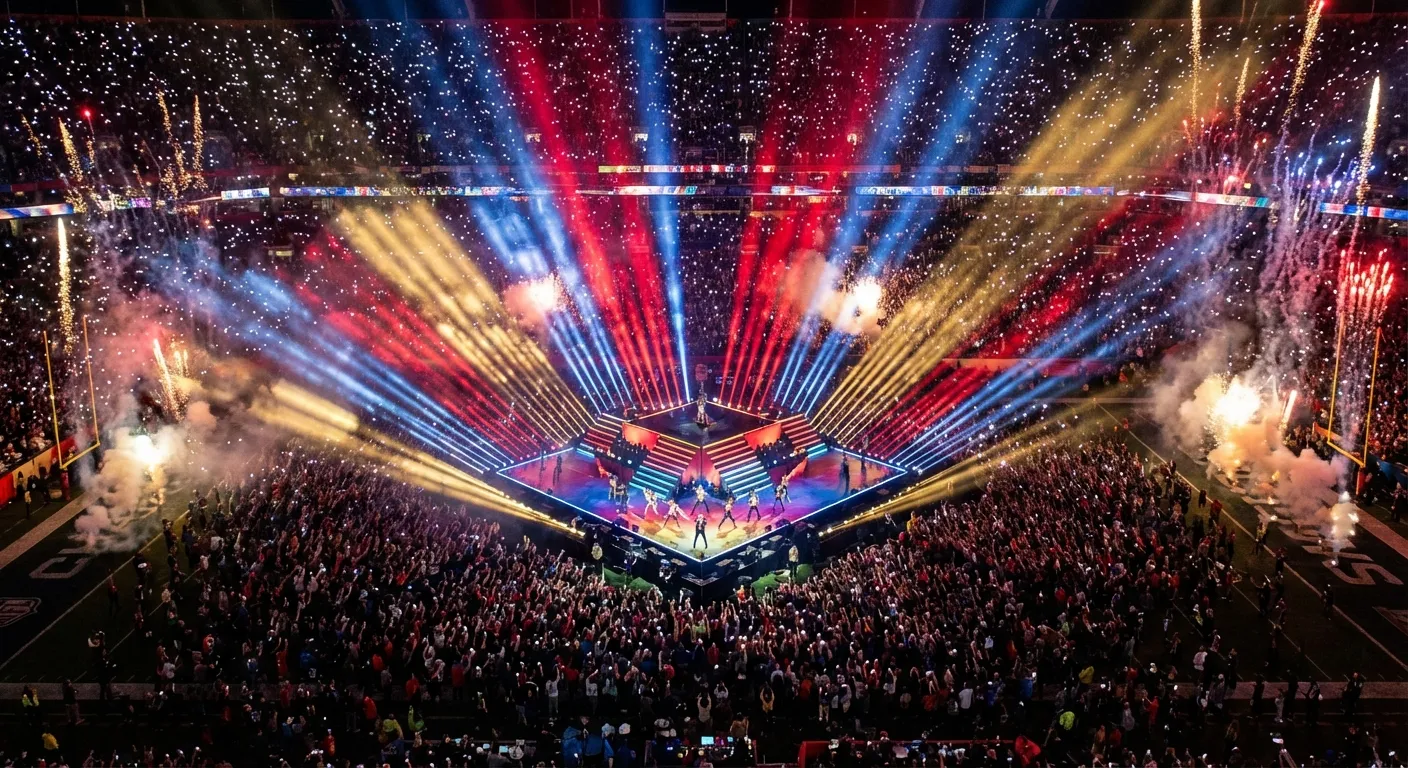
The album's companion tour, announced simultaneously with the release, signals another shift in how elite pop acts approach live performance. Rather than a traditional world tour hitting dozens of cities over 12 to 18 months, Styles is doing a seven-city global residency. The U.S. component is 30 shows at Madison Square Garden between August 26 and October 31, 2026, a commitment that will generate an estimated $150 million in gross revenue based on comparable residency pricing.
The residency model, popularized by acts like Adele in Las Vegas and Beyonce's "Renaissance" run, represents a fundamental rethinking of the tour economics. Traditional tours require massive logistics, with production costs, crew transportation, and venue setup eating into margins that get thinner as costs rise. Residencies concentrate those costs, allowing for more elaborate productions at higher ticket prices, while creating a destination-event dynamic that drives secondary spending on hotels, restaurants, and merchandise.
For Styles, the Madison Square Garden residency also serves a strategic purpose. It positions him as a New York cultural institution for three months, generating sustained media coverage that a single-night arena stop cannot match. Each show becomes a potential celebrity-sighting event, and the cumulative effect of 30 performances builds a cultural moment that extends well beyond the music itself.
The Conversation
Harry Styles's return tells us more about the state of the music industry than it does about Harry Styles. The album is strong, the critical reception is favorable, and the commercial performance will almost certainly be massive. But the real story is the operating model. The disappearance cycle has become the dominant strategy for pop's biggest names because it solves a problem that the streaming economy created: how do you make a piece of content feel special when every platform is designed to make content disposable?
The answer, proven again this Friday, is to withhold. The key number to track is first-week streaming totals. If "Kiss All the Time. Disco, Occasionally." surpasses 300 million first-week streams on Spotify, which industry projections suggest is likely, it will confirm that the disappearance cycle is not just an artistic choice but a commercial strategy that outperforms the constant-release model that streaming platforms nominally incentivize. That outcome would accelerate a trend already underway: the bifurcation of the music industry into a small tier of superstar acts who can afford to disappear and a vast underclass of artists who cannot. The nostalgia cycles reshaping Gen Z's cultural consumption suggest audiences are increasingly drawn to scarcity over saturation, and Styles has bet his career on it.
Sources
- Rolling Stone: Harry Styles' 'Kiss All the Time. Disco, Occasionally.' Review
- Variety: Harry Styles' New Album 'Kiss All the Time. Disco, Occasionally.' Sets March Release Date
- Hollywood Reporter: Track-By-Track: Harry Styles' Kiss All the Time. Disco, Occasionally
- Consequence of Sound: On Kiss All the Time, Harry Styles Is at His Best When He's Crashing Out