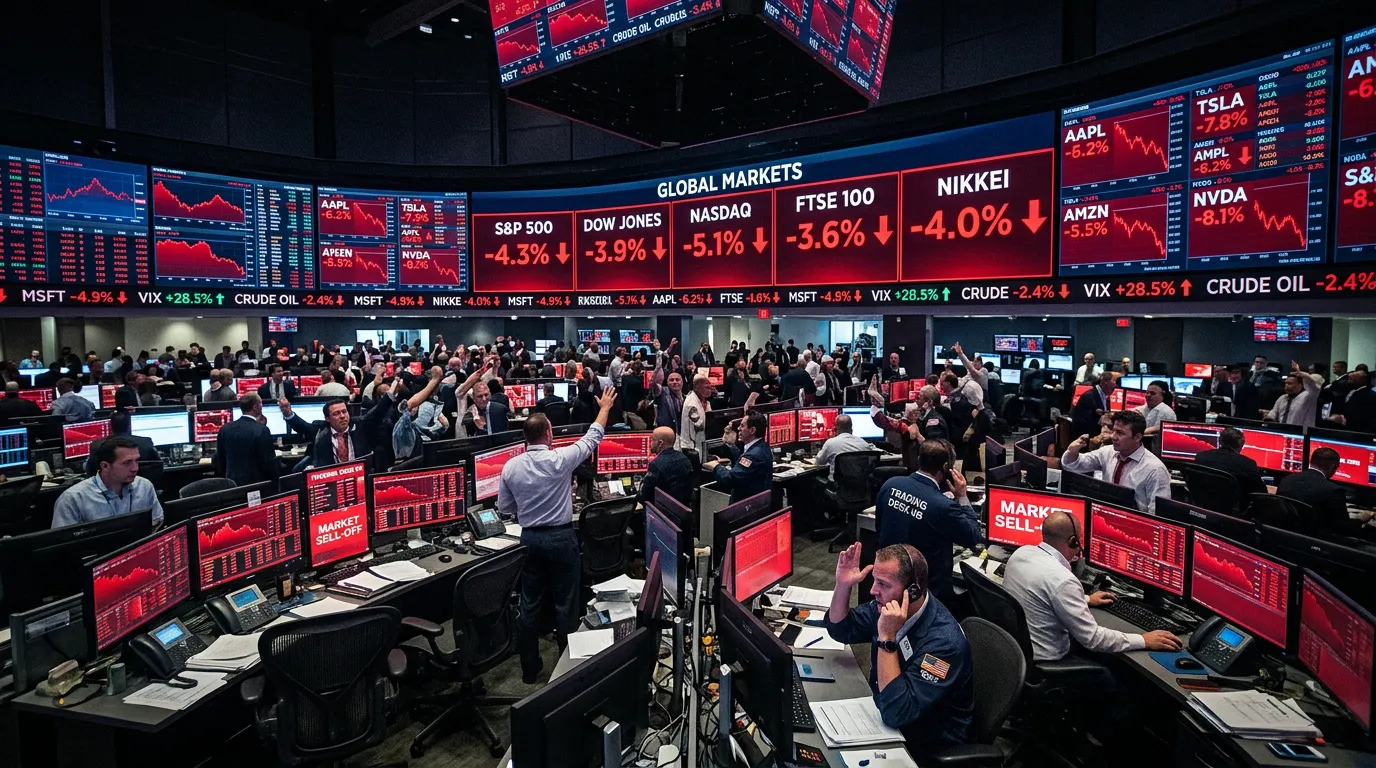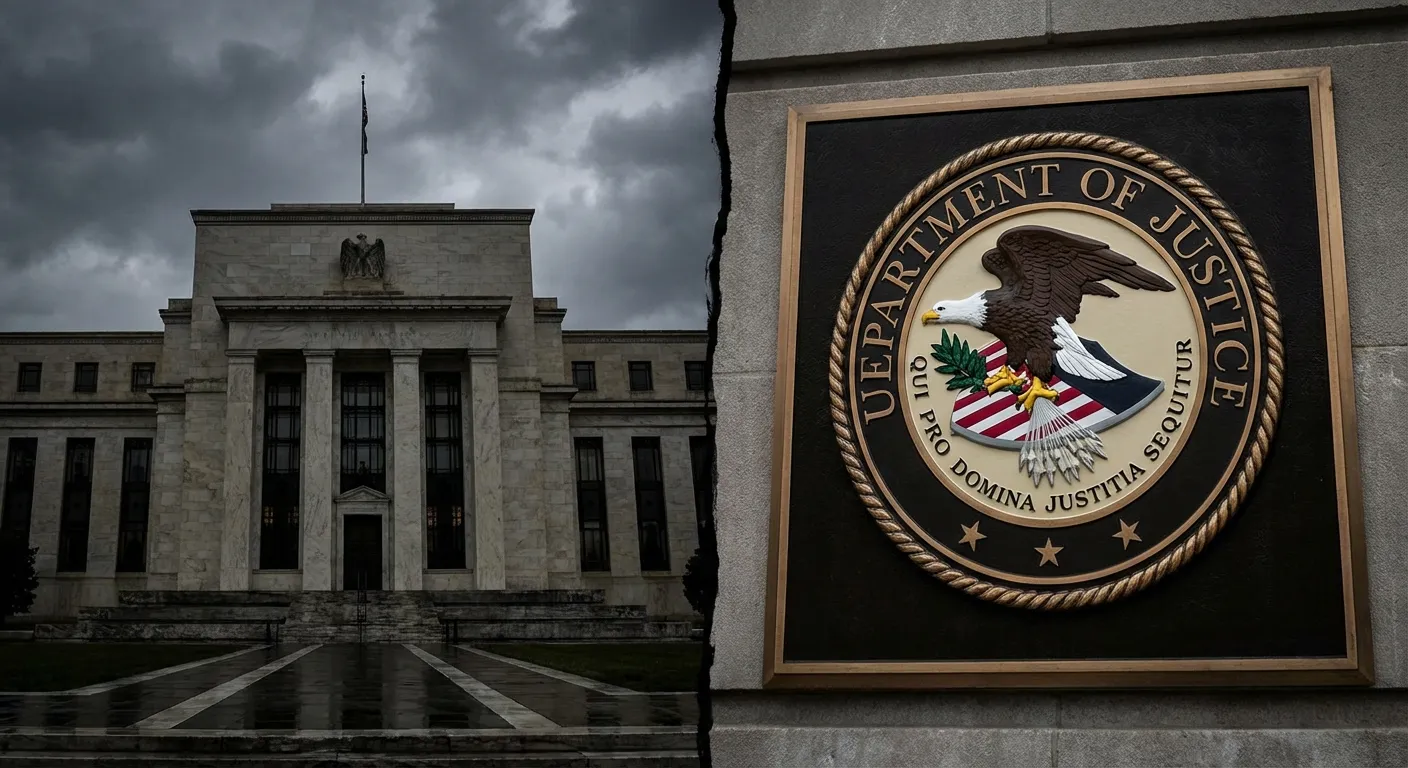
The Justice Department has opened a criminal investigation into Federal Reserve Chair Jerome Powell, triggering what former Fed officials are calling the most serious threat to central bank independence in modern American history. The probe ostensibly centers on cost overruns in a headquarters renovation project, but Powell himself has drawn a direct line between the investigation and his refusal to lower interest rates on the president's timetable.
Three former Fed chairs, Janet Yellen, Ben Bernanke, and Alan Greenspan, jointly condemned the investigation. A bipartisan group of former Treasury secretaries described it as an "unprecedented attempt to use prosecutorial attacks to undermine" the Federal Reserve's independence. The reaction is not proportional to a building renovation dispute. It is proportional to the prospect that criminal prosecution has become a tool for pressuring monetary policy.
What Triggered the Investigation
Federal prosecutors subpoenaed the Federal Reserve on Friday with the threat of criminal indictment, Powell revealed in a video statement Sunday. The investigation focuses on his testimony before the Senate about the renovation of Federal Reserve office buildings, which exceeded initial cost estimates of $2.5 billion.
The probe originated from a referral by Rep. Anna Paulina Luna (R-Fla.), who alleged Powell committed perjury and made false statements to federal officials in connection with his renovation testimony. The Justice Department escalated that referral into a full criminal investigation.
Powell responded with unusual directness for a Fed chair. "No one, certainly not the chair of the Federal Reserve, is above the law," he said. "But this unprecedented action should be seen in the broader context of the administration's threats and ongoing pressure." He added: "The threat of criminal charges is a consequence of the Federal Reserve setting interest rates based on our best assessment of what will serve the public, rather than following the preferences of the president."
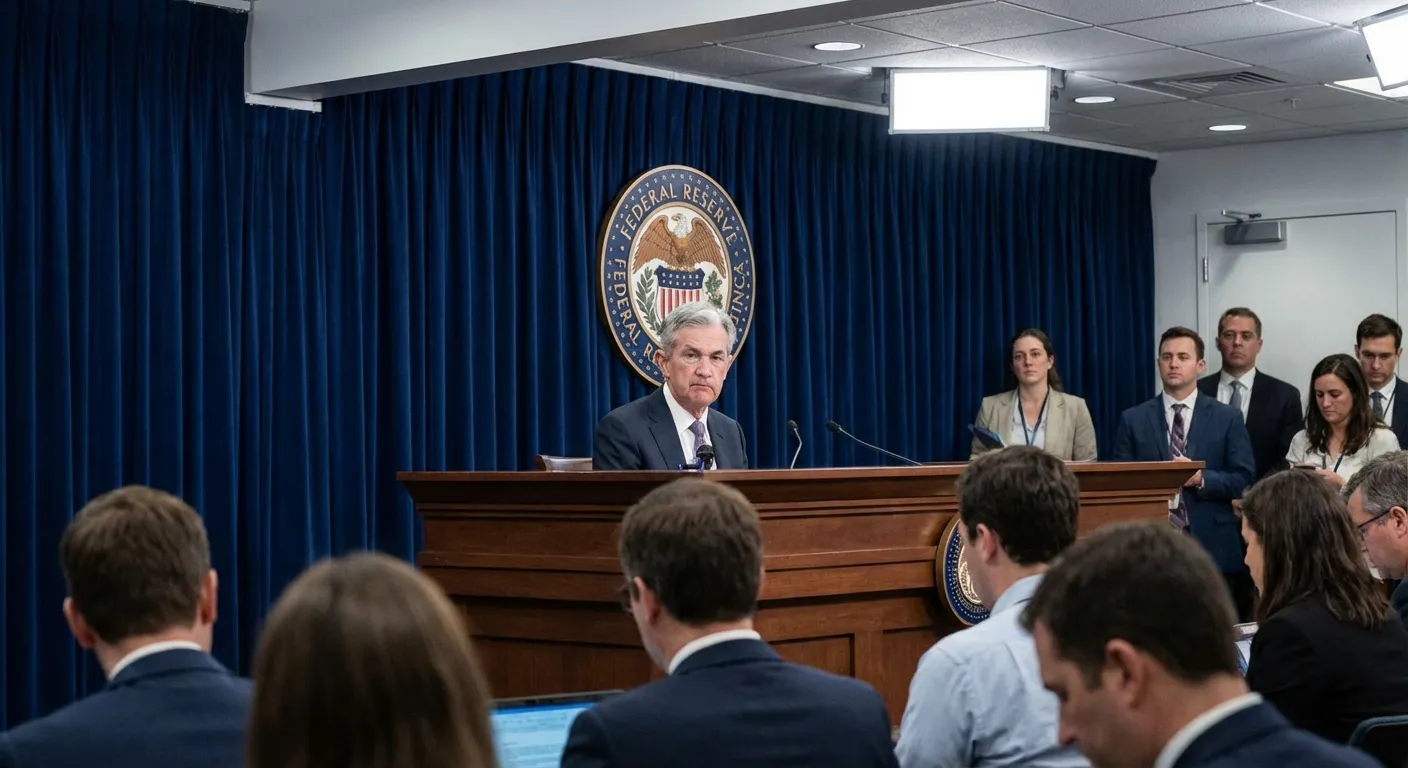
The legal merits appear thin. Building renovation cost overruns are common across federal government projects. Proving perjury requires demonstrating intentional deception rather than mere inaccuracy, and legal experts have expressed broad skepticism that any case could be built from testimony about construction budgets. The gap between the stated justification and the scale of the institutional response suggests that the renovation is a pretext, exactly as Powell claims.
Why This Crosses a Line Previous Presidents Didn't
Every modern president has pressured the Fed, and understanding that history clarifies why this case is different. President Lyndon Johnson physically intimidated Fed Chair William McChesney Martin in 1965, reportedly shoving him against a wall at the LBJ Ranch after a rate increase. Richard Nixon successfully pressured Fed Chair Arthur Burns to keep monetary policy loose before the 1972 election, contributing to the stagflation crisis that devastated the economy for a decade. During his first term, President Trump publicly attacked Powell hundreds of times, calling him "clueless" and suggesting he was a bigger threat to the economy than China.
All of that was ugly, but it operated within the boundaries of political pressure. Presidents criticized, cajoled, and threatened, but they did not deploy the criminal justice system. The distinction matters enormously. A president who tweets criticism of the Fed chair creates discomfort. A president whose Justice Department opens a criminal investigation creates a credible threat of imprisonment. The chilling effect on future Fed chairs is categorically different.
The Burns-Nixon episode is the most instructive parallel. Burns accommodated Nixon's pressure, keeping rates low before the 1972 election. The result was the Great Inflation of the 1970s, which took Paul Volcker's painful rate hikes to 20% in 1981 to finally break. Economists estimate the total cost of the Burns-era accommodation at trillions of dollars in lost output and destroyed savings. That outcome occurred when the pressure was merely political. The economic consequences of a Fed that sets rates to avoid criminal prosecution would be substantially worse.
What Economics Predicts About Politicized Central Banks
The question of what happens when central banks lose independence is not theoretical. Academic research and international precedent provide a clear, consistent answer: inflation rises, borrowing costs increase, and economic stability deteriorates.
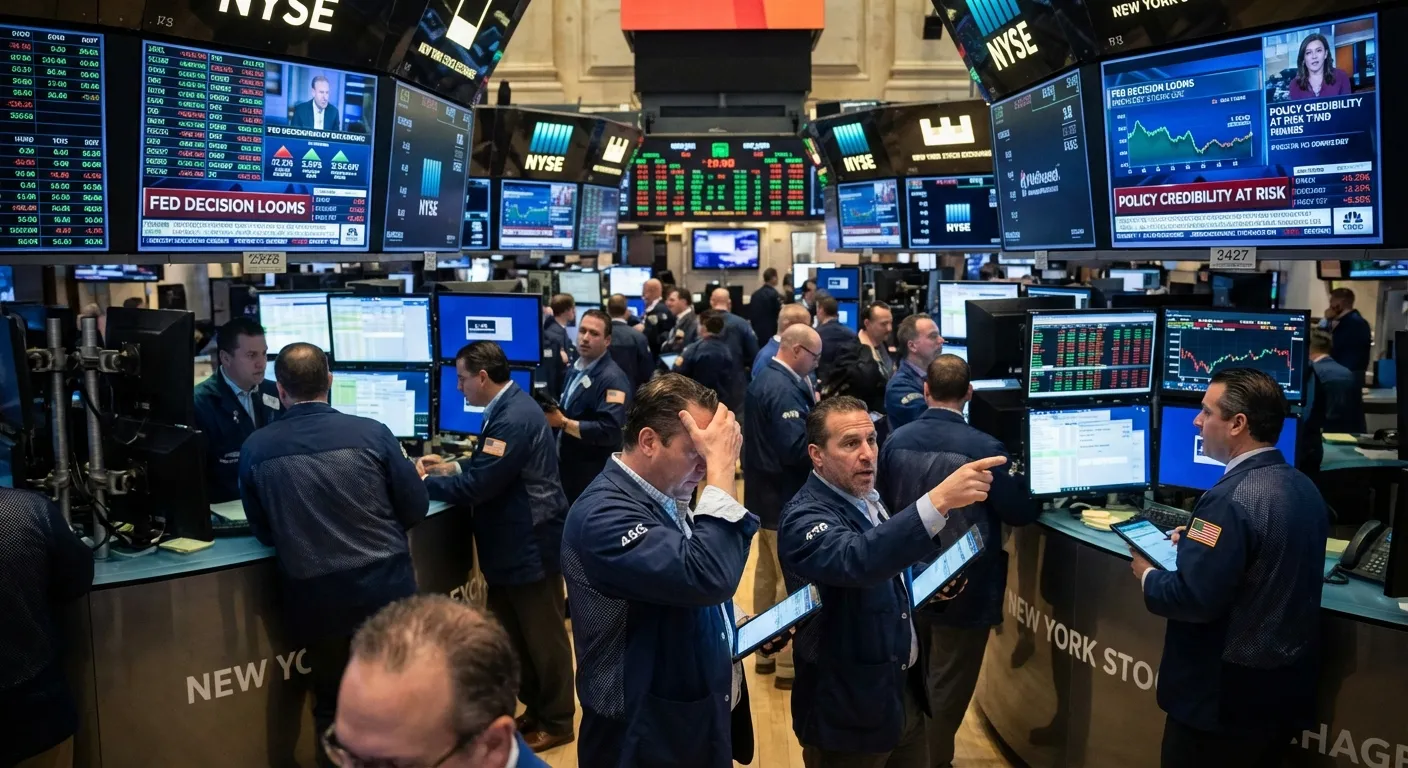
A landmark 1993 study by Alberto Alesina and Lawrence Summers established the empirical relationship: countries with more independent central banks consistently achieve lower and more stable inflation without sacrificing economic growth. The finding has been replicated across dozens of studies and forms the intellectual foundation for central bank independence worldwide.
The contemporary examples reinforce the point. Turkey's President Erdogan fired three central bank governors between 2019 and 2021 for refusing to lower rates. Turkish inflation subsequently exceeded 85%. Argentina's history of political interference in its central bank has produced recurring currency crises and inflation that exceeded 200% in 2024. These are extreme cases, but they illustrate the mechanism: when markets believe monetary policy serves political rather than economic objectives, they demand higher interest rates to compensate for the added risk.
Brett House, an economics professor at Columbia Business School, warned that "the assault on the Fed's independence can only mean higher rates, greater volatility, and uncertainty for consumers in the years ahead." Krishna Guha, vice chairman at Evercore ISI, called the probe "a deeply disturbing development which came out of the blue after a period in which tensions between Trump and the Fed seemed to be contained."
The Political Fracture
The investigation has created an unusual split within Republican ranks. Senator Thom Tillis (R-N.C.), who serves on the Senate Banking Committee, called the probe "another example of amateur hour" and announced he would block confirmation of any Fed nominees until the matter is resolved. Senator John Kennedy (R-La.), another Banking Committee member, told reporters he would be "stunned" if Powell "did anything wrong." Senator Lisa Murkowski (R-Alaska) went further, saying "the administration's investigation is nothing more than an attempt at coercion" and calling for Congress to investigate the Justice Department.
Even Treasury Secretary Scott Bessent has privately expressed unhappiness with the investigation, according to CNN reporting, though he has not commented publicly.
The White House has maintained distance from the probe. President Trump told NBC News he didn't have knowledge of the investigation, adding "he's certainly not very good at the Fed, and he's not very good at building buildings." Press Secretary Karoline Leavitt said Trump did not direct the investigation but "has every right to criticize the Fed chair." The denial of direct involvement, combined with the president's history of publicly demanding lower rates, has not quieted skeptics. The probe adds to a broader pattern of the administration's testing the boundaries of institutional independence across multiple fronts.
The Constitutional Collision
Powell's term as Fed chair runs through May 2026. The investigation creates three specific pressure points on a defined timeline. First, Tillis's threat to block nominees could leave the Fed without confirmed leadership if Powell steps down or the administration attempts to replace him before his term expires. Second, the investigation itself will either produce charges or be quietly dropped, and the administration faces reputational cost either way: charges that fail in court would validate Powell's retaliation claim, while dropping the probe would look like a retreat. Third, the Fed's next rate decision on January 29 will be scrutinized as a test of whether the investigation has influenced policy deliberations.
The most likely outcome is that the legal threat dissipates without charges. The perjury case appears weak, and pursuing it to trial would guarantee exactly the kind of public examination of the administration's motives that the White House wants to avoid. But the damage to institutional norms may already be done. Future Fed chairs will know that criminal investigation is now in the toolkit of presidential pressure. Whether that knowledge subtly shapes their rate decisions, even unconsciously, is the kind of harm that cannot be measured but is very real. The Burns precedent suggests that the costs of even partially compromised central bank independence are measured in decades, not news cycles.
Sources
- CNBC: Fed Chair Powell says he's under criminal investigation
- CNN: Federal prosecutors open criminal investigation into the Fed and the Fed chair
- ABC News: DOJ launches criminal investigation into Fed Chair Jerome Powell
- Federal Reserve: Statement from Chair Jerome H. Powell
- CNN: Bessent unhappy with criminal investigation of Fed Chair Jerome Powell