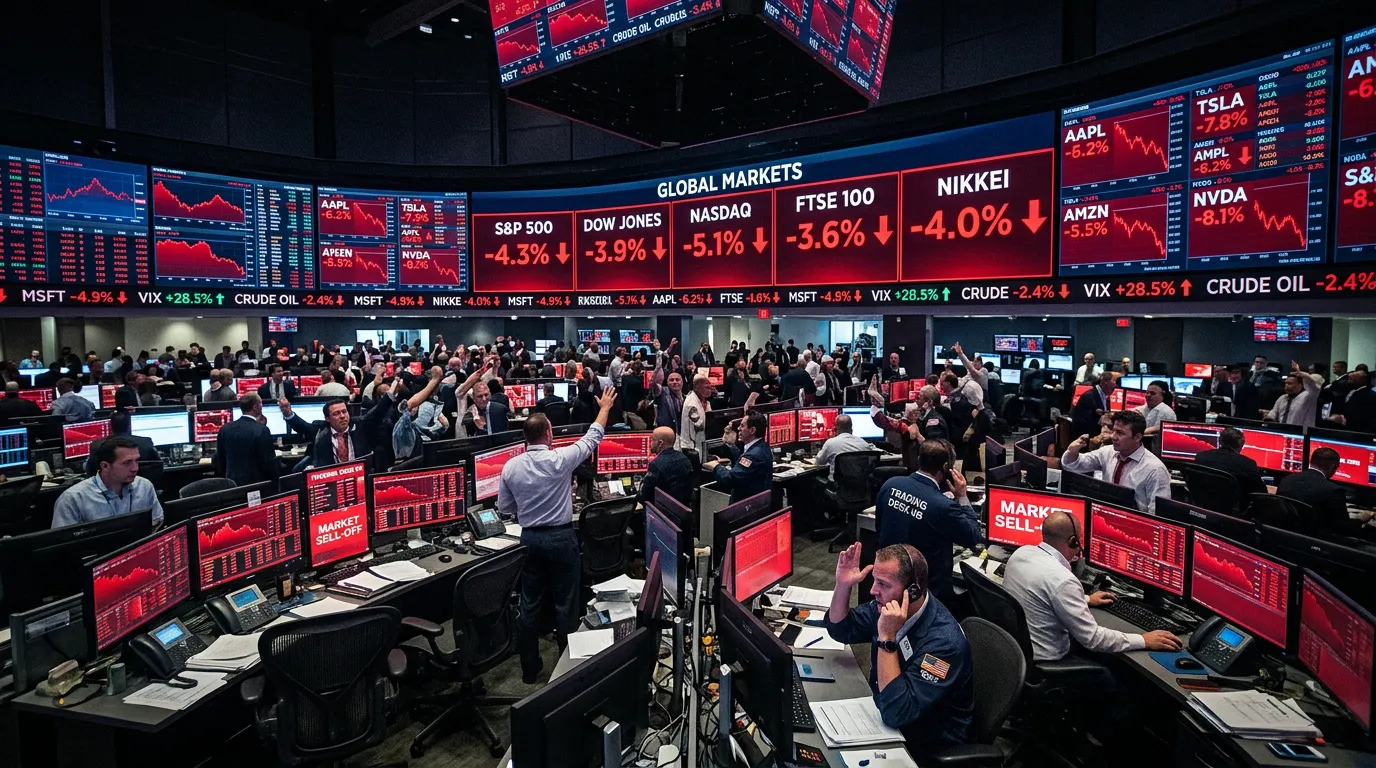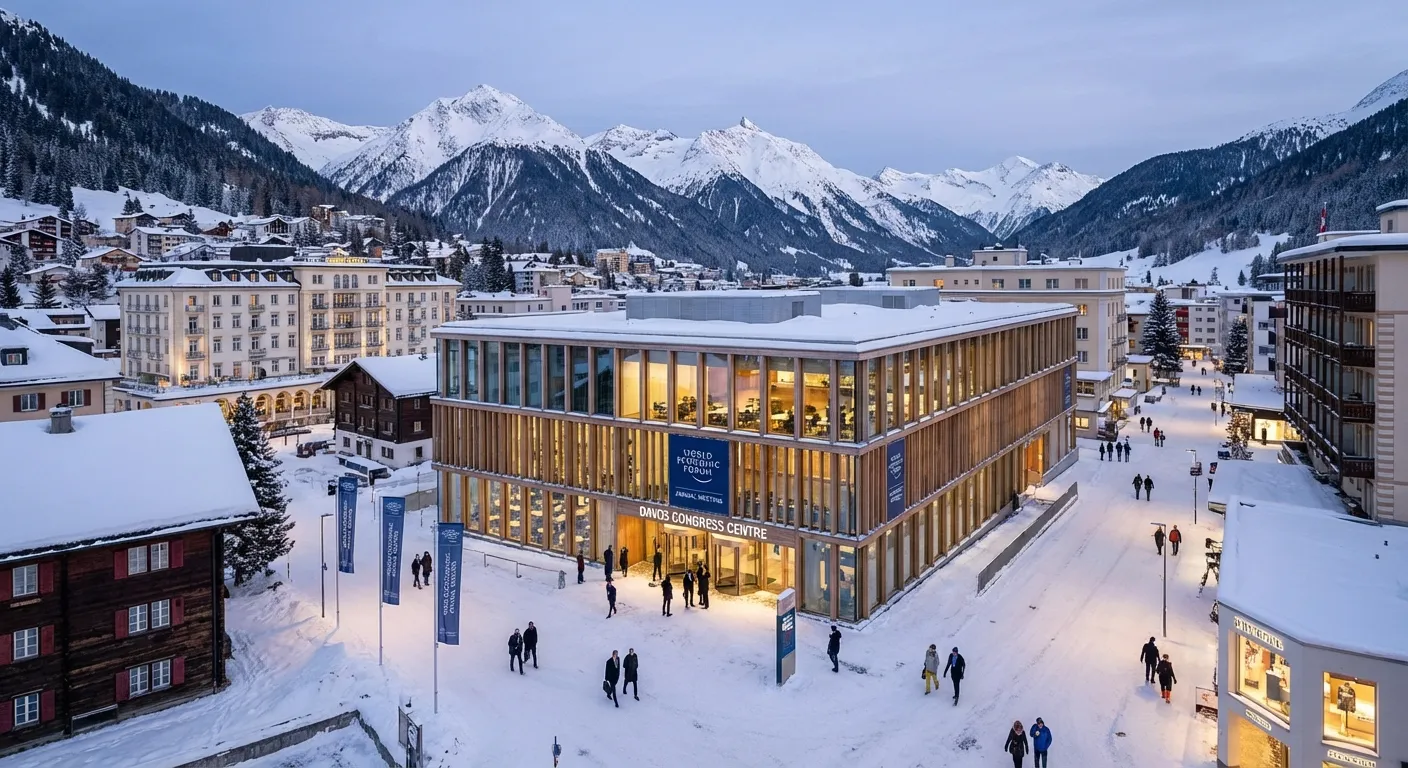
The 56th World Economic Forum brought close to 3,000 leaders from over 130 countries to Davos, Switzerland, under the theme "A Spirit of Dialogue." The name turned out to be aspirational. At a VIP dinner hosted by BlackRock CEO Larry Fink, U.S. Commerce Secretary Howard Lutnick belittled European competitiveness so aggressively that ECB President Christine Lagarde stood up and walked out. The hosts called off the event before dessert. That single episode captured the real mood of Davos 2026 more precisely than any panel discussion: the old diplomatic rituals are breaking down, and the people who built the postwar economic order are no longer confident they can hold it together.
This year's gathering drew a record 400 political leaders, including nearly 65 heads of state, and 850 CEOs and chairpersons. Those numbers tell a story of their own. When the global system feels stable, Davos attendance is high but casual. When leaders show up in record numbers, it signals anxiety, not confidence. The question at the center of Davos 2026 was whether the institutions that have governed global trade and cooperation since the 1940s can survive a world where their most powerful member is actively dismantling them.
The Vocabulary of Decline
The language at Davos has shifted in ways that matter for corporate strategy. Five years ago, the dominant vocabulary revolved around "growth," "scaling," and "market access." In 2026, the preferred terms were "resilience," "strategic autonomy," and "diversification." This is not a superficial branding exercise. When executives replace "growth" with "resilience" in their investor presentations, they are signaling a fundamental reorientation of capital allocation. Resources that once flowed toward market expansion are now flowing toward supply chain redundancy, dual-sourcing arrangements, and manufacturing flexibility.
J.P. Morgan's analysis of the forum identified this shift as structural rather than cyclical: businesses are decentralizing production, diversifying supplier bases, and building modular manufacturing capabilities designed to be reconfigured quickly as trade conditions change. The firms that adapted fastest to this reality were, notably, the ones already burned by COVID-era supply chain failures. Companies that experienced severe disruptions in 2020 and 2021 had already begun building redundancy by 2023. Davos 2026 marked the moment when that defensive posture became the mainstream corporate consensus rather than a minority position.
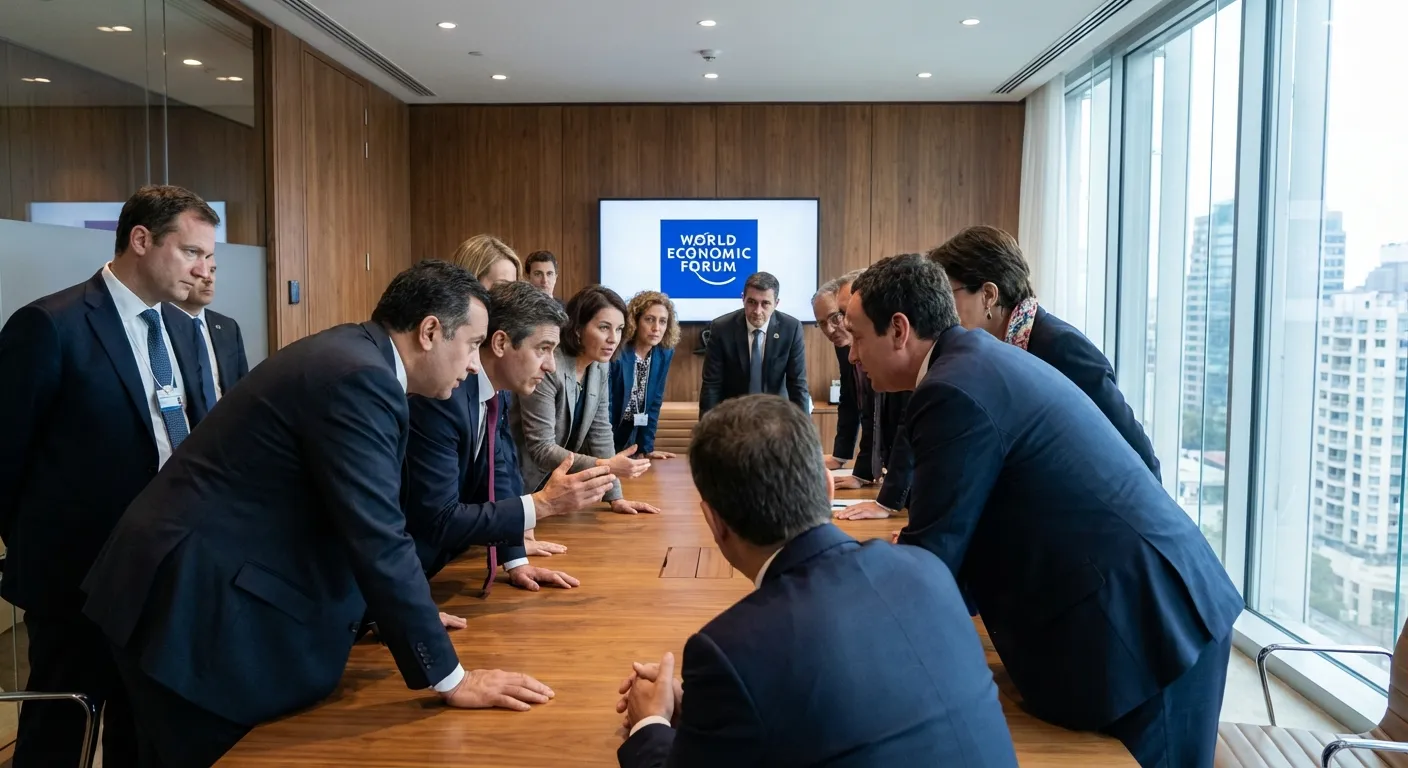
The European response to this shift was unusually concrete. European Commission President Ursula von der Leyen used her Davos address to announce that the EU-Mercosur trade agreement had been signed, creating one of the world's largest free trade areas covering approximately 700 million consumers across 31 countries. She then hinted at what she called the "mother of all deals" with India. That deal was formally concluded on January 27, creating a free trade zone of approximately two billion people. Under the agreement, India will progressively eliminate or reduce tariffs on 96.6% of EU exports, including duties on cars that currently stand at 110%. The EU projects the deal will double its goods exports to India by 2032.
These are not routine trade agreements. They represent Europe's deliberate strategy to reduce dependence on American markets at a speed that would have been unthinkable even two years ago.
What "80 Years of Disruption" Actually Means
WTO Director-General Ngozi Okonjo-Iweala's warning that the trading system faces "the greatest disruptions in 80 years" received widespread coverage, but most analysis stopped at quoting the phrase. The historical reference deserves closer examination, because the parallel is both instructive and alarming.
Eighty years ago, in 1946, the global trading system had effectively collapsed. The protectionist spiral of the 1930s, beginning with the Smoot-Hawley Tariff Act and cascading through retaliatory measures worldwide, had contributed to a contraction of global trade by roughly 65% between 1929 and 1934. The response was a decade of institution-building: the Bretton Woods Conference in 1944 established the IMF and World Bank, and the General Agreement on Tariffs and Trade in 1947 created the framework that would govern international commerce for the next half-century.
When Okonjo-Iweala invokes that period, she is not merely reaching for a dramatic comparison. She is describing a situation in which the existing trade architecture may need to be rebuilt from its foundations. Her specific data point reinforces the urgency: 72% of global trade still takes place under WTO rules, but that percentage has been declining as bilateral and regional agreements proliferate and as major economies increasingly invoke "national security" exceptions to bypass multilateral frameworks. Businesses at Davos reported growing uncertainty about how "national security" is being applied to economic policy and pressed for clearer definitions of its scope.
The 1940s parallel predicts a specific trajectory. When the old system collapsed, it took roughly a decade to build a new one. The architects of Bretton Woods and GATT had a significant advantage: one dominant economic power (the United States) that was willing to underwrite the new system and absorb short-term costs for long-term institutional stability. The current disruption lacks that anchor. The United States is now the primary source of institutional instability rather than its guarantor, and no other power, not China, not the EU, has the combination of economic scale and political willingness to take on that role alone.
The Power Map Is Shifting
The attendance patterns at Davos 2026 reveal a geopolitical rebalancing that the official agenda barely acknowledged. China sent Vice-Premier He Lifeng rather than Xi Jinping, a calibrated signal: present but not agenda-setting. He Lifeng used his address to advocate for reforming multilateral institutions, including the WTO and IMF, to increase Global South representation. This framing positions China as the champion of institutional reform rather than institutional disruption, a contrast with Washington's posture that Beijing is cultivating deliberately.
India's Prime Minister Narendra Modi and Brazil's President Lula da Silva were both notably absent, despite their countries' growing economic importance. Both are investing their diplomatic capital in alternative platforms: BRICS summits, regional development banks, and bilateral investment mechanisms that operate outside Western-designed institutions. African representation, despite the continent holding nearly 18% of the world's population, remained fragmented and symbolic, with priorities like debt relief and industrial financing staying marginal in the high-level discussions.
The most revealing comparison is between this year's attendee composition and the forum five years ago. In 2021, the conversation was dominated by U.S. and European voices debating pandemic recovery. In 2026, the most consequential new presences were Gulf state sovereign wealth funds, Southeast Asian technology executives, and Latin American commodity exporters, groups whose influence has grown as the old bipolar framework fractures into something more complex. Finnish President Alexander Stubb put the scale of the transformation bluntly: "This is the 1918, 1945 or 1989 moment of our generation." He outlined two possible futures, a return to a 19th-century multipolar world built on transactional deals, or a reformed multilateral system that gives the Global South genuine agency. He warned that "now we're somewhere in between those two."

AI Meets Its Infrastructure Ceiling
Artificial intelligence dominated the agenda for the third consecutive year, but the conversation has undergone a decisive shift. In 2024, the focus was on capabilities (what AI could do). In 2025, it was on adoption (how to deploy it). In 2026, the conversation hit a hard physical constraint: energy.
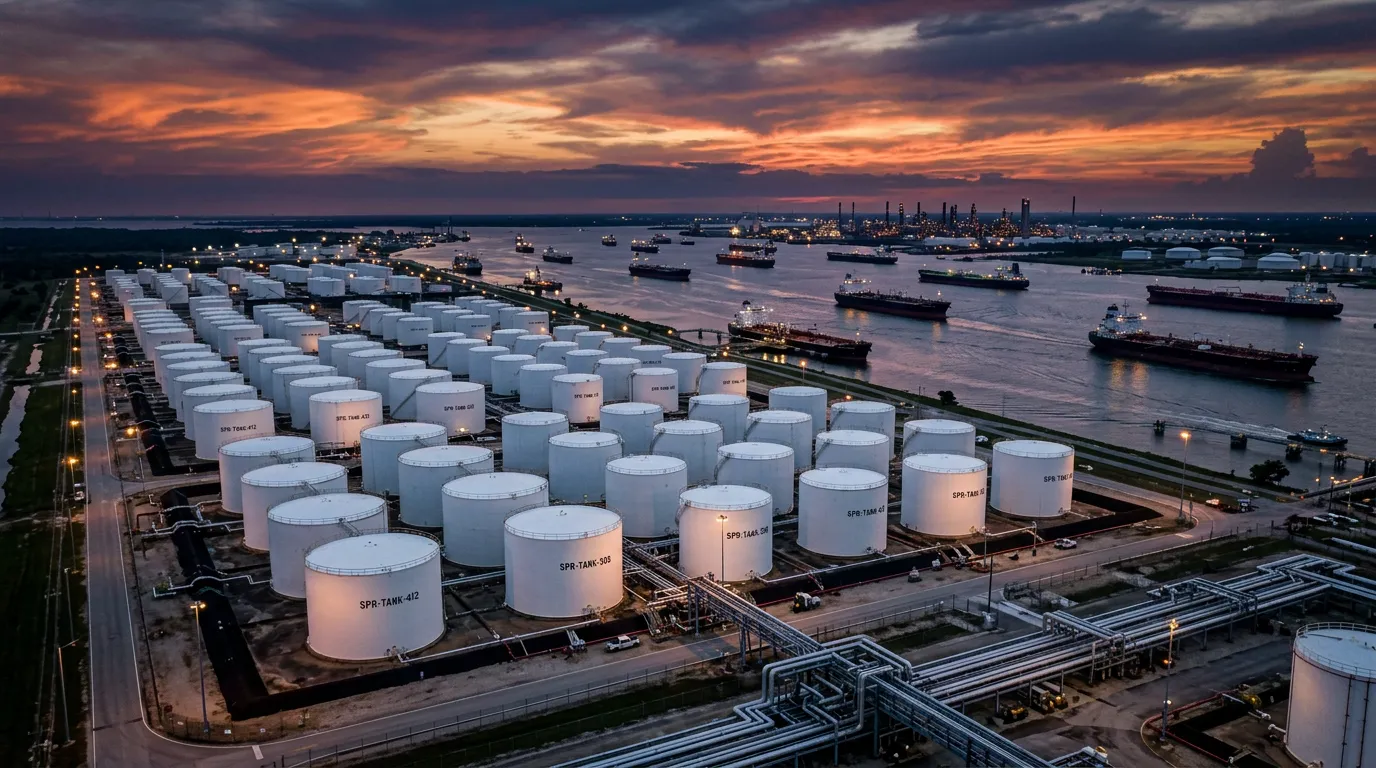
Schneider Electric CEO Olivier Blum captured the paradox directly: "AI is the digital engine of growth, but it is also a massive consumer of one of the world's most in-demand resources." Global power consumption by data centers is projected to grow from roughly 55 gigawatts to 84 gigawatts within two years, according to Goldman Sachs research. That 53% increase is colliding with grid infrastructure that was not built for this kind of concentrated demand.
The response is reshaping energy policy in real time. Trump told the Davos audience that the U.S. is going "heavy into nuclear," describing accelerated approval processes for nuclear power plants to serve data centers. Meta's nuclear power agreements for AI infrastructure reflect how companies are bypassing traditional energy markets entirely, contracting directly with power generators to secure dedicated supply. Microsoft CEO Satya Nadella argued that energy infrastructure costs, not chip availability, will determine who wins the AI race.
J.P. Morgan Asset Management CEO George Gatch provided a concrete example of AI's current trajectory: his firm has already replaced external proxy advisory services with a proprietary AI tool called Proxy IQ, which aggregates and analyzes data from 3,000 company annual meetings. J.P. Morgan is the first major investment firm to eliminate reliance on proxy advisory firms entirely. That shift from experimental to operational is the pattern playing out across industries, but the energy constraint is becoming the binding limit on how fast it can scale.
The Wealth Disparity Reckoning
Lagarde's walkout from the Lutnick dinner grabbed headlines, but her substantive warning at Davos carried more weight. "We are heading for real trouble," she said, "if we don't pay attention to the distribution of wealth and the disparity that is getting deeper and bigger." Her prescription was specific: "We should not be talking about rupture. We should be talking about alternatives."
Oxfam's annual report, released to coincide with the forum, provided the data behind Lagarde's warning. Global billionaire wealth hit a record $18.3 trillion in 2025, with the total number of billionaires surpassing 3,000 for the first time. Their collective wealth surged by $2.5 trillion in a single year, a figure roughly equivalent to the total wealth held by the bottom half of humanity, approximately 4.1 billion people. Oxfam also found that billionaires are over 4,000 times more likely to hold political office than ordinary citizens.
These numbers explain why Canadian Prime Minister Mark Carney received a rare standing ovation for his Davos address, in which he declared a "rupture in the world order" and argued that middle powers "are not powerless" and "have the capacity to build a new order." Carney's speech was notable for its directness: he announced plans to diversify Canada's trade relationships away from dependence on the United States, a stance he reinforced days later when he told reporters, "I meant what I said in Davos." The speech drew a sharp response from Trump, who threatened 100% tariffs on Canada.
The confrontation between Carney and Trump, like the Lagarde-Lutnick dinner episode, illustrates a dynamic that previous Davos gatherings managed to paper over. The forum's traditional function was to maintain a veneer of consensus among global elites. In 2026, the disagreements were too fundamental to paper over, and several participants stopped trying.
The Outlook
Davos 2026 produced three concrete developments that will shape the global economy for the rest of the decade. First, Europe has committed to a strategic decoupling from dependence on American markets, backed by signed trade agreements with Mercosur and India that collectively cover nearly 2.7 billion consumers. Second, the energy constraint on AI scaling is now the central strategic concern for technology companies, and the response (direct nuclear contracting, accelerated permitting) is creating a parallel energy infrastructure that will reshape power markets. Third, the vocabulary shift from "growth" to "resilience" has been institutionalized across corporate boardrooms, which means capital expenditure patterns will continue prioritizing redundancy over efficiency for the foreseeable future.
The key indicator to track is the EU-India trade agreement's implementation timeline. If tariff reductions on the 96.6% of EU export categories proceed on schedule through 2027, it will confirm that the European diversification strategy is real and not merely rhetorical. If the agreement stalls in ratification (as the EU-Mercosur deal nearly did for over two decades), the window for building alternative trade architecture before the current system fragments further will narrow considerably. The coming 18 months will determine whether Davos 2026 marked the beginning of a deliberate institutional reconstruction or simply the point at which the cracks became too visible to ignore.