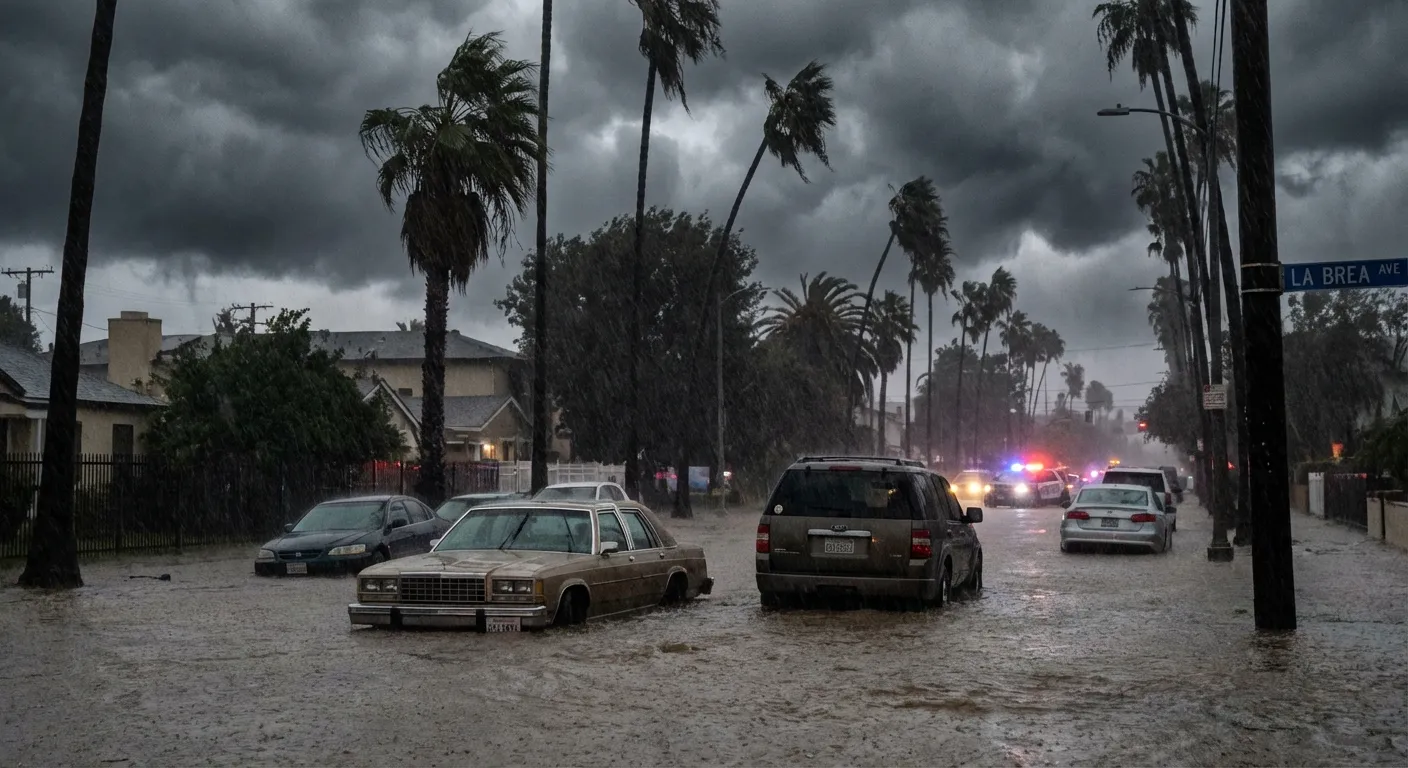
Los Angeles County's storm drain system was largely built between the 1930s and 1960s, engineered around a simple assumption: that Southern California's heaviest rainfall events would top out at roughly two inches per hour in extreme cases, with annual totals averaging around 14 inches. On Christmas Eve, six inches fell on downtown Los Angeles in 24 hours, and peak intensities in the foothills exceeded three inches per hour. The system did not fail because it was poorly maintained. It failed because it was designed for a climate that no longer exists.
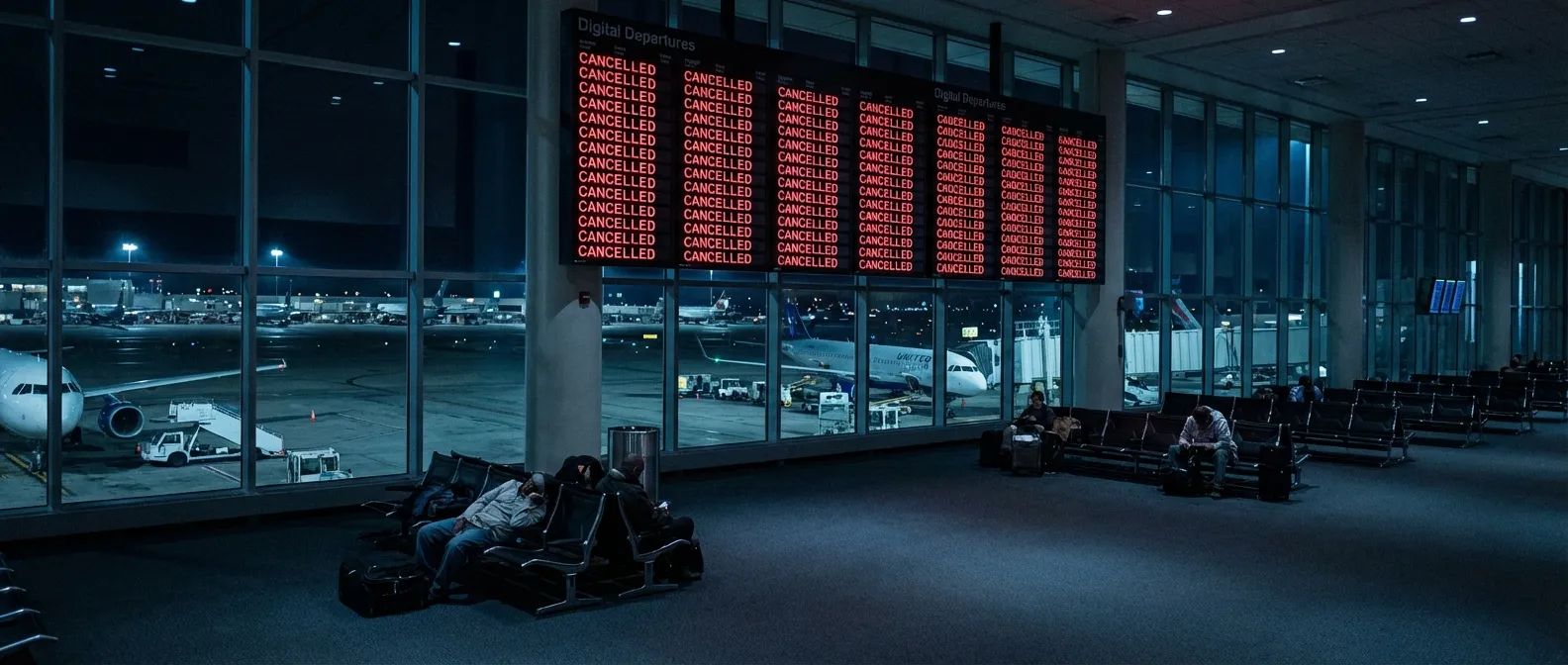
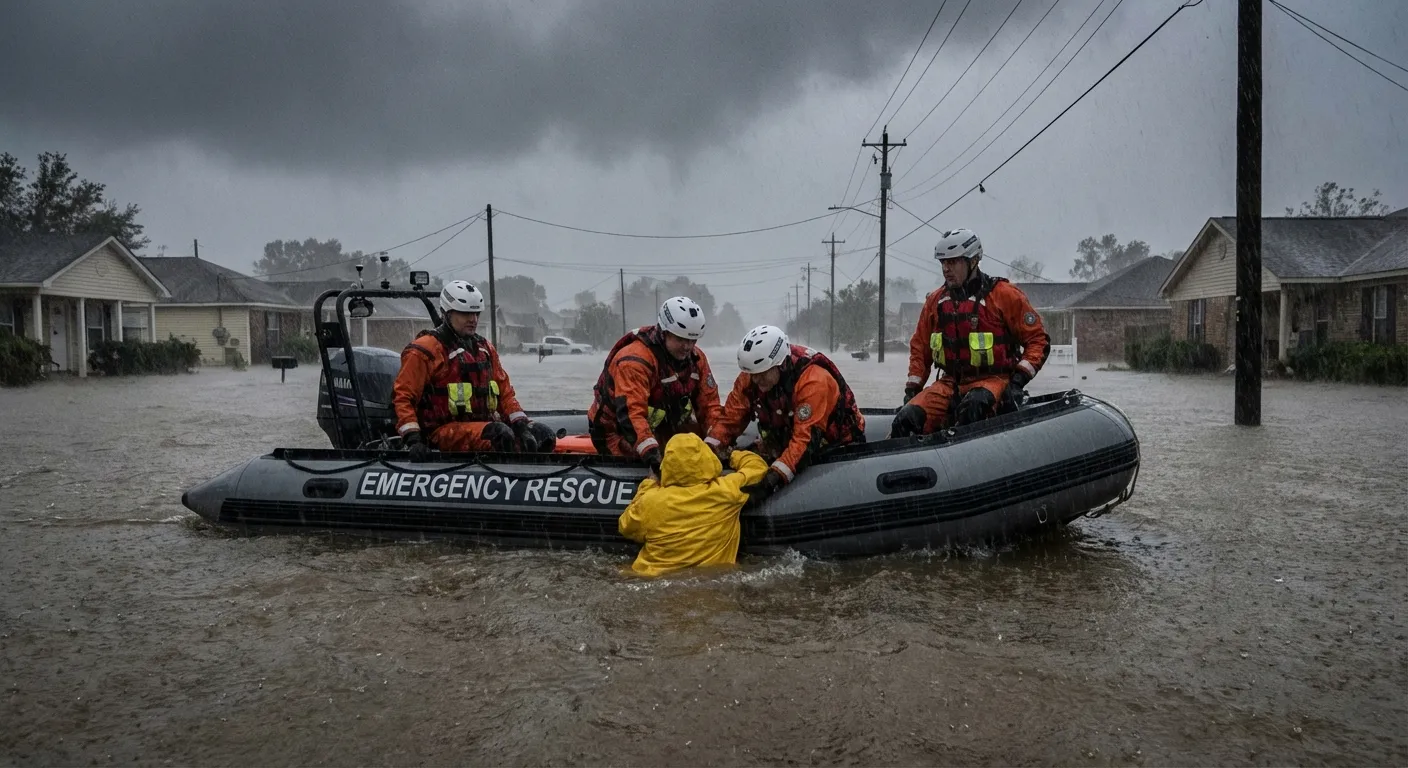
This is the core problem that the Christmas Eve atmospheric river exposed. The storm itself was severe, ranking among the most intense holiday weather events in California's modern record. It carried an enormous plume of tropical moisture from the Central Pacific, cancelled hundreds of flights at LAX, closed portions of the 101 and 405 freeways, triggered mudslides through fire-scarred hillside communities, and left more than 200,000 households without power. Search and rescue teams worked through the night pulling stranded motorists from floodwaters. Four people died. But the destruction was not simply a product of extreme weather. It was a product of extreme weather meeting infrastructure that was built for a different era, in a state where millions of homeowners lack the insurance coverage they will need to recover.
Infrastructure Built for a Climate That No Longer Exists
The concrete channels, storm drains, and flood control basins that make up Los Angeles County's stormwater system represent one of the largest urban drainage networks in the world. The U.S. Army Corps of Engineers channelized the Los Angeles River in the 1930s and 1940s after a series of devastating floods. The broader storm drain network expanded through the postwar decades, with most of the system in place by the mid-1960s. Design standards were based on historical rainfall data from the early 20th century, calibrated for what engineers called a "100-year storm," a statistical concept meaning a storm with a 1 percent chance of occurring in any given year.
The problem is that the 100-year storm of 1950 is no longer the 100-year storm of today. As global temperatures have risen, the atmosphere holds approximately 7 percent more moisture per degree Celsius of warming. A 2023 study published in Science Advances found that warming has already increased precipitation rates in the strongest atmospheric rivers by roughly 10 percent compared to pre-industrial baselines. Events that the original engineers classified as once-in-a-century are now occurring with far greater frequency, and the peak intensities are higher than anything the system was designed to absorb.
Marty Ralph, director of the Center for Western Weather and Water Extremes at UC San Diego's Scripps Institution of Oceanography, has spent decades studying these storms. Ralph told NPR that the Christmas Eve event fits a pattern climate models have long predicted: "We're seeing the strongest storms deliver more water in shorter periods, which is exactly what produces flooding even in areas with good infrastructure. The problem isn't that we get atmospheric rivers. The problem is that the biggest ones are getting bigger."
Upgrading LA County's stormwater infrastructure to handle intensified precipitation would be a project measured in decades and tens of billions of dollars. The county's own Safe Clean Water Program, funded by a parcel tax voters approved in 2018, generates roughly $300 million per year for stormwater improvements, but the program's scope focuses primarily on water quality and capture rather than flood capacity expansion. A comprehensive overhaul of the drainage system, including widening channels, adding underground detention basins, and increasing pump station capacity, would cost an estimated $50 billion to $75 billion according to assessments from the Los Angeles County Department of Public Works and the Army Corps of Engineers. Even with full funding, the construction timeline would stretch 20 to 30 years.
How Other Cities Have Adapted
Los Angeles is not the only major city to confront the gap between legacy drainage systems and intensifying rainfall. The difference is that some cities have already committed to closing it.
Copenhagen suffered catastrophic flooding in July 2011 when a single cloudburst dropped six inches of rain in two hours, causing $1 billion in damage. Rather than simply rebuilding what existed, the city adopted its Cloudburst Management Plan in 2012, a 20-year, $1.6 billion program that combines green infrastructure (parks and plazas designed to temporarily hold floodwater), underground tunnels, and redesigned streets that channel water away from buildings and toward designated retention areas. By 2024, more than 300 individual cloudburst projects had been completed or were under construction. The city estimates the program will prevent $2.7 billion in flood damage over its lifetime, producing a positive return even before accounting for the recreational value of the new green spaces.
Tokyo's approach is even more dramatic. After decades of devastating typhoon flooding, Japan built the Metropolitan Area Outer Underground Discharge Channel, completed in 2006. The facility, located beneath suburban Saitama Prefecture, consists of five massive cylindrical shafts (each 100 feet in diameter and 230 feet deep) connected by four miles of tunnels that can hold 7.1 million cubic feet of floodwater. The system diverts overflow from rivers that would otherwise flood residential areas, then pumps it into the larger Edogawa River at a controlled rate. Since becoming operational, it has activated more than 100 times and reduced flood damage in the region by approximately 90 percent.
These projects share a common philosophy: designing infrastructure around the storms that are coming, not the storms that came before. LA's current system was state-of-the-art when Eisenhower was president. The Christmas Eve storm demonstrated what happens when mid-century engineering meets 21st-century weather.
The Storm's Anatomy
Daniel Swain, a climate scientist at UCLA's Institute of the Environment and Sustainability who has become one of California's most trusted voices on extreme weather, explained on his Weather West blog that this storm combined two characteristics that make atmospheric rivers particularly destructive. First, the moisture content was exceptionally high, carrying water vapor equivalent to roughly 15 times the average flow of the Mississippi River. Second, the system was unusually warm, pushing the snow line above 8,000 feet.
That warmth is what made the difference between a manageable storm and a dangerous one. In a normal December atmospheric river, precipitation at higher elevations falls as snow, accumulating gradually in the Sierra snowpack. With this system, rain fell where snow should have been, sending water downhill immediately rather than storing it for gradual spring melt. The result was rapid runoff volumes that would have stressed infrastructure even without the complicating factor of fire-scarred hillsides.
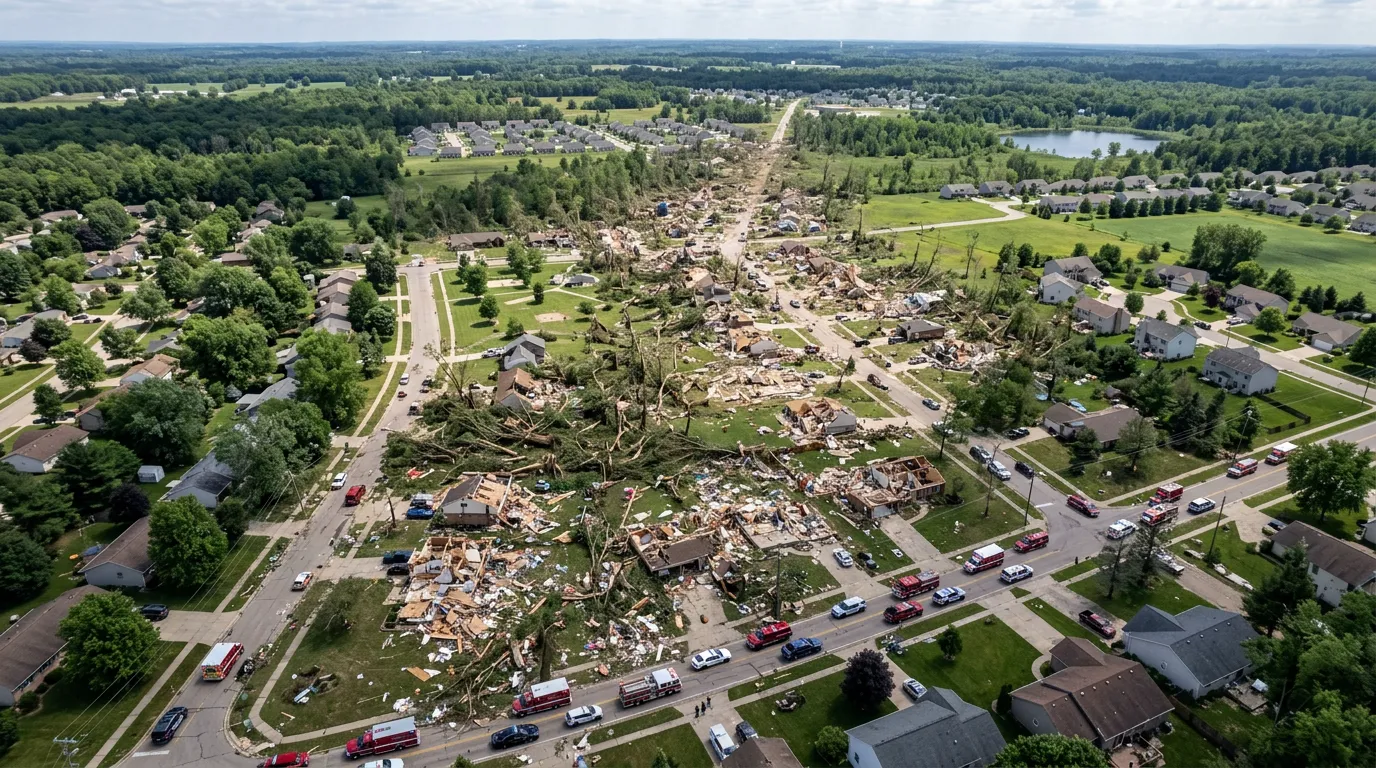
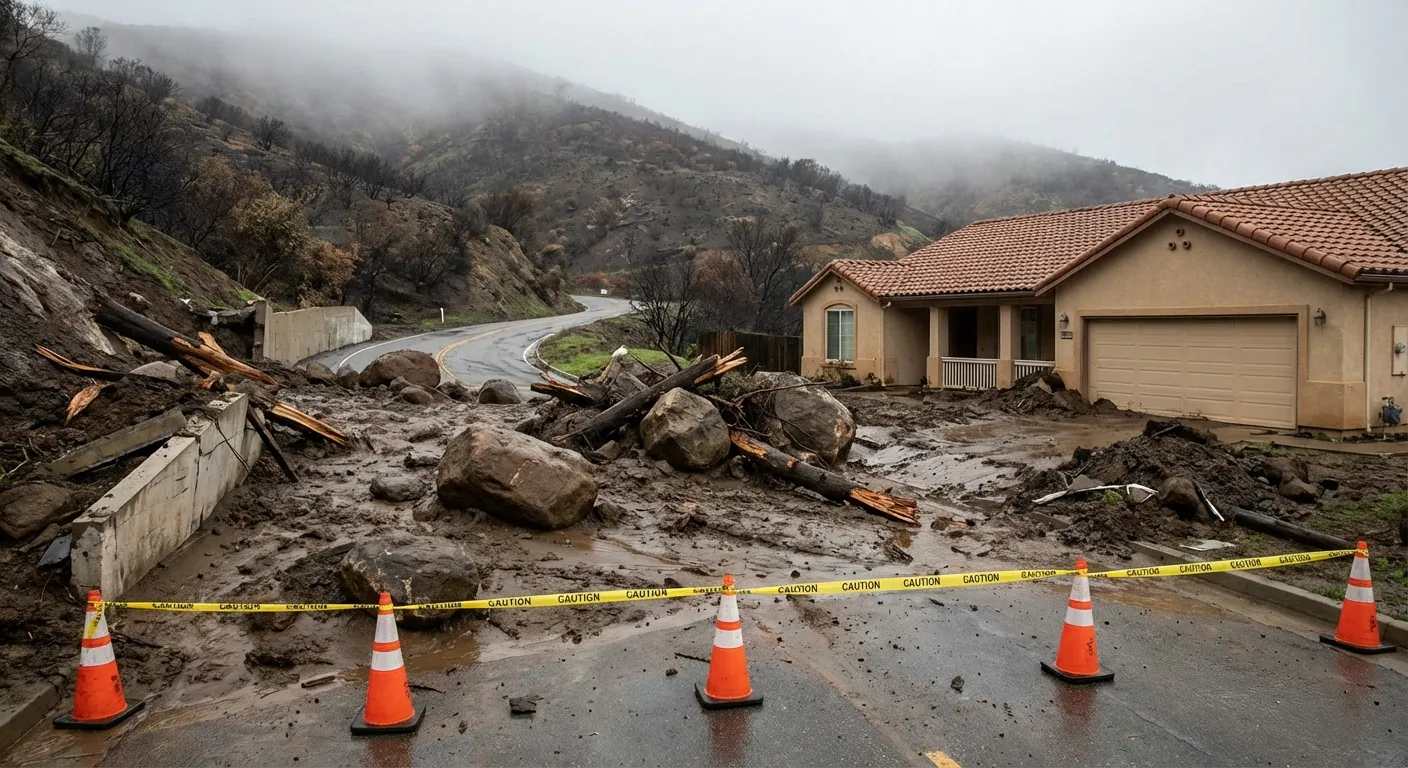
The foothills suffered worst. In communities below burn scars from recent wildfires, where vegetation that normally holds soil in place had been destroyed, mudslides damaged or destroyed homes in Malibu, Altadena, and the San Gabriel Valley. Debris flows carry boulders, trees, and mud at speeds that leave no time for evacuation once they begin. Mandatory evacuation orders went out to several thousand residents in high-risk zones, though emergency officials acknowledged that not everyone left in time.
Los Angeles County Fire Department spokesman David Ortiz told the Los Angeles Times that crews responded to more than 2,000 emergency calls in 18 hours, including 47 swift water rescues. "The volume exceeded what we staff for on any given shift," Ortiz said. "Mutual aid from surrounding counties was activated before dawn."
Downtown Los Angeles saw intersections submerged to car-door depth. The LA River, normally a concrete channel carrying a modest trickle, exceeded flood stage and ran as a full torrent for the first time since 2005. Northern California was also affected, with heavy rain and wind disrupting BART service in the San Francisco Bay Area and causing flooding in low-lying neighborhoods of San Jose. Southern California Edison reported more than 200,000 customers without electricity at the storm's peak, with restoration timelines stretching past Christmas Day for some areas.
The Insurance Gap Nobody Talks About
For homeowners in the hardest-hit areas, the storm's physical damage is only the beginning of the financial crisis. Standard homeowner's insurance policies in California do not cover flood damage. This is not a technicality or a rare exclusion. It is the default. Flood coverage requires a separate policy, typically purchased through the National Flood Insurance Program (NFIP) administered by FEMA, and the vast majority of California homeowners do not have one.
Nationally, only about 4 percent of homeowners carry flood insurance. In California, the rate is even lower outside of designated Special Flood Hazard Areas (the zones lenders require coverage for as a condition of a mortgage). According to FEMA data, fewer than 290,000 NFIP policies were active in California as of mid-2025, covering a small fraction of the state's roughly 14 million housing units. In Los Angeles County specifically, NFIP policy counts have hovered around 55,000 to 60,000, meaning roughly 95 percent of the county's homeowners lack flood coverage.
The consequences are severe and predictable:
- Homeowners in mapped floodplains are required to carry flood insurance if they have a federally backed mortgage, but many have paid off their loans and allowed policies to lapse.
- Homeowners outside mapped floodplains are almost never required to carry flood coverage, even though more than 40 percent of NFIP flood claims nationally come from properties outside designated flood zones.
- Average NFIP payouts for residential flood claims have ranged from $50,000 to $70,000 in recent years, often well below the cost of full restoration for a severely flooded home.
- FEMA Individual Assistance grants, the fallback for uninsured disaster victims, are capped at roughly $43,000 and typically average far less. These grants are meant to make housing "habitable," not to make homeowners whole.
The result is that most California homeowners who suffered serious flood damage from the Christmas Eve storm will bear the financial burden themselves. For families in communities still recovering from the January 2025 wildfires, this represents a compounding disaster: fire damage followed by flood damage, with insurance gaps in both cases that leave homeowners trapped between destroyed property and inadequate coverage.
What the Christmas Eve Storm Revealed
Atmospheric rivers deliver roughly 30 to 50 percent of California's annual precipitation and are essential to the state's water supply. They are not new. But the combination of intensifying storms, aging infrastructure, and widespread insurance gaps creates a vulnerability that grows worse with each passing year.
The math is straightforward. LA County's drainage system was engineered for rainfall assumptions that are now outdated by measurable margins. Upgrading it would cost tens of billions and take decades. Other major cities, from Copenhagen to Tokyo, have demonstrated that comprehensive stormwater modernization is technically feasible and economically justified, but only if governments commit to the investment before the next disaster rather than after it. Meanwhile, the overwhelming majority of homeowners in flood-affected areas lack the insurance coverage that would allow them to rebuild without financial ruin.
The Christmas Eve atmospheric river was not an anomaly. It was a demonstration of what happens when a warming climate's intensified water cycle meets infrastructure and insurance systems calibrated for conditions that no longer apply. California's response to this storm will likely follow the familiar post-disaster pattern: emergency declarations, cleanup funding, pledges to do better. The question that determines whether the next atmospheric river produces the same results is whether those pledges translate into the specific, expensive, decades-long infrastructure investments and insurance reforms that the state's own data says it needs. Copenhagen and Tokyo answered that question with concrete and engineering. California has not yet answered it at all.
Sources
- 'Dangerous scenario unfolding' in Southern California from potent storm lashing the entire state - CNN, December 2025
- Historic atmospheric river slowly leaves SoCal, but more rain expected next week - LAist, December 2025
- Christmas storm floods Southern California, sparks evacuations - Axios, December 2025
- 4 dead in catastrophic Christmas flooding in California - NBC News, December 2025