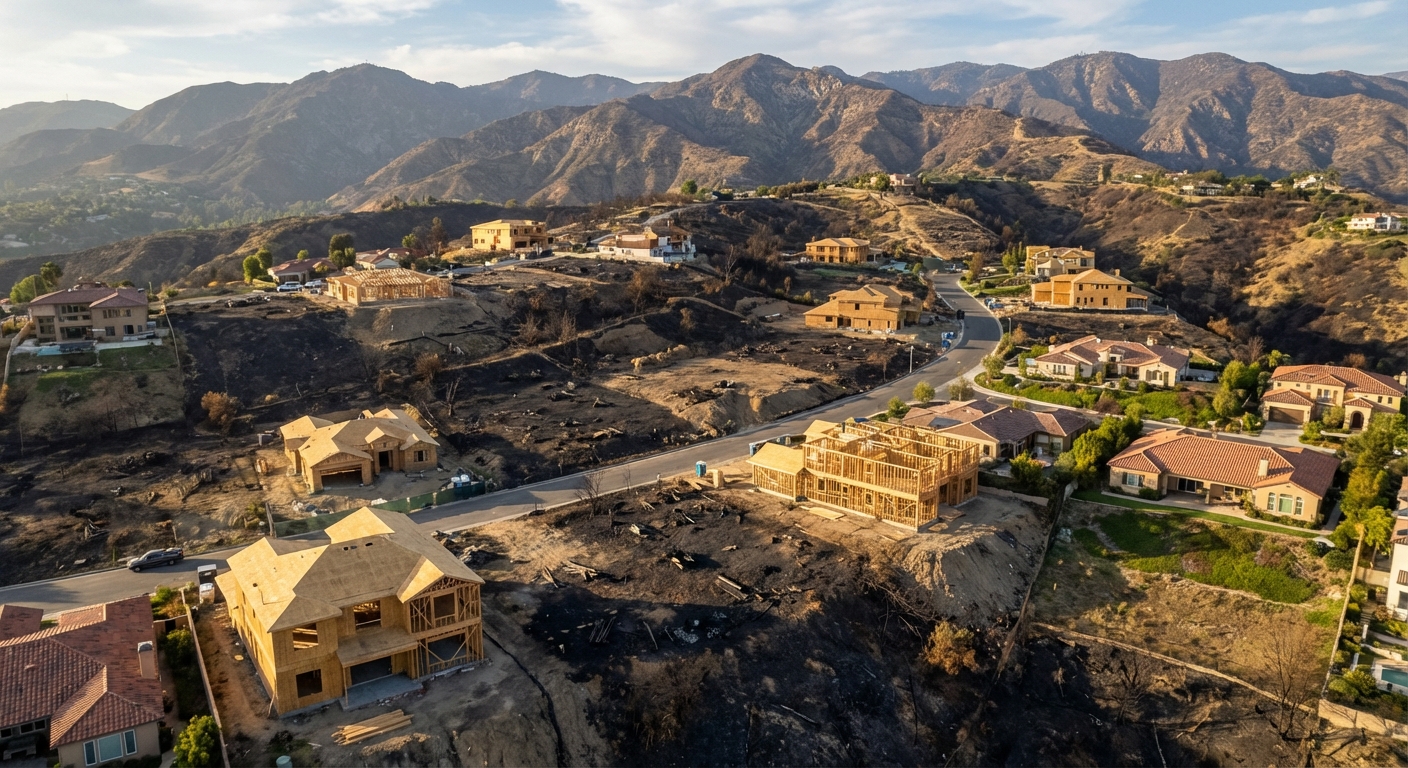
One year ago this week, a series of catastrophic wildfires swept through the Los Angeles metropolitan area, killing 31 people and destroying more than 16,000 structures in what became one of California’s worst natural disasters. The Palisades and Eaton fires alone caused more than $100 billion in estimated economic damages and displaced over 200,000 residents from their homes. Governor Gavin Newsom proclaimed January 7 as a day of remembrance and ordered flags lowered to half-staff. But for the tens of thousands of people still waiting to return home, the anniversary marks not closure but the continuation of a grinding bureaucratic struggle to rebuild their lives.
The numbers tell a story of recovery that has proceeded far more slowly than anyone anticipated. According to nonprofit Department of Angels, 70 percent of survivors from the Palisades and Eaton fires remain displaced, living with family, in rentals, or in temporary housing a full year after fleeing their homes. In Pacific Palisades, one of the wealthiest communities in Los Angeles, only a single certificate of occupancy has been issued for a rebuilt home, and that structure was already under construction when the fire struck. Not one family whose house burned down has been able to return and occupy a newly built home.
Why Recovery Has Stalled
The slow pace of rebuilding reflects a convergence of obstacles that have proved far more daunting than officials initially projected. Insurance disputes, permitting delays, contractor shortages, and supply chain bottlenecks have combined to turn what residents hoped would be months of inconvenience into what increasingly looks like years of displacement. Each individual barrier might be surmountable, but together they have created a bureaucratic maze that exhausts even the most determined survivors.
Insurance has emerged as the central battlefield. Many policies had coverage limits that seemed adequate before the fire but proved catastrophically insufficient when construction bids arrived. Materials and labor costs in fire-affected areas have soared as demand overwhelmed supply. Homeowners who thought they had $1 million in dwelling coverage discovered that rebuilding to current code would cost $2 million or more. Insurance companies have disputed claims, denied payouts, and in some cases withdrawn from the California market entirely, leaving policyholders scrambling for coverage at rates many cannot afford.
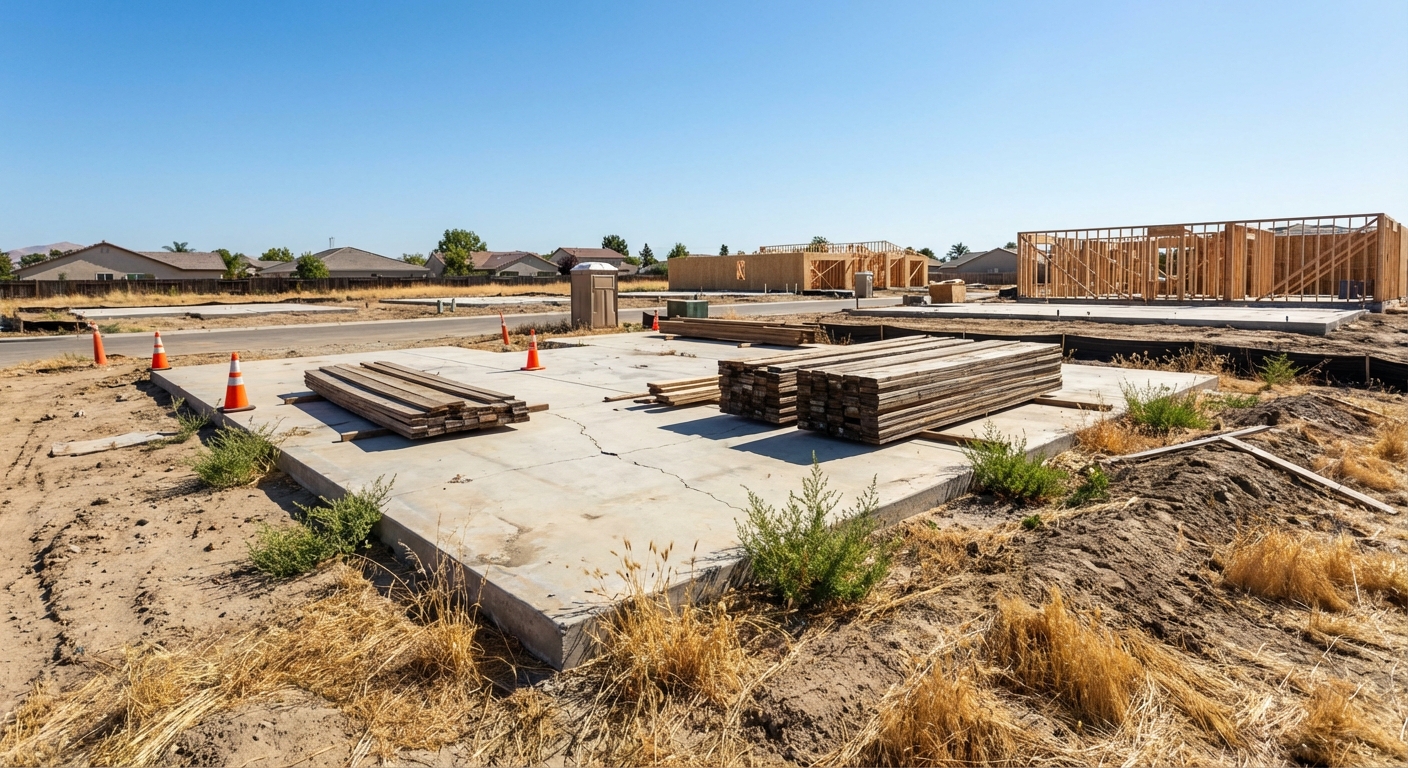
Permitting has created another bottleneck. Los Angeles County implemented expedited permitting processes after the fires, but “expedited” still means months of review for plans that must meet updated building codes designed to make structures more fire-resistant. These codes are important for long-term resilience but add complexity and cost to rebuilding. Homeowners have reported waiting three to six months for permits that pre-fire might have taken weeks, even as they pay rent elsewhere and watch their temporary housing assistance run out.
The contractor shortage compounds every other problem. Qualified builders in fire-affected areas have their schedules booked years in advance. Out-of-area contractors willing to take on projects often charge premium rates that further strain already stretched budgets. Horror stories circulate of unscrupulous contractors taking deposits and disappearing, or starting work and abandoning projects half-finished. The California Contractors State License Board has reported increased complaints from fire victims, though enforcement actions take time that displaced families don’t have.
A Community in Limbo
The human toll extends beyond statistics. Families that evacuated expecting to return in days or weeks have now spent a year in limbo. Children have changed schools, sometimes multiple times. Marriages have strained under the pressure of displacement and financial uncertainty. Elderly residents who spent decades in their homes have died in temporary accommodations, never seeing their neighborhoods rebuilt. The trauma of losing everything has been compounded by the trauma of bureaucratic frustration as people navigate systems not designed for disasters of this scale.
Pacific Palisades and Altadena, the communities hardest hit by the Palisades and Eaton fires respectively, present different challenges. Pacific Palisades residents generally had higher incomes and better insurance coverage, but they also face some of the highest construction costs in the country in an area with limited contractor availability. Altadena’s more working-class population often had less insurance coverage and fewer financial resources to bridge gaps between payouts and actual rebuilding costs. Both communities share the fundamental problem: the system wasn’t built to handle this many people trying to rebuild at once.
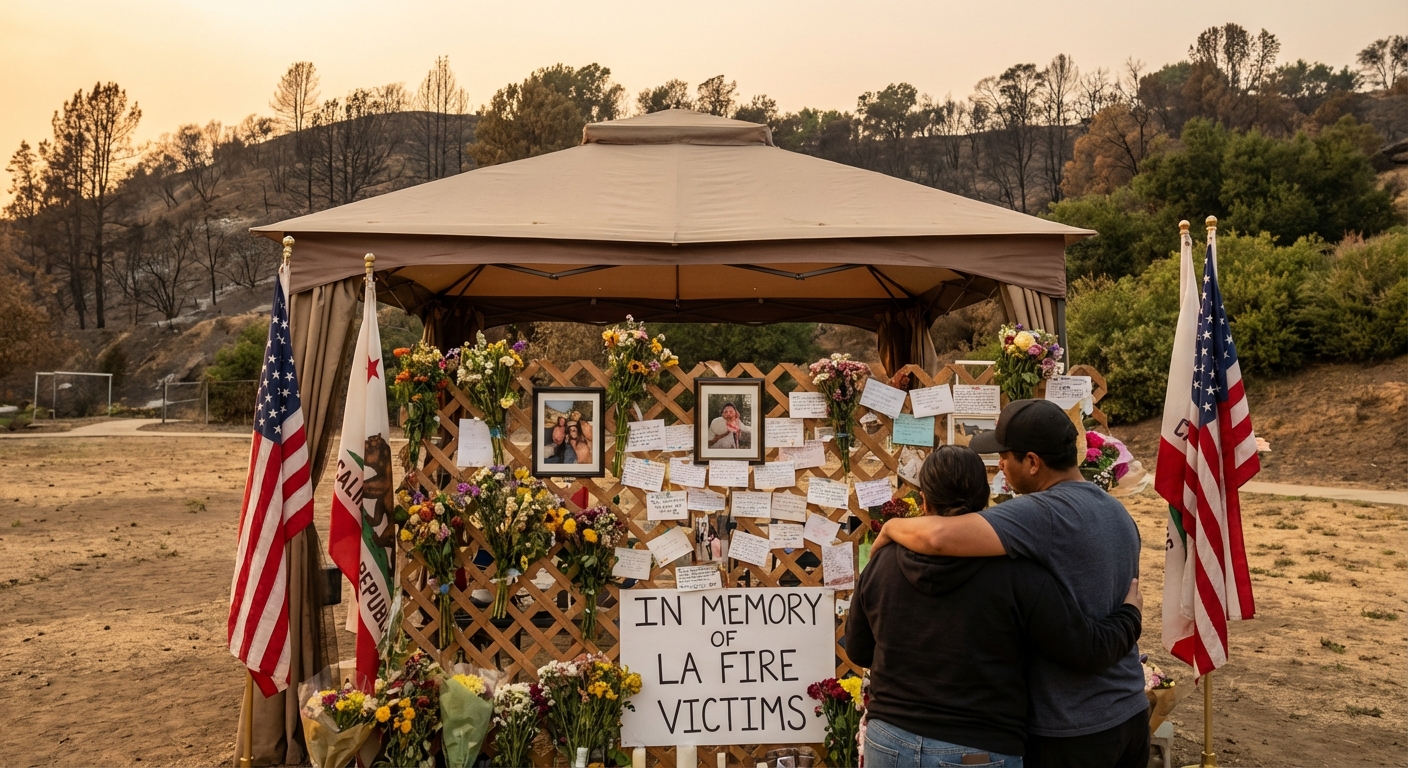
Support organizations have tried to fill gaps in official assistance. The Red Cross continues operating programs a year after the fires, providing everything from financial assistance to mental health services. Local churches and community groups have organized meal deliveries, donated clothing, and helped navigate bureaucratic processes. These efforts have been essential but cannot substitute for systemic solutions to systemic problems. The scale of displacement exceeds what charity alone can address.
Some survivors have made difficult decisions to leave entirely. Rather than wait years for rebuilding that may never happen, they’ve sold their lots and moved elsewhere in California or out of state. For longtime residents with deep community ties, this feels like a second loss on top of the fire itself. For others, particularly renters who lost their homes but not their mortgages, staying made no financial sense. The community that eventually emerges in rebuilt Palisades and Altadena will be different from what existed before, with implications for character and demographics that remain unclear.
Looking Forward
The one-year anniversary has prompted renewed attention from officials who had moved on to other priorities. Governor Newsom announced additional state resources for fire recovery, including streamlined permitting assistance and expanded temporary housing programs. Los Angeles Mayor Karen Bass has called for more aggressive action on insurance reform and contractor oversight. Whether these renewed commitments translate into faster recovery remains to be seen. Previous announcements have not always resulted in tangible improvements on the ground.
The legal system offers some hope for accountability. In October 2025, authorities arrested a 29-year-old man accused of intentionally starting what became the Palisades Fire. Prosecutors allege he set a small fire on New Year’s Day 2025 that was thought to be extinguished but rekindled under severe wind conditions on January 7, becoming the catastrophic blaze that destroyed Pacific Palisades. Criminal charges may provide a sense of justice for some survivors, though they won’t rebuild homes or restore lost belongings.
Climate considerations loom over any discussion of rebuilding. The conditions that created the January 2025 fires, extreme drought, strong Santa Ana winds, accumulated fuel from previous wet years, will recur. Building codes now require more fire-resistant materials and designs, but no construction method can guarantee safety in the face of conditions that can destroy anything in their path. Some experts have questioned whether rebuilding in high-risk areas makes sense at all, a position that offers little comfort to people who lost homes in communities they love.
The Bottom Line
One year after fires killed 31 people and displaced over 200,000, the Los Angeles region remains deep in a recovery that has proceeded far more slowly than anyone hoped. Seventy percent of survivors remain displaced, only one rebuilt home has received occupancy approval in Pacific Palisades, and the obstacles to recovery show few signs of easing. Insurance battles continue, permits remain backlogged, and contractors remain scarce.
The anniversary offers an opportunity to recommit to faster recovery, but opportunities mean little without action that produces results. Watch for whether renewed official attention translates into streamlined processes and additional resources. Watch for whether insurance reform legislation moves forward in Sacramento. And watch for whether the national conversation about disaster recovery produces solutions that could help not just Los Angeles but communities across the country facing similar challenges in an era of increasingly severe climate events.
Sources: LA Mag, Commercial Observer, Fox Business, Red Cross, California Governor’s Office, CalHHS.