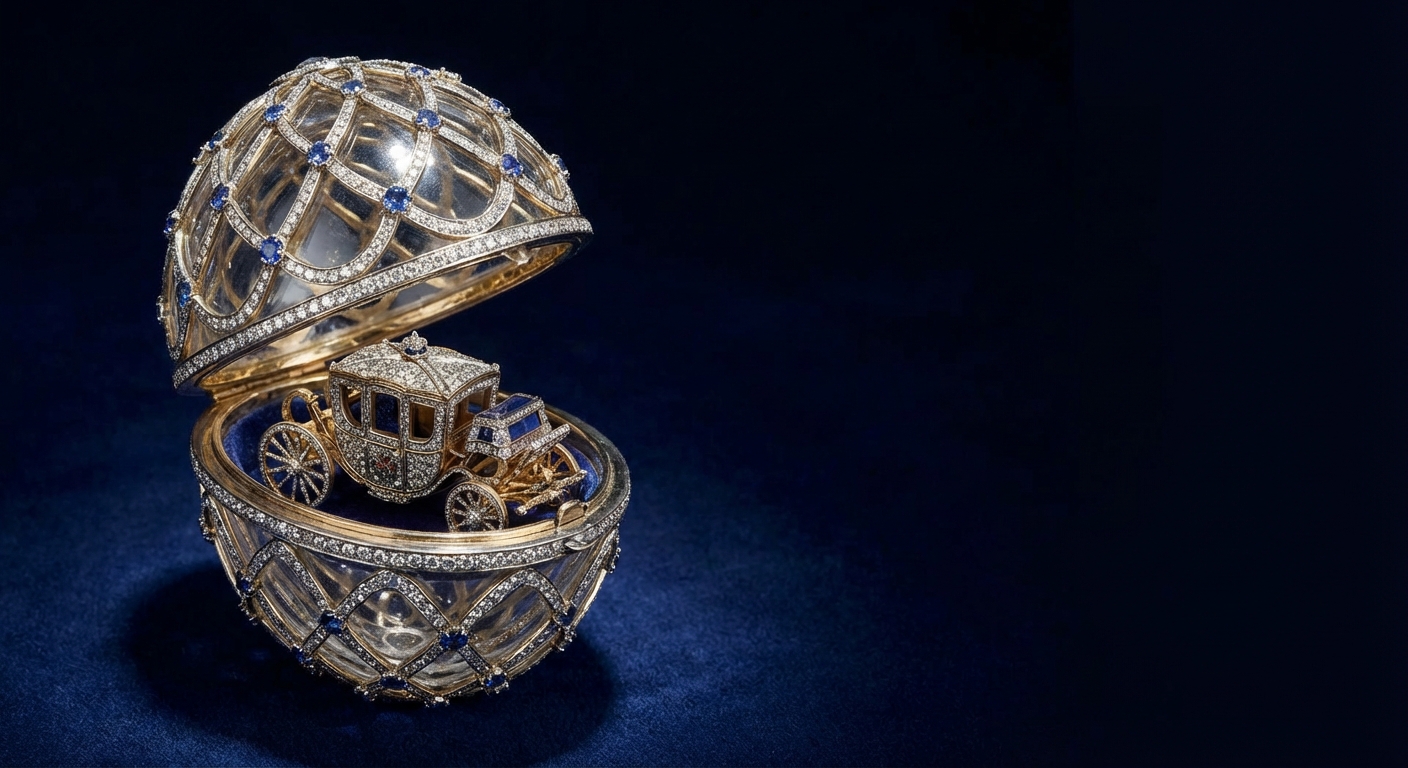
The Winter Egg, one of the rarest Fabergé eggs still in private hands, just sold at Christie’s in London for £22.9 million, roughly $30.2 million. The sale sets a new auction record for any work by the House of Fabergé, the legendary Russian jewelry firm that created elaborate Easter eggs for the last two Russian tsars.
For context, that’s more than some people pay for entire buildings. It’s also validation for collectors who have long argued that Fabergé eggs represent the pinnacle of decorative arts, combining technical mastery, historical significance, and genuine scarcity in ways that few other collectibles can match.
The sale comes at an interesting moment for the market in Russian imperial artifacts. Sanctions and political tensions have complicated the provenance and sale of Russian art, but clearly haven’t dampened appetite for the most exceptional pieces.
What Makes Fabergé Eggs Special
Peter Carl Fabergé wasn’t just a jeweler. He ran what was essentially the Apple of late 19th-century luxury goods, a workshop that combined cutting-edge technology with obsessive attention to detail and a genius for marketing.
The Imperial Easter eggs were his masterwork. Between 1885 and 1916, the House of Fabergé created 50 eggs for the Russian imperial family, each one a unique mechanical marvel containing a hidden surprise. The tradition began when Tsar Alexander III commissioned an egg for his wife, Empress Maria Feodorovna. She was so delighted that it became an annual tradition, continued by their son Nicholas II.
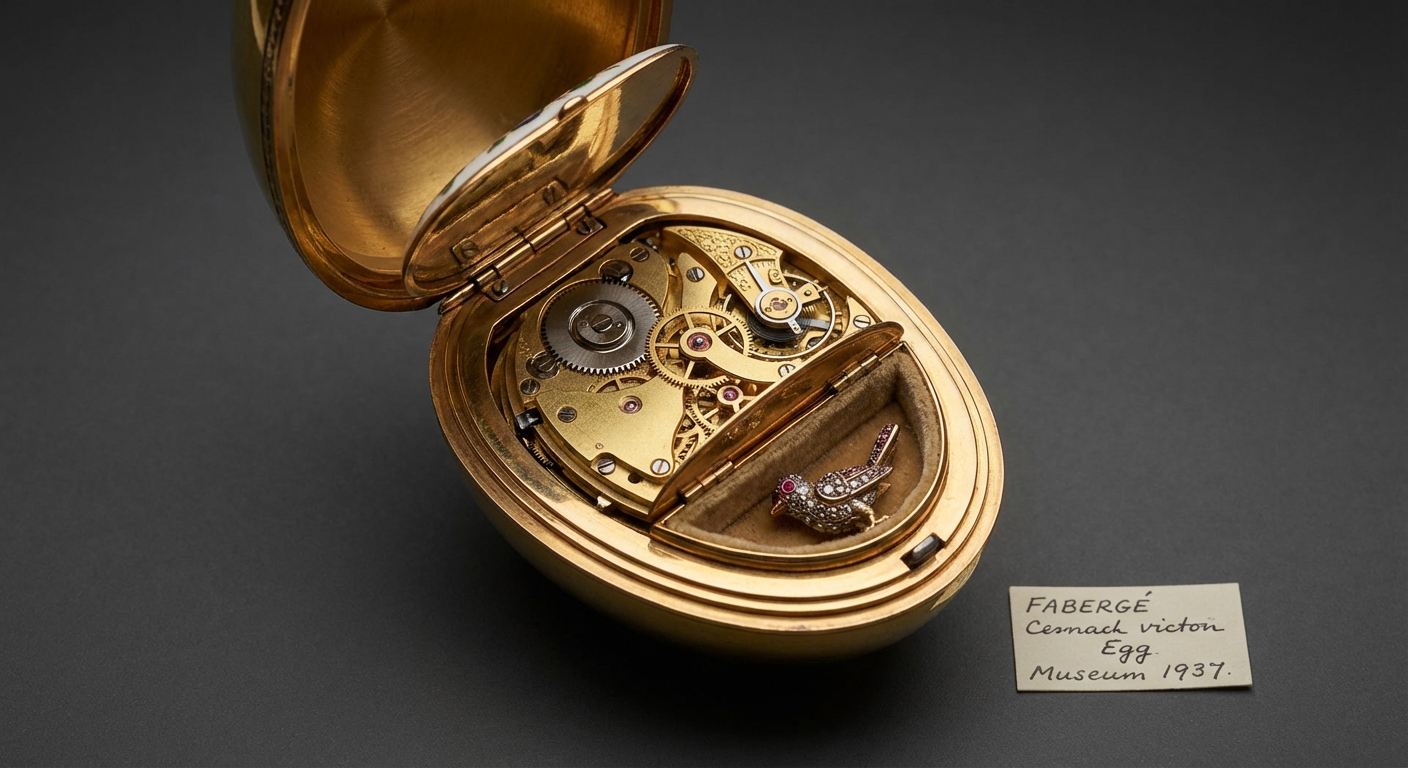
What made them extraordinary wasn’t just the precious materials, though those were lavish. It was the engineering. One egg contained a working model of the Trans-Siberian Railway. Another held a miniature replica of the imperial yacht. The surprise inside was always a secret until the egg was opened, and Fabergé’s workshops spent months perfecting each one.
Of the 50 Imperial eggs created, only 43 are known to survive. Seven disappeared during the chaos of the Russian Revolution, and their fate remains one of the art world’s enduring mysteries. The surviving eggs are split between museums and private collections, with Russia’s Kremlin Armory holding the largest number.
The Winter Egg’s Journey
The Winter Egg was created in 1913 for Tsar Nicholas II to give to his mother. Its design evokes Russian winter, with rock crystal carved to simulate ice and diamonds and moonstone accents that catch light like frost. Inside, a platinum basket of wood anemones sits in a bed of gold moss, representing the first flowers of spring emerging from winter’s grip.
The egg passed through several hands after the Revolution. It was sold by the Soviet government in the 1920s and 1930s, when the cash-strapped regime liquidated imperial treasures to fund industrialization. It eventually entered a private European collection where it remained for decades.
Christie’s declined to identify the seller or buyer, as is standard for high-value auction transactions. But the sale itself was closely watched by museums and collectors worldwide. Opportunities to acquire Imperial Fabergé eggs are genuinely rare, with only a handful changing hands in any given decade.
Why Now, and Why This Price
The $30 million price tag reflects several factors. The Winter Egg is considered one of the most beautiful of the surviving Imperial eggs, with a design that feels more modern than some of the more ornate examples. Its condition is exceptional, and its provenance is clean, meaning there are no disputes about ownership or questions about how it left Russia.
Market conditions also played a role. Ultra-high-net-worth collectors have been increasingly drawn to tangible assets with historical significance. Art, rare watches, and collectibles have all seen strong prices as wealthy buyers seek alternatives to traditional financial assets.
The timing is notable given ongoing tensions with Russia. Sanctions have complicated the market for Russian art and artifacts, but pieces with clear pre-Revolution provenance and decades of legitimate ownership history remain tradeable. The Winter Egg meets those criteria.
The Bigger Picture
Fabergé eggs occupy a unique place in the collectibles world. They’re not quite fine art in the traditional sense, yet they command prices that rival major paintings. They’re decorative objects, but ones with genuine historical significance and technical achievements that still impress modern craftspeople.
The eggs also carry a certain melancholy. They represent the final flowering of imperial Russian culture, created in the years just before the Revolution swept it all away. The last egg Fabergé completed was never delivered. Nicholas II and his family were executed in 1918, and Fabergé fled Russia, dying in exile in 1920.
That history adds to their mystique. Owning a Fabergé egg means owning a piece of a vanished world, one of extraordinary privilege and craftsmanship that ended abruptly and violently. For some collectors, that narrative weight is part of the appeal.
The Bottom Line
The Winter Egg’s record sale confirms that top-tier Fabergé eggs remain among the most valuable decorative arts objects in the world. For collectors with deep pockets and a taste for history, they represent something genuinely irreplaceable.
For the rest of us, the sale is a reminder that some objects transcend their materials. Gold, diamonds, and rock crystal are valuable, but what makes a Fabergé egg worth $30 million is everything else: the craftsmanship, the history, and the story of a world that created such marvels and then destroyed itself.