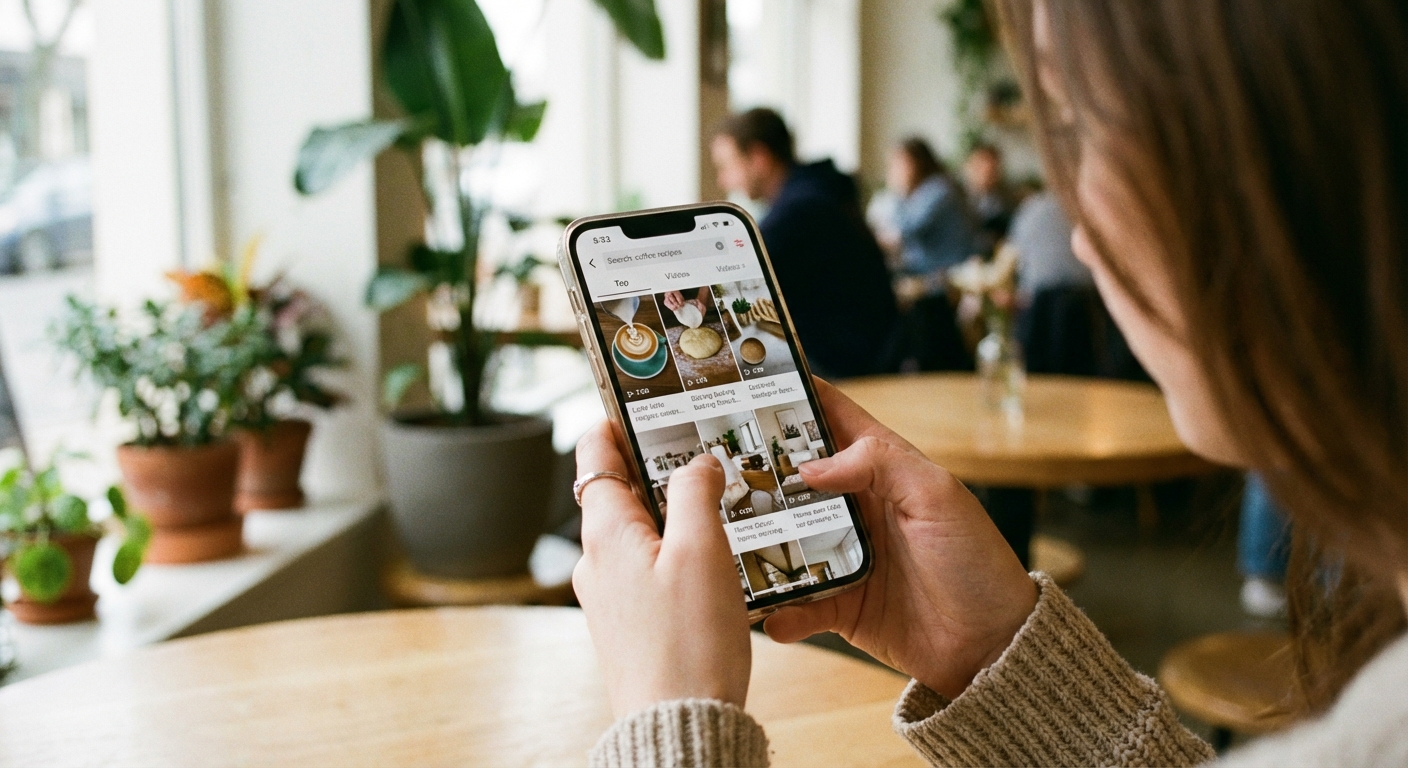
Something fundamental is shifting in how people find information, and the numbers from early 2026 make it impossible to ignore. Nearly one in three consumers now skip Google entirely when searching for something, starting their journey on TikTok, Instagram, or YouTube instead. Among Gen Z, that figure exceeds 50 percent. For a generation that grew up with smartphones as extensions of their hands, the traditional search engine has become the equivalent of asking their parents for directions: technically functional but not how they naturally operate.
This matters because search isn’t just about finding restaurants or product reviews. It’s about how information flows through society, which sources gain authority, and whose voices get heard. Google’s dominance shaped the internet for two decades, determining what content got created and how it was formatted. A shift toward video-first social search doesn’t just change user habits; it reshapes the entire information economy.
Why Video Beats Links
The appeal of TikTok search isn’t hard to understand once you try it. Ask Google “how to fix a leaky faucet” and you get a list of links, each requiring you to click through, evaluate the source, scroll past ads, and hope the content matches what you need. Ask TikTok the same question and you get 60-second video tutorials showing exactly what to do. You can see the actual faucet, watch the actual repair, and decide in seconds whether this person knows what they’re talking about.
For information that benefits from demonstration, video is simply more efficient. Cooking techniques, makeup application, exercise form, travel destinations, home repairs: these are all areas where showing beats telling. Written instructions for tying a bow tie are vastly inferior to a 30-second video demonstrating the movements. Google understood this, which is why it bought YouTube. But TikTok’s algorithm surfaces relevant video content more effectively, and its short-form format better matches how people actually want to consume information.
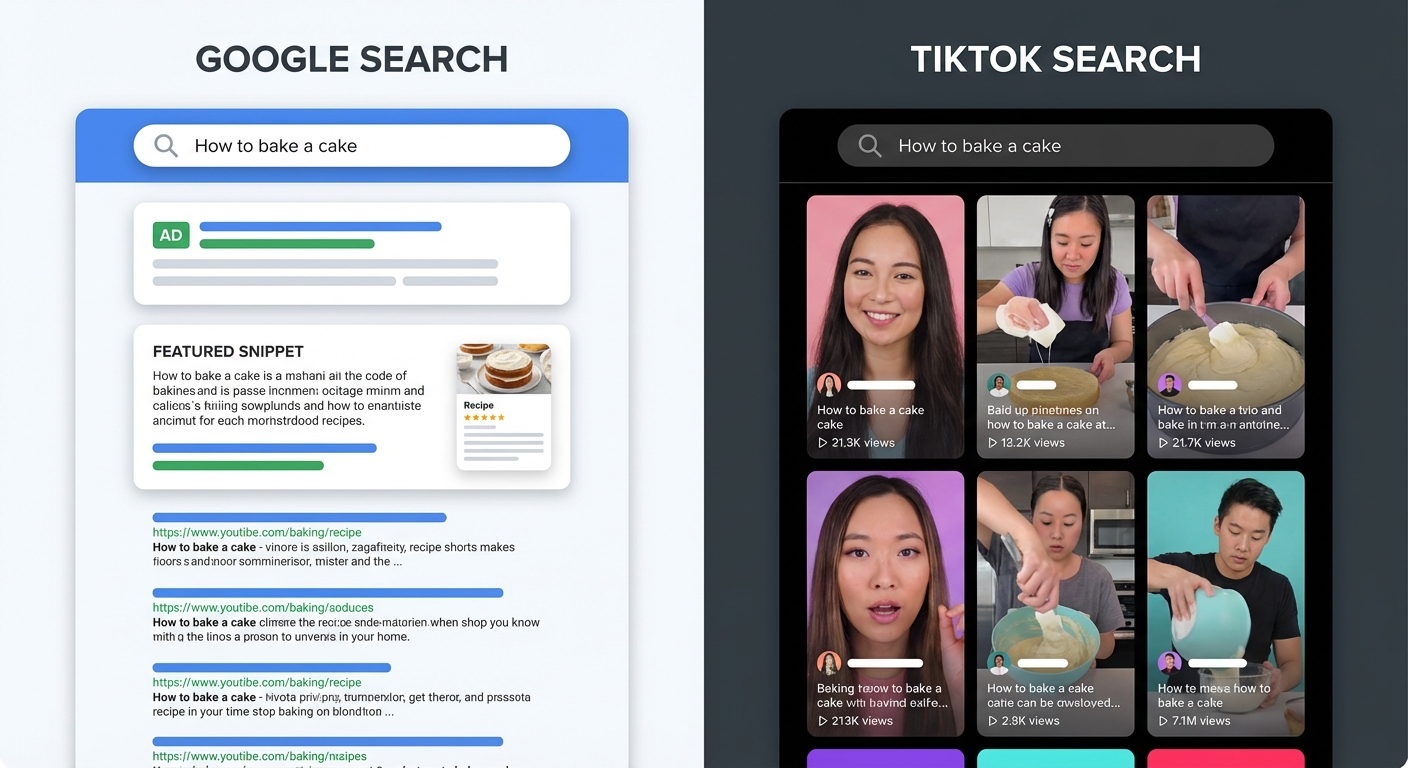
The shift also reflects changing attention patterns. Google search assumes you want comprehensive information and will invest time reading through it. TikTok search assumes you want a quick answer and will scroll past anything that doesn’t deliver immediately. Neither assumption is universally correct, but for many queries, the TikTok assumption better matches actual user behavior.
The algorithm plays a crucial role. TikTok’s recommendation system learns individual preferences with remarkable speed and surfaces content that matches both the query and the user’s demonstrated interests. Google’s algorithm prioritizes authority signals that sometimes feel disconnected from quality. A TikTok creator with 50,000 followers who actually knows plumbing might provide better information than the SEO-optimized website that ranks first on Google.
What Gets Lost
The shift toward video-first social search isn’t without costs, and understanding these costs helps explain why the change is genuinely significant rather than just a preference shift among young people. Text-based search, for all its frustrations, has advantages that video search lacks.
Verification is harder with video. When you read an article, you can click through to sources, check credentials, and evaluate claims against other sources. Video content presents information as authoritative without the supporting infrastructure for verification. A confident creator speaking directly to camera can be completely wrong but entirely convincing. The format optimizes for engagement, not accuracy.
Depth is also difficult in short-form video. A 60-second TikTok can show you how to fix a simple faucet leak but not explain why the leak happened, how to prevent future problems, or when you should actually call a plumber. Complex topics get compressed into digestible clips that may sacrifice important nuance. Health information is particularly concerning: TikTok is full of medical advice from creators with no medical training, and the algorithm doesn’t distinguish between licensed doctors and wellness influencers.
The commercial dynamics differ as well. Google search results include ads clearly labeled as such. TikTok content often blurs the line between organic recommendations and paid promotions. Creators frequently endorse products without explicit disclosure, and sponsored content looks identical to authentic reviews. Users who’ve learned to filter Google ads haven’t necessarily developed equivalent skepticism for TikTok recommendations.
The Business Implications
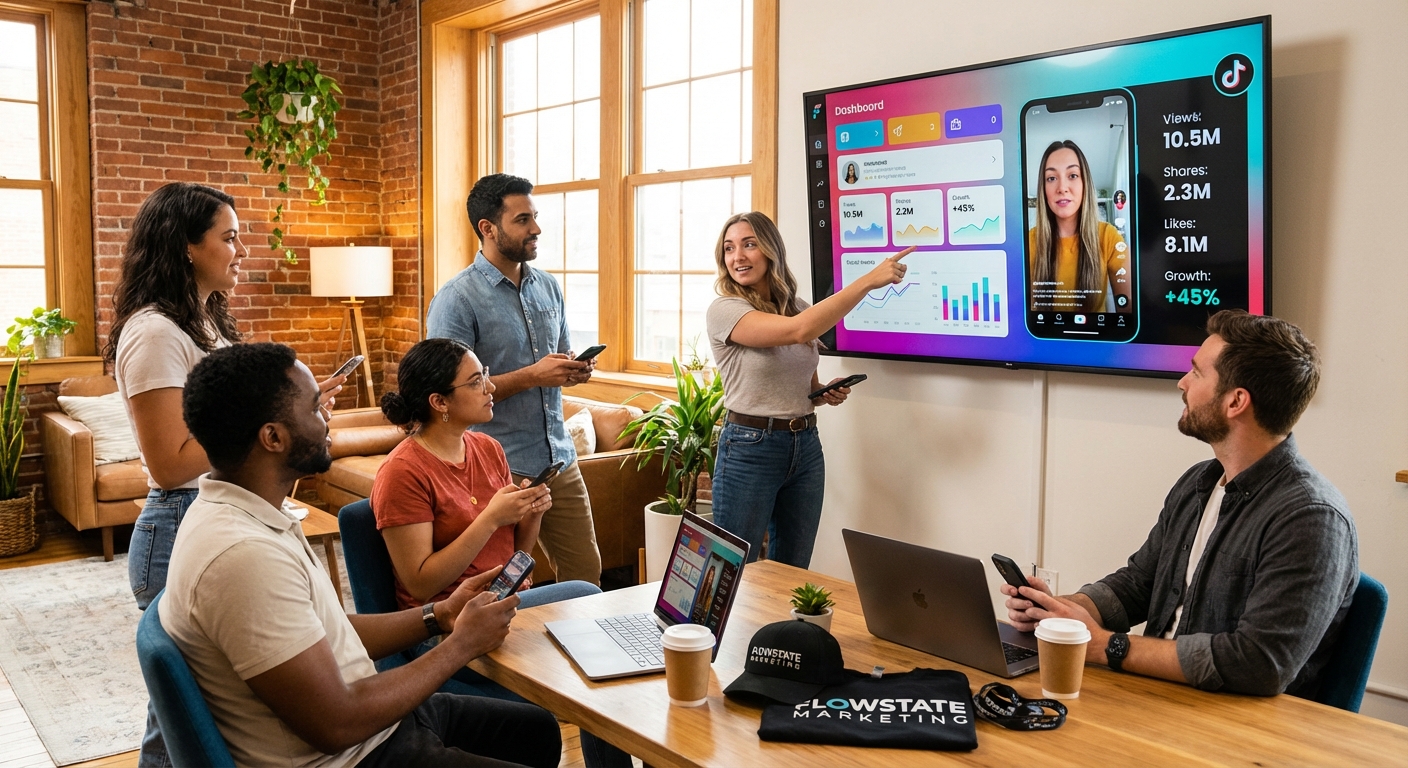
For businesses trying to reach consumers, the search shift creates both opportunities and challenges. Traditional SEO expertise becomes less valuable as traffic sources diversify. Companies that optimized their websites for Google rankings now need content strategies for TikTok, Instagram, and YouTube, each with different algorithmic preferences and content formats.
Local businesses face particular challenges. Google’s local search results, complete with maps, reviews, and business hours, represent infrastructure that TikTok hasn’t replicated. A restaurant can go viral on TikTok and see a surge of customers, but that surge is unpredictable and doesn’t provide the steady stream of search-driven traffic that Google delivers. Some businesses are winning on TikTok while struggling to be found by people who search “restaurants near me” on Google.
The advertising industry is adjusting to this shift, though not as quickly as user behavior is changing. Marketing budgets still skew heavily toward Google ads because measurement and attribution are better established. TikTok advertising exists but requires different creative approaches and offers less precise targeting. As more attention shifts to video platforms, advertising dollars will follow, but the transition creates uncertainty about where to invest.
For Google specifically, the trend represents an existential threat to its core business. Search advertising generates the vast majority of Alphabet’s revenue. If the next generation of consumers doesn’t use Google to find things, that revenue stream eventually dries up. Google has responded by adding more video content to search results and by investing in YouTube Shorts, but these feel like defensive moves rather than strategic advantages.
What Happens Next
The trajectory seems clear: video-first search will continue gaining share, especially among younger users. As today’s teenagers become adults with purchasing power and information needs, their preferences will shape the broader market. Companies that adapt their content strategies early will have advantages over those that assume Google search will remain dominant.
However, a complete replacement of traditional search seems unlikely. Some queries genuinely benefit from text-based results: legal questions, academic research, technical documentation, detailed product specifications. These use cases won’t migrate to TikTok because video isn’t the right format for them. What’s more likely is a fragmentation of search behavior, where people use different platforms for different types of queries based on which format serves their needs best.
The information quality concerns deserve attention from regulators, educators, and platforms themselves. If video search becomes a primary way people learn about health, finance, and other consequential topics, the systems that surface that information need to get better at distinguishing quality from engagement. Current algorithms optimize for watch time, not accuracy. That’s a problem when people are making real decisions based on what they watch.
The Bottom Line
The shift from Google to TikTok search reflects genuine changes in how people prefer to consume information, not just a trend among teenagers. Video-first discovery is more efficient for many query types, and algorithmic recommendation often beats keyword matching for surfacing relevant content. These advantages explain the migration.
But the shift comes with costs: harder verification, compressed complexity, and commercial dynamics that favor engagement over accuracy. As TikTok faces continued regulatory uncertainty in the US, the platform’s role in information discovery adds another dimension to policy debates. Whether TikTok specifically remains dominant matters less than the broader trend toward video search.
Watch for how Google responds over the next year. Its investments in YouTube integration and video search results will indicate how seriously it takes the threat. Watch for whether information quality issues on TikTok generate regulatory attention similar to concerns about misinformation on other platforms. And watch your own search habits: if you find yourself opening TikTok to answer questions you used to type into Google, you’re part of the shift.
Sources: TrendHunter, Pepper Agency, New Engen, Startups.co.uk, industry surveys and platform data.