TikTok faces a shutdown deadline that, after years of political threats and legal maneuvering, appears to be real this time. The law signed in 2024 requires ByteDance, TikTok’s Chinese parent company, to divest its ownership of the app or face a ban from American app stores and web hosting services. That deadline is approaching, no sale has materialized, and the legal challenges have failed.
For the 170 million Americans who use TikTok monthly, this isn’t abstract policy debate. It’s the potential end of a platform that has become central to how they discover music, follow news, build businesses, and connect with communities. The economic stakes are significant too: an estimated 7 million American businesses use TikTok for marketing, and an entire ecosystem of creators earns their living on the platform.
The situation remains fluid, but the path forward is narrowing. Here’s what’s actually happening, what happens if the ban takes effect, and what options remain.
Why TikTok Is Being Banned
The legal basis for the TikTok restrictions centers on national security concerns. U.S. officials argue that ByteDance’s ownership creates an unacceptable risk that the Chinese government could access American users’ data or manipulate the algorithm to serve Chinese interests. The law passed Congress with bipartisan support, reflecting rare agreement between Democrats and Republicans on China-related tech policy.
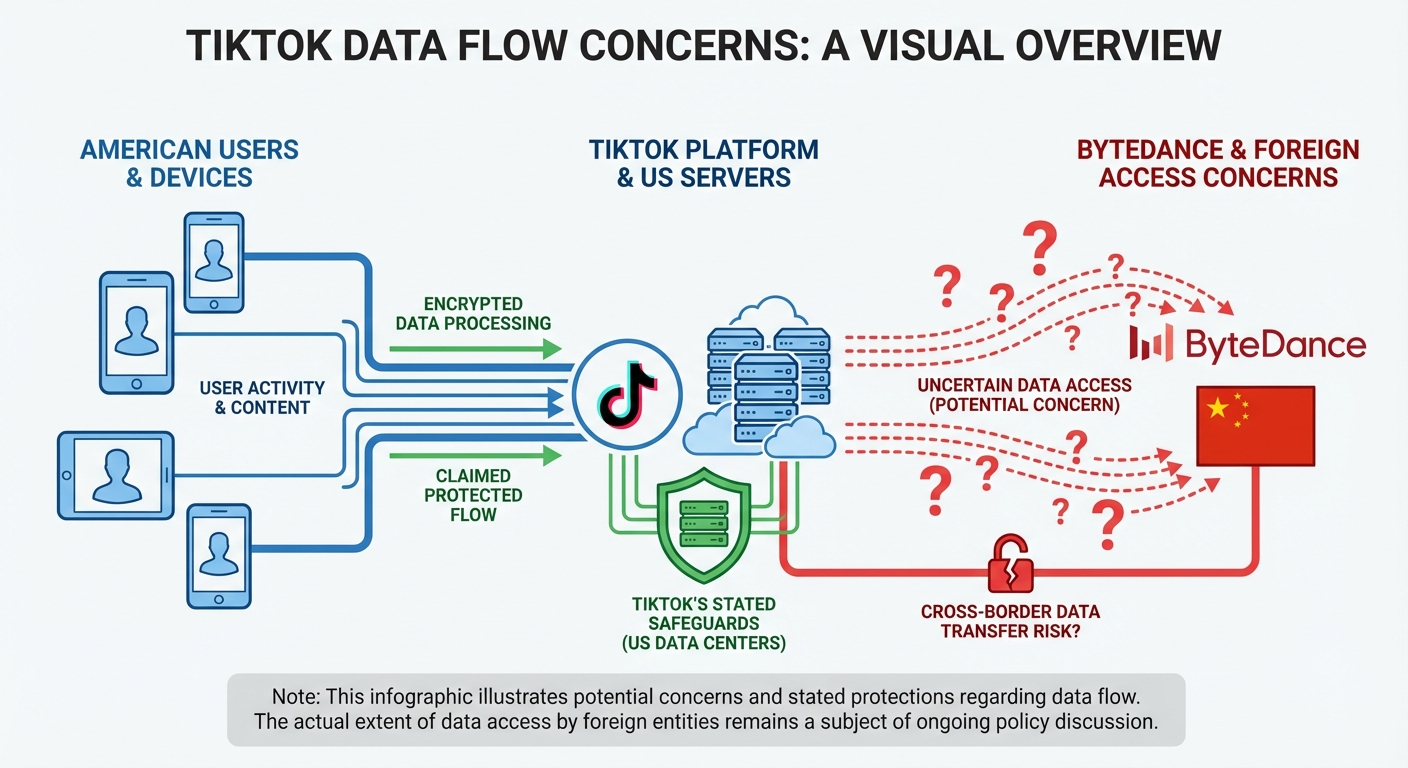
TikTok has consistently denied that it shares data with the Chinese government or would comply with requests to do so. The company spent over a billion dollars on “Project Texas,” an initiative to store American user data on Oracle servers in the United States, supervised by American personnel. TikTok executives have testified before Congress that they would refuse any Chinese government data requests and have never received such requests.
Critics say these assurances are inadequate. Chinese law requires companies to cooperate with intelligence agencies, and ByteDance’s Chinese ownership means the company ultimately answers to authorities in Beijing, regardless of what its American executives promise. Even if TikTok isn’t currently sharing data or manipulating content, the potential exists, and for national security hawks, potential is enough.
The counterargument is that banning TikTok sets a troubling precedent. No evidence has been publicly presented that TikTok has actually shared data inappropriately or manipulated its algorithm for political purposes. Banning a platform used by 170 million Americans based on hypothetical risks rather than demonstrated harms raises First Amendment concerns that have been central to TikTok’s legal challenges.
What Happens If the Ban Takes Effect
If TikTok doesn’t find a buyer or win legal relief before the deadline, the consequences unfold in stages. App stores operated by Apple and Google would be required to remove TikTok. Web hosting providers and content delivery networks would be prohibited from serving the app. The TikTok you know would stop working on American devices and networks.
Users with TikTok already installed might find the app continues to function initially, but without updates, it would degrade over time. New features wouldn’t arrive. Security vulnerabilities wouldn’t be patched. Eventually, changes to smartphone operating systems would break compatibility entirely.
Creators and businesses face the most immediate economic impact. The hours spent building audiences on TikTok wouldn’t transfer to other platforms. Follower counts, algorithmic advantages, and content libraries would be stranded. Some creators have been frantically cross-posting to Instagram Reels and YouTube Shorts, but audience migration is never complete. Many creators will lose significant income if TikTok disappears.
The music industry, which has come to depend on TikTok for song discovery and viral hits, would lose its most powerful promotional engine. Labels and artists have publicly opposed the ban, arguing that it harms American cultural exports and gives competitor platforms less incentive to support emerging artists.
Who Might Buy TikTok
A sale remains theoretically possible, but the obstacles are enormous. TikTok’s value is estimated between $50 billion and $100 billion, making it one of the largest tech acquisitions ever attempted. The pool of potential buyers with both the capital and the strategic interest is small.
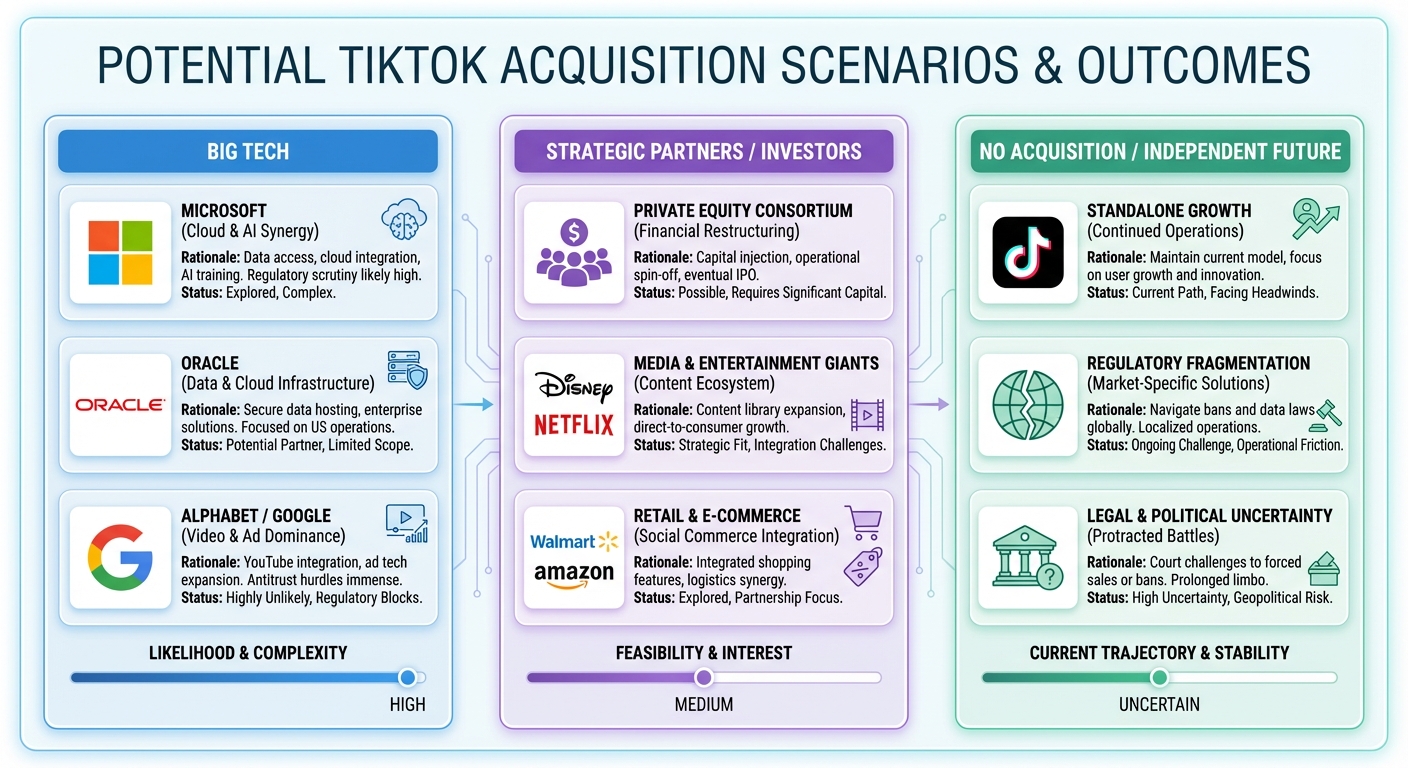
American tech giants like Microsoft, Google, or Amazon could afford the price tag, but antitrust regulators would likely scrutinize any attempt by already-dominant platforms to absorb TikTok’s audience. Google already owns YouTube; buying its most serious competitor raises obvious competition concerns.
Private equity firms have expressed interest, but the valuation and operational complexity of running a major social platform make TikTok an unusual target. Most PE acquisitions involve mature businesses with stable cash flows, not rapidly evolving consumer apps requiring constant product development.
A consortium of investors has been discussed, potentially including American venture capitalists, media companies, and even creators themselves. But assembling such a group quickly enough to meet the deadline, agreeing on governance, and closing a transaction of this size would be extraordinarily challenging.
Then there’s the algorithm question. TikTok’s recommendation algorithm is its core competitive advantage, the reason the app is so addictive and so effective at content discovery. China has indicated it considers the algorithm sensitive technology that may not be exported. A TikTok without its algorithm would be far less valuable, potentially a shell of the current product.
What Users Should Do Now
If you’re a casual TikTok user, there’s nothing you need to do immediately. The app will continue functioning until any ban takes effect, and deadlines may yet be extended through legal or political intervention. Panic-deleting won’t help anything.
If you’re a creator or business that depends on TikTok, diversification is urgent. Start building presence on alternative platforms now. Instagram Reels, YouTube Shorts, and Snapchat Spotlight offer similar short-video formats, though none matches TikTok’s algorithm for organic discovery. Download your TikTok content archive through the app’s settings so you retain your videos regardless of what happens.
For users concerned about data privacy, the reality is that TikTok collects similar types of data to other social platforms. If you’re comfortable with Instagram or Facebook’s data practices, TikTok’s are comparable. If you’re not comfortable with any social media data collection, that’s a reasonable position, but it applies across platforms, not just TikTok.
The Bottom Line
The TikTok situation has reached a point where outcomes that seemed unthinkable, an actual ban of a platform used by half of American adults under 30, are now plausible. Legal challenges have largely failed. No buyer has emerged. The deadline is approaching.
This doesn’t mean a ban is certain. Politics can shift quickly, especially in a new administration. Last-minute deals remain possible. Courts could still intervene. But the window for these outcomes is narrowing.
What’s certain is that TikTok’s future in the United States is no longer a matter of if the government will act, but whether the actions already taken will be reversed or modified. For users and creators, the prudent move is hoping TikTok survives while preparing for the possibility that it doesn’t.