The American shopping mall was supposed to be dead. Amazon killed it, we were told. COVID finished it off. The endless “dead mall” videos on YouTube became a genre unto themselves, documenting the decay of suburban cathedrals of commerce. And yet, something strange is happening: young people are going back to malls. Not to shop, necessarily, but to exist. To hang out. To do the thing their parents did in the 1980s that seemed hopelessly outdated five years ago.
This isn’t just anecdotal. Foot traffic at malls increased 12% in 2025, according to Placer.ai data, with the sharpest increases among visitors under 25. The malls seeing this growth aren’t the anchor-store-dependent behemoths of the past but redesigned spaces that look nothing like the fluorescent-lit shopping corridors of the 20th century. Something is being reborn here, and understanding what requires looking at what malls always were: not primarily shopping destinations, but social infrastructure.
Why Malls Originally Mattered
Victor Gruen, the architect who designed the first enclosed shopping mall in 1956, didn’t set out to build a shopping center. He wanted to recreate the European town square, a public gathering space where community happens organically. Shopping was supposed to be incidental to the social function. That vision got swallowed by commercial interests over the following decades, as malls became increasingly optimized for retail sales at the expense of everything else.
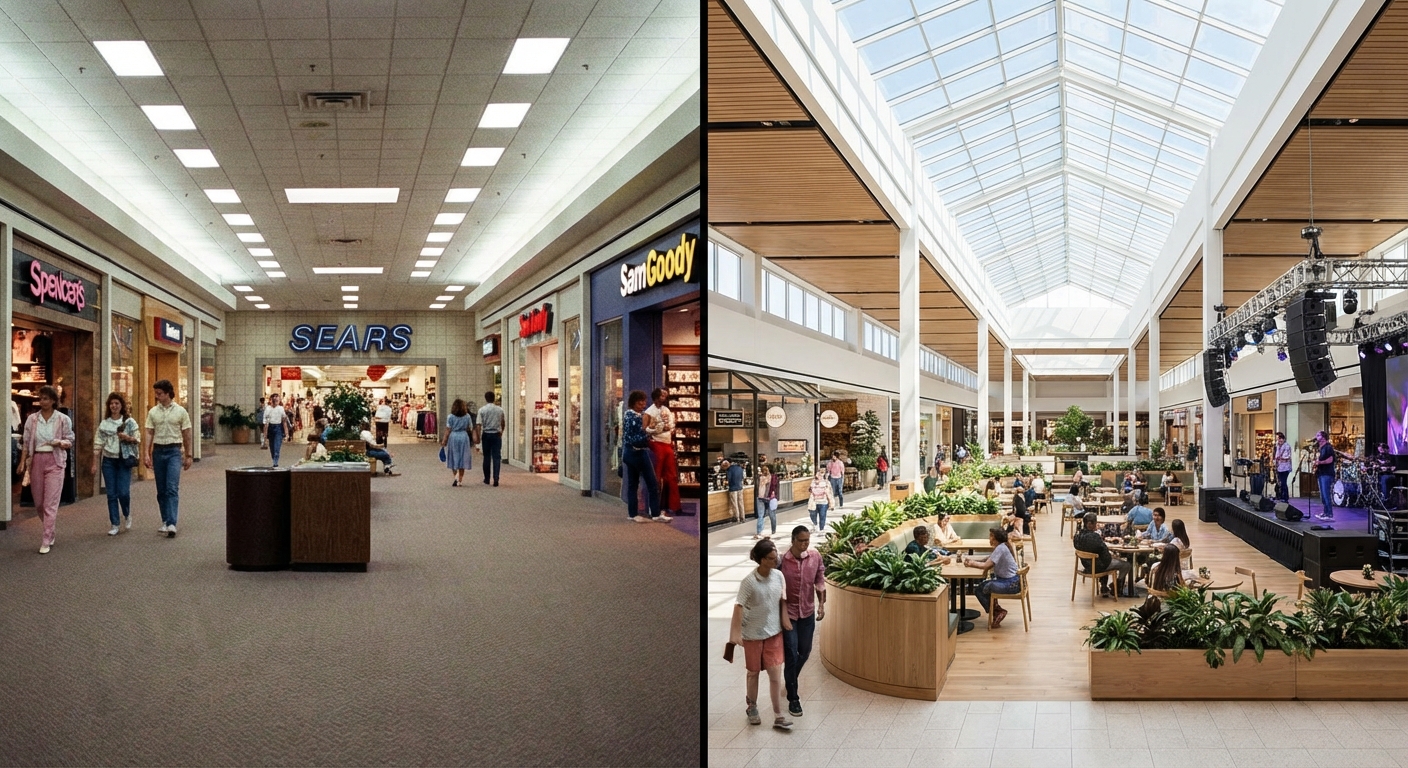
But the social function never entirely disappeared. For teenagers in the 1980s and 1990s, malls were one of the few places they could go without adult supervision. They had climate control, bathrooms, places to sit, and the ambient activity that makes a space feel alive. Sociologists called this “third place” function, somewhere between home and work/school where informal social life happens.
When e-commerce hollowed out the retail function, malls lost their economic reason to exist. But nothing replaced their social function. Young people don’t have backyards like previous generations (more apartment living), can’t afford the consumption that used to organize social life (restaurants, movies, concerts), and find that online social spaces increasingly feel hollow. The physical third place never got a substitute.
What the New Malls Look Like
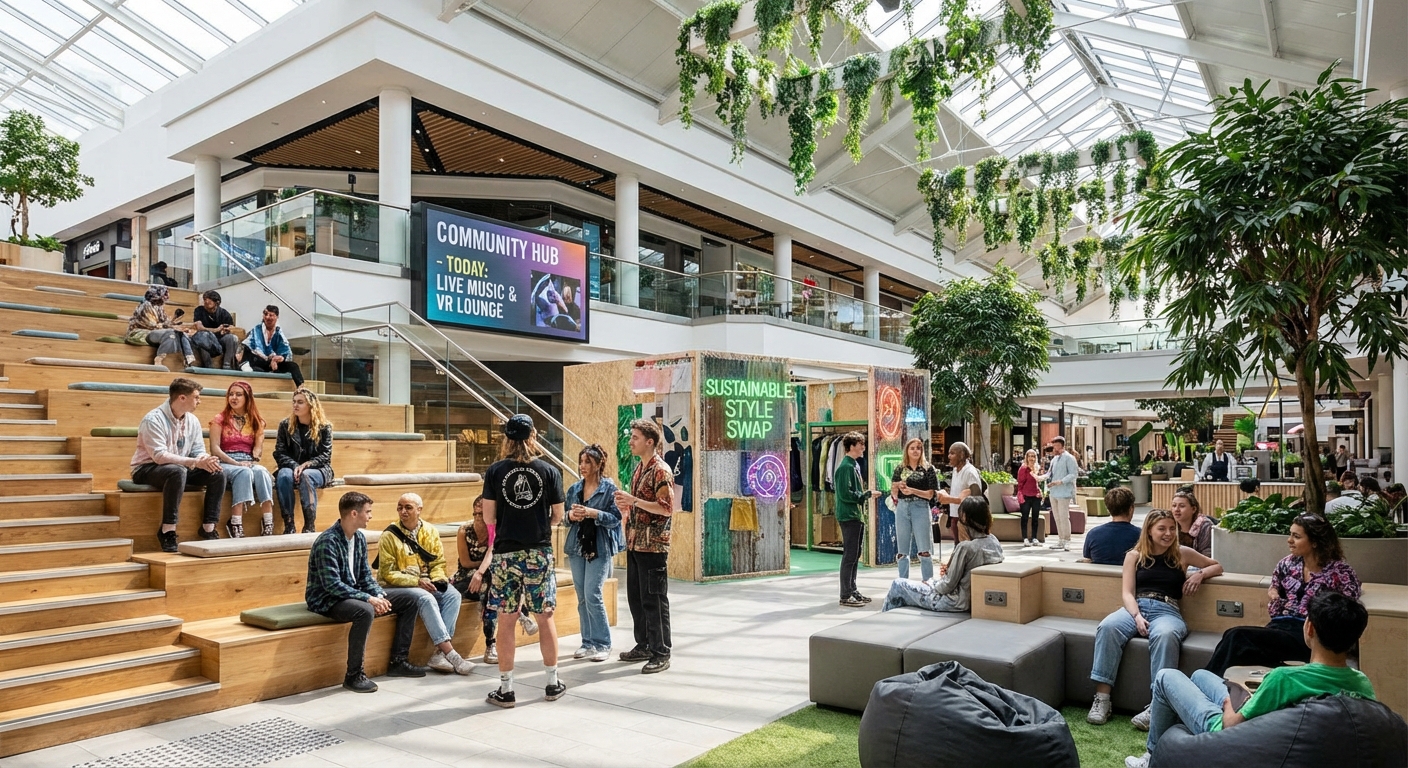
The malls succeeding now have reconfigured around experiences rather than transactions. The American Dream mall in New Jersey, despite mixed financial performance, draws crowds for its indoor ski slope, water park, and entertainment venues. Smaller malls are being converted into mixed-use developments with apartments, coworking spaces, and community facilities alongside reduced retail footprints.
The stores that remain tend to be experiential rather than transactional. Apple stores where you can try products. Nike showrooms where you can customize sneakers. Beauty retailers with full-service makeover stations. These aren’t places to buy things you could get on Amazon; they’re places to do things Amazon can’t replicate. The remaining retail serves the social function rather than the other way around.
Food halls have replaced traditional food courts, offering local restaurants and higher-quality options than the fast-food chains of the past. Seating areas have expanded, with comfortable lounge furniture replacing the hard plastic benches designed to discourage lingering. Some malls have added free WiFi and charging stations, explicitly encouraging people to hang out.
The Gen Z Angle
Why is this resonating particularly with Gen Z? The generation that grew up with smartphones and social media would seem least likely to seek out physical gathering spaces. But that’s precisely the point: they’re oversaturated with digital interaction and craving something different.
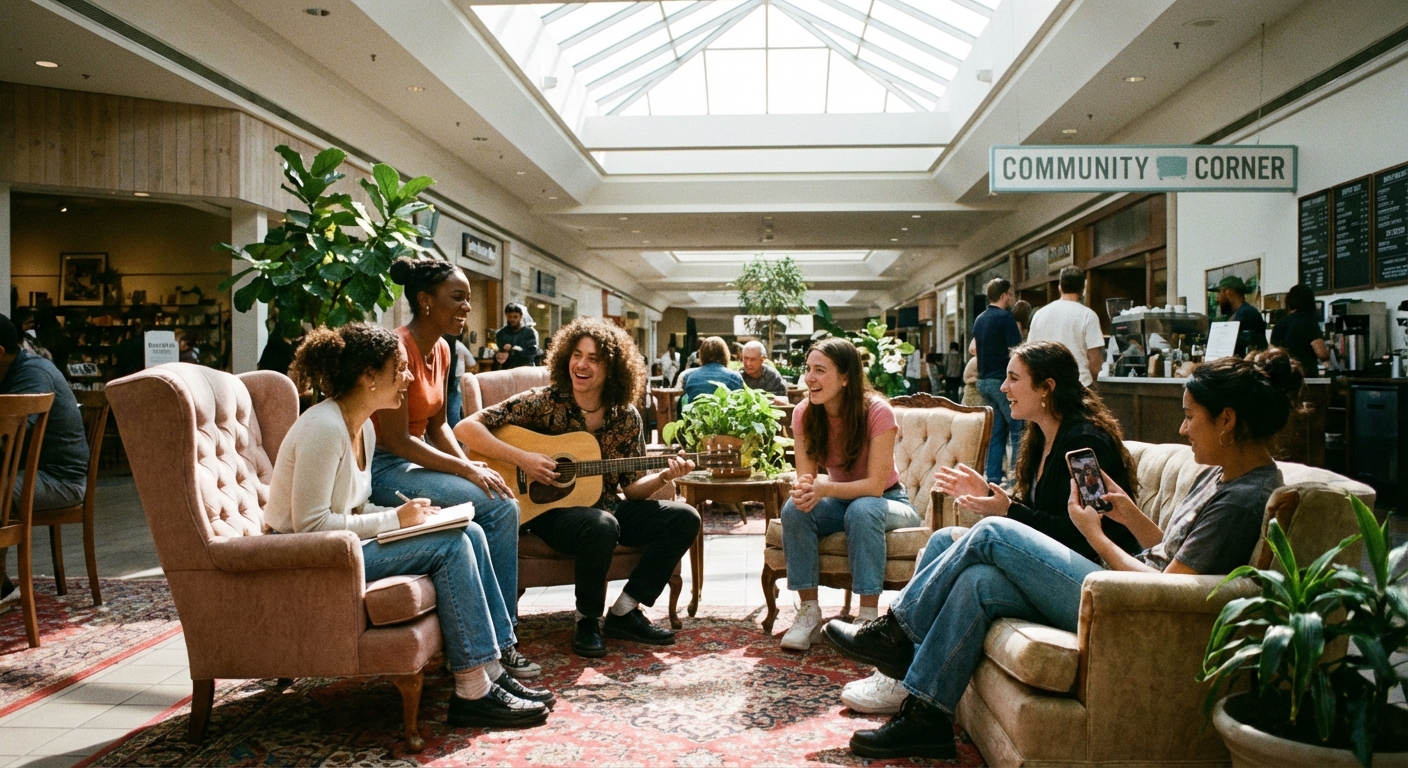
Research from the Pew Research Center shows Gen Z reports higher rates of loneliness than any previous generation at the same age. They’ve also experienced more restrictions on their physical movement than previous generations, between helicopter parenting, car-dependent suburbs, and years of pandemic restrictions during formative years. The desire for casual physical co-presence, just being around other people without agenda, makes sense in that context.
Malls also solve the “what do you want to do?” problem that plagues social planning. Going to a mall doesn’t require deciding on a specific activity in advance. You can walk around, maybe get food, maybe browse stores, maybe just sit and talk. This low-stakes flexibility is appealing to a generation that grew up scheduling everything and is now seeking spontaneity.
The economic accessibility matters too. Malls are free to enter, climate-controlled, and don’t require purchasing anything to justify being there. For young people with limited discretionary income in an era of high inflation, that combination is valuable. You can spend an afternoon at a mall with friends for the cost of a shared pretzel.
What This Means for Retail
The death of retail was always overstated. E-commerce has leveled off at about 15% of total retail sales, a significant share but far from dominant. The remaining 85% happens in physical spaces, even if those spaces look different than they used to. The question was never whether physical retail would survive but what form it would take.
The mall resurgence suggests the answer involves integration with social functions. Pure transactional retail, stores that exist solely to move products, will continue struggling against online competition. Retail that provides experiences, community, and third-place functions can charge premium rents because it provides value beyond the transaction. The stores paying those rents will be the ones that benefit from foot traffic generated by the social function.
This model isn’t new; it’s how shopping districts in cities have always worked. The innovation is applying it to suburban enclosed spaces that lost their way by over-optimizing for transactions. The malls that survive will be the ones that remember what Victor Gruen originally intended: community centers that happen to include commerce.
The Bottom Line
The mall isn’t back. The mall never fully went away, and what’s emerging is something different anyway. But physical gathering spaces are having a moment, driven by a generation that’s digital-native but craving physical presence. The commercial real estate implications are significant: well-located mall properties that adapt will thrive; those that don’t will continue their decline.
Watch for which developers figure this out fastest. The winners will be those who treat retail as one tenant among many in a community hub, not the primary purpose of the space. The losers will be those who keep trying to make traditional anchor-store retail work in a world that’s moved on.
And if you haven’t been to a mall in years, consider stopping by. What you find might surprise you.
Sources: Placer.ai, Pew Research Center, ICSC (International Council of Shopping Centers), Urban Land Institute