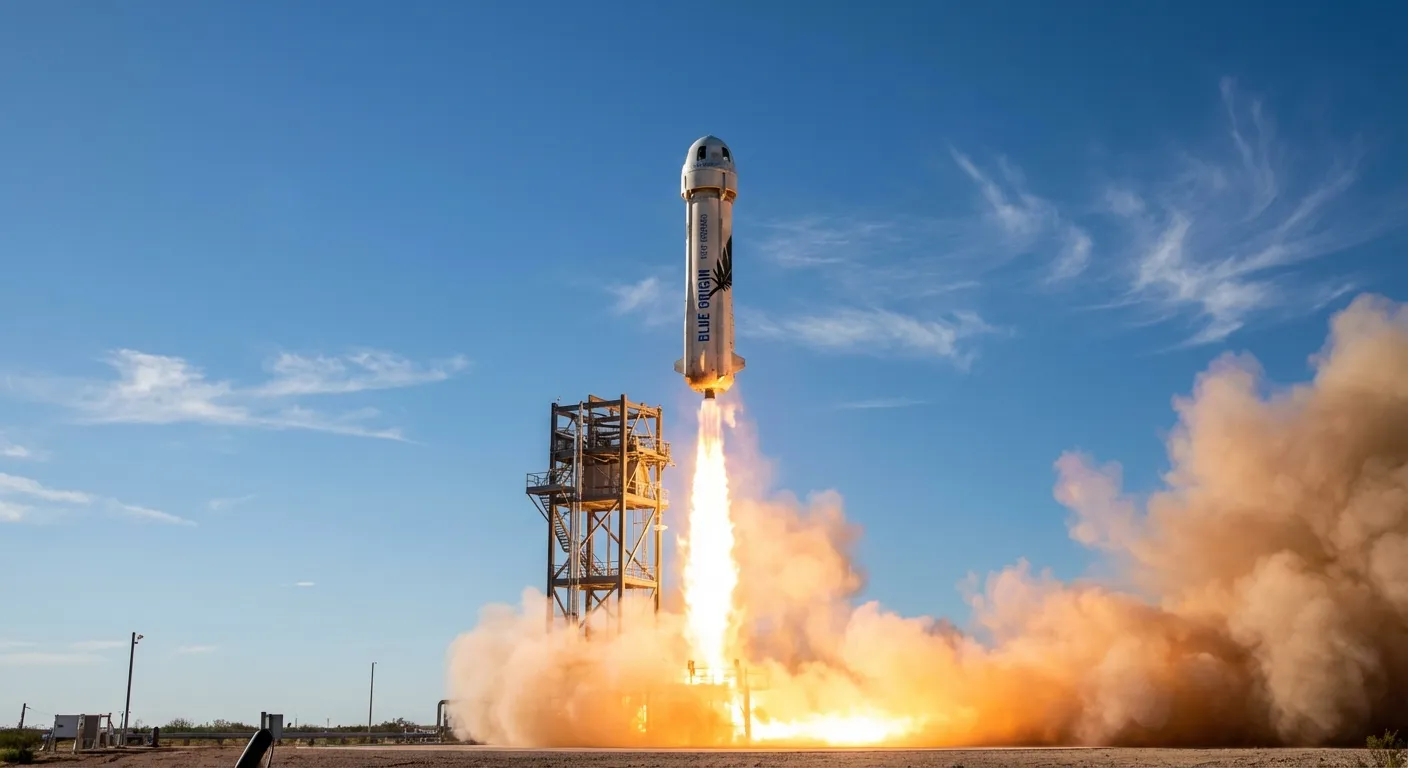
At 10:47 a.m. Central Time today, Michaela Benthaus became the first person with paraplegia, and the first wheelchair user, to cross the Karman line and enter space. The 38-year-old German mechanical engineer flew aboard Blue Origin's New Shepard vehicle from the company's West Texas launch facility, experiencing approximately four minutes of weightlessness at an altitude of 107 kilometers before returning safely to Earth. The entire flight lasted 11 minutes and 14 seconds. For the disability rights community, it lasted a lifetime.
"Space doesn't care whether you can walk," Benthaus told reporters at the post-flight press conference, still visibly processing the experience. "Gravity is the great equalizer on the way up, and weightlessness is the great equalizer once you arrive." The flight was not a symbolic gesture arranged for publicity. Benthaus, who holds a master's degree in aerospace engineering from the Technical University of Munich and has worked on satellite propulsion systems for Airbus Defence and Space, applied to Blue Origin's astronaut program through the same process as any civilian applicant. Her selection, she has emphasized, was based on qualifications, not charity.
The Engineering Behind the Mission
Adapting a spacecraft for a passenger with paraplegia turned out to be less technically demanding than Blue Origin's engineers initially expected. Dr. Laura Forczyk, founder of the space consulting firm Astralytical and an expert on human spaceflight operations, told Space.com that "the New Shepard capsule was already designed to restrain passengers against forces up to 5.5 G during ascent and descent. The fundamental safety systems didn't need to change. What changed was the procedures."
The primary modifications involved the capsule's ingress and egress system. Blue Origin designed a transfer mechanism that allowed Benthaus to move from her wheelchair to the flight seat without requiring her to bear weight on her legs. The harness system was adjusted to provide additional torso support during the high-G phases of flight, compensating for the reduced core muscle function that comes with her level of spinal cord injury. A medical monitoring system tracked her vitals in real time throughout the flight.
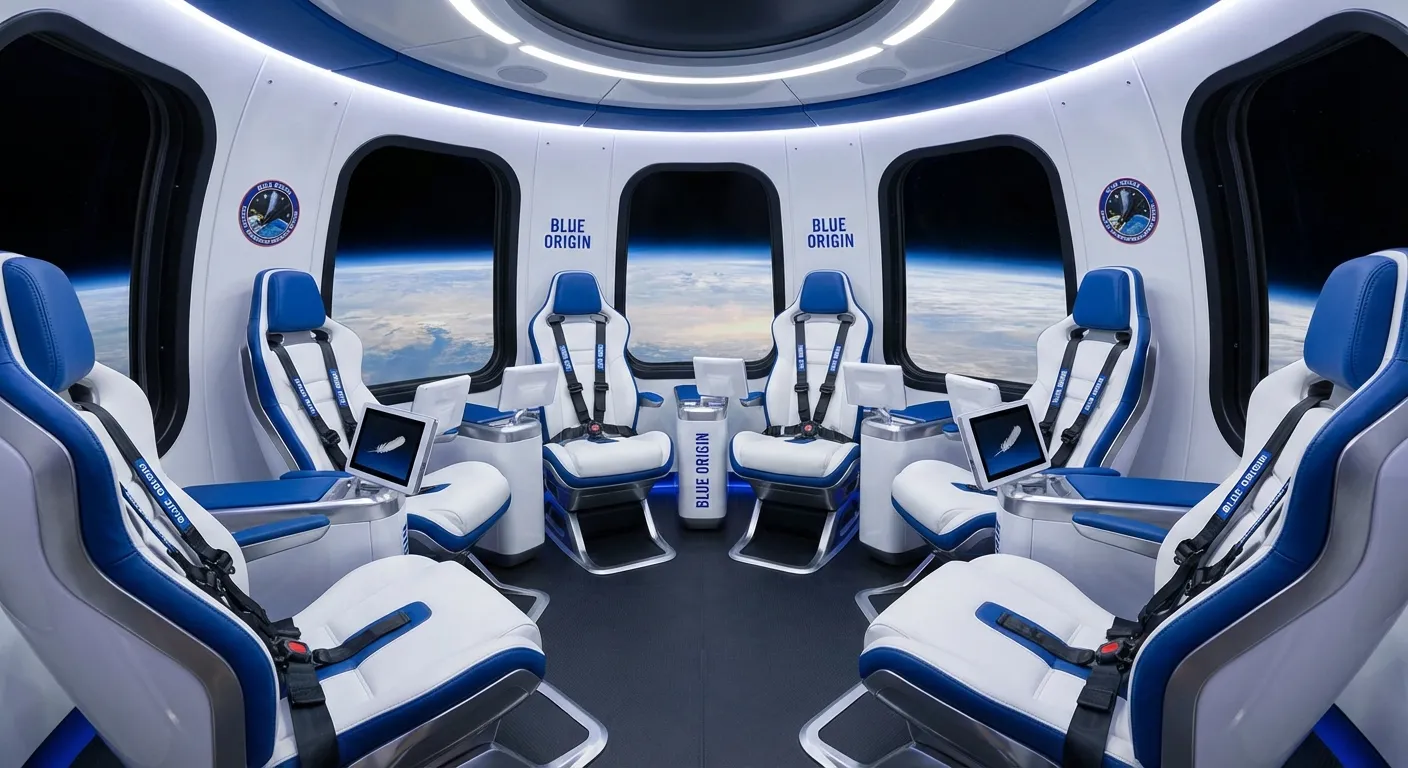
The more significant innovation was in pre-flight training. Standard astronaut preparation assumes full mobility for emergency procedures including capsule evacuation. Blue Origin worked with Benthaus over four months to develop alternative protocols for every emergency scenario, demonstrating that safety could be maintained without requiring all passengers to have identical physical capabilities. "We proved that one-size-fits-all is a choice, not a necessity," said Nick Patrick, Blue Origin's director of human spaceflight, at the post-flight briefing.
What This Accomplishment Represents
The history of spaceflight has been built on exclusion, for reasons that were sometimes justified and sometimes simply inherited from military culture. Early astronauts were drawn exclusively from fighter pilot ranks, a profession that demanded peak physical conditioning. Even as space agencies broadened their criteria to include scientists and engineers, strict medical standards persisted. NASA's astronaut medical screening still disqualifies candidates with a range of physical conditions, many of which have no bearing on the ability to perform duties in microgravity.
Major space agencies have been slow to address this gap. NASA's astronaut medical standards still disqualify candidates with significant mobility impairments, and the agency has no formal disability inclusion program for its astronaut corps. The European Space Agency took a more proactive step in 2022 by selecting John McFall, a Paralympian with a prosthetic leg, as its first "parastronaut," though McFall has not yet flown and the program remains a feasibility study rather than a permanent policy change. Benthaus's flight challenges the assumption that those standards, designed for long-duration missions requiring manual spacecraft operation, should apply equally to the emerging commercial spaceflight sector. Sub-orbital tourism flights are automated, brief, and physically manageable for passengers across a wider range of physical conditions than traditional spaceflight demands. Judy Heumann, the late disability rights activist whose advocacy helped shape the Americans with Disabilities Act, argued for years that exclusion from frontier experiences reinforced broader societal assumptions about what disabled people could achieve.
The Accessibility Debate
Not all reactions were celebratory. Some disability advocates raised concerns that the flight could be interpreted as a solved problem when the underlying issues remain vast. A ticket on Blue Origin's New Shepard costs an estimated $200,000 to $300,000, placing space tourism beyond the reach of the overwhelming majority of disabled people, who face employment discrimination, higher medical costs, and lower average incomes than the general population. The Bureau of Labor Statistics reports that the employment rate for people with disabilities in the U.S. was 22.5% in 2024, compared to 65.2% for the general working-age population.
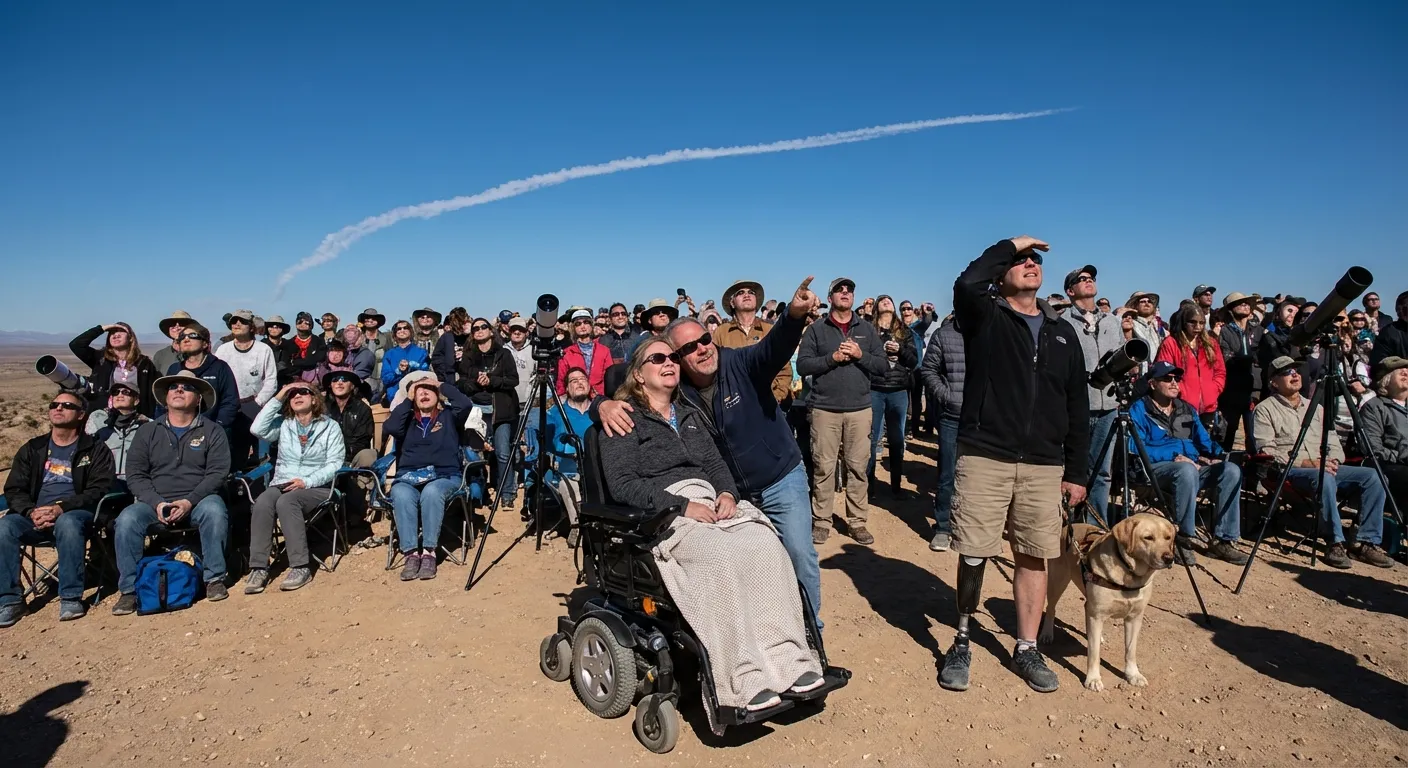
Alice Wong, founder of the Disability Visibility Project, wrote on social media that "one flight for one person is a symbol, not a solution. Accessibility means systemic change, not individual achievements that make everyone feel good while the structures remain unchanged." The critique is familiar in disability rights circles, where individual 'firsts' are sometimes seen as providing cover for the lack of broader systemic progress.
Blue Origin has committed to incorporating the lessons from Benthaus's flight into its standard procedures, with the goal of making its commercial program routinely accessible to passengers with various physical disabilities. The company has not provided specific timelines, and the cost barrier remains the largest obstacle to any meaningful expansion of access.
The Takeaway
Michaela Benthaus's flight is a genuine engineering and human achievement. It demonstrates that the physical barriers to space travel are narrower than decades of exclusionary standards suggested, and that adaptation requires creativity rather than fundamental redesign. But the significance of the moment extends beyond the technical proof. For the approximately 1.3 billion people worldwide who live with significant disabilities, according to the World Health Organization, seeing someone who shares their experience cross the boundary of space shifts what is imaginable. Whether that shift translates into systemic change in aerospace and beyond depends on whether institutions treat today's flight as a beginning rather than a destination. The 11 minutes Benthaus spent above the Karman line proved something that should have been obvious: the universe has no accessibility requirements. The barriers have always been down here.
Sources
- New Shepard Completes 37th Mission - Blue Origin, December 2025
- Blue Origin Launches 1st Wheelchair User to Space and Back - Space.com, December 2025
- AstroAccess Ambassador Michaela "Michi" Benthaus Makes History as First Wheelchair User in Space - AstroAccess, December 2025
- Persons with a Disability: Labor Force Characteristics Summary - 2024 - Bureau of Labor Statistics, February 2025
- Paraplegic Engineer Becomes First Wheelchair User to Float in Space - NBC News, December 2025