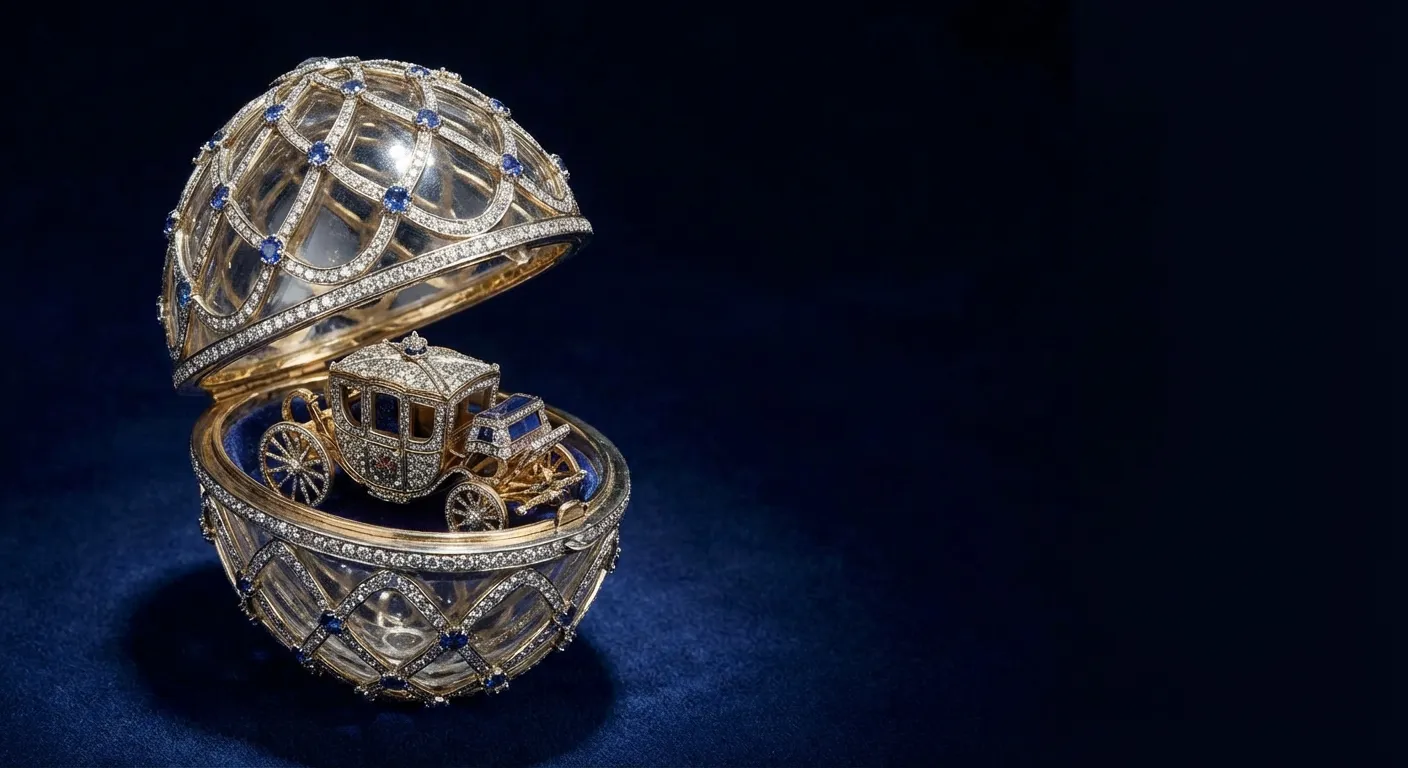
The Winter Egg, one of the rarest Fabergé eggs still in private hands, sold at Christie's in London last week for £22.9 million, roughly $30.2 million. That figure sets a new auction record for any work by the House of Fabergé, the legendary Russian jewelry firm that created elaborate Easter eggs for the last two Russian tsars. The previous record, $18.5 million for the Rothschild Egg in 2007, had stood for nearly two decades.
For context, $30 million exceeds the GDP of some small nations and rivals prices paid for works by Monet or Warhol. It also represents validation for a category that has long occupied an unusual space in the art market, too ornate for minimalist collectors, too functional for fine art purists, but utterly irresistible to buyers who prize the combination of technical mastery, imperial history, and genuine scarcity.
The Workshop That Rivaled Any Artist's Studio
Peter Carl Fabergé ran what was essentially the Apple of late 19th-century luxury goods, a firm that combined cutting-edge metalworking technology with obsessive attention to detail and an instinct for spectacle. At its peak, the House of Fabergé employed over 500 craftspeople across workshops in St. Petersburg, Moscow, and Odessa. Géza von Habsburg, a Fabergé scholar and former Christie's specialist, has described the operation as "the most sophisticated luxury production house the world has ever seen."
The Imperial Easter eggs were the firm's masterwork. Between 1885 and 1916, Fabergé's artisans created 50 eggs for the Russian imperial family, each one a unique mechanical marvel containing a hidden surprise. The tradition began when Tsar Alexander III commissioned an egg for his wife, Empress Maria Feodorovna. She was so enchanted that it became an annual tradition, continued by their son Nicholas II, who eventually commissioned two eggs each year, one for his mother and one for his wife.
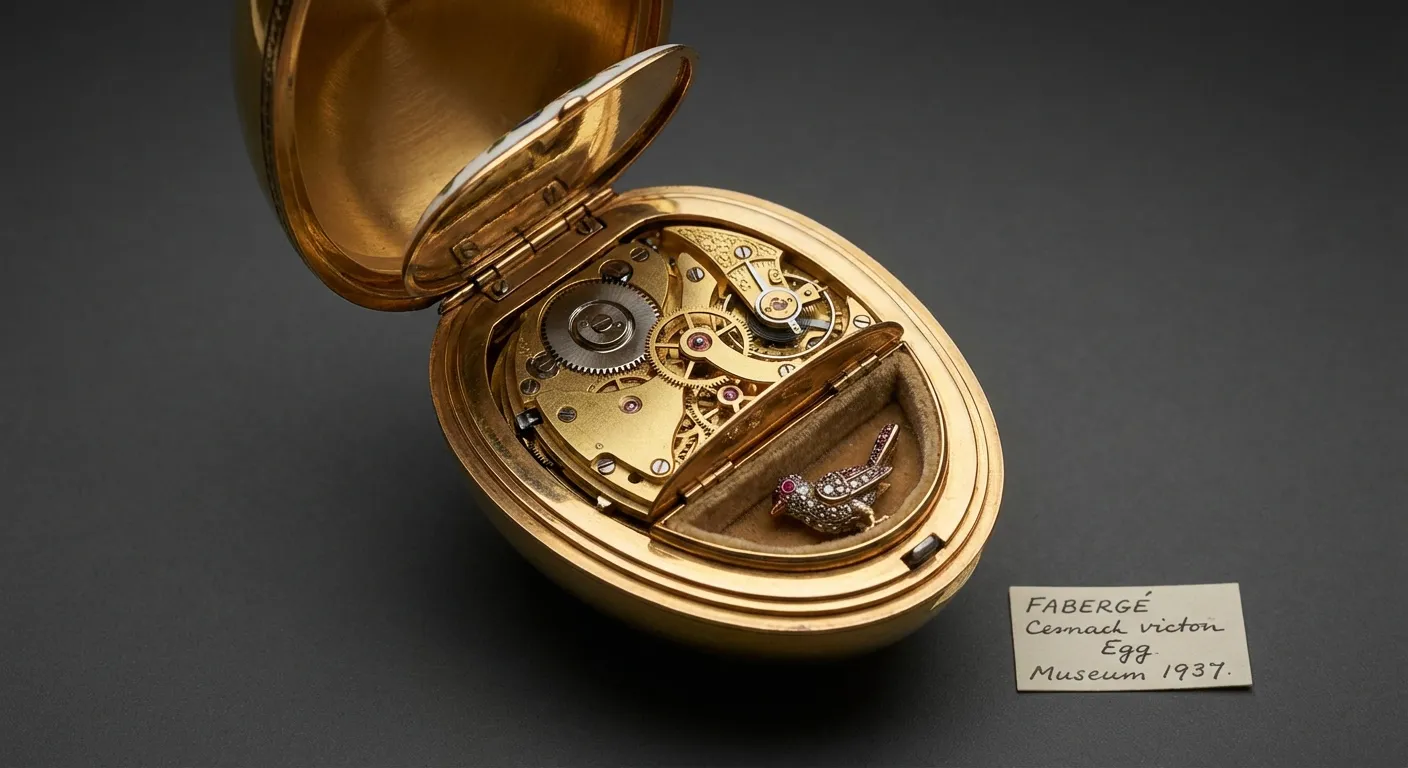
What made the eggs extraordinary was not simply the precious materials, though those were lavish. It was the engineering. One egg contained a fully working model of the Trans-Siberian Railway with a gold and platinum locomotive. Another held a miniature replica of the imperial yacht with diamond-set portholes. The surprise inside was always a secret until the egg was opened, and Fabergé's workshops spent up to fourteen months perfecting each commission.
Of the 50 Imperial eggs created, only 43 are known to survive. Seven vanished during the chaos of the Russian Revolution, and their fate remains one of the art world's most tantalizing mysteries. The surviving eggs are split between museums and private collections, with Russia's Kremlin Armory holding the largest public collection of ten eggs.
The Winter Egg's Extraordinary Journey
The Winter Egg was created in 1913 for Tsar Nicholas II to present to his mother, the Dowager Empress. Its design evokes the Russian winter with rock crystal carved to simulate ice and accents of diamonds and moonstones that catch light like frost on a window. Inside sits a platinum basket of wood anemones in a bed of gold moss, representing spring emerging from winter's grip. The contrast between the frozen exterior and the delicate flowers within is considered one of Fabergé's most poetic conceits.
The egg's provenance traces a path through the upheavals of the 20th century. After the Revolution, the Soviet government sold it during the 1920s and 1930s, when the cash-strapped regime liquidated imperial treasures to fund industrialization. It passed through the hands of several European dealers before entering a private collection where it remained for decades. Christie's head of Russian art, Alexis de Tiesenhausen, called the consignment "one of the most significant Fabergé works to reach the market in a generation."
What $30 Million Reveals About the Market
The record price reflects converging forces in the art and collectibles markets. Ultra-high-net-worth collectors have increasingly turned to tangible assets with historical significance, seeking alternatives to volatile financial markets. Fabergé eggs offer what few other objects can: a finite supply that will never increase, combined with a brand recognition that extends far beyond the art world. Practically everyone has heard of Fabergé eggs, even people who have never set foot in an auction house.
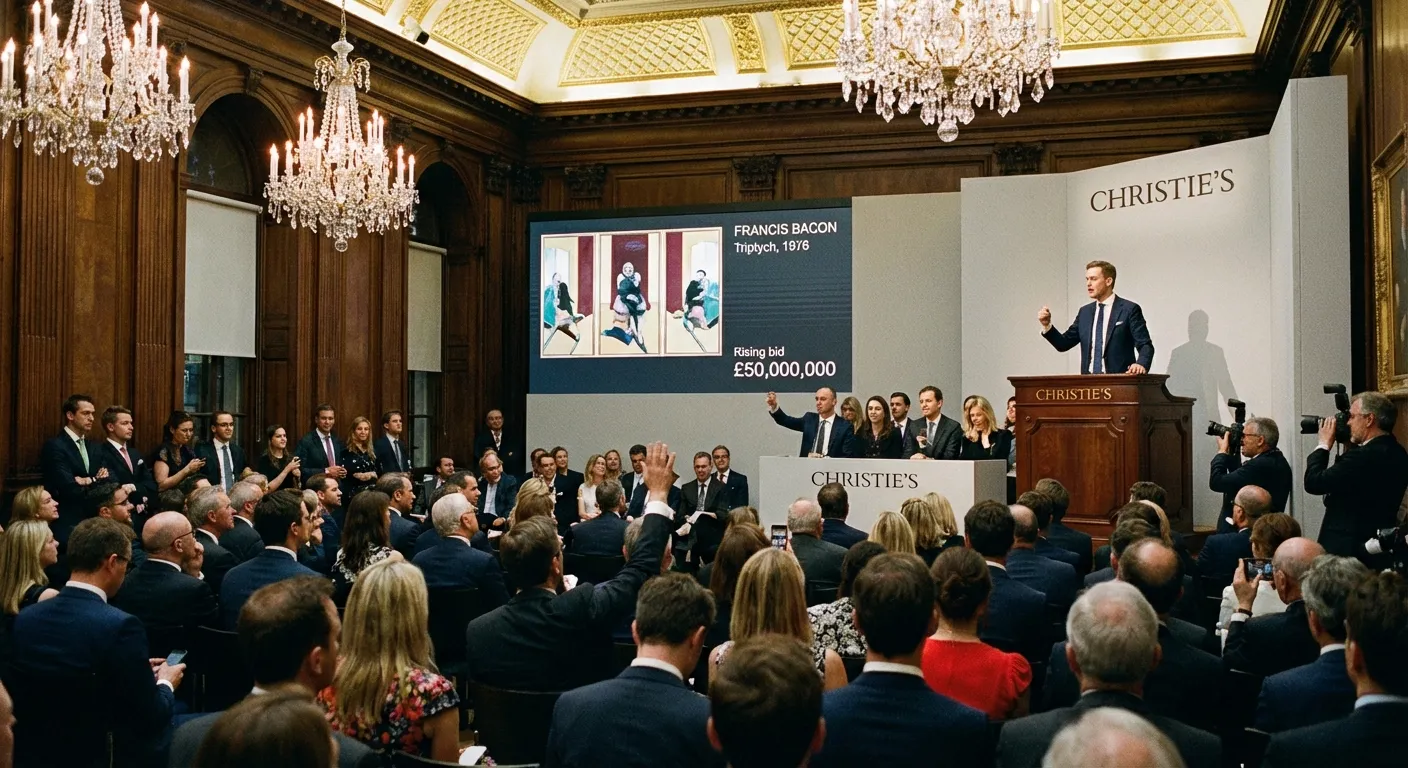
The timing carries its own significance. Sanctions and political tensions stemming from Russia's invasion of Ukraine have complicated the market for Russian art and artifacts. But pieces with clear pre-Revolution provenance and decades of legitimate Western ownership remain freely tradeable. The Winter Egg's clean ownership history since the 1930s placed it beyond any sanctions-related complications. Fabergé specialist Kieran McCarthy of Wartski, the London jewelers, noted that "the sanctions have actually concentrated demand on the small number of pieces with impeccable provenance, driving prices higher for the best examples."
The sale also highlights a generational pattern in Fabergé collecting. Several major collections assembled in the mid-20th century are now being dispersed as their owners age or their estates are settled. Each sale represents both a loss for one collection and an opportunity for another, in a market where supply is measured in single digits per decade.
What It Tells Us
The appeal of these eggs extends beyond investment calculus. They carry the weight of a vanished civilization, created during the final flourishing of imperial Russia and representing a level of craftsmanship that no modern workshop can replicate. The last egg Faberge completed was never delivered. Nicholas II and his family were executed in 1918, and Faberge himself fled Russia, dying in exile in Lausanne in 1920. Owning one of his eggs means owning a fragment of that world, and for collectors with the means to compete at this level, that combination of beauty, history, and irreplaceable scarcity clearly justifies the price.
The Winter Egg sale also signals a broader shift in the decorative arts market. For decades, furniture, jewelry, and objets d'art traded at a steep discount relative to paintings and sculpture. That gap is narrowing. Christie's reported that its 2025 decorative arts sales rose 31% year over year, driven by younger collectors who prize craftsmanship and provenance over medium. If that trend holds, the Faberge record may be less an outlier than a leading indicator for a category whose best works are finally being valued alongside fine art.
Sources
- CNN Style: Faberge egg fetches record $30.2 million at rare auction - CNN, December 2025
- Faberge Research Site: Imperial Easter Eggs chronology - Faberge Research Site
- The Metropolitan Museum of Art: Faberge from the Matilda Geddings Gray Foundation Collection - The Metropolitan Museum of Art
- Artnet News: Faberge Egg Cracks Record With $30.2 Million Haul at Auction - Artnet News, December 2025
- Moscow Kremlin Museums: Faberge Easter Presents virtual exhibition - Moscow Kremlin Museums