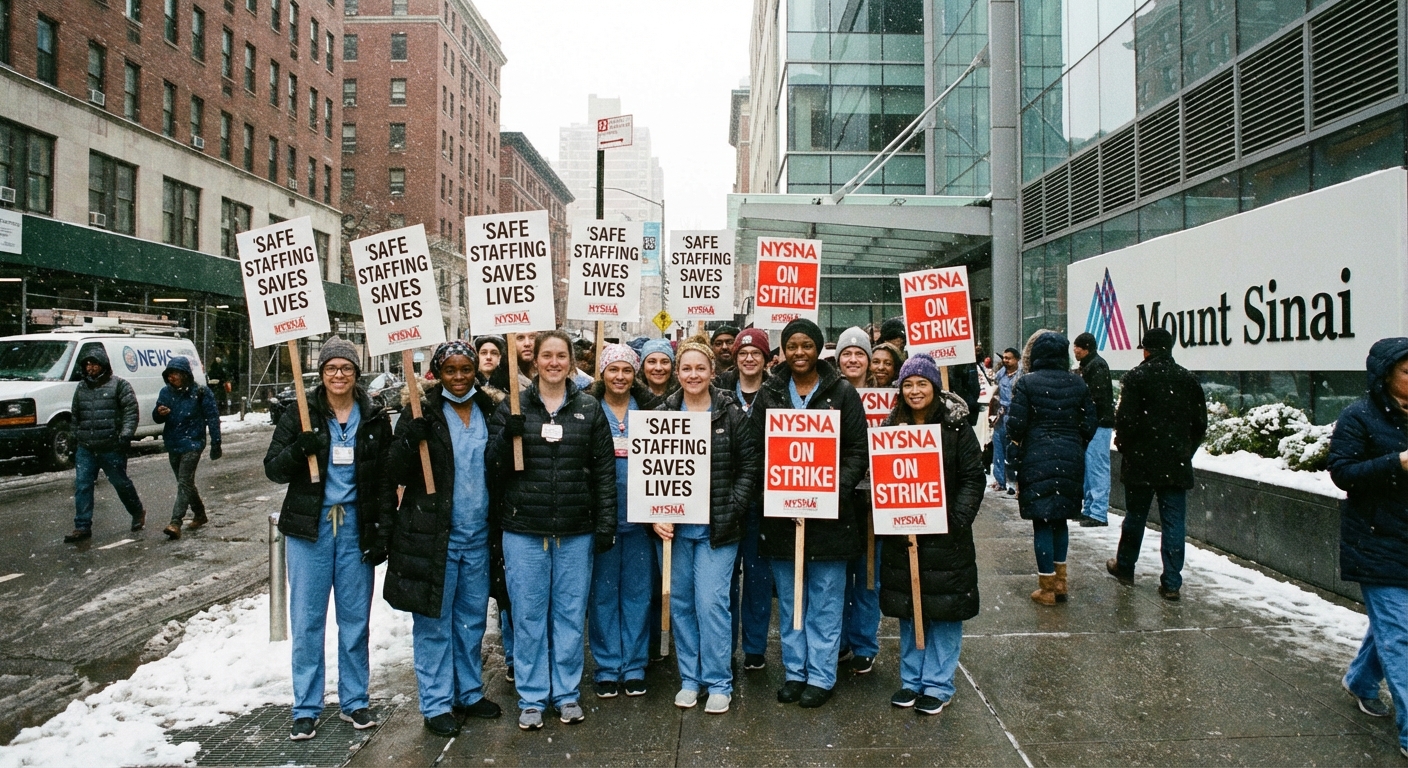
About 15,000 nurses walked off the job Monday morning at three of New York City’s largest hospital systems, launching what union officials say is the biggest nursing strike in the city’s history. The walkout comes during a historic flu surge and raises immediate questions about patient care at some of the region’s most important medical facilities.
Nurses at Mount Sinai Hospital (including two satellite campuses), NewYork-Presbyterian, and Montefiore Medical Center in the Bronx began their strike at 6 a.m. after contract negotiations collapsed over the weekend. The New York State Nurses Association, which represents the workers, says hospitals refused to budge on three core issues.
What Nurses Are Demanding
The strike centers on three primary demands, though broader issues around pay and AI also factor in.
Safe staffing ratios are the most contentious point. Nurses argue that inadequate staffing forces them to care for too many patients simultaneously, compromising both patient safety and their own ability to do their jobs effectively. The union says hospitals are trying to roll back protections won in previous contracts.
Healthcare benefits for nurses themselves have become a sticking point. Union leadership says hospitals are proposing cuts to the health coverage nurses receive, an ironic position for healthcare employers.
Workplace violence protections round out the core demands. Nurses report rising incidents of violence from patients and visitors, and want hospitals to implement stronger security measures and policies.
The union also wants limitations on hospitals’ use of artificial intelligence, reflecting broader labor concerns about automation in healthcare settings.
The Hospitals’ Response
Hospital management has pushed back hard on the union’s characterization of negotiations. Montefiore called the demands “reckless and irresponsible,” citing a proposed package worth “$3.6 billion, including a nearly 40% wage increase.” The hospital said it is “preparing for what we anticipate could be a multi-week strike.”
Mount Sinai announced it has “1,400 qualified and specialized nurses” ready to provide care during the walkout, presumably temporary replacement staff brought in specifically for strike coverage.
Neither side appears close to a resolution. The contract expired December 31, and the 10-day strike notice period passed without breakthrough negotiations.
The Timing Problem
The strike hits during what New York State Attorney General Letitia James called “a historic flu surge.” Emergency rooms across the city have been strained by seasonal illness, and the loss of 15,000 nurses compounds pressure on a system already running hot.
The timing appears intentional from the union’s perspective. Strikes have maximum leverage when employers face the greatest operational pressure. But it also means patients seeking care this week face genuine uncertainty about staffing levels and wait times.
Mayor Zohran Mamdani stood with striking nurses Monday, calling their fight “a battle for dignity, fairness and the future of the city’s health care system.” The political support from city hall adds pressure on hospitals but does not directly affect negotiations.
What This Means for Patients
If you need care at the affected hospitals, expect delays and potentially degraded service. Replacement nurses, however qualified, lack familiarity with specific facilities, systems, and patient populations. Emergency rooms will remain open, but non-emergency procedures may be postponed.
Hospitals across the city not affected by the strike will likely see increased patient volume as people seek alternatives. That ripple effect means the strike’s impact extends beyond the three health systems directly involved.
Historical Context
The last major nursing strike in New York City occurred just three years ago, in 2023, at Mount Sinai and Montefiore. That walkout lasted only three days before a settlement was reached, resulting in a 19% pay increase over three years.
Union leadership may be hoping for a similar quick resolution, but hospital statements suggesting preparation for “a multi-week strike” indicate management may take a harder line this time.
The 2023 strike established that nurses could win significant concessions through work stoppages. This time, both sides know what the other is capable of.
What to Watch
Track whether other hospitals join. The strike currently affects three systems, but the NYSNA represents nurses at additional facilities. Expansion would dramatically increase pressure on the city’s healthcare infrastructure.
Watch for any movement on the core staffing ratio demands. That issue, more than pay, appears to be the real sticking point. Hospitals view staffing flexibility as essential to operations; nurses view mandatory ratios as essential to patient safety.
Federal mediation could enter the picture if the strike drags on and becomes a public health emergency. But for now, this remains a local labor dispute playing out on New York City sidewalks.
Sources: ABC News, NBC News, CBS New York, New York State Nurses Association, hospital statements.