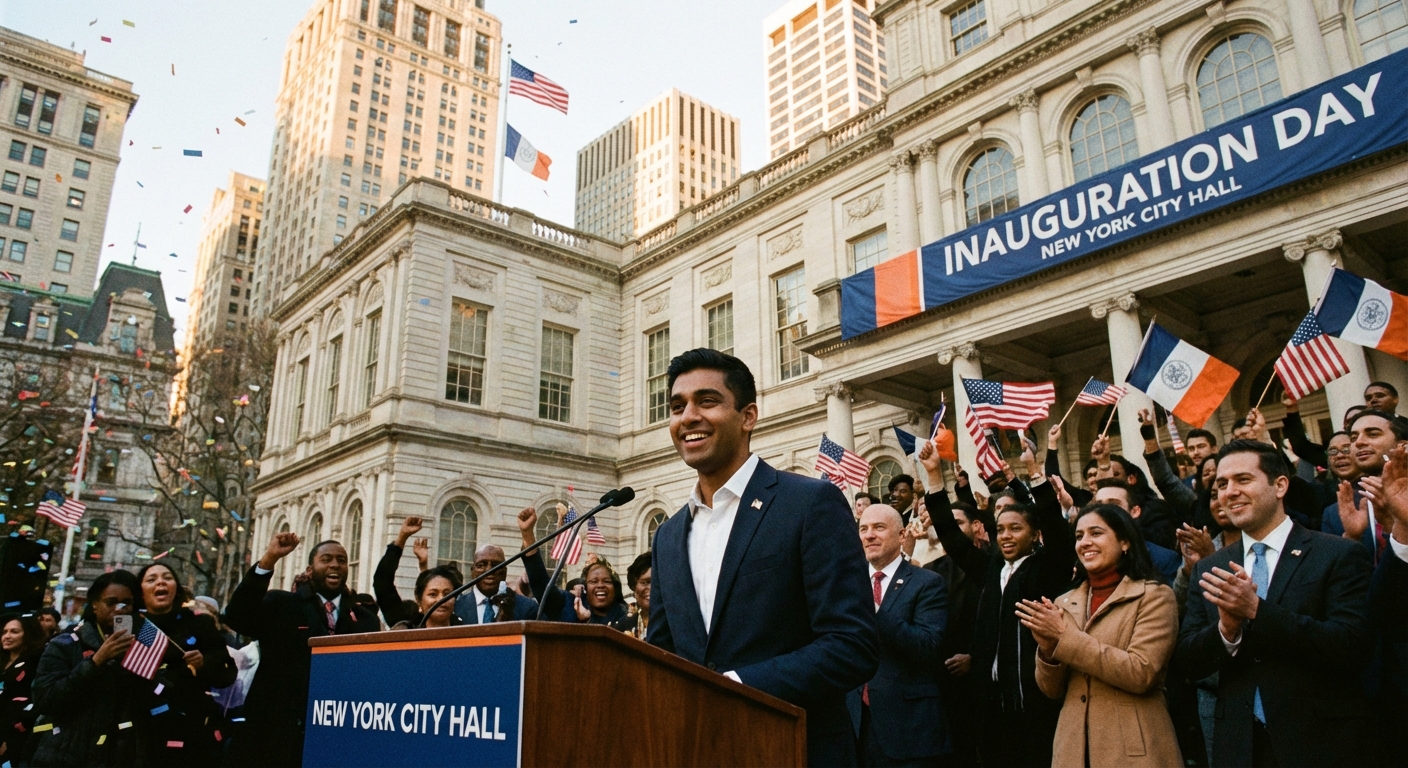
Zohran Mamdani was sworn in as New York City’s 111th mayor this week, becoming the first Muslim, first South Asian, and first African-born person to hold the office. At 34, he’s also the youngest mayor New York has had in generations. The democratic socialist’s victory over a crowded field marks a significant shift for a city that has traditionally elected moderate Democrats to its highest office.
Mamdani’s path to City Hall began in the New York State Assembly, where he represented Astoria, Queens, and built a reputation as a progressive voice on housing, labor, and immigrant rights. His mayoral campaign emphasized affordability, tenant protections, and a more confrontational approach to real estate interests that have long shaped city politics. In a city where median rent exceeds $3,500 and housing insecurity affects millions, that message found an audience.
The historic nature of his election extends beyond policy. New York City’s Muslim population exceeds 750,000, its South Asian population approaches one million, and both communities have long been underrepresented in city leadership relative to their numbers. Mamdani’s inauguration resonates as representation in a city that prides itself on diversity but hasn’t always reflected it in elected leadership.
How He Won
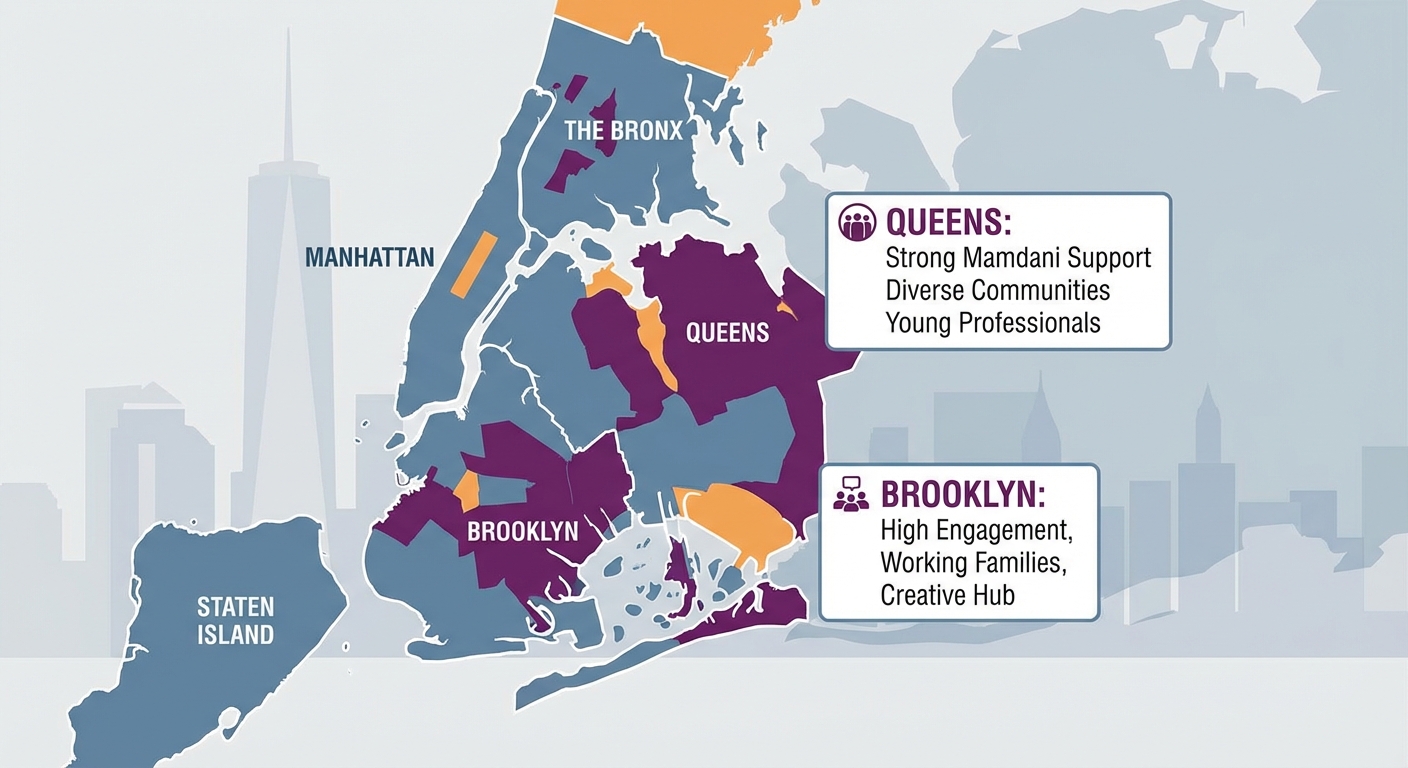
Mamdani’s victory came through a coalition that reshaped assumptions about New York City politics. He performed strongly in immigrant-heavy neighborhoods in Queens and Brooklyn, dominated among younger voters across all boroughs, and made inroads in communities that had previously leaned toward more moderate candidates.
His campaign was notably small-dollar funded, rejecting contributions from real estate developers and relying instead on grassroots donations and volunteer networks. This approach, which initially seemed like a liability in expensive New York media markets, became a selling point as voters grew tired of the influence of wealthy donors on city government.
The timing mattered too. Mamdani benefited from a fractured moderate lane, with several candidates splitting the vote among voters who might have otherwise coalesced around a single alternative. His campaign also mobilized constituencies that typically sit out municipal elections, particularly young renters who saw housing costs as an existential concern rather than an abstract policy issue.
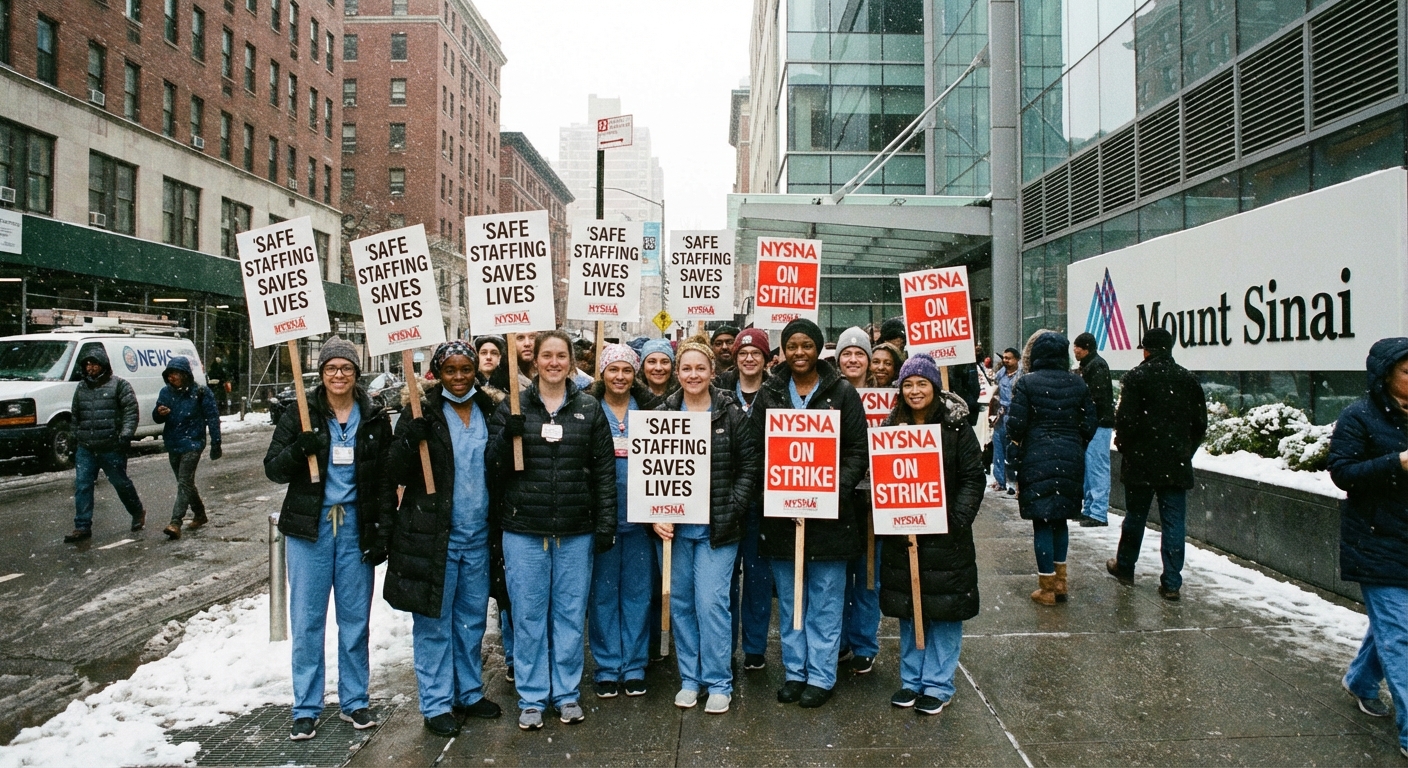
Union endorsements proved crucial. While some labor organizations backed more traditional candidates, several major unions, particularly those representing service workers and healthcare employees, supported Mamdani’s campaign early and provided organizational muscle in the final weeks.
What His Agenda Looks Like
Mamdani’s policy priorities center on housing affordability, a defining issue in a city where the gap between wages and rents has reached crisis proportions. His platform includes significant expansion of tenant protections, increased investment in public housing, and more aggressive use of city powers to challenge landlord practices. He’s called for a “good cause eviction” law that would limit landlords’ ability to refuse lease renewals, a measure the real estate industry has fiercely opposed.
On public safety, he’s positioned himself as a reformer without being abolitionist. He’s committed to maintaining police staffing while shifting some emergency response functions to other city agencies and investing in violence intervention programs that have shown results in other cities. It’s a balancing act that acknowledges both progressive concerns about policing and broader public anxiety about crime.
His approach to economic development breaks from predecessors who prioritized tax incentives to attract major employers. Mamdani has been skeptical of corporate subsidies, arguing that the city’s advantages, talent, markets, infrastructure, should make it attractive without giveaways. Whether this approach will work in practice, especially if economic conditions tighten, remains to be tested.
The new mayor also inherits significant challenges: a budget under pressure, a transit system in need of investment, and a city still adjusting to post-pandemic changes in work and commuting patterns. His ability to deliver on ambitious promises while managing these constraints will define his tenure.
What the National Response Tells Us
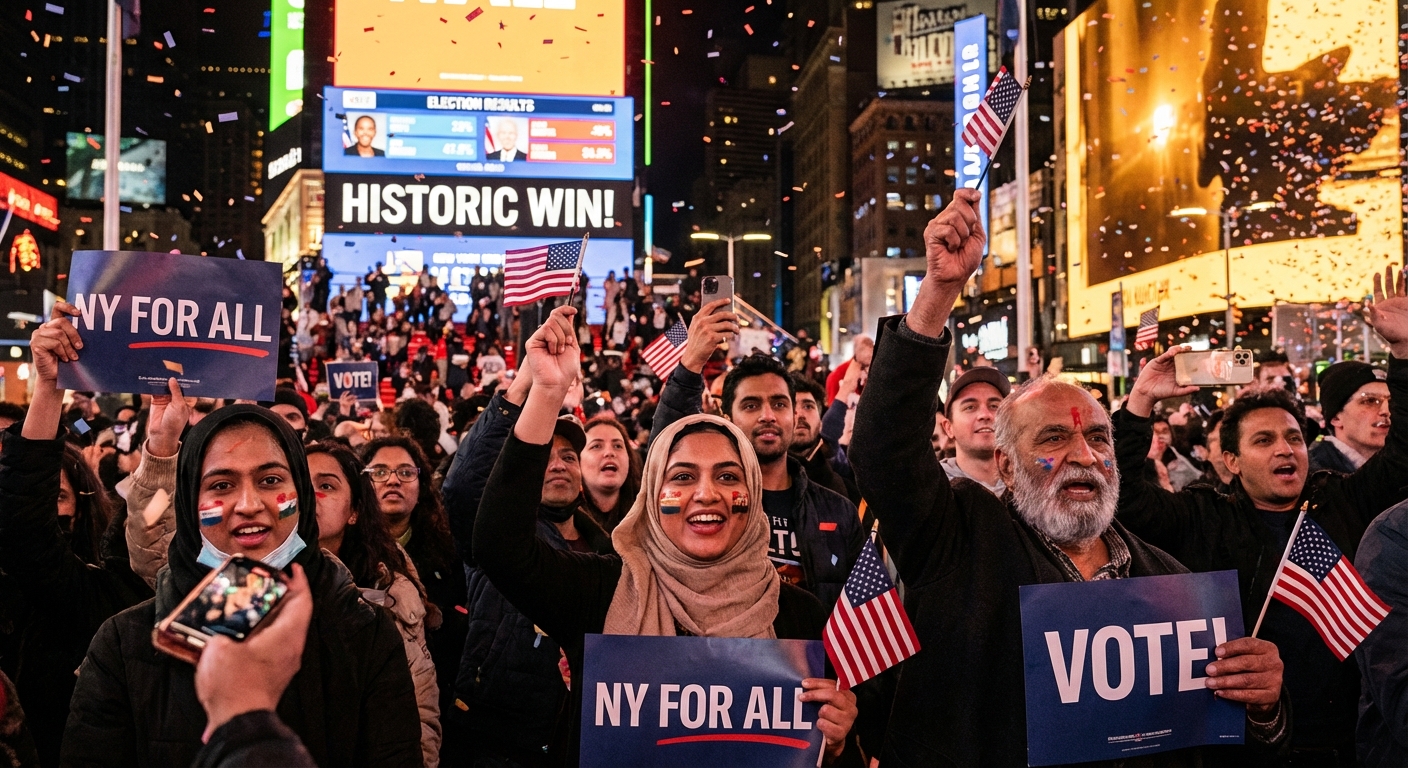
Reaction to Mamdani’s victory split predictably along political lines, but the intensity revealed something about the current moment. Conservative commentators seized on his democratic socialist label and Muslim faith as evidence of radical politics capturing a major city. Progressive voices celebrated the win as proof that ambitious policy platforms can succeed even in expensive, complex electoral environments.
Both readings probably overstate the case. New York City politics has always been somewhat distinct from national trends, and a municipal election with particular local dynamics doesn’t necessarily predict anything about broader political direction. But the symbolic weight is real. A Muslim mayor of America’s largest city matters in a country where anti-Muslim sentiment remains a live political force.
International coverage was notable. Media outlets across Europe, Asia, and the Middle East covered the inauguration prominently, reflecting both interest in American politics and recognition of the representational significance. For communities that have felt marginalized in American public life, seeing someone who shares their background lead New York City carries meaning that transcends policy positions.
The Bottom Line
Zohran Mamdani’s election as New York City mayor is historically significant and potentially consequential for urban policy, but the real test begins now. His ability to translate campaign promises into governance results, navigating a complex bureaucracy, a powerful real estate industry, and the endless competing demands of America’s largest city, will determine whether his victory represents a lasting political shift or a one-time event.
Watch for early moves on housing policy, where he’s promised aggressive action, and his appointments to key positions, which will signal how he plans to actually run city government. The next few months will reveal whether the campaign’s ambitions can survive contact with the realities of governing eight million people.
For those tracking American politics more broadly, Mamdani’s tenure will provide a test case for whether progressive urban governance can deliver results that sustain electoral coalitions. Plenty of mayors have won on ambitious platforms only to disappoint supporters or lose reelection. The historic firsts matter, but so does what comes next.