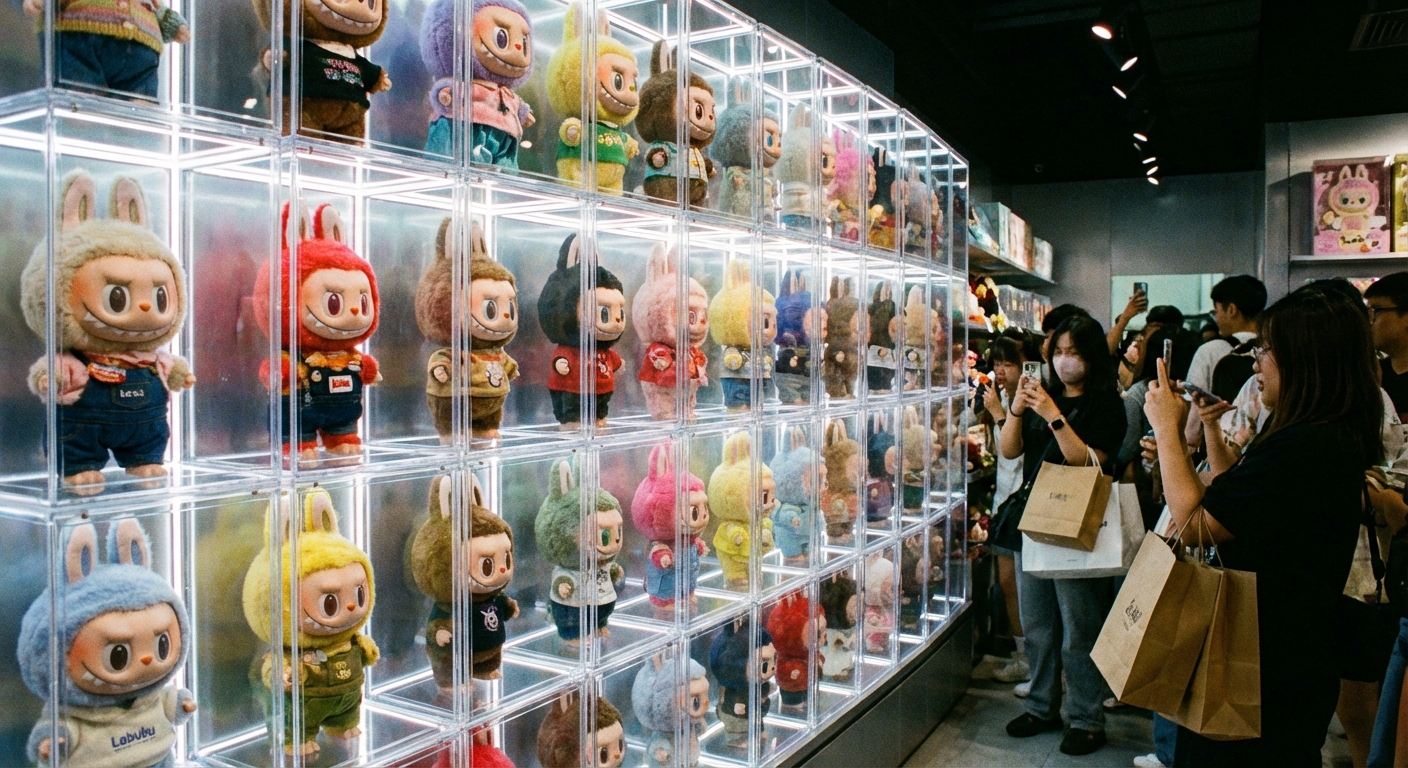
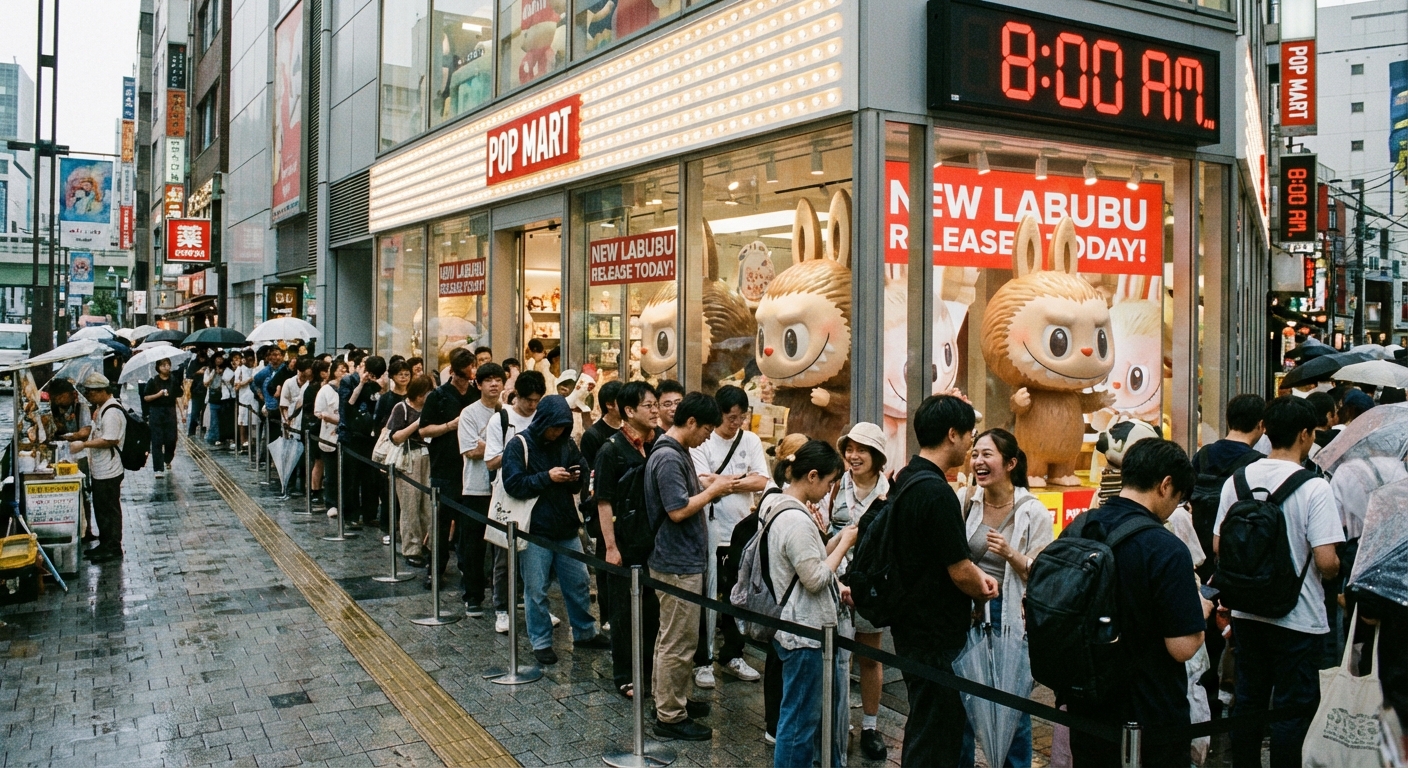
At first glance, Labubu seems like an unlikely candidate for cultural phenomenon status. The character, created by Hong Kong artist Kasing Lung, features an oversized head, pointy ears, and a mouth full of sharp teeth arranged in a permanent, somewhat unsettling grin. Many who encounter it for the first time describe it as “creepy” or “weird.” And yet, this toothy creature has become the year’s most sought-after collectible, generating lines around the block, a thriving resale market, and prices that defy rational explanation.
A life-size Labubu sold for more than $170,000 at auction in China earlier this year. Smaller figures in limited editions command thousands. Pop Mart, the Chinese company that produces official Labubu merchandise, can’t keep shelves stocked. The question everyone outside the phenomenon asks is: why?
Understanding the Appeal
Labubu belongs to a category of design sometimes called “ugly-cute.” The aesthetic deliberately subverts traditional cuteness by introducing elements of strangeness or mild menace. The Labubu smile, with its full display of teeth, looks friendly and threatening simultaneously. The big eyes project innocence while the overall design suggests something more ambiguous.
This tension seems to be precisely the point. Collectors describe Labubu as having “personality” and “character” that distinguish it from more conventionally cute toys. In a market saturated with wide-eyed, pleasant designs, Labubu’s edge stands out. It’s memorable in a way that safe designs can’t match.
The blind box format amplifies collectibility. Labubus are sold in sealed packaging without revealing which specific variant is inside. This gambling element creates excitement around each purchase and drives repeat buying as collectors chase rare editions. Some variants appear in only a small percentage of boxes, making them valuable both for their scarcity and the luck required to find them.
The Resale Economy
Where there’s scarcity and demand, resale markets flourish. Labubu has spawned a robust secondary economy where rare figures trade for multiples of their retail price. Certain limited editions appreciate so quickly that buying them becomes an investment rather than a purchase.
This dynamic has attracted speculators who have no interest in the character itself but see opportunity in the price movements. Some buyers immediately list unopened boxes for resale, betting that sealed merchandise with uncertain contents will command premiums from collectors unwilling to gamble.
The resale phenomenon has drawn criticism. Some argue it prices genuine collectors out of the market and reduces a creative product to a financial instrument. Others see it as a natural consequence of demand exceeding supply, no different from any other market where desirable goods trade above retail.
Pop Mart’s Strategy
The company behind Labubu has proven remarkably skilled at maintaining demand. Pop Mart controls supply carefully, releasing new editions in quantities that ensure sell-outs without completely frustrating collectors. The company has expanded from its Chinese base into international markets, establishing stores and partnerships that bring Labubu to new audiences.
The business model relies on what the toy industry calls “adult collectibles,” a category that has exploded in recent years as millennials and Gen Z consumers demonstrate willingness to spend on nostalgia, aesthetics, and community around objects. Labubu fits this moment perfectly: distinctive enough to display, affordable enough (at retail) for impulse purchases, and social enough to share online.
Celebrity endorsements have amplified the trend. When public figures are photographed with Labubu accessories, it drives visibility and desire. The character has appeared on bags, phones, and clothing of influencers worldwide, normalizing what might otherwise seem like a niche interest.
Cultural Context
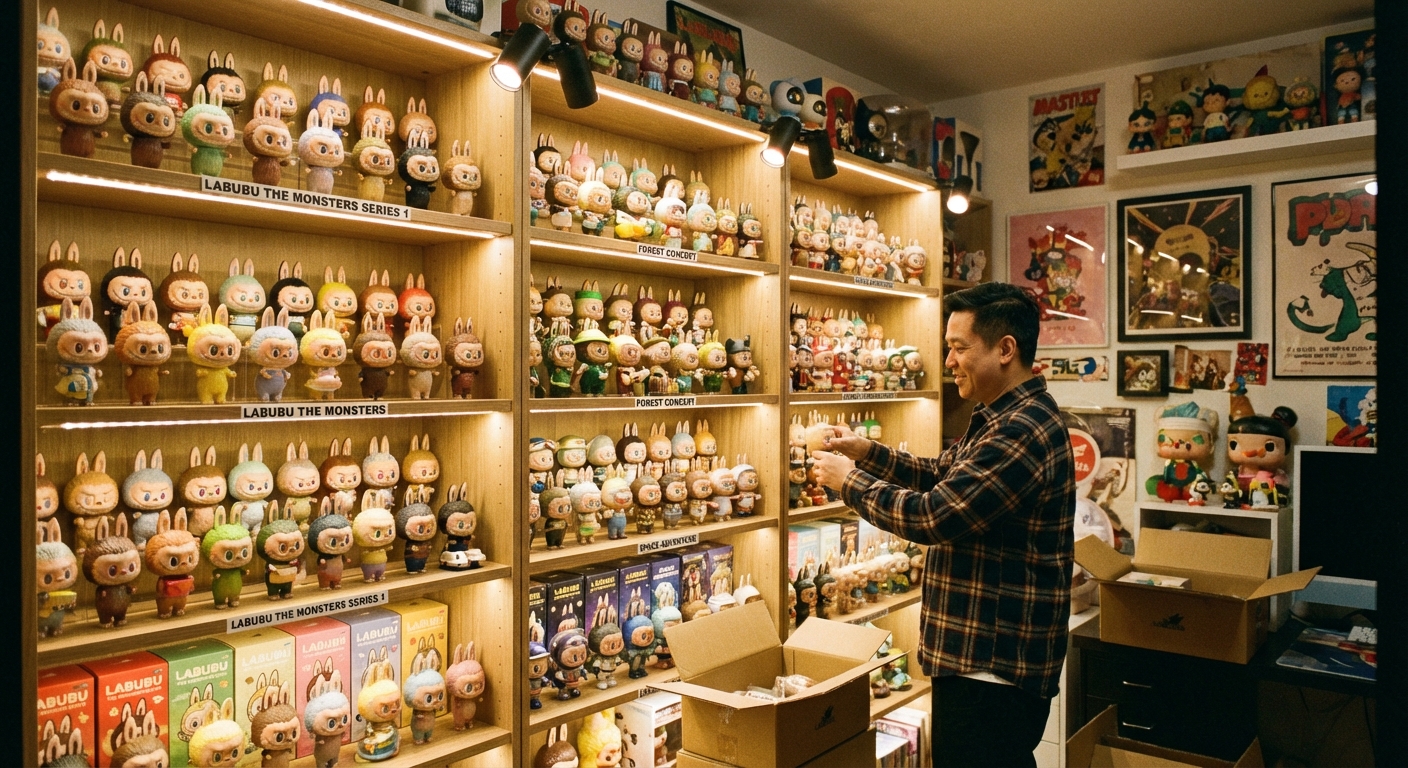
The Labubu phenomenon reflects broader trends in consumer culture. The “kidult” market, adults buying toys and collectibles, has grown substantially. What once might have been dismissed as childish is now recognized as legitimate collecting, no different from art or vintage items.
Social media has transformed collecting into performance. Unboxing videos generate millions of views. Collectors document their hunts, celebrate finds, and build communities around shared interest. The experience of collecting extends far beyond ownership into content creation and social connection.
There’s also something distinctly 2025 about the Labubu craze. In an era when AI generates increasingly perfect images and smooth interfaces dominate design, the deliberately imperfect, slightly off-putting aesthetic of Labubu offers contrast. It’s handmade-looking in an algorithmic age, weird in a world of optimization.
What Comes Next
Whether Labubu maintains its current fever pitch or cools into steady collectibility remains to be seen. Consumer crazes often burn bright before fading, as the market moves to the next object of desire. Pop Mart will face the challenge of keeping the character fresh while maintaining the scarcity that drives value.
For now, Labubu represents something cultural observers find endlessly interesting: the unpredictability of what captures collective attention. No algorithm would have predicted that a toothy, slightly unsettling plush character would command six-figure auction prices and generate genuine emotional attachment. But here we are, closing out 2025 with Labubu’s distinctive grin as one of the year’s most recognizable images.
The Bottom Line
The Labubu phenomenon defies easy explanation. A character many find objectively strange has become one of the most coveted collectibles of the year, generating massive retail demand, a thriving resale market, and prices that reach into six figures for rare editions. Whether you see it as creative disruption of conventional aesthetics or another example of hype-driven consumer culture, Labubu has earned its place in 2025’s cultural story. The toothy grin that launched a collecting craze isn’t going anywhere soon.