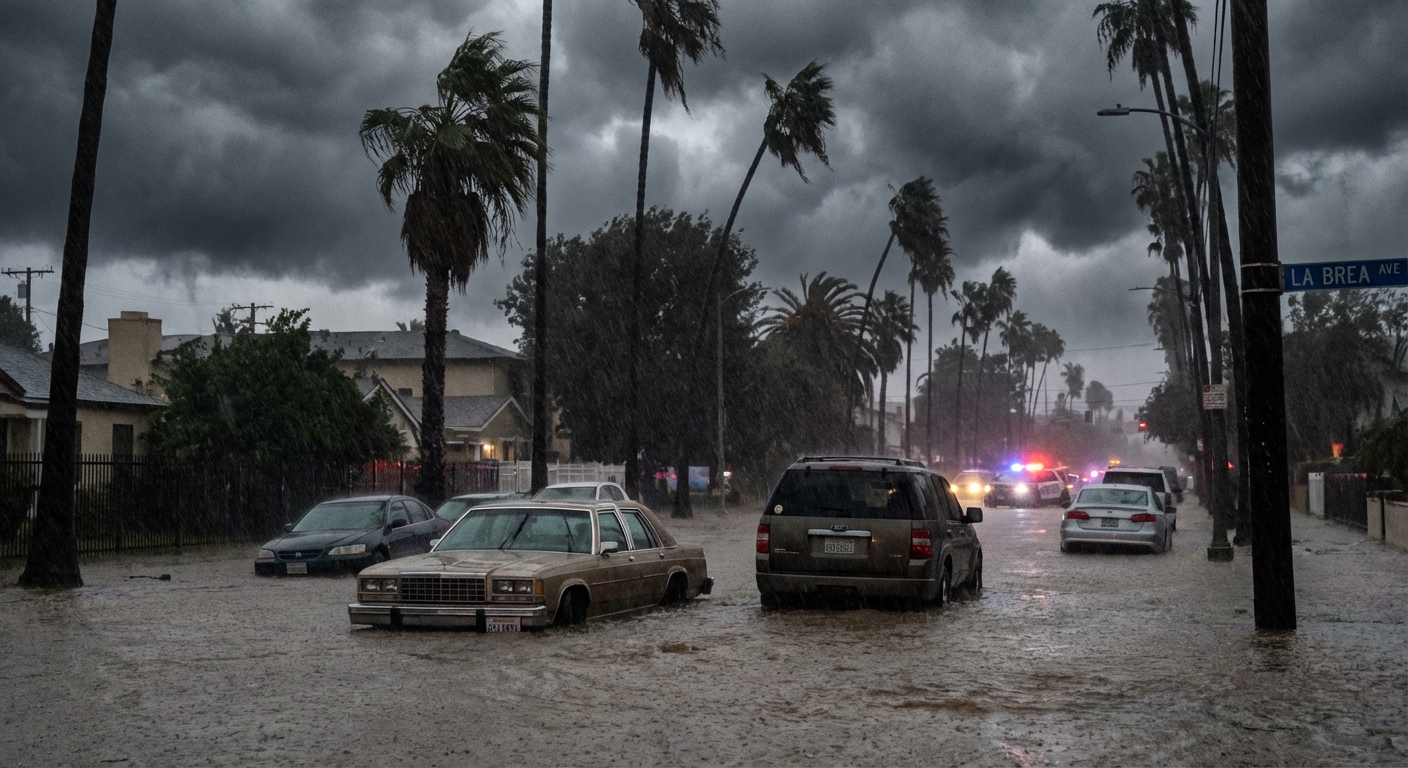
A powerful atmospheric river is battering California on Christmas Eve, bringing what officials are calling one of the worst holiday storms in recent memory. Torrential rain, flooding, mudslides, and power outages have affected millions across Los Angeles and surrounding areas, with evacuations ordered in several communities.
The storm system, carrying massive amounts of moisture from the Pacific, began hitting the coast Monday and intensified overnight. Some areas have received more than six inches of rain in 24 hours, overwhelming drainage systems designed for California’s normally dry climate. Debris flows have closed highways, and search and rescue teams are responding to stranded motorists across the region.
For anyone trying to travel for the holidays, the timing couldn’t be worse. LAX has cancelled hundreds of flights, and major highways including portions of the 101 and 405 are closed due to flooding.
The Scope of the Damage
The storm’s impact is widespread. Los Angeles County alone has reported thousands of calls for emergency assistance. Neighborhoods in the foothills face the greatest risk, where saturated soil on burned hillsides threatens to give way. Mudslides have already damaged homes in Malibu and the San Gabriel Valley.
Downtown Los Angeles saw streets transformed into rivers, with water rising to car door handles in some intersections. The LA River, usually a concrete trickle, is a torrent that has exceeded flood stage. Emergency crews have been conducting water rescues throughout the day.
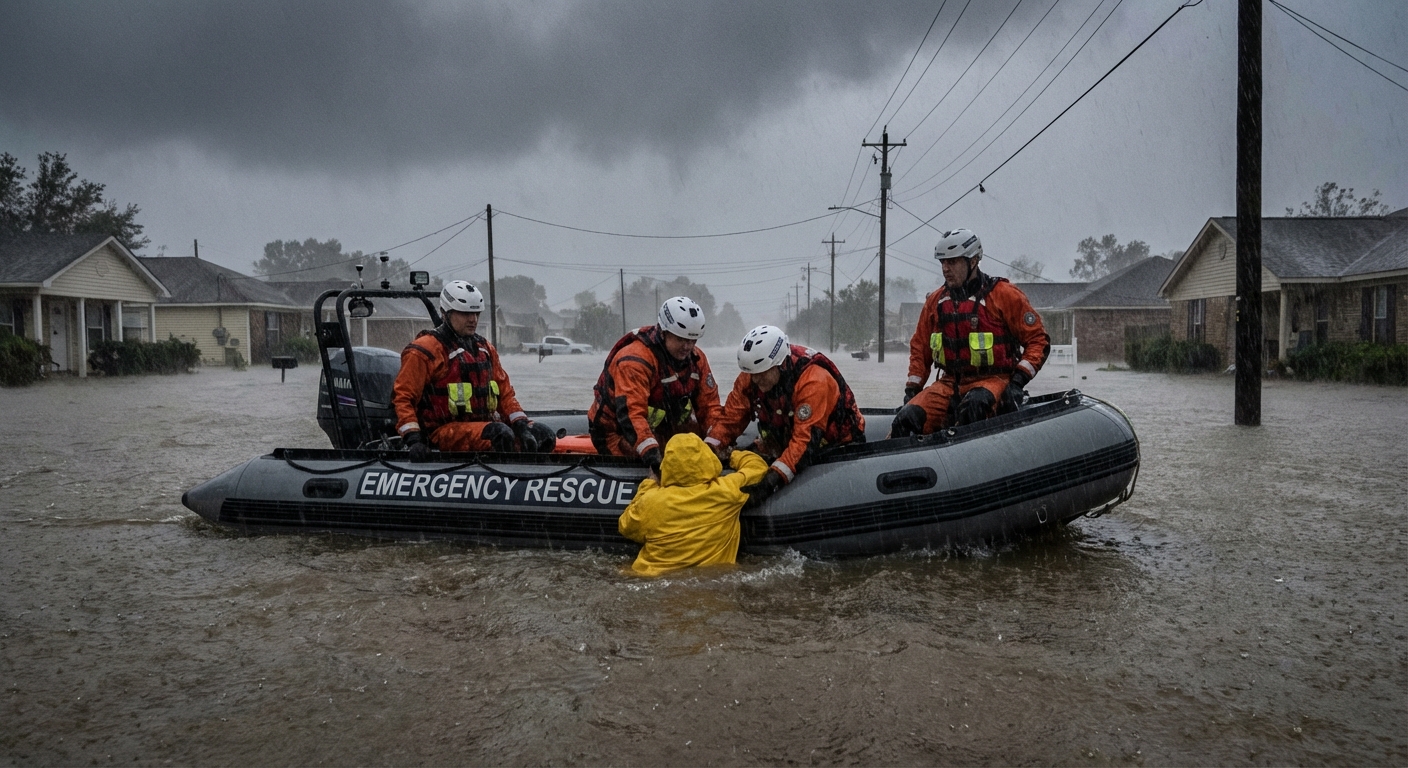
Power outages have affected more than 200,000 customers across Southern California. Utility crews are working to restore service, but ongoing conditions make repairs dangerous. Some residents may be without electricity through Christmas.
The storm is also hitting Northern California, where the San Francisco Bay Area is experiencing heavy rain and wind. Flooding has closed BART stations and disrupted holiday travel plans for thousands.
Why This Storm Is Different
Atmospheric rivers are nothing new to California. These “rivers in the sky” carry tropical moisture from the Pacific and deliver much of the state’s annual precipitation. But this storm ranks among the most intense in recent years, combining heavy rainfall with warm temperatures that are causing rapid snowmelt at higher elevations.
The warmth is part of what makes this storm dangerous. Normally, precipitation at higher elevations falls as snow, which accumulates gradually. With this system, rain is falling at elevations that would typically see snow, sending water downstream immediately rather than storing it in the snowpack.
Climate scientists have long predicted that warming temperatures would intensify atmospheric rivers, making the wettest storms wetter while dry periods grow longer. This storm fits that pattern, delivering extreme rainfall that the state’s infrastructure wasn’t designed to handle.
The Holiday Disruption
For millions of Californians, the storm has upended Christmas plans. Families separated by flooded roads can’t gather. Travelers stranded at airports face hours-long delays or cancellations. Holiday dinners are being prepared by flashlight in homes without power.
Retailers have also been affected, with many closing early or entirely on one of the busiest shopping days of the year. Food banks report damage to supplies meant for holiday distribution to families in need.
The storm is expected to continue through Christmas Day, though the heaviest rain should taper by Thursday evening. A second, weaker system may follow this weekend, raising concerns about additional flooding on already saturated ground.
What to Do
Authorities are urging residents to stay home if possible. Roads that appear passable can be deceptively dangerous, and “turn around, don’t drown” remains the most important safety message. Drivers stranded in floodwaters account for most storm-related fatalities.
Residents in evacuation zones should leave immediately. Mudslides can occur without warning, and the speed of debris flows leaves no time to escape once they begin. Shelters have opened throughout the region for those displaced.
For those without power, California utilities advise against using gas generators indoors due to carbon monoxide risk. Checking on elderly neighbors is particularly important, as cold, dark conditions can be dangerous for vulnerable populations.
The Bottom Line
California’s Christmas Eve storm is a reminder that extreme weather doesn’t take holidays. The atmospheric river battering the state is bringing dangerous flooding, mudslides, and disruption just as millions planned to celebrate with family.
The immediate priority is safety. Holiday gatherings can be rescheduled; lives cannot. Anyone in an affected area should monitor local emergency alerts, avoid unnecessary travel, and evacuate if ordered to do so.
The storm will pass, but the cleanup will take days or weeks. For now, California is experiencing a Christmas it won’t soon forget.